
Vollmann celebrates the freedom of riding the rails with anecdotal hobo lore and depictions of open landscapes in dull, flat prose. Exclamation point.

Strange, violent, darkly farcical, and unlike anything else that comes to mind. There’s a missing-‘person’ mystery, some cosmic horror, a revenge fantasy adventure, and a library that contains the entire universe inside a house on a hill in a suburb of the Dead. A dandy blood-jiggling entertainment.

Rid teaches War Studies, so he misinterprets Richard Brautigan’s “All Watched Over by Machines of Loving Grace” because the poem mentions cybernetic three times. The section on interactive technologies from WWII is sort of interesting, but Rid seems oblivious to the techno-cesspool that has engulfed us since then and tries to treat hippie utopians and techno-libertarians like philosophers. A thousand years from now, ‘cyber’ will be an old slang term that means ‘shit.’

An outstanding example of how a good writer can make literature out of crime fiction/noir/psychological suspense: a mysterious murder, a lone figure beset by malevolent forces, ratcheting tension and palpable dread accentuated by the physical setting, and a trenchant critique of early 1960s American social fissures. Bravo

Memphis is one of a handful of US cities that can claim its own sui generis music. Gordon tells an unfamiliar story of a group of acquaintances who blur the lines, rearrange the pieces, and create entirely new sounds and visuals across the second half of the 20th c.: rockabullies, hippies, folkies, bluesmen, noise freaks, jazzbos, photographers, painters, puppeteers and punks, drinking from the same bottle and breathing the same funky air. We are all the better for what they did. A great book.

Human-scale fables from the Angolan revolution unfolding in snippets and glimpses through the curved lattice of time and lives intersecting. A kaleidoscopic marvel of storytelling.

Gentle closing calls for gentle opening, and we should want life always to be well oiled.
The imagination is what keeps life well-oiled, and poetry is nourishment for the imagination. It is always more enriching to imagine than to experience, and a poet will always be more suggestive than a philosopher. Why should the actions of the imagination not be as real as those of perception?
The imagination is what keeps life well-oiled, and poetry is nourishment for the imagination. It is always more enriching to imagine than to experience, and a poet will always be more suggestive than a philosopher. Why should the actions of the imagination not be as real as those of perception?

A mix of memoir, history, and geography. Savoy’s fine prose and her travels through ‘landscapes of memory’ are personal, but also reveal much about 400 years of American society, racist warts and all.

This book was recommended by Charlie Parr.
Fatalism and false hope in a muddy Hungarian village as a metaphor for the human condition. Drunkenness, dancing, death. The chapters are single long paragraphs, the prose mesmerizing. Krasznahorkai read some Beckett.
Fatalism and false hope in a muddy Hungarian village as a metaphor for the human condition. Drunkenness, dancing, death. The chapters are single long paragraphs, the prose mesmerizing. Krasznahorkai read some Beckett.

A story that begins with an early-20th-c. pulp-horror writer and a drunken poet should be more engaging. Turns out that, after all of Hingston’s indefatigable fact-searching, Redonda is more interesting as a woozy myth.

Suggestive, with some engaging Bulgarian bits. Alas, the interesting ideas about the pathology of memory and the poison of nostalgia are mired in flat prose and banal turns of phrase. We already know about the poison of nationalism. There is a way to write simply and profoundly, but Gospodinov doesn’t get there.

A very long magazine article about animal senses and how humans are messing them up.

Passive black holes of information, active predatory infovores, unrememberable worms which covered the human skin like dust mites…contagious bad news, self-sealing secrets, living murders, Chinatowns.
SCP-3125 — a highly aggressive anomalous metastasized meme complex, adapted for survival in an ideatic ecology considerably more violent and hostile than our own — has now intersected our reality.
I don’t know but my heart started beating faster when the thing was chasing that guy. Is it Horror? SciFi? Felt some amped-up Dickian paranoia, spackled and burnished. What do you do when something else is running your head? I don’t know. It’s probably happening to us right now and we don’t know it. Or we forgot. I don’t know.
SCP-3125 — a highly aggressive anomalous metastasized meme complex, adapted for survival in an ideatic ecology considerably more violent and hostile than our own — has now intersected our reality.
I don’t know but my heart started beating faster when the thing was chasing that guy. Is it Horror? SciFi? Felt some amped-up Dickian paranoia, spackled and burnished. What do you do when something else is running your head? I don’t know. It’s probably happening to us right now and we don’t know it. Or we forgot. I don’t know.

The story is interesting enough to survive Paterniti’s dull prose and outworn pop cultural references. The best bits are a visit to William S. Burroughs at home only months before he died, letters from the National Archive alluding to the pacifist Einstein’s work for the U.S. Navy, a dildo with a handle shaped like Ronald Reagan’s head, and the Einsteinian hero-worship of karaoke singers in Osaka — but since this is an overinflated magazine article, Paterniti’s treatment is superficial. And the brain is just slimy chunks floating in Tupperware.

“There is such a thing as good taste, Julian.”
“Taste, madam? Have you ever tasted arsenic?”
The strange and mysterious atmospherics and the evocation of suspense through the voice of the narrator give this moody New England gothic an unsettling eerie feel. Jackson was a master.
“Taste, madam? Have you ever tasted arsenic?”
The strange and mysterious atmospherics and the evocation of suspense through the voice of the narrator give this moody New England gothic an unsettling eerie feel. Jackson was a master.

Sheldrake reminds us that much of what is taken for granted in popular scientific theory (the mechanical universe, the fixed laws of nature, materialism, the mind/body connection) is insightful but speculative. He asks some interesting questions, berates dogmatics, and finds some unexpected antecedents for his own theories, but fails to recognize that his key idea—‘morphic resonance’—is also speculative. Oops.

Machado’s commentary on human folly is presented as the memoir of a dead man. A dead man. Some chapters are sad, but short; others are short, but sad. Some chapters, according to the narrator, are a mistake; others are unnecessary, or explanations of a previous chapter. About the most brilliant phase of his life he is determined to say nothing. He responds preemptively (but posthumously) to his critics, abandons and embraces the teachings (‘Humanitism’) of the philosopher-tramp Quincas Borba, and confirms the parable of the Athenian maniac. That Brás Cubas is an unreliable narrator is beside the point, really, since language and the mind from which it springs are not to be trusted. A brilliant book.
…this is what makes us the lords of the Earth, this ability to restore the past, to realize the fragility of our impressions and the futility of our affections. Pascal may say that man is a thinking reed, but he isn’t, he’s a thinking erratum. Each season in life is a new edition that corrects the preceding one, which will in turn be corrected again, until we reach the definitive edition, which the editor donates for free to the worms.
…this is what makes us the lords of the Earth, this ability to restore the past, to realize the fragility of our impressions and the futility of our affections. Pascal may say that man is a thinking reed, but he isn’t, he’s a thinking erratum. Each season in life is a new edition that corrects the preceding one, which will in turn be corrected again, until we reach the definitive edition, which the editor donates for free to the worms.

Ekelund's perambulations inspire him to write down the kind of trite, simplistic observations that sound like fortune-cookie wisdom ("Regardless of how rapidly one walks, it will always be at a much slower pace than someone who is running or driving a car"; "Everything that happens must happen in a place"). Along the way he surmises that crows can see nearly the entire forest from high up in the trees, and he tells us so. By citing Rebecca Solnit and Bruce Chatwin, he inadvertently reminds us of what a good writer could do with similar material.

A collection of stories set mostly in the Rio Grande valley of south Texas, populated by punk bands and performance artists with modest aspirations. Flores writes sympathetically of misfits and fuckups, the unheralded and the unconventional, missed chances and patient perseverance. Punk is essentially an attitude, a combination of dissent and desire that takes various forms, depending on where you are. The Tex-Mex punk atmosphere conjured by Flores’ simple, straightforward prose is an indictment of the bullshit, and a affirmation for those who will not give in.

A richly imagined old woman narrator and her enigmatic interactions with the other people in a remote Polish village serve as the vessel for Tokarczuk’s subtle prose, which lures us into believing that we all begin as sparks from a star, that nature’s tally of our misdeeds is ongoing, and that the human psyche evolved to defend us against seeing the truth. And how do we figure the narrator's observation regarding the local writer?:
In a way, people like her, those who wield a pen, can be dangerous. At once a suspicion of fakery springs to mind—that such a Person is not him or herself, but an eye that’s constantly watching, and whatever it sees it changes into sentences; in the process it strips reality of its most essential quality—its inexpressibility.
In a way, people like her, those who wield a pen, can be dangerous. At once a suspicion of fakery springs to mind—that such a Person is not him or herself, but an eye that’s constantly watching, and whatever it sees it changes into sentences; in the process it strips reality of its most essential quality—its inexpressibility.
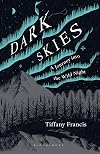
Francis is an able writer and an entertaining guide, taking us through nighttime in rural Britain, Scandinavia, and Brittany, drawing our attention to the curious ways that humans interact with the dark. Along the way, we encounter the bizarre taxidermy of Walter Potter at Jamaica Inn on Bodmin Moor, a nudist spa in a wild corner of the Black Forest (“Never one to let testicles get in my way, …”), a 17th-century treatise that claimed birds migrated to the moon and back every year, the white chalk stones that travelers in the Quantock Hills dropped along walking paths in order to retrace their steps in the dark, yeth hounds, Gaelic fire festivals, Welsh banshees, and the Poet Stone in the Ashford Hangers dedicated to Edward Thomas (for whom Robert Frost wrote “The Road Not Taken”). A good read.

Fforde turns Munsell's color scheme into a map of society and satirizes science, totalitarianism and race relations. Clever and funny.

Running through this memoir by a greenhorn librarian/creative-writing teacher in a Boston prison is a subliminal meditation on the power of words to liberate, isolate, connive, cajole, and dispute.
‘During a debate with a fellow hustler, C.C. Too Sweet scored major points when he said, “With all due, and undue, respect, the difference between me and you is the following: You are nonsensical while I, my brother, am ineffable. In case you ain’t mastered your diction, I’ll break that down for you—ineffable, meaning: I can not, and will not, be effed with.”’
‘During a debate with a fellow hustler, C.C. Too Sweet scored major points when he said, “With all due, and undue, respect, the difference between me and you is the following: You are nonsensical while I, my brother, am ineffable. In case you ain’t mastered your diction, I’ll break that down for you—ineffable, meaning: I can not, and will not, be effed with.”’

Krilanovich takes as the vehicle for her prose the adventures of a gang of teenage runaways and dropouts in the dank and druggy Pacific Northwest, so characters and plot are less relevant than daydreams, nightmares, hallucinations and psychogenic disorientation. A sensual, bewildering, devouring read.

Pop Science, meet Pop Music. Pop Music, Pop Science.
It’s fun to hear how precisely specialists deploy concepts like pitch, timbre and rhythm in trying to explain how music works, and how intricately laboratory experiments can simulate/stimulate brain activity, but the brain is not the mind, and even (or especially) cognitive neuroscientists won't crack the ineffability of music. The chapter on the origins of music shows just how speculative and tentative the science is. What would Junior Kimbrough say?
It’s fun to hear how precisely specialists deploy concepts like pitch, timbre and rhythm in trying to explain how music works, and how intricately laboratory experiments can simulate/stimulate brain activity, but the brain is not the mind, and even (or especially) cognitive neuroscientists won't crack the ineffability of music. The chapter on the origins of music shows just how speculative and tentative the science is. What would Junior Kimbrough say?

The temporal and geographic range of these stories is impressive, the prose unadorned but suggestive and probing of the human condition. Sachdeva is a true talent. File under caving, fulgurite, fork-hands and mermaids.

Schalansky uncovers and imagines stories around wrecks and ruins and forgotten things—lost islands, crumbling villas, a library stamped on tin plates hung in a cypress grove—in a book that requires close and careful reading. She shifts voices unexpectedly, sliding from first- to third- to second-person, visits ancient and medieval worlds and living memory, and crafts subtly suggestive descriptive passages in deceptively simple language. She lets us see that what lasts (if we want it) are the words and stories and voices that people leave behind.

It’s not about the self-absorbed young woman narrator who takes Robert Louis Stevenson’s Treasure Island as her life manual. It’s an audacious satire about self-improvement jammed with wacky black humor held at a whirring pitch by a talented young writer named Sara Levine.
Dr. Klug nodded. “You do seem anxious. You shredded your gown.”
“Well, it takes an awful lot of energy to give birth to oneself. It’s not as though you do one bold thing and then you are bold. The thing about adventure is that you have to keep on doing it, day in and day out. I don’t know, can it ever be definitively accomplished? I hardly rest, I hardly can!”
Dr. Klug nodded. “You do seem anxious. You shredded your gown.”
“Well, it takes an awful lot of energy to give birth to oneself. It’s not as though you do one bold thing and then you are bold. The thing about adventure is that you have to keep on doing it, day in and day out. I don’t know, can it ever be definitively accomplished? I hardly rest, I hardly can!”

Dick Gibson’s radio career takes him around the country and gives Stanley Elkin the opportunity to riff on the foibles and foolery of 20th-c. USA in a text that is virtuosic, wacky, and darkly poignant.
It did no good to change policy or fiddle with format. The world pressed in. It opened your windows. All one could hope for was to find his scapegoat, to wait for him, lurking in alleys, pressed flat against walls, crouched behind doors while the key jiggles in the lock, taking all the melodramatic postures of revenge. To be there in closets when the enemy comes for his hat, or to surprise him with guns in swivel chairs, your legs dapperly crossed when you turn to face him, to pin him down on hillsides or pounce on him from trees as he rides by, to meet him on the roofs of trains roaring on trestles, or leap at him while he stops at red lights, to struggle with him on the smooth faces of cliffs, national monuments, chasing him round Liberty’s torch, or up girders of bridges, or across the enormous features of stone presidents. To pitch him from ski lifts and roller coasters, to Normandy his ass and guerilla his soul. To be always in ambush at the turnings in tunnels, or wrestle him under the tides of the seas. Gestures, gestures, saving gestures, life-giving and meaningless and sweet as appetite, delivered by gestures and redeemed by symbols, by necessities of your own making and a destiny dreamed in a dream. To be free—yes, existential and generous.
It did no good to change policy or fiddle with format. The world pressed in. It opened your windows. All one could hope for was to find his scapegoat, to wait for him, lurking in alleys, pressed flat against walls, crouched behind doors while the key jiggles in the lock, taking all the melodramatic postures of revenge. To be there in closets when the enemy comes for his hat, or to surprise him with guns in swivel chairs, your legs dapperly crossed when you turn to face him, to pin him down on hillsides or pounce on him from trees as he rides by, to meet him on the roofs of trains roaring on trestles, or leap at him while he stops at red lights, to struggle with him on the smooth faces of cliffs, national monuments, chasing him round Liberty’s torch, or up girders of bridges, or across the enormous features of stone presidents. To pitch him from ski lifts and roller coasters, to Normandy his ass and guerilla his soul. To be always in ambush at the turnings in tunnels, or wrestle him under the tides of the seas. Gestures, gestures, saving gestures, life-giving and meaningless and sweet as appetite, delivered by gestures and redeemed by symbols, by necessities of your own making and a destiny dreamed in a dream. To be free—yes, existential and generous.

Tsing moves back and forth from the subterranean to the global, exposing patterns of human-botanical interaction in vivid four-dimensional context and reconsidering concepts in science and political economy from surprising angles. Rich in information and insight, this is a fascinating book of unexpected rewards.