
André Vianco
Author of OS SETE TEM GENTE QUE NAO ACREDITA EM VAMPIROS ... - PORTUGUES BRASIL
About the Author
Image credit: Vianco in 2019 By Gustavoferreli - Own work, CC BY-SA 4.0, https://commons.wikimedia.org/w/index.php?curid=91229177
Series
Works by André Vianco
Brasil Fantástico - Histórias fantásticas saindo do nosso saco folclórico (Portuguese Edition) (2014) 2 copies
Sétimo 2 1 copy
VAMPIROS DO RIO DOURO 2 VOL 1 copy
Vampiros do Rio Douro #2 1 copy
O Vampiro-Rei 1 copy
Tagged
Common Knowledge
- Canonical name
- Vianco, André
- Legal name
- Vianco, André
- Gender
- male
- Nationality
- Brazil
- Associated Place (for map)
- Brazil
Members
Reviews
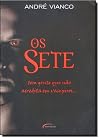
Since I started to read André Vianco's books, I always feel torn between liking his ideas and hating his writing style. And I must say that this is one of the worst books I have read so far. Which is a shame, because the story's core is pretty nice. The main idea is good, it has a solid basis, it does make sense and is justifiable. What really ruins the story is the author's lack of experience in making the story fluid, adding unnecessary details that only add the number of pages without show more making anything effectively useful from that.
His writing style, with short and direct sentences works pretty well for short stories with few characters, like his own book A Casa. Alas, in Os Sete, it only made me angry, because the phrases were short, but there were too many descriptive elements. Descriptions of scenarios, of characters, of feelings... and a re-description of everything all over again. I must have read the parts of the "unbearable cold" about ten times only in the first half of the book, written in the exact same way. Add that to stupid dialogs that have as the main subject how the lamps, means of transportation and electronic devices work and there you have it. A boring book.
Amidst this complete loss of time going through repeated experiences, the writer ends up getting lost within the new elements that appear later in the book. Yes, there are seven vampires, but in the end of the story you'll probably only remember one or two, because there is too much highlight in a single one.
And since we're talking about characters, there is another features that gave me the impression that the writer had a hard time with: there are WAY TOO MANY characters. This usually isn't so bad when each character is treated as an individual being. There lies the other problem: there are just so many characters, so many vampires, researches, heroes, secondary characters that you will have no idea of the purpose of reading the story of one of the lieutenants's family issues. Meanwhile, you will know nearly nothing of the main hero who's going to save the country all by himself. As a result, the vilains, who had originally awaken as pompous creatures of the 15th century will start to use some sort of speech that has absolutely nothing to do with their own kind, while the military people will start talking in a way that NO ONE speaks nowadays. In other words, their dialogs are just not natural.
Final words about this book: those who don't really have the habit of reading may find it interesting and easy to be read. The ones used to Stephen King's morbid style, Neil Gaiman's dark and mysterious worlds or Anne Rice's lusty characters may want to stay away from Os Sete. show less
His writing style, with short and direct sentences works pretty well for short stories with few characters, like his own book A Casa. Alas, in Os Sete, it only made me angry, because the phrases were short, but there were too many descriptive elements. Descriptions of scenarios, of characters, of feelings... and a re-description of everything all over again. I must have read the parts of the "unbearable cold" about ten times only in the first half of the book, written in the exact same way. Add that to stupid dialogs that have as the main subject how the lamps, means of transportation and electronic devices work and there you have it. A boring book.
Amidst this complete loss of time going through repeated experiences, the writer ends up getting lost within the new elements that appear later in the book. Yes, there are seven vampires, but in the end of the story you'll probably only remember one or two, because there is too much highlight in a single one.
And since we're talking about characters, there is another features that gave me the impression that the writer had a hard time with: there are WAY TOO MANY characters. This usually isn't so bad when each character is treated as an individual being. There lies the other problem: there are just so many characters, so many vampires, researches, heroes, secondary characters that you will have no idea of the purpose of reading the story of one of the lieutenants's family issues. Meanwhile, you will know nearly nothing of the main hero who's going to save the country all by himself. As a result, the vilains, who had originally awaken as pompous creatures of the 15th century will start to use some sort of speech that has absolutely nothing to do with their own kind, while the military people will start talking in a way that NO ONE speaks nowadays. In other words, their dialogs are just not natural.
Final words about this book: those who don't really have the habit of reading may find it interesting and easy to be read. The ones used to Stephen King's morbid style, Neil Gaiman's dark and mysterious worlds or Anne Rice's lusty characters may want to stay away from Os Sete. show less
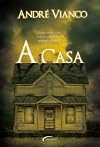
The first book from André Vianco that I read was "O Senhor da Chuva", and when I did so, I made it clear that I don't like his writing style because I think he lacks the ability of making the reading fluid. This is the main reason why I didn't expect much of this book. Alas, I'm glad to say that I was wrong.
A Casa is the story of four different people going through the same problem: in a certain point of their lives, they did something they deeply regret. They're tired. They just want some show more peace of mind. And when they're about to give up hope, they get a card with an address and a single sentence. A promise of relief for their angsty hearts. That's the focus of the book: what would you do if you had a second chance to undo your mistakes?
André Vianco's writing style remains pretty much the same: the frequently paused narrative and the formal informal dialogs still remain, but they're better disguised. Almost fluid. In spite of the book telling four different stories all at once, this doesn't really slow you down in your reading. It even gives you time to actually LIKE the characters.
Speaking of them, they were as developed as 227 pages allow you. The stories are short, but quite clear and objective. And I admit it, I cried in most of the book.
I'm honestly surprised. But in a nice way. This is the sort of book to read in a single sitting. show less
A Casa is the story of four different people going through the same problem: in a certain point of their lives, they did something they deeply regret. They're tired. They just want some show more peace of mind. And when they're about to give up hope, they get a card with an address and a single sentence. A promise of relief for their angsty hearts. That's the focus of the book: what would you do if you had a second chance to undo your mistakes?
André Vianco's writing style remains pretty much the same: the frequently paused narrative and the formal informal dialogs still remain, but they're better disguised. Almost fluid. In spite of the book telling four different stories all at once, this doesn't really slow you down in your reading. It even gives you time to actually LIKE the characters.
Speaking of them, they were as developed as 227 pages allow you. The stories are short, but quite clear and objective. And I admit it, I cried in most of the book.
I'm honestly surprised. But in a nice way. This is the sort of book to read in a single sitting. show less
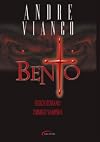
Uma noite começada como outra qualquer entra para história da humanidade quando metade dos seres humanos adormece de forma inexplicável. Tratada como uma epidemia, a doença desencadeia um caos sem precedentes nas cidades do mundo. O pesadelo parece não ter fim quando os humanos, livres do sono, descobrem que estão dividindo a noite com demônios da escuridão. Este novo mundo, sombrio e tenebroso, é apresentado pelos olhos de Lucas, um homem que desperta nesse tenebroso cenário e que show more se tornará, mesmo contra sua vontade, um poderoso e venerado guerreiro, lutando contra os vampiros e liderando os humanos ao encontro dos quatro milagres que libertarão a Terra dessa terrível maldição. show less
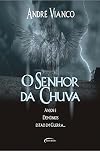
It's hard to open-mindedly judge a book after spending a couple of time reading books from veteran writers, so I believe that my opinion towards this book won't be the best of them all. Let's just say that the story's core is pretty good, but the way it was written could've been a LOT better. André Vianco's writing style didn't please me that much.
The story goes like this: a drug dealer, amidst his anxiety to change his lifestyle to something worth living, tries to trick one of his clients show more in the last drug business of his life and finds himself involved in an apocalyptic battle between angels and demons. As a last resort to save his own life, the angel Thal joins himself to Gregório, helping him escape from death and bringing him to the calm city of Belo Verde, where Gregório's twin brother Samuel lives. Everything would seem to go nice and smoothly if it wasn't for one small detail: by uniting himself to Gregório, Thal breaks an important rule of the spectral plan, which said that supernatural creatures should NOT join with humans. The breaking of the rules triggers a conflict between heaven and hell.
The story itself is not bad. It has a fast paced rhythm and, in spite of the several focus changes, it is pretty easy to follow. I must say that it even succeeds in creating an atmosphere of anxiety, which is good enough to keep the reader interested to the story from the beginning to the end. I do have a problem with the writing style though. That and the way the characters talked. I feel like there is a lack of coherence and realism in their speeches, since they mixed a foul language with a formal language the whole time.
Overall, this is not a BAD book, alas, it also isn't good enough for me to want to read it all over again. Vianco was very daring and wrote this book without a shadow of fear, for this I'd have to give him thumbs up. show less
The story goes like this: a drug dealer, amidst his anxiety to change his lifestyle to something worth living, tries to trick one of his clients show more in the last drug business of his life and finds himself involved in an apocalyptic battle between angels and demons. As a last resort to save his own life, the angel Thal joins himself to Gregório, helping him escape from death and bringing him to the calm city of Belo Verde, where Gregório's twin brother Samuel lives. Everything would seem to go nice and smoothly if it wasn't for one small detail: by uniting himself to Gregório, Thal breaks an important rule of the spectral plan, which said that supernatural creatures should NOT join with humans. The breaking of the rules triggers a conflict between heaven and hell.
The story itself is not bad. It has a fast paced rhythm and, in spite of the several focus changes, it is pretty easy to follow. I must say that it even succeeds in creating an atmosphere of anxiety, which is good enough to keep the reader interested to the story from the beginning to the end. I do have a problem with the writing style though. That and the way the characters talked. I feel like there is a lack of coherence and realism in their speeches, since they mixed a foul language with a formal language the whole time.
Overall, this is not a BAD book, alas, it also isn't good enough for me to want to read it all over again. Vianco was very daring and wrote this book without a shadow of fear, for this I'd have to give him thumbs up. show less
You May Also Like


Statistics
- Works
- 35
- Members
- 477
- Popularity
- #51,682
- Rating
- 3.5
- Reviews
- 23
- ISBNs
- 34
- Languages
- 1
- Favorited
- 2