
Machado de Assis (1839–1908)
Author of The Posthumous Memoirs of Brás Cubas
About the Author
Disambiguation Notice:
(dut) Joaquim Maria Machado de Assis was de zoon van Francisco José de Assis en Maria Leopoldina da Câmara Machado. Machado is dus niet zijn voornaam, maar een deel van zijn achternaam. Zie ook de Encyclopaedia Britannica en Cassell's Encyclopaedia of World Literature, waar hij te boek staat als "Machado de Assis, Joaquim Maria".
Joaquim Maria Machado de Assis signed his books as Machado de Assis, and author's profile name must be kept as its sign name. However, his books are shelved in libraries under 'M' for Machado de Assis, as it is his surname. Machado is not his first name and should not be sorted as such.
Image credit: Wikipedia Commons
Series
Works by Machado de Assis
A Semana II 9 copies
Quem conta um conto e outros contos 9 copies
Onze contos de Machado de Assis: Textos integrais (Coleção Núcleo de literatura) (Portuguese Edition) (1992) 7 copies, 1 review
Unknown 7 copies
A Cartomante e Outros Contos - Coleção Travessias (Em Portuguese do Brasil) (2015) 7 copies, 1 review
Historias romanticas 6 copies
Crítica Literária 6 copies
A palavra é... Festa 6 copies
Contos do Casmurro 5 copies
Contos : uma antologia 5 copies
O Espelho E Outros Contos Machadianos - Coleção Literatura E Cia (Em Portuguese do Brasil) (2008) 5 copies
Crônicas Selecionadas - Volume 279. Coleção A Obra-Prima De Cada Autor (Em Portuguese do Brasil) (2009) 5 copies
L'alienista. Uns braços 5 copies
Todos os romances e contos consagrados de Machado de Assis - vol.1 - Ressureição / A mão e a luva / Helena / Iaiá Garcia (2016) 4 copies
Ρεαλιστική τριλογία : Μεταθανάτιες αναμνήσεις του Μπρας Κούμπας. Κίνκας Μπόρμπα. Δον Κασμούρο… (2017) 4 copies
RESSURREIÇAO 4 copies
RELÍQUIAS DE CASA VELHA 3 copies
O velho Senado 3 copies
Histórias do Bruxo do Cosme Velho 3 copies
Machado de Assis, Obra Completa 3 copies
Várias Histórias - Machado de Assis 3 copies
Obra completa 3 copies
Obras Ilustradas de Machado de Assis - Volume I - Helena * A Mão e a Luva * Histórias da Meia Noite 3 copies
Relíquias da Casa Velha - tomo 2 3 copies
Crônicas, 1º volume (1859-1863) 3 copies
Cronicas Volume IV 3 copies
Poesias 3 copies
Dom Casmuro 3 copies
Contos e crônicas 3 copies
Literatura Comentada 3 copies
Memorie dall'aldilà 3 copies
A Semana - Machado de Assis: Crônicas Machadianas do turbulento início da República Brasileira (1892-1893) (Portuguese Edition) (2020) 2 copies
Quem Educa Quem? 2 copies
O Mínimo e o Escondido 2 copies
A Parasita Azul 2 copies
PARA PRINCIPIANTES 2 copies
Capitu e outras Evas 2 copies
A Descoberta do Amor em Prosa 2 copies
Ressurreição - Machado de Assis (Clássicos da Literatura Brasileira) (Portuguese Edition) (2012) 2 copies
Contos de Machado de Assis, vol I 2 copies
PROFESSOR E ALUNO 2 copies
O ALIENISTA - MACHADO DE ASSIS (Clássicos da Literatura Brasileira Livro 1) (Portuguese Edition) (2009) 2 copies
Várias Histórias (Edição Especial Ilustrada): Com biografia do autor e índice activo (Portuguese Edition) (2015) 2 copies
A Mão e a luva - 1º Edição 2 copies
Escritor por Escritor - Machado de Assis Segundo Seus Pares 1939 - 2008 (Em Portugues do Brasil) (2019) 2 copies
Crônicas de Lélio 2 copies
A semana Volume III 2 copies
Obras Ilustradas de Machado de Assis - Volume VII - Bras Cubas * A Semana * Correspondência (1881) 2 copies
Una Signora (in Storia senza data) 2 copies
Obras Ilustradas de Machado de Assis - Volume IV - Poesias * Ressurreição * Contos Fluminenses 2 copies
phalenas 2 copies
La causa secreta y otros cuentos 2 copies
Obras Completas de Machado de Assis II: Coletâneas de Contos (Edição Definitiva) (Portuguese Edition) (2015) 2 copies
Confissões de uma Viúva Moça 2 copies
Dispersos de Machado de Assis 2 copies
Crisálidas [Ilustrado] [Com Notas, Biografia e Índice Ativo]: Poesias (Poesias de Machado de Assis Livro 1) (Portuguese Edition) (2014) 2 copies
Clássicos: várias histórias 1 copy
HISTÓRIA DE CARNAVAL 1 copy
A palavra é .....MULHER 1 copy
The Alienist — Author — 1 copy
Contos de Machado de Assis 1 copy
Revista do Livro, nºs 1-2 1 copy
Quem boa cama faz... 1 copy
FOTÓGRAFO DO INVISÍVEL 1 copy
CONTOS SAGRADOS 1 copy
Quando ela fala 1 copy
RETRATOS DA ESCOLA 1 copy
VIDA E PENSAMENTOS 1 copy
O espelho 1 copy
A PALAVRA É MISTÉRIO 1 copy
Dom Casmurro 1 copy
L'alienista. Uns braços 1 copy
Quincas Borba - Apêndice 1 copy
De conto em conto 1 copy
OS MELHORES CONTOS 1 copy
Obras Completas de Machado de Assis III: Poesia Completa (Edição Definitiva) (Portuguese Edition) (2015) 1 copy
A Mão e a Luva 1 copy
Pais que Educam, Professores que Amam Como encontrar a alegria de ensinar e o gosto de aprender 1 copy
CRÕNICAS ESCOLHIDAS 1 copy
PAPÉIS AVULSOS II 1 copy
PÁGINAS RECOLHIDAS 1 copy
RELÍQUIAS DE CASA VELHA II 1 copy
QUINCAS BORBA DOM CASMURRO 1 copy
Bons dias! & Notas Semanais 1 copy
IAÍA GARCIA 1 copy
CONTOS SELECIONADOS II 1 copy
Contos Selecionados I 1 copy
Ubjara 1 copy
Un hombre célebre 1 copy
o alíenista 1 copy
O Alienista 1 copy
Memorial de Aires 1 copy
Nalet Dom Casmurro 1 copy
ESAÚ E JACÓ 1 copy
Esaü Et Jacob 1 copy
L292 - Papéis Avulsos 1 copy
L291 - Dom Casmurro 1 copy
Memorial da arte 1 copy
PRÊMIO SESE DE CONTOS 1 copy
quincas borrba 1 copy
Contos 1 copy
C0NTOS ESCOLHIDOS 1 copy
MC MELHORES CONTOS 1 copy
PRÊMIO SESC DE CONTOS 1 copy
ONTO DE ESCOLA 1 copy
DAIÁ GARCIA 1 copy
obras do autor 1 copy
POESIA 1 copy
Todos os romances e contos consagrados de Machado de Assis - vol.3 - Esaú e Jacó / Memorial de Aires / Contos consagrados (1900) 1 copy
Contos Sagrado de Machado 1 copy
A vida de Machado de Assis 1 copy
Reliquias da casa velha 1 copy
HISÓRIAS DE CARNAVAL 1 copy
o alienista adaptado 1 copy
Poesia sempre 1 copy
Quincas Borba - Saraiva 1 copy
MEUS PRIMEIROS CONTOS 1 copy
Quincas Borbas em quadrinhos 1 copy
Obras Completas de Machado de Assis III: Teatro Completo (Edição Definitiva) (Portuguese Edition) (2015) 1 copy
Teatro completo 1 copy
O ENFERMEIRO - QUADRINHO 1 copy
Conto de escola 1 copy
Lalá Garcia 1 copy
O enfermeiro 1 copy
O alienista 1 copy
História do bruxo velho 1 copy
influências inglesas 1 copy
IAIÁ 1 copy
Obras selecionadas 1 copy
O ESPELHO - QUADRINHOS 1 copy
PSIKIATRI 1 copy
ASS Don Casmurro 1 copy
O Remédio é a Crítica 1 copy
CONTOS EM QUADROS 1 copy
O Relógio de Ouro 1 copy
Nem Uma Nem Outra 1 copy
Sem Olhos 1 copy
Crítica 1 copy
Romance 1 copy
Dom Casmurro (Condensado) 1 copy
Historias sem Data 1 copy
A palavra é ... Criança 1 copy
Phalenas - primeira ed. 1 copy
Contos Livro 1 1 copy
Machado de Assis, Memórias Póstumas de Brás Cubas e Quincas Borba (Portuguese Edition) (2021) 1 copy
Quincas Borba - 1º Edição 1 copy
LEITURA COMENTADA 1 copy
Hoje Avental, Amanhã Luva 1 copy
O Alienista em quadrinhos 1 copy
As Academias de Sião 1 copy
O Olhar da Platéia 1 copy
Dom Casmurro o filme 1 copy
Remédio é a Crítica, O 1 copy
Os Óculos de Pedro Antão 1 copy
Histórias 1 copy
Suplício de uma mulher 1 copy
O conto de Machado de Assis 1 copy
Contos : vestibular 2002 1 copy
O Corvo 1 copy
Machado de Assis - Contos Diversos [Annotated] (Contos Selecionados Livro 20) (Portuguese Edition) (1884) 1 copy
Machado de Assis - Teatro 1 1 copy
Helena em mangá LJ2154 1 copy
Contos selecionados 1 copy
Helena: obras completas 1 copy
A semana: crônicas, vol 3 1 copy
A semana: crônicas, vol 2 1 copy
A semana: crônicas, vol 1 1 copy
Liberatura luso-brasileira memórias póstumas de brás cubas oração aos moços palavras á juventudes 1 copy
"O primo Basílio" 1 copy
Falenas (Portuguese Edition) 1 copy
Machado de Assis Teatro 1 1 copy
SEM TITULO 1 copy
IAIÁ GARCIA SÉRIE BOM LIVRO 1 copy
Papeles sueltos 1 copy
O ALIENISTA EM QUADRINHOS 1 copy
Tizio (in Storia senza data) 1 copy
Un hombre célebre 1 copy
Counselor Ayres' Memorial 1 copy
Contos Esparsos 1 copy
Dušeslovec in druge zgodbe 1 copy
CONTOS S.C.B 1 copy
Aquarelas e outras crônicas - 1859-1878 (Todas as crônicas de Machado de Assis Livro 1) (2021) 1 copy
Balas de estalo e outras crônicas - 1883-1889 (Box Todas as crônicas de Machado de Assis Livro 2) (2021) 1 copy
A semana e outras crônicas - 1892-1900 (Box Todas as crônicas de Machado de Assis Livro 3) (2021) 1 copy
Sete contos 1 copy
MISSA do GALO 1 copy
Hist©đrias da meia-noite 1 copy
Ressurrei©ʹ©Đo 1 copy
A Tríade de Machado de Assis: Memórias Póstumas de Brás Cubas · Quincas Borba · Dom Casmurro (Portuguese Edition) (2022) 1 copy
Contos esparsos 1 copy
las acdemias de siam 1 copy
30 MELHORES CONTOS 1 copy
Cuentos - Prologo Alfredo Bosi. Cronologia Neusa Pinsard Caccese (Biblioteca Ayacucho N° 33) (1988) 1 copy
A Machado de Assis Anthology 1 copy
Obra completa : volume III 1 copy
Associated Works
A Hammock Beneath the Mangoes: Stories from Latin America (1991) — Contributor — 162 copies, 3 reviews
The Masterpiece Library of Short Stories Vol. XVIII: Spanish & Portuguese (1900) — Contributor — 5 copies
Quem conta um conto... e outros contos — Contributor — 1 copy
Tagged
Common Knowledge
- Canonical name
- Machado de Assis
- Legal name
- Machado de Assis, Joaquim Maria
- Other names
- Machado de Assis
- Birthdate
- 1839-06-21
- Date of death
- 1908-09-29
- Gender
- male
- Occupations
- poet
novelist
short story writer
printer's apprentice
playwright - Organizations
- Academia Brasileira de Letras
- Awards and honors
- Order of the Rose of Brazil (1888)
- Nationality
- Brazil
- Birthplace
- Rio de Janeiro, Brazil
- Places of residence
- Rio de Janeiro, Rio de Janeiro, Brazil (birth ∙ death)
- Place of death
- Rio de Janeiro, Brazil
- Burial location
- Cemitério São João Batista, Rio de Janeiro
- Map Location
- Brazil
- Disambiguation notice
- Joaquim Maria Machado de Assis signed his books as Machado de Assis, and author's profile name must be kept as its sign name.
However, his books are shelved in libraries under 'M' for Machado de Assis, as it is his surname. Machado is not his first name and should not be sorted as such.
Members
Discussions
Group Read, February 2021: The Posthumous Memoirs of Bras Cubas in 1001 Books to read before you die (February 2021)
Reviews
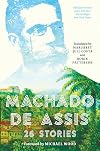
There’s no lack of variety in this collection, culled from Machado’s 120-something catalogue of short stories by the translators with the aim of representing, even roughly, a writer who never seems to have settled on a preferred style or voice. Many of these tales are more or less parables, ludic thought experiments sometimes calling to mind Borges — the two outright parables, Life! and The Canon were the only two that did absolutely nothing for me. At the other end of the stylistic show more spectrum are gentle social satires like Augusta’s Secret that approach someone like, I dunno, Katherine Mansfield, but without her psychological penetration. And in between are short, anecdotal tales, sometimes with hints of the uncanny, that put me in mind of Ambrose Bierce. These include my favourite by far, Maria Cora, about the cruelties and delusions of love, and the moving but heavy-handed Father against Mother, in which a penurious slave-catcher saves his own child at the expense of another.
Overall, mostly enjoyable enough, but the comparisons to Sterne, Kafka, Beckett and god knows who else are OTT (though Machado does predate all of them except Sterne). Clearly a very interesting writer, and I’m looking forward to reading his novels. show less
Overall, mostly enjoyable enough, but the comparisons to Sterne, Kafka, Beckett and god knows who else are OTT (though Machado does predate all of them except Sterne). Clearly a very interesting writer, and I’m looking forward to reading his novels. show less
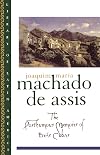
A literary gem!
The book is written, as the author puts it, with a playful pen and melancholy ink. Resplendent with wit and continuously breaks the fourth wall to talk directly with the reader which catches you offguard every single time.
Warning: Don't read in public if you are easily embarrassed by people staring at you as you laugh while you are reading the book.
The book is written, as the author puts it, with a playful pen and melancholy ink. Resplendent with wit and continuously breaks the fourth wall to talk directly with the reader which catches you offguard every single time.
Warning: Don't read in public if you are easily embarrassed by people staring at you as you laugh while you are reading the book.
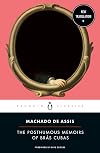
witty, funny, brisk, ingenious, and weirdly relatable. i did not quite like the main character's character. he's self-centered and strikes me as lazy and borderline delusional. but he feels like a very real person living in his times. the social commentaries on slavery and the morality of the privileged were almost subtle, but always striking. i think it deserves a more critical reading than i did.
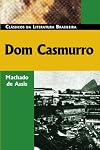
Boy meets girl, boy gets girl, boy proceeds to enact tragicomic variations on Othello.
My family is officially sick of me bursting into a room and saying, "Okay, wait, you've got to hear this bit, no, really, it's brilliant," and then reading chapters from Dom Casmurro. And even now, after I've finished the book, I am hard-pressed to select my favorite part. Is it the chapter where life is a libretto written by God and conducted by Satan? Is it the bit where the hero bemoans the show more inconvenience of a dead boy who blights an otherwise peerless day? Is it when he blithely endorses the benevolent prophecies of the witches from Macbeth? Is it when he sighs over the inability of ignorant people to commit suicide? Is it when he tries to poison his son?
No. No, I think my favorite part comes right after the hero has received an ambiguous signal from his best friend's wife (who is named Sancha). His mind busy cataloging possible interpretations (both innocent and adulterous), he talks to his best friend about swimming in the sea the next day. The best friend invites him to feel his biceps; the hero touches them tenderly: "I felt his arms as if I were feeling those of Sancha." [218] There is so much bundled up in that line -- his arousal, his guilt, and his reassignment of virtues -- but it is so dryly ironic and straight-faced. (People complain about the Helen Caldwell translation, but I found it very precise and cognizant of Machado de Assis' wide-ranging allusions. But then, I have not read the original Portuguese.) show less
My family is officially sick of me bursting into a room and saying, "Okay, wait, you've got to hear this bit, no, really, it's brilliant," and then reading chapters from Dom Casmurro. And even now, after I've finished the book, I am hard-pressed to select my favorite part. Is it the chapter where life is a libretto written by God and conducted by Satan? Is it the bit where the hero bemoans the show more inconvenience of a dead boy who blights an otherwise peerless day? Is it when he blithely endorses the benevolent prophecies of the witches from Macbeth? Is it when he sighs over the inability of ignorant people to commit suicide? Is it when he tries to poison his son?
No. No, I think my favorite part comes right after the hero has received an ambiguous signal from his best friend's wife (who is named Sancha). His mind busy cataloging possible interpretations (both innocent and adulterous), he talks to his best friend about swimming in the sea the next day. The best friend invites him to feel his biceps; the hero touches them tenderly: "I felt his arms as if I were feeling those of Sancha." [218] There is so much bundled up in that line -- his arousal, his guilt, and his reassignment of virtues -- but it is so dryly ironic and straight-faced. (People complain about the Helen Caldwell translation, but I found it very precise and cognizant of Machado de Assis' wide-ranging allusions. But then, I have not read the original Portuguese.) show less
Lists
Awards


You May Also Like


Associated Authors
Statistics
- Works
- 678
- Also by
- 11
- Members
- 12,866
- Popularity
- #1,820
- Rating
- 4.1
- Reviews
- 278
- ISBNs
- 1,300
- Languages
- 24
- Favorited
- 45

