

Clarice Lispector (1920–1977)
Author of The Hour of the Star
About the Author
Clarice Lispector was born in the Ukraine and was taken to Brazil as a young child. She was a law student, editor, translator, and newswriter, who traveled widely, spending eight years in the United States. "Family Ties" (1960) is a collection of short stories revealing Lispector's existentialist show more view of life and demonstrating that even family ties and social relationships are temporary. Although tied to each other and to the outside world, the characters are finally totally alone and separate. Lispector received praise from American critics for "The Apple in the Dark" (1967), a novel about a guilt-ridden man's search for the ultimate knowledge (Eve's apple), which he believes will bring him hope. Lispector's books are being translated into various languages in Europe, especially in France, where the critic Helene Cixous is one of her great admirers and a promoter of her works. (Bowker Author Biography) show less
Image credit: www.releituras.com
Works by Clarice Lispector
Para Gostar de ler Volume 9 Contos 11 copies
El gran mago Sirasfi / The Great Magician Sirasfi: Doce Leyendas Brasilenas (Serie naranja El barco de vapor) (Spanish Edition) (2009) 6 copies
Novelas III. Agua viva - La hora de la estrella - Un soplo de vida (Spanish Edition) (2021) 3 copies
literatura comentada 3 copies
Complete Stories 2 copies
Covert Joy 1 copy
Las palabras y el tiempo 1 copy
Aigua viva 1 copy
Una bestia en el jardín 1 copy
Book 9788845938788 1 copy
água viva 1 copy
Restos del carnaval 1 copy
The Triumph 1 copy
A ILHA MISTERIOSA 1 copy
HISTÓRIAS EXTRAORDINÁRIAS 1 copy
38 Livres 1 copy
El huevo y la gallina 1 copy
Descubrimientos 1 copy
Love 1 copy
A Cabeça Decepada 1 copy
CLARICE LISPECTOR. Textos selecionados estudo histórico-literário, biografia e atividades de compreensao e criacao. (1981) 1 copy
Literatura Comentada 1 copy
Descoberta Do Mundo 1 copy
Knjiga užitaka ili učenja 1 copy
Pasja według G.H. 1 copy
Associated Works
The Story and Its Writer: An Introduction to Short Fiction (1976) — Contributor — 1,214 copies, 3 reviews
You've Got to Read This: Contemporary American Writers Introduce Stories that Held Them in Awe (1994) — Contributor — 413 copies, 3 reviews
A Hammock Beneath the Mangoes: Stories from Latin America (1991) — Contributor — 162 copies, 3 reviews
The House of Memory: Stories by Jewish Women Writers of Latin America (1999) — Contributor — 34 copies
La Otredad: Antología de cuentos latinoamericanos del siglo XX (2015) — Contributor — 3 copies, 1 review
Ein Haus mit vielen Zimmern: Autorinnen erzählen vom Schreiben (edition fünf 27) (German Edition) (2015) — Contributor — 2 copies
Pět brazilských novel — Contributor — 1 copy
Josefina, bedien die Herren : Geschichten von Frauen und Männern aus Lateinamerika — Contributor — 1 copy
Tagged
Common Knowledge
- Other names
- Lispector, Chaya Pinkhasovna (birth)
- Birthdate
- 1920-12-10
- Date of death
- 1977-12-09
- Gender
- female
- Education
- Law School of the University of Brazil
Ginásio Pernambucano, Brazil
Colégio Hebreo-Idisch-Brasileiro, Recife, Brazil - Occupations
- novelist
short story writer
children's book author
teacher
reporter
translator - Awards and honors
- Graça Aranha Prize (1944)
- Relationships
- Lispector, Elisa (sister)
- Short biography
- Clarice Lispector was born Chaya Pinkhasovna Lispector to a Jewish family in western Ukraine. When she was an infant, her family moved to Brazil. While she studied law at the University of Brazil, she began working as a journalist and publishing short stories. Her first novel, Near to the Wild Heart, won the Graça Aranha Prize for the best debut novel of 1943. She married Maury Gurgel Valente, a diplomat in 1943; they had two sons but later divorced, and Clarice returned to Brazil in 1959.
She died of ovarian cancer at age 57. - Cause of death
- ovarian cancer
- Nationality
- Brazil (naturalized 1943)
Ukraine (birth) - Birthplace
- Chechelnyk, Ukraine
- Places of residence
- Chechelnyk, Ukraine
Maceió, Alagoas, Brazil
Recife, Pernambuco, Brazil
Rio de Janeiro, Brazil
Naples, Italy
Bern, Switzerland (show all 8)
Torquay, Devon, England, UK
Washington, D.C., USA - Place of death
- Rio de Janeiro, Brazil
- Burial location
- Jewish Cemetery of Caju, Rio de Janeiro, Brazil
Members
Discussions
Being Clarice Lispector in Le Salon Littéraire du Peuple pour le Peuple (November 2009)
Reviews
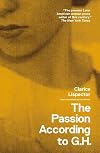
You know, I was a little nervous about returning to Lispector. Reading Agua Viva and Hour of the Star in my early 20s changed my life and I was worried that now 8 years later I'd be less spellbound somehow. Nope. This is one of the best books I've read and the best Lispector I've read yet. I don't want to deliver a review or rather, I don't know that I can. This book even more than her other works is very explicitly a work of theology as much as philosophy. Not just because she uses the word show more God a lot, but because of the way it dives into this hyper-Spinozan universe and then spends its time deconstructing what it means to think of the world as the All, as G-d in an abstract (and, to me, very Jewish) sense. And as it turns out, confronting the All is absolutely horrifying and fundamentally impossible. But the impossibility is the point. show less
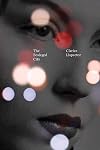
The Publisher Says: Seven decades after its original publication, Clarice Lispector’s third novel—the story of a girl and the city her gaze reveals—is in English at last. Lucrécia Neves is ready to marry. Her suitors—soldierly Felipe, pensive Perseu, dependable Mateus—are attracted to her tawdry not-quite-beauty, which is of a piece with Sao Geraldo, the rough-and-ready township she inhabits. Civilization is on its way to this place, where wild horses still roam.
As Lucrécia is show more tamed by marriage, Sao Geraldo gradually expels its horses; and as the town strives for the highest attainment it can conceive—a viaduct—it takes on the progressively more metropolitan manners that Lucrécia, with her vulgar ambitions, desires too. Yet it is precisely through this woman’s superficiality—her identification with the porcelain knickknacks in her mother’s parlor—that Clarice Lispector creates a profound and enigmatic meditation on “the mystery of the thing.”
Written in Europe shortly after Clarice Lispector’s own marriage, The Besieged City is a proving ground for the intricate language and the radical ideas that characterize one of her century’s greatest writers—and an ironic ode to the magnetism of the material.
I RECEIVED A REVIEW COPY FROM THE PUBLISHER. THANK YOU.
My Review: Lucrécia Neves of São Geraldo belongs to a place as only a woman who exists in Clarice Lispector's bitter, resentful, passionate novels can. Her town exists, barely, as we learn of her early life in it. During the course of her narration, we learn that São Geraldo is a place in the throes of explosive, exponential growth. This novel's bitterness is directed at the sights of Life, of Nature, being subsumed and defiled by Human actions, for Human aesthetics:
The author's organizing principle in this visually driven narrative seems to me to be the manner in which Man, used in the sense of "all humanity" but (*I* think) really aimed at human males, rapes the entire natural universe to get what he needs to be in control. Only then will he be comfortable, on the way to being contented. And I chose that pronoun consciously and exclusively, as I am of the opinion Author Lispector did as well.
It's true that Clarice Lispector, born in Ukraine in 1920 but raised from infancy forward in Recife, Brazil, spoke and thought in a highly gendered language, Portuguese. It's also true that her Jewish family was part of the long patriarchal march of the religion. Clarice was intellectually gifted, gaining admission to the best schools in Pernambuco State, and later into the law school of the national university...I think it's pretty safe to assume she was formatively aware of how little women matter to the men who make the laws and set the course. I see no evidence in anything I've read by or about Author Lispector to suggest she was anything but keenly sensitive to women's absence from the discourses that directly impacted them all her life.
I could be reading into these words what she did not put there herself that "man's way" spoken with an authorial sniff of annoyed disdain. But, reading this least-loved of her novels, I am struck by her absolutely fierce anticipation of the ecofeminist ethos. I can't prove it. I readily admit that her life and its mysteries are outside my knowledge base. But it just *feels* like an angry woman's denunciation of the uncontrolled cancer of unrestrained capitalist "development" destroying the natural world.
I will also note that the critics whose reception of the novel were characterized as "lukewarm" were all males and writing in the 1940s. I suspect they responded to Lucrécia's rejection of two perfectly adequate suitors, Felipe (who disrespected Lucrécia's hometown quite insultingly) and Perseu (whose world was circumscribed by the few words he could be arsed to speak to her), for what felt to a man of the time like frivolous reasons. Mateus, older and "wiser" than Lucrécia, is her eventual ticket to the Big City. Where, mirabile dictu, she discovers that "{e}very man seemed to promise a woman a bigger city," but the promise carries a grim, undiscussed reality with it: She must give up her sense of place and surrender to the city's vast impersonality. It is not in Lucrécia to want this for herself. Her influence with Mateus leads them back to what was São Geraldo...and there to discover that it is not that place, that its development has created a place that is not the one Lucrécia's memories conjure when she thinks of São Geraldo.
A woman of 26, a Brazilian Jew living in Bern, Switzerland, wrote this novel. No, São Geraldo wasn't the Recife of her childhood, nor was the big city exactly Rio de Janeiro where she came of age and married. But she was a person cut off from Home. The nature of Lucrécia's relationship to her world is visually oriented. She speaks of and in images, shapes, sights and vistas; they evoke secondarily and (it feels to me) tangentially emotional responses in her. This makes sense in the context of Author Lispector's dislike for the Swiss countryside...it does, to be honest, live in my memory as shockingly, even surreally, tidy and manicured. Nothing about the place appealed to her, nor if I'm honest did it appeal to me. Visually spectacular, aesthetically wanting.
Is it, then, any wonder that woman Author Lispector looked at the astonishingly male (built, controlled, made to fit a purpose not the spectacular place it's sited within) world of Bern, of Switzerland, and wrote the story of a rather dull, fairly dim girl recording visually, passively, the consequences of male dominion on her world? Even when, after a dull marriage to Mateus palls, she finally falls in love with a man, it's one without a shred of agency to offer her. He is unavailable and uninterested in making himself so.
The world, then, is a place that acts on Lucrécia, a world made by, of, and for men, and she is reduced to eyes without a face recording recording recording the deeds of others, the way they wreak havoc and call it progress:
It's not what you call me, it's what I answer to. Lucrécia, her life a response and a reaction, then becomes only a queen in her imagination. She orders her mental world to suit her vision, her view...circumscribed, as always, be men and their power. show less
As Lucrécia is show more tamed by marriage, Sao Geraldo gradually expels its horses; and as the town strives for the highest attainment it can conceive—a viaduct—it takes on the progressively more metropolitan manners that Lucrécia, with her vulgar ambitions, desires too. Yet it is precisely through this woman’s superficiality—her identification with the porcelain knickknacks in her mother’s parlor—that Clarice Lispector creates a profound and enigmatic meditation on “the mystery of the thing.”
Written in Europe shortly after Clarice Lispector’s own marriage, The Besieged City is a proving ground for the intricate language and the radical ideas that characterize one of her century’s greatest writers—and an ironic ode to the magnetism of the material.
I RECEIVED A REVIEW COPY FROM THE PUBLISHER. THANK YOU.
My Review: Lucrécia Neves of São Geraldo belongs to a place as only a woman who exists in Clarice Lispector's bitter, resentful, passionate novels can. Her town exists, barely, as we learn of her early life in it. During the course of her narration, we learn that São Geraldo is a place in the throes of explosive, exponential growth. This novel's bitterness is directed at the sights of Life, of Nature, being subsumed and defiled by Human actions, for Human aesthetics:
Behold the flower—showing its thick stem, the round corolla: the flower was showing off. But atop the stem it too was untouchable. When it started to wilt, you could look at it directly but by then it would be too late...
The author's organizing principle in this visually driven narrative seems to me to be the manner in which Man, used in the sense of "all humanity" but (*I* think) really aimed at human males, rapes the entire natural universe to get what he needs to be in control. Only then will he be comfortable, on the way to being contented. And I chose that pronoun consciously and exclusively, as I am of the opinion Author Lispector did as well.
It's true that Clarice Lispector, born in Ukraine in 1920 but raised from infancy forward in Recife, Brazil, spoke and thought in a highly gendered language, Portuguese. It's also true that her Jewish family was part of the long patriarchal march of the religion. Clarice was intellectually gifted, gaining admission to the best schools in Pernambuco State, and later into the law school of the national university...I think it's pretty safe to assume she was formatively aware of how little women matter to the men who make the laws and set the course. I see no evidence in anything I've read by or about Author Lispector to suggest she was anything but keenly sensitive to women's absence from the discourses that directly impacted them all her life.
The struggle to reach reality—that’s the main objective of this creature who tries, in every way, to cling to whatever exists by means of a total vision of things. I meant to make clear too the way vision—the way of seeing, the viewpoint—alters reality, constructing it. A house is not only constructed with stones, cement etc. A man’s way of looking constructs it too.
I could be reading into these words what she did not put there herself that "man's way" spoken with an authorial sniff of annoyed disdain. But, reading this least-loved of her novels, I am struck by her absolutely fierce anticipation of the ecofeminist ethos. I can't prove it. I readily admit that her life and its mysteries are outside my knowledge base. But it just *feels* like an angry woman's denunciation of the uncontrolled cancer of unrestrained capitalist "development" destroying the natural world.
I will also note that the critics whose reception of the novel were characterized as "lukewarm" were all males and writing in the 1940s. I suspect they responded to Lucrécia's rejection of two perfectly adequate suitors, Felipe (who disrespected Lucrécia's hometown quite insultingly) and Perseu (whose world was circumscribed by the few words he could be arsed to speak to her), for what felt to a man of the time like frivolous reasons. Mateus, older and "wiser" than Lucrécia, is her eventual ticket to the Big City. Where, mirabile dictu, she discovers that "{e}very man seemed to promise a woman a bigger city," but the promise carries a grim, undiscussed reality with it: She must give up her sense of place and surrender to the city's vast impersonality. It is not in Lucrécia to want this for herself. Her influence with Mateus leads them back to what was São Geraldo...and there to discover that it is not that place, that its development has created a place that is not the one Lucrécia's memories conjure when she thinks of São Geraldo.
A woman of 26, a Brazilian Jew living in Bern, Switzerland, wrote this novel. No, São Geraldo wasn't the Recife of her childhood, nor was the big city exactly Rio de Janeiro where she came of age and married. But she was a person cut off from Home. The nature of Lucrécia's relationship to her world is visually oriented. She speaks of and in images, shapes, sights and vistas; they evoke secondarily and (it feels to me) tangentially emotional responses in her. This makes sense in the context of Author Lispector's dislike for the Swiss countryside...it does, to be honest, live in my memory as shockingly, even surreally, tidy and manicured. Nothing about the place appealed to her, nor if I'm honest did it appeal to me. Visually spectacular, aesthetically wanting.
Is it, then, any wonder that woman Author Lispector looked at the astonishingly male (built, controlled, made to fit a purpose not the spectacular place it's sited within) world of Bern, of Switzerland, and wrote the story of a rather dull, fairly dim girl recording visually, passively, the consequences of male dominion on her world? Even when, after a dull marriage to Mateus palls, she finally falls in love with a man, it's one without a shred of agency to offer her. He is unavailable and uninterested in making himself so.
The world, then, is a place that acts on Lucrécia, a world made by, of, and for men, and she is reduced to eyes without a face recording recording recording the deeds of others, the way they wreak havoc and call it progress:
Upon the rubble horses would reappear announcing the rebirth of the old reality, their backs without riders. Because thus it had always been. Until a few men would tie them to wagons, once again erecting a city that they wouldn't understand, once again building, with innocent skill, the things. And then once more they'd need a pointing finger to give them their old names.
It's not what you call me, it's what I answer to. Lucrécia, her life a response and a reaction, then becomes only a queen in her imagination. She orders her mental world to suit her vision, her view...circumscribed, as always, be men and their power. show less
Wow.
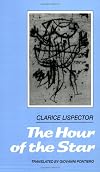
This story is so beautiful and so sad. It's the fundamental tension between futile rage and cold comfort, and the way that push-and-pull wears you out, and the bone weariness and disgust it gives rise to in Lispector's narrator. He is telling the story of Macabea, who is young, and dumb, and ignorant, and rachitic, and . . . happy? Or just completely stunted, unaware of the unbearable fullness of beaing? But no, man, she gets it. She cool. Life is hard, but she has an inner okayness. Why show more does that feel so sad?
Stylistically, this is such a sweet tapestry, in the sense of warp and weft, following out the threads, flush of recognition and surprise when one manifests in a novel fashion (bang). Wow again, and specifically:
Wow, the sudden intermittent inthrust of visual objects in this progression of concepts, the nature of perceiving, and the interrelation between the human self and the vicious, necessary other. Meaning, "A narrative . . . from which blood surging with life might flow only to coagulate into lumps of trembling jelly". Meaning, "grass is so easy and simple". Meaning, "It's as good as saying a healthy dog is worth more".
Wow, the writhing of the narrator faced with the massive greyness underlying the bright Brazilian patina, the refusal of this story to be sublimated or brought to cathartic Aristotelian heel. Meaning, "But why am I bothering about this girl when what I really want is wheat that turns ripe and golden in summer?" Meaning, "How I should like her to open her mouth and say: --I am alone in the world". Meaning, "I could resolve this story by taking the east way out and murdering the infant child, but what I want is something more: I want life.Let my readers take a punch in the stomach to see how they enjoy it. For life is a punch in the stomach."
Wow, unavoidably and dismally, the obscene vividness of the glimpses into Macabea's life, and our inability to believe in her self-sustaining capability, or that she's anything but an accident waiting to happen. Meaning, "the one luxury she permitted herself was a few sips of cold coffee before going to bed. She paid for this luxury by waking up with heartburn." Meaning, "(t)his is like flying in an airplane," just before the shocking unfairness of humiliation and blood. Meaning, "as a little girl, because she had no one to kiss, she used to kiss the wall." I could cry about that last one for the rest of my life if I let myself.
The hot dogs she eats. That fucking Mercedes.
In summation? Wow. show less
This story is so beautiful and so sad. It's the fundamental tension between futile rage and cold comfort, and the way that push-and-pull wears you out, and the bone weariness and disgust it gives rise to in Lispector's narrator. He is telling the story of Macabea, who is young, and dumb, and ignorant, and rachitic, and . . . happy? Or just completely stunted, unaware of the unbearable fullness of beaing? But no, man, she gets it. She cool. Life is hard, but she has an inner okayness. Why show more does that feel so sad?
Stylistically, this is such a sweet tapestry, in the sense of warp and weft, following out the threads, flush of recognition and surprise when one manifests in a novel fashion (bang). Wow again, and specifically:
Wow, the sudden intermittent inthrust of visual objects in this progression of concepts, the nature of perceiving, and the interrelation between the human self and the vicious, necessary other. Meaning, "A narrative . . . from which blood surging with life might flow only to coagulate into lumps of trembling jelly". Meaning, "grass is so easy and simple". Meaning, "It's as good as saying a healthy dog is worth more".
Wow, the writhing of the narrator faced with the massive greyness underlying the bright Brazilian patina, the refusal of this story to be sublimated or brought to cathartic Aristotelian heel. Meaning, "But why am I bothering about this girl when what I really want is wheat that turns ripe and golden in summer?" Meaning, "How I should like her to open her mouth and say: --I am alone in the world". Meaning, "I could resolve this story by taking the east way out and murdering the infant child, but what I want is something more: I want life.Let my readers take a punch in the stomach to see how they enjoy it. For life is a punch in the stomach."
Wow, unavoidably and dismally, the obscene vividness of the glimpses into Macabea's life, and our inability to believe in her self-sustaining capability, or that she's anything but an accident waiting to happen. Meaning, "the one luxury she permitted herself was a few sips of cold coffee before going to bed. She paid for this luxury by waking up with heartburn." Meaning, "(t)his is like flying in an airplane," just before the shocking unfairness of humiliation and blood. Meaning, "as a little girl, because she had no one to kiss, she used to kiss the wall." I could cry about that last one for the rest of my life if I let myself.
The hot dogs she eats. That fucking Mercedes.
In summation? Wow. show less

By publishing het work in the Modern Classics series and putting on a pedestal with Kafka and Joyce, you might think the work of Clarice Lispector belongs to the distant past of the early Twentieth Century, but she is actually fairly contemporaneous. Agua viva was first published in 1973.
It is a wildly poetic work that is throbbing with life. Some readers will consider this type of text poetry. Although the initial images suggest the text consists of a narrative in which a painter is trying show more to express their medium through words, at later stages of the book this transposition of words is also explored through the other senses. The texts is music, the text is fragrance, music is touch (vibration) soaked up the fingers, not the ears.
The fluidic state of the narrator moves on to find identity in nature, man as animal, animal as man, and while the narrator strives for life, the contemplation of death is as much part of the story. Whence is all this energy directed? Up. Freedom. As birth is the wrestling free from the sack of fluid, cutting the umbilical cord, to become free. Freedom, living and love is it. show less
It is a wildly poetic work that is throbbing with life. Some readers will consider this type of text poetry. Although the initial images suggest the text consists of a narrative in which a painter is trying show more to express their medium through words, at later stages of the book this transposition of words is also explored through the other senses. The texts is music, the text is fragrance, music is touch (vibration) soaked up the fingers, not the ears.
The fluidic state of the narrator moves on to find identity in nature, man as animal, animal as man, and while the narrator strives for life, the contemplation of death is as much part of the story. Whence is all this energy directed? Up. Freedom. As birth is the wrestling free from the sack of fluid, cutting the umbilical cord, to become free. Freedom, living and love is it. show less
Lists
Reading LIst (6)
Stuff from Bard (1)
2023 (1)
Books for Birute (1)
Cult Classics (1)
To borrow next (1)
psychological (1)
Schwob Nederland (2)
2024 (1)
current (1)
1940s (1)
Overdue Podcast (1)
Awards


You May Also Like


Associated Authors
Statistics
- Works
- 150
- Also by
- 29
- Members
- 12,805
- Popularity
- #1,831
- Rating
- 3.9
- Reviews
- 281
- ISBNs
- 615
- Languages
- 22
- Favorited
- 69


