
Michael Degen (1) (1932–2022)
Author of Nicht alle waren Mörder: Eine Kindheit in Berlin
For other authors named Michael Degen, see the disambiguation page.
Works by Michael Degen
Associated Works
Tagged
Common Knowledge
- Legal name
- Degen, Max-Michael
- Other names
- Degen, Michael
- Birthdate
- 1932-01-31
- Date of death
- 2022-04-09
- Gender
- male
- Occupations
- actor
novelist
autobiographer
Holocaust survivor - Short biography
- Michael Degen was born to a Jewish family in Chemnitz, Germany. After his brother fled the country and his father was deported by the Nazis to the concentration camp at Sachsenhausen, where he died shortly after World War II, Michael and his mother survived, hidden by friends in Berlin.
He attended drama school and made his stage debut in 1946 at the Deutsches Theater in Berlin. Following a two-year stay in Israel, Degen returned to Germany to work with the Berliner Ensemble. Over the following decades, he worked with some of the most important stage directors, including Bertolt Brecht, and began directing himself in the late 1960s. He has appeared in more than 100 films.
Degen has been married three times and has four children. In 1999, he published a critically acclaimed autobiography, Nicht alle waren Mörder: Eine Kindheit in Berlin (Not Everyone Was a Murderer: A Childhood in Berlin), which was adapted in 2006 as a film for television. A second volume, Mein heiliges Land: Auf der Suche nach meinem verlorenen Bruder (My Holy Land: In Search of My Lost Brother) was published in 2007. He is also the author of a novel called Blondi (2002), in which he described the atrocities of the Nazi era from the perspective of Hitler's dog. - Nationality
- Germany
Israel - Birthplace
- Chemnitz, Germany
- Places of residence
- Berlin, Germany
- Place of death
- Hamburg, Hamburg, Deutschland
- Associated Place (for map)
- Germany
Members
Reviews
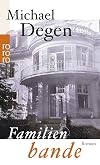
The youngest Mann: Actor Michael Degen takes known facts about the Thomas Mann family and weaves them into a moving and insightful novel, told in the third person but clearly from the perspective of the youngest child Michael Mann. The cover illustration shows "Poschi," the gorgeously gracious, much loved home of the Thomas Mann family on Poschinger Street in Munich before World War II. Thomas Mann would write, creating his brilliant novels and stories, in the mornings, then take an show more afternoon nap with his devoted wife Katia in lounge chairs on the curved veranda. He -- famously talented, she -- wealthy and cultured. Their closest friends are from the cultural elite, including musical geniuses such as Bruno Walter. They have six gifted children: Erika, Golo, Elisabeth, Klaus, Monika and the youngest Michael. The youngest was born in the disastrous year 1919, when Germany's defeat destroyed the infrastructure of the country and even the wealthy faced food shortages and hardships. And Michael embodied disaster. From early infancy he was given to fits and tantrums that disrupted the picture perfect family life. Thomas Mann who needs peace and calm to write, develops an intense disgust at the very sight of his youngest, and Katia, ever loyal to her genius husband, has mixed feelings about the boy as well. But they care for him. Thomas Mann gives his own abandoned violin to the boy, who clearly loves music, but the boy just has one problem at school after another. Exile during the Nazi period, and leaving Poschi behind for Switzerland, intensifies the built-in anguish in the family, and Michael leaves home early to escape. In the middle of all these family dynamics, there is a brief mention of Thomas Mann's anxiety about retrieving his diaries from Poschi after they have fled. He cannot rest until the diaries are safely with him again. (A detail that plays out tragically at the end...) Michael develops as a highly intelligent, musically talented son, who studies his father's novels and then endures huge psychological pain when he finds his own behavior in one of his father's characters, "the biter." Michael spends many hours practicing the violin, and then slugs his music teacher in a fit of anger. The embarrassment all around is beyond grief. Michael enters a happier phase of life with a Swiss girl, Gret, who becomes a wonderful wife to him and loving mother to their two beautiful sons, Frido and Toni, whom Thomas Mann and Katia fall in love with, dote on endlessly. They establish a good life in Monterey, Michael is a success with the San Francisco Symphony. Thomas Mann consults with Michael on the history of 12 tone music, and incorporates this information in his latest novel Dr. Faustus, this makes Michael happy. He still has fits of anger, intensified by alcohol and drug abuse. At one point he slugs Gret. Then later on a successful concert tour he slugs Yahltah Menuhin, his accompanist and briefly his lover. This will not end well. Frido perfers living with his grandparents. Michael gives up music. He almost lands on his feet again: he goes to Harvard for a PhD in German studies and gets a professorship in German at Berkeley. He is asked to edit his father's diaries, which have all the details of his childhood that he knew but is forced to confront anew on the page in his father's handwriting. All this is factual. In the end Michael inevitably succumbs to depression to the drugs and alcohol. Too short a life, but what a life it was. In all of this detail, no word about what the average reader must be thinking: all these symptoms seem to indicate some kind of early childhood brain damage, such as lead paint poisoning or trauma of some kind. But not a word of what caused his inability to exercise self control. You just see the pain from the family's perspective. Still, a meaningful life, deserving a full biographical treatment such as this. The novel is a beautiful human document. (NB There is a sly reference on page 135 to a character in Thomas Mann's Buddenbrooks, the oleaginous Herr Gruenlich, which is the character that Degen played for a German TV serial based on the novel. The book probably has other hidden clues that I missed....) show less
Eigentlich ist es kaum zu glauben, wie viele Bücher über die Familie Mann existieren. In diesem hier geht es um Michael Mann, den jüngsten und ungeliebten Sohn. Mit großer Sympathie für seine Figuren und ausgezeichnet recherchiert stellt der Autor diesen Lebenslauf dar. Michael Mann war ja ein begnadeter Musiker, der trotz oder wegen seines Talents immer wieder an Grenzen seiner Belastbarkeit kam. Bereits mit 19 Jahren heiratete er seine Jugendfreundin, mit der etwas Ruhe einkehrte in show more seine unruhige Psyche. Zudem wurden sie die Eltern von Thomas Manns Lieblingsenkel Frido. Sein Leben lang um die Anerkennung seines Vaters ringend ist er wohl über der Edition der Tagebücher, die er als Germanist vornehmen wollte, verzweifelt. show less
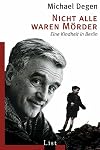
Das ist ein tolles Buch. Es beeindruckt mich sehr, wie genau und unaufgeregt Michael Degen seine Kindheit beschreibt. Seine Mutter muss ja eine Wahnsinns-Frau gewesen sein. Ich habe das Buch in einem Zug an einem Tag verschlungen.
Und es bleiben viele Gedanken zurück.
Und es bleiben viele Gedanken zurück.
Feb 4, 2010German
Es gibt sicher kaum eine Familie in Deutschland, über deren Mitglieder so viele Biografien geschrieben wurden, wie die Familie des Schriftstellers Thomas Mann. Wenig beachtet wurde bisher das jüngste der Kinder von Katja und Thomas Mann, Michael (1918–1977) . Der Schauspieler und Erzähler Michael Degen, der in einer Verfilmung der „Buddenbrooks“ den Bendix Grünlich spielte, hat jetzt mit „Familienbande“ einen Roman über den exzentrischen wie hochbegabten Michael Mann show more geschrieben, über seine Kindheit im lieblosen Elternhaus, im kalten Zauber des Großschriftstellers, die Jugendjahre im Schweizer Exil, seine internationale Karriere als Bratschist. Dann ein plötzlicher Bruch – Michael Mann wird Professor für Germanistik in Berkeley und widmet sich bald dem Werk seines Vaters, um dessen Zuneigung er stets vergeblich gebuhlt hatte. Mit nur siebenundfünfzig Jahren stirbt er an einer fatalen Mischung von Alkohol und Schlafmitteln. show less
You May Also Like
Associated Authors
Statistics
- Works
- 6
- Also by
- 12
- Members
- 108
- Popularity
- #179,296
- Rating
- 3.8
- Reviews
- 5
- ISBNs
- 25
- Languages
- 2