
Matt Fitzgerald (1)
Author of Racing Weight: How to Get Lean for Peak Performance (The Racing Weight Series)
For other authors named Matt Fitzgerald, see the disambiguation page.
About the Author
Matt Fitzgerald is an endurance sports coach, nutritionist, and author. His many best-selling books include 80/20 Running, Life Is a Marathon, and How Bad Do You Want It? A former editor of Triathlete magazine, Matt cofounded 80/20 Endurance, an online training resource for endurance athletes.
Works by Matt Fitzgerald
Racing Weight: How to Get Lean for Peak Performance (The Racing Weight Series) (2009) 183 copies, 6 reviews
Brain Training for Runners: A Revolutionary New Training System to Improve Endurance, Speed, Health, and Res ults (2007) 108 copies, 3 reviews
Diet Cults: The Surprising Fallacy at the Core of Nutrition Fads and a Guide to Healthy Eating for the Rest of US (2014) 77 copies, 5 reviews
Runner's World Performance Nutrition for Runners: How to Fuel Your Body for Stronger Workouts, Faster Recovery, and Your Best Race Times Ever (2005) 67 copies
Triathlete Magazine's Complete Triathlon Book: The Training, Diet, Health, Equipment, and Safety Tips You Need to Do Your Best (2003) 54 copies
The New Rules of Marathon and Half-Marathon Nutrition: A Cutting-Edge Plan to Fuel Your Body Beyond "the Wall" (2013) 37 copies, 2 reviews
Racing Weight Cookbook: Lean, Light Recipes for Athletes (Racing Weight Series) (2014) 36 copies, 1 review
The Endurance Diet: Discover the 5 Core Habits of the World’s Greatest Athletes to Look, Feel, and Perform Better (2016) 36 copies, 1 review
80/20 Triathlon: Discover the Breakthrough Elite-Training Formula for Ultimate Fitness and Performance at All Levels (2018) 30 copies, 2 reviews
Triathlete Magazine's Essential Week-by-Week Training Guide: Plans, Scheduling Tips, and Workout Goals for Triathletes of All Levels (2006) 24 copies
Tagged
Common Knowledge
- Birthdate
- 20th Century
- Gender
- male
- Short biography
- Author of books on running.
- Nationality
- USA
- Associated Place (for map)
- USA
Members
Reviews
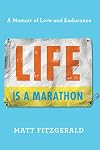
The author displays some terrible and dangerous attitudes towards running, and life in general. Perennially fixated on attaining this goal or the other, he's never able to simply enjoy himself or his relationships. It's always a competition, whether to beat the runner in front of him, or his own PR, or even some arbitrary target. When a race isn't going his way, he rage quits midway rather than sticking it out, opting for a DNF (did not finish) or even a DNS (did not start) once it became show more clear that he would not hit his goal pace. The inability to simply relax and enjoy the experience is really sad.
Even on the last page, as he ruminates on how much he's learned and grown, he forces himself to run around the block an extra time, because he set out on a 2 hour run and it was only 1 hr and 57 minutes when he got back to the door. This drive to win at any cost ends up costing him dearly, with chronic injuries, crippling anxiety and self-doubt, and unhealthy addictions. Which would all be fine if framed as a cautionary tale, but no, he's quite proud of himself and brags about his accomplishments. He even manages to make his wife's debilitating struggle with mental illness all about himself, and how inconvenient it was for his training, painting himself as the long-suffering martyr as he drags her through the mud. What a narcissistic jerk.
-1 star for non-ironically referring to NYC as "the big apple" and similarly cheesy writing throughout. show less
Even on the last page, as he ruminates on how much he's learned and grown, he forces himself to run around the block an extra time, because he set out on a 2 hour run and it was only 1 hr and 57 minutes when he got back to the door. This drive to win at any cost ends up costing him dearly, with chronic injuries, crippling anxiety and self-doubt, and unhealthy addictions. Which would all be fine if framed as a cautionary tale, but no, he's quite proud of himself and brags about his accomplishments. He even manages to make his wife's debilitating struggle with mental illness all about himself, and how inconvenient it was for his training, painting himself as the long-suffering martyr as he drags her through the mud. What a narcissistic jerk.
-1 star for non-ironically referring to NYC as "the big apple" and similarly cheesy writing throughout. show less
Diet Cults: The Surprising Fallacy at the Core of Nutrition Fads and a Guide to Healthy Eating for the Rest of Us by Matt Fitzgerald

This book is truly awful. While it has an honorable intention, to discredit many of the bogus fad diets that appear and disappear with astonishing regularity in the media, it utterly fails in its execution. The author relies on anecdotes, faulty science (correlation does not equal causation, which he states, but then goes on to imply that correlation does equal causation several times in this book) and dubious sources (including an "according to wikipedia" mention that made my jaw drop).
Diet show more Cults is also not terribly cohesive or well-written. The author starts off debunking individual diets (paleo, raw vegan, etc), goes on a completely different track for awhile discussing his love of wine, coffee and chocolate (after having discredited "superfoods" a mere few pages earlier), and then goes back to discussing diet fads, supplementation, and then his remedy: "agnostic healthy eating." I can save you a hundred plus pages of discomfort by telling you what that boils down to: eat what you like, and it helps if you eat foods that have been scientifically shown to be healthy.
The author also, lamentably, falls into the trap of exclaiming that body size is wholly dependent on motivation, willpower, exercise, and eating less. Even though he mentions at many times in the book that body size isn't necessarily correlated to health or happiness, and that body size can be determined by many things that aren't food and exercise, he assumes that just because he ate less and exercised more, that everybody can and it will lead to permanent weight loss and happiness for everyone. Which science has discredited, but considering that the author considers wikipedia and anecdotal evidence to be science, I'm not surprised he missed that conclusion.
In sum, I wouldn't recommend this book to anybody, unless you want a hundred or so pages of hate-reading that leaves you scratching your head at the end. show less
Diet show more Cults is also not terribly cohesive or well-written. The author starts off debunking individual diets (paleo, raw vegan, etc), goes on a completely different track for awhile discussing his love of wine, coffee and chocolate (after having discredited "superfoods" a mere few pages earlier), and then goes back to discussing diet fads, supplementation, and then his remedy: "agnostic healthy eating." I can save you a hundred plus pages of discomfort by telling you what that boils down to: eat what you like, and it helps if you eat foods that have been scientifically shown to be healthy.
The author also, lamentably, falls into the trap of exclaiming that body size is wholly dependent on motivation, willpower, exercise, and eating less. Even though he mentions at many times in the book that body size isn't necessarily correlated to health or happiness, and that body size can be determined by many things that aren't food and exercise, he assumes that just because he ate less and exercised more, that everybody can and it will lead to permanent weight loss and happiness for everyone. Which science has discredited, but considering that the author considers wikipedia and anecdotal evidence to be science, I'm not surprised he missed that conclusion.
In sum, I wouldn't recommend this book to anybody, unless you want a hundred or so pages of hate-reading that leaves you scratching your head at the end. show less
Diet Cults: The Surprising Fallacy at the Core of Nutrition Fads and a Guide to Healthy Eating for the Rest of US by Matt Fitzgerald
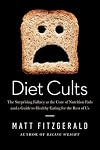
Sometimes I get on runs of books that just fail to thrill me. I like Matt Fitzgerald's points: humans evolved over millennia to eat basically all food and all fad diets are dumb. This is also a pretty obvious point to anyone who's spent any time thinking about food or metabolism and since I'm a professional metabolist...
I was hoping either for scientific rigor or bystander fascination (e.g. a review of the craziest fad diets of all time.) Instead I got a lot of common sense: people are show more healthy eating a wide-range of foods in moderation and there's no magic diet mostly stated without citations.
I will say, though, I was grateful to the chapter dedicated to the overhydration cult and the dangers of free water intoxication as that's my personal pet peeve.
Unclear who his target audience is: most people who already think about these things already know what he's saying to be true OR have their heads buried in the sand of their favorite fad diet. show less
I was hoping either for scientific rigor or bystander fascination (e.g. a review of the craziest fad diets of all time.) Instead I got a lot of common sense: people are show more healthy eating a wide-range of foods in moderation and there's no magic diet mostly stated without citations.
I will say, though, I was grateful to the chapter dedicated to the overhydration cult and the dangers of free water intoxication as that's my personal pet peeve.
Unclear who his target audience is: most people who already think about these things already know what he's saying to be true OR have their heads buried in the sand of their favorite fad diet. show less
Diet Cults: The Surprising Fallacy at the Core of Nutrition Fads and a Guide to Healthy Eating for the Rest of US by Matt Fitzgerald
I’ve written on a few different health books during the Cannonball Read, and most of them are focused on what Matt Fitzgerald would call “Diet Cults.” It sounds more insulting than I think it actually is; the premise of the books is that many folks latch onto a way of eating that doesn’t just work for them, but that they insist is the only healthy way to eat. Think Paleo, or vegetarian, or Atkins. I know I’ve fallen into more than one of these ways of thinking (see: my Whole 30 show more book review).
Mr. Fitzgerald looks at many of these ideas about ways we must eat to be healthy and breaks them down not so much to disprove them as working for some people, but to disprove that they are the best way to eat for everyone. He doesn’t argue that these diets don’t work for some of their adherents; he just points out that for pretty much all of them, there is no science to support them as healthy for all people. Gluten isn’t likely to harm you unless you’re celiac; you can eat dairy and quality meat and not be a walking heart attack.
I think my favorite chapter was the one he used to illustrate that even sugar – something nearly everyone vilifies – has its place in some diets. Endurance athletes, for example, do benefit from the sugar added to sports drinks. They aren’t right for folks as an everyday beverage while sitting and reading a book, but they can be quick healthful for someone in the middle of a marathon.
The very last chapter gets at what he calls “Agnostic Healthy Eating.” His point is that you can make up whatever diet you want, but that there are things to keep in mind. His suggestions:
- Fruits and Vegetables (including beans) are essential, so eat the most of these
- Nuts/Seeds/Healthy Oils, High Quality Meats and Seafood, Whole Grains, and Dairy are recommended, so eat the next most of these
- Refined Grains, Low Quality Meats and Seafood, Sweets and Fried Foods are acceptable, but eat the least of these
It’s not rocket science, and Mr. Fitzgerald freely admits that it’s pretty similar to the ‘My Plate’ concept. But I found it pretty interesting. And hopefully it’s another motivation for me to do what I already know I should: eat more vegetables and fewer sweets. show less
Mr. Fitzgerald looks at many of these ideas about ways we must eat to be healthy and breaks them down not so much to disprove them as working for some people, but to disprove that they are the best way to eat for everyone. He doesn’t argue that these diets don’t work for some of their adherents; he just points out that for pretty much all of them, there is no science to support them as healthy for all people. Gluten isn’t likely to harm you unless you’re celiac; you can eat dairy and quality meat and not be a walking heart attack.
I think my favorite chapter was the one he used to illustrate that even sugar – something nearly everyone vilifies – has its place in some diets. Endurance athletes, for example, do benefit from the sugar added to sports drinks. They aren’t right for folks as an everyday beverage while sitting and reading a book, but they can be quick healthful for someone in the middle of a marathon.
The very last chapter gets at what he calls “Agnostic Healthy Eating.” His point is that you can make up whatever diet you want, but that there are things to keep in mind. His suggestions:
- Fruits and Vegetables (including beans) are essential, so eat the most of these
- Nuts/Seeds/Healthy Oils, High Quality Meats and Seafood, Whole Grains, and Dairy are recommended, so eat the next most of these
- Refined Grains, Low Quality Meats and Seafood, Sweets and Fried Foods are acceptable, but eat the least of these
It’s not rocket science, and Mr. Fitzgerald freely admits that it’s pretty similar to the ‘My Plate’ concept. But I found it pretty interesting. And hopefully it’s another motivation for me to do what I already know I should: eat more vegetables and fewer sweets. show less
Lists
Da Capo Press (1)
Awards

You May Also Like


Statistics
- Works
- 20
- Members
- 1,091
- Popularity
- #23,545
- Rating
- 3.8
- Reviews
- 29
- ISBNs
- 100
- Languages
- 5
- Favorited
- 1