
E. W. Bullinger (1837–1913)
Author of Figures of Speech Used in the Bible: Explained and Illustrated
About the Author
E. W. Bullinger (1837-1913) was an Anglican clergyman, secretary of the Trinitarian Bible Society, and editor of the monthly journal Things to Come. He wrote ten books, including A Critical Lexicon and Concordance to the English and Greek New Testament, and numerous booklets. Bullinger's Selected show more Writings were published in 1960. show less
Works by E. W. Bullinger
Number in Scripture: Its Supernatural Design and Spiritual Significance (1967) 382 copies, 5 reviews
A Critical Lexicon and Concordance to the English and Greek New Testament (1971) 128 copies, 2 reviews
How to Enjoy the Bible: A Guide to Better Understanding and Enjoyment of God's Word (1980) 76 copies, 2 reviews
Selected writings 6 copies
Bullinger's Figures of Speech: Dataset Documentation — Author — 3 copies
The Fallacies of Evolution 1 copy
The Sons of God 1 copy
Sunday-School Lessons 1 copy
Things to Come: A Journal of Biblical Literature - Complete 21 Volume Set (with Index) (2017) 1 copy
The gospel of the kingdom: As set forth in the parables of the sower, the dinner, and the great supper (1905) 1 copy
God heeft gesproken...! 1 copy
Selected Writings, 1 copy
Tagged
Common Knowledge
- Legal name
- Bullinger, Ethelbert William
- Birthdate
- 1837-12-15
- Date of death
- 1913-06-06
- Gender
- male
- Short biography
- Ethelbert William Bullinger DD United Kingdom 1837-1913. Born in Canterbury, he was an Anglican clergyman, Biblical scholar, and ultradispensationalist theologian and writer. Educated at King's College, London, he became a good organist, singer, and composer. He married Emma Dobson, 13 years his senior, and they had two sons. In 1861 he began as Associate Curate to the parish of St. Mary Magdelene, Bermondsey, and was ordained as priest in the Church of England in 1862. He served as parish curate in Tittleshall until 1866, then Notting Hill until 1869, them Leytonstone to 1870, and finally Walthamstow, until becoming Vicar of the new parish of St. Stephen's in 1874. He resigned his vicarage in 1888. In 1867 he was clerical secretary of the Trinitarian Bible Society, which he held (except for illnesses) until his death. The Society completed and published a Hebrew version of the New Testament, the Tanakh (introduction to the Hebrew Bible), formation of the Brittany evangelical Mission Society under Pasteur LeCoat and translation of the Bible into Breton, also producing the first ever Protestant Portuguese reference Bible. It also distributed Spanish Bibles in Spain after the 1868 Spanish Revolution. Bullinger, a practiced musician, collected and harmonized untranscribed hymns on his visits to Tremel, Brittany. He wrote many articles, edited a monthly journal “Things to come”. He wrote 4 Biblical works (16 works). -- John Perry
Works he was known for, "A Critical Lexicon and Concordance to the English and Greek New Testament" (1877), "Figures of Speech Used in the Bible" (1898), and primary editor of "The Companion Bible" (completed after his death by his associates). - Birthplace
- Fordwich, City of Canterbury, Kent, England
- Place of death
- London, City of London, Greater London, England
- Burial location
- Hampstead Cemetery, Hampstead, London Borough of Camden, Greater London, England
- Associated Place (for map)
- Greater London, England
Members
Reviews

Have you noticed how often the English language uses figures of speech?
Imagine someone coming home from work saying, “Honey I’m home. I sure hope you don’t want to paint the town tonight because I am one whipped pup. I just want to stay around the crib this evening. I’m so hungry I could eat a horse and my feet are killing me. I want to down some groceries and hit the hay. No sheep counting for me tonight. I bet I’ll be asleep before my head hits the pillow. I’m going to sleep show more like a baby. Before I ‘catch some Z’s’ though, I’m going to see what’s on the tube, do a little web surfing and catch up on some email.”
Would you have any trouble understanding the meaning of the conversation? Not at all. Consider, however, someone from a different culture or time period hearing these words. I’m sure there would be no small confusion.
“Why would anyone want to paint a whole town? How can feet murder someone? Does an adult really sleep in a crib? What’s this sport web surfing? Either you have big spider webs or very small people.”
We would definitely have to translate the figures of speech for our confused visitor.
“Figures of speech” or idioms suspend the normal meaning of words to convey an emphasized message that is easily understood by people in a particular culture.
The Biblical languages of Hebrew and Greek use figures of speech just like English does. The problem is, we’re thousands of years and miles removed from the Biblical culture. We don’t always quickly identify a figure of speech. Are we really supposed to hate our parents (Luke 14:26)? Was Jesus being rude to His mother (John 2:4)? Does a camel really go through the eye of a needle (Matthew 19:24)?
We need help recognizing ancient Middle Eastern figures of speech. Bullinger’s classic Figures of Speech Used in the Bible is just that help. He describes hundreds of different types of figures of speech and then presents numerous Biblical examples of each. show less
Imagine someone coming home from work saying, “Honey I’m home. I sure hope you don’t want to paint the town tonight because I am one whipped pup. I just want to stay around the crib this evening. I’m so hungry I could eat a horse and my feet are killing me. I want to down some groceries and hit the hay. No sheep counting for me tonight. I bet I’ll be asleep before my head hits the pillow. I’m going to sleep show more like a baby. Before I ‘catch some Z’s’ though, I’m going to see what’s on the tube, do a little web surfing and catch up on some email.”
Would you have any trouble understanding the meaning of the conversation? Not at all. Consider, however, someone from a different culture or time period hearing these words. I’m sure there would be no small confusion.
“Why would anyone want to paint a whole town? How can feet murder someone? Does an adult really sleep in a crib? What’s this sport web surfing? Either you have big spider webs or very small people.”
We would definitely have to translate the figures of speech for our confused visitor.
“Figures of speech” or idioms suspend the normal meaning of words to convey an emphasized message that is easily understood by people in a particular culture.
The Biblical languages of Hebrew and Greek use figures of speech just like English does. The problem is, we’re thousands of years and miles removed from the Biblical culture. We don’t always quickly identify a figure of speech. Are we really supposed to hate our parents (Luke 14:26)? Was Jesus being rude to His mother (John 2:4)? Does a camel really go through the eye of a needle (Matthew 19:24)?
We need help recognizing ancient Middle Eastern figures of speech. Bullinger’s classic Figures of Speech Used in the Bible is just that help. He describes hundreds of different types of figures of speech and then presents numerous Biblical examples of each. show less

Originally written in 1898, this book is a treasure. Bullinger organized his book by rhetorical device (215 of them), giving examples of Scripture for each. His explanations are clear and thorough, with an understanding of the figure in the original language, but primarily using the English translation to illustrate the particular device. He notes when the translation obscures the rhetoric, or when translators disagree about the rhetoric, resulting in substantial differences in translation.
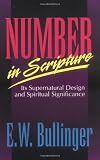
Extraordinary work has been done by Bullinger in this edition of Number in Scripture. First published in 1894 this book gives inside details about numbers and their meanings in Scripture. He works through from 1 - 11 then odd numbers, omitting 12,15,16 in particular. He also covers chemistry and music and analyses it using Hebrew language. This is such an excellent resource that we used this since 1983 when we first became born again Christians. This book tells so much about the Scriptures show more and how everything has a infinite number designated.
He covers prophecy and even the number 6 has a few pages of interesting dialogue. I would recommend every student of the universe get this book and study at least some of it, to gain an insight into God's amazing intervention and fingerprints in the Bible. show less
He covers prophecy and even the number 6 has a few pages of interesting dialogue. I would recommend every student of the universe get this book and study at least some of it, to gain an insight into God's amazing intervention and fingerprints in the Bible. show less
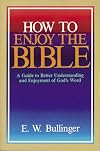
This book establishes the integrity and trustworthiness of Scripture based on its own internal evidence. All believers will be encouraged by discovering how to read, study, and enjoy the sacred contents of the Bible. E. W. Bullinge
You May Also Like


Statistics
- Works
- 56
- Members
- 2,227
- Popularity
- #11,508
- Rating
- 4.0
- Reviews
- 21
- ISBNs
- 151
- Languages
- 3
- Favorited
- 2
