

J.P. Riley
Author of Napoleon and the World War of 1813: Lessons in Coalition Warfighting
Works by J.P. Riley
Tagged
Common Knowledge
There is no Common Knowledge data for this author yet. You can help.
Members
Reviews
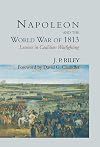
Before the book itself can be discussed, its publisher Routledge should be flogged. The hardback issue carries a sticker price of 168 USD which is not justified by either the printing or editing quality. The book features hand-drawn maps based on 1990s computer print-outs. If this book had been produced for the exact library market, a serious publisher would have exchanged these maps for professionally produced ones. The only service Routledge seems to provide is limiting public access to show more this publication which merits a wider audience.
J.P Riley, a Brigadier in the British Army, presents the wars in 1813 from a big picture perspective. The addition of the North American side-show to present a world at war seems a bit forced. The blundering and amateurish actions in the American wilderness did not cause much concern in Europe's capitals. More pertinent is Riley's connection of the Spanish, Mediterranean and Central European theaters. Wellington's victories were based in a large part on Napoleon's repeated withdrawal of experienced units from the secondary Spanish theater.
Napoleon's big failure was in not seeking a peace treaty with the allies. Fighting for the possession of Germany doomed his throne. Apart from a miracle on the battlefield which knocked out at least Russia and one other major player, Napoleon stood no chance of winning the campaign. 1813 also showed that Napoleon's unwillingness to accept independent thinkers as marshals doomed his strategic options as any attempt at delegation failed due to the marshals' incompetence at independent action.
On the Allied side, it is Bernadotte who is shown in a bad light. He kept his Swedish army out of most fights, having only eyes for his Norwegian conquest (which he achieved). At least in the early part of the campaign, I think it is wrong to blame him for hanging back. I interpret his movements as a clear signal to Napoleon that Berlin would not be defended to the utmost, thus increasing the Allied options greatly. Instead of maneuvering in the nowhere land, Napoleon should have tested this assumption with his whole army. Conquering Berlin would not have knocked out the Russians but it might have dampened the will of the Prussians. Given that the Austrians were always willing to negotiate, the capture of Berlin might have given Napoleon the option of a highly favorable peace treaty.
Highly recommended for its strategic approach. show less
J.P Riley, a Brigadier in the British Army, presents the wars in 1813 from a big picture perspective. The addition of the North American side-show to present a world at war seems a bit forced. The blundering and amateurish actions in the American wilderness did not cause much concern in Europe's capitals. More pertinent is Riley's connection of the Spanish, Mediterranean and Central European theaters. Wellington's victories were based in a large part on Napoleon's repeated withdrawal of experienced units from the secondary Spanish theater.
Napoleon's big failure was in not seeking a peace treaty with the allies. Fighting for the possession of Germany doomed his throne. Apart from a miracle on the battlefield which knocked out at least Russia and one other major player, Napoleon stood no chance of winning the campaign. 1813 also showed that Napoleon's unwillingness to accept independent thinkers as marshals doomed his strategic options as any attempt at delegation failed due to the marshals' incompetence at independent action.
On the Allied side, it is Bernadotte who is shown in a bad light. He kept his Swedish army out of most fights, having only eyes for his Norwegian conquest (which he achieved). At least in the early part of the campaign, I think it is wrong to blame him for hanging back. I interpret his movements as a clear signal to Napoleon that Berlin would not be defended to the utmost, thus increasing the Allied options greatly. Instead of maneuvering in the nowhere land, Napoleon should have tested this assumption with his whole army. Conquering Berlin would not have knocked out the Russians but it might have dampened the will of the Prussians. Given that the Austrians were always willing to negotiate, the capture of Berlin might have given Napoleon the option of a highly favorable peace treaty.
Highly recommended for its strategic approach. show less
Statistics
- Works
- 12
- Members
- 67
- Popularity
- #256,178
- Rating
- 4.4
- Reviews
- 1
- ISBNs
- 23