
Pamela Cox (1)
Author of The Third Form at St. Clare's
For other authors named Pamela Cox, see the disambiguation page.
About the Author
Image credit: Pamela Cox [credit: bookandborrow.com]
Series
Works by Pamela Cox
Tagged
Common Knowledge
- Canonical name
- Cox, Pamela
- Gender
- female
- Occupations
- children's book author
- Nationality
- UK
- Associated Place (for map)
- UK
Members
Reviews
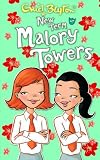
This is the first of the Malory Towers continuation novels written by Pamela Cox. My expectations were not high, and I was very pleasantly surprised. This book was much better than I had expected. This one at least can be placed beside the ones written by Enid Blyton without any shame.
Pamela Cox does a very solid effort to imitate Blyton's style, without it being exactly the same. That "almost but not quite" sensation is noticeable at the beginning, but it soon vanishes as one reads. It show more helps that Cox is writing about a different set of characters. That way the small difference in feel is less grating, since it makes sense that for a different group of schoolgirls the voice may be slightly different.
Perhaps Cox does not have the same effortless and engaging storytelling as Blyton did, but her style is also engaging, and it feels like a Malory Towers story. She is clearly very familiar with the series, and adds to it respectfully. The tricks, the classes, the conflicts between the characters, the insights they gain, it's all there. Perhaps one could say that she relies a lot on Blyton's work, making it less original, but I think this is what one expects of continuation novels like this. One wants to recapture the originals, not to read something rather different.
There's even one important area where Cox actually improves on her predecessor: she is less heavy-handed with the moralism, and that allows her to have characters who feel less one-dimensional. There is more nuance and less typecasting. In Blyton's Malory Towers books, the "bad" girls often found redemption, but it worked like this: they were awful, and at the end, after something bad happened to them, they had a change of heart, learned from their errors and reformed. With Cox, the antagonists do not act so awful to begin with. Sure, they are flawed, sometimes seriously so, but those flaws are also balanced with some good qualities. They not so much reform as learn to handle their flaws better. It makes for more interesting, well-rounded characters. Even the heroes do wrong things and learn.
I enjoyed many things about this. While not exactly the same as Blyton, because that's impossible, it's a very close imitation, and I'm now looking forward to reading the rest of Pamela Cox additions to the series, now with confidence that they are worthy. show less
Pamela Cox does a very solid effort to imitate Blyton's style, without it being exactly the same. That "almost but not quite" sensation is noticeable at the beginning, but it soon vanishes as one reads. It show more helps that Cox is writing about a different set of characters. That way the small difference in feel is less grating, since it makes sense that for a different group of schoolgirls the voice may be slightly different.
Perhaps Cox does not have the same effortless and engaging storytelling as Blyton did, but her style is also engaging, and it feels like a Malory Towers story. She is clearly very familiar with the series, and adds to it respectfully. The tricks, the classes, the conflicts between the characters, the insights they gain, it's all there. Perhaps one could say that she relies a lot on Blyton's work, making it less original, but I think this is what one expects of continuation novels like this. One wants to recapture the originals, not to read something rather different.
There's even one important area where Cox actually improves on her predecessor: she is less heavy-handed with the moralism, and that allows her to have characters who feel less one-dimensional. There is more nuance and less typecasting. In Blyton's Malory Towers books, the "bad" girls often found redemption, but it worked like this: they were awful, and at the end, after something bad happened to them, they had a change of heart, learned from their errors and reformed. With Cox, the antagonists do not act so awful to begin with. Sure, they are flawed, sometimes seriously so, but those flaws are also balanced with some good qualities. They not so much reform as learn to handle their flaws better. It makes for more interesting, well-rounded characters. Even the heroes do wrong things and learn.
I enjoyed many things about this. While not exactly the same as Blyton, because that's impossible, it's a very close imitation, and I'm now looking forward to reading the rest of Pamela Cox additions to the series, now with confidence that they are worthy. show less
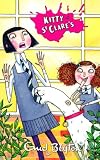
The sixth book in internal chronology order, if we don't separate the Enid Blyton original novels from the continuation novels by Pamela Cox. I do not separate them, since I feel that Pamela Cox's are quite good and the respect the style and spirit of the originals. Therefore, I completely disagree with the Goodreads reviewers who believe that they are awful.
This one in particular I found very entertaining, mixing several dramatic storylines mostly based on relations between siblings: we show more have a temporary fallout between the O'Sullivan twins, caused by the intrigues of a new girl, and also the bad relationship between two stepsisters, also new girls. We also have the tensions between the third and second forms, who are forced to share a common room due to renovation works in the school. However, the main storyline is the tittle character, Kitty, another new girl with a sparkling personality, who gets involved in a long fight against a mean head girl. You could argue that she is a bit too much, and some readers may find her annoying, but I found her entertaining, so it worked for me. Also, she is a stereotypical Irish girl, which is something that really, really bothers some reviewers, but it's in line with the original's style, where there were similar stereotypes, like Carlotta, the fiery half-Spanish girl, or the usual image-obsessed American girls. I always prefer when the stereotypical character is used in a positive way, which is was happens with Carlotta or, in this case, with Kitty.
All in all, I thought the different storylines flowed well and the book was a good entry in the series. show less
This one in particular I found very entertaining, mixing several dramatic storylines mostly based on relations between siblings: we show more have a temporary fallout between the O'Sullivan twins, caused by the intrigues of a new girl, and also the bad relationship between two stepsisters, also new girls. We also have the tensions between the third and second forms, who are forced to share a common room due to renovation works in the school. However, the main storyline is the tittle character, Kitty, another new girl with a sparkling personality, who gets involved in a long fight against a mean head girl. You could argue that she is a bit too much, and some readers may find her annoying, but I found her entertaining, so it worked for me. Also, she is a stereotypical Irish girl, which is something that really, really bothers some reviewers, but it's in line with the original's style, where there were similar stereotypes, like Carlotta, the fiery half-Spanish girl, or the usual image-obsessed American girls. I always prefer when the stereotypical character is used in a positive way, which is was happens with Carlotta or, in this case, with Kitty.
All in all, I thought the different storylines flowed well and the book was a good entry in the series. show less
The top-voted reviews at this time show how difficult it is to please all people. I'd like to give my take on some of the objections:
* Not properly understanding the period or the world. At the old girls' reunion, every single flipping girl has a career. Now, the "special" ones like Mavis and Irene, fair enough, but you can't tell me that those many years later in that period none of them would be housewives --> this much is true, but it's not Pamela Cox's fault. Here (like in much of what show more she does in her continuation books) she is following Blyton's lead, who, in one of her Malory towers books, had the girls discussing their projects after school, and the vast majority of them had some professional aspiration. I think partially it's wish fulfilment, but it's also true that not all women would marry straight out of school. It would be normal for many of them to start some career and then abandon it when they got married and had children. Remember also that Blyton wrote her MT novels in the late 40s and early 50s, not in the 19th century. There were more career opportunities for women at that point, particularly with so many young men wiped out in the war, although of course far from what's now possible.
* Demonising the maid. Who has her living to earn, which doesn't matter at all. Yuck. --> I'm all for being sensitive to the plight of underprivileged people, but this sure is a weird complaint right after the previous one, since it shows a very modern way to look at things. People in the time period also were sensitive to the plight of underprivileged people, but in a different way. They recognized the merit of improving your plight by working hard and honestly, but would not suggest that poverty excused thievery, or suggest that just because a character is underprivileged she can't also be a thief. People are judged according to their actions, not their origins. Also, there are other situations during the series where a more privileged character turns out to be a thief. Anyway, the maid here is not treated badly. She is simply dismissed, and the police is not notified, so she's free to seek another job. Surely you see she can't remain after all the malicious and dishonest behavior.
* Forgetting things about Gwen that really were relevant. Darrell, Bill and Clarissa kept writing to her after she left. Darrell would know she was back at the school. Bill and Clarissa are particularly significant --> Cox mentions that Darrell and Gwen wrote to each other for a while, but eventually stopped. Which seems to me very realistic, even for school friends, which Darrell and Gwen were not. The same goes for Bill and Clarissa keeping in touch with Gwen.
* Crushes Are Bad. (This might explain why B&C were absent, I guess.) --> Again, another modern take I have to disagree with. B&C play a prominent role in some of Pamela Cox's novels, just not in this one. And attributing that to "crushes are bad" is something I can't agree with, partly because of that prominent role they played in other of the continuation novels, and partly because this female close relationship equals lesbian is another very modern take. You can certainly interpret it that way if you want (females with common interest starting a business together and living together as bachelors), but you won't find anything in Blyton's novels to support it being a sexual partnership. People of the same gender can be friends and business partners and even live in the same house without being gay. However you choose to interpret this relationship, though, the fact is that neither Blyton nor Cox have a problem including these characters in the plots of the novels when they deem it necessary.
* It was mentioned that Amanda couldn't make it to the reunion - but what about Moira, Catherine, Ruth and Mam'zelle's niece? Did they just cease to exist the way Daphne did in sixth form? I was very sad not to see Moira. --> I think this is also something that has its origin in Blyton's writing. It's how these books work. Each book, the plot is driven by a couple of new girls who provide a lot of the conflict and suspense. Then after the book, they leave and are replaced by the next batch of new characters. Some remain (Bonnie), but most do not. It's how the books were structured from the very beginning.
* suddenly narrationally insinuate that Malory Towers is some kind of exclusive boarding school with many domestics catering to the attending students (which from Enid Blyton’s original texts simply and really is NOT the truth --> I'm very puzzled by this objection, also. It's true that Blyton's novels do not feature maids. Apart from the teachers, Miss Grayling and Matron, only the kitchen staff and an old school caretaker is mentioned in Blyton's books, as far as I remember. However, surely you are not assuming that an expensive boarding school is functioning without any domestic staff. Sure, Malory Towers is not the kind of elite boarding school where the girls are pampered and have their every need attended to by maids. They are expected to make their own beds and keep their dorms in order. But from there to no domestic staff whatsoever there's a huge leap. Someone has to be washing the bathrooms, corridors, classrooms, also washing clothes... Do you think the girls did all the domestic work, in addition to their classes, schoolwork, plays, sports and other activities?
Anyway, coming back to the novel, I enjoyed it, as I have enjoyed all of Pamela Coxes continuation novels in this series. It very much follows the formula Blyton established. Perhaps it's too formulaic, you could say, although I can not blame Cox for that, as it's what I think people expect and want in a continuation novel. Her style is not quite the same as Blyton's, but it's a reasonable approximation.
In fact, there's one element in Cox's novels that I actually enjoyed more than in Blyton's: Cox's stories are more nuanced and less heavy-handed in their treatment of antagonists. Blyton often allowed redemption to her villains, but at the very end, after they had made many mistakes. Cox often makes those characters more nuanced, rarely making them act like complete villains.
I think overall Cox did an excellent job, and I don't minimize the difficulty, because Blyton has a storytelling talent that makes her stories very compelling, and it's not easy writing in the same series without disappointing. For me, these Cox novels can be placed beside Enid Blyton's Malory Towers novels without reservations, which is the highest compliment I can give to a continuation novel. show less
* Not properly understanding the period or the world. At the old girls' reunion, every single flipping girl has a career. Now, the "special" ones like Mavis and Irene, fair enough, but you can't tell me that those many years later in that period none of them would be housewives --> this much is true, but it's not Pamela Cox's fault. Here (like in much of what show more she does in her continuation books) she is following Blyton's lead, who, in one of her Malory towers books, had the girls discussing their projects after school, and the vast majority of them had some professional aspiration. I think partially it's wish fulfilment, but it's also true that not all women would marry straight out of school. It would be normal for many of them to start some career and then abandon it when they got married and had children. Remember also that Blyton wrote her MT novels in the late 40s and early 50s, not in the 19th century. There were more career opportunities for women at that point, particularly with so many young men wiped out in the war, although of course far from what's now possible.
* Demonising the maid. Who has her living to earn, which doesn't matter at all. Yuck. --> I'm all for being sensitive to the plight of underprivileged people, but this sure is a weird complaint right after the previous one, since it shows a very modern way to look at things. People in the time period also were sensitive to the plight of underprivileged people, but in a different way. They recognized the merit of improving your plight by working hard and honestly, but would not suggest that poverty excused thievery, or suggest that just because a character is underprivileged she can't also be a thief. People are judged according to their actions, not their origins. Also, there are other situations during the series where a more privileged character turns out to be a thief. Anyway, the maid here is not treated badly. She is simply dismissed, and the police is not notified, so she's free to seek another job. Surely you see she can't remain after all the malicious and dishonest behavior.
* Forgetting things about Gwen that really were relevant. Darrell, Bill and Clarissa kept writing to her after she left. Darrell would know she was back at the school. Bill and Clarissa are particularly significant --> Cox mentions that Darrell and Gwen wrote to each other for a while, but eventually stopped. Which seems to me very realistic, even for school friends, which Darrell and Gwen were not. The same goes for Bill and Clarissa keeping in touch with Gwen.
* Crushes Are Bad. (This might explain why B&C were absent, I guess.) --> Again, another modern take I have to disagree with. B&C play a prominent role in some of Pamela Cox's novels, just not in this one. And attributing that to "crushes are bad" is something I can't agree with, partly because of that prominent role they played in other of the continuation novels, and partly because this female close relationship equals lesbian is another very modern take. You can certainly interpret it that way if you want (females with common interest starting a business together and living together as bachelors), but you won't find anything in Blyton's novels to support it being a sexual partnership. People of the same gender can be friends and business partners and even live in the same house without being gay. However you choose to interpret this relationship, though, the fact is that neither Blyton nor Cox have a problem including these characters in the plots of the novels when they deem it necessary.
* It was mentioned that Amanda couldn't make it to the reunion - but what about Moira, Catherine, Ruth and Mam'zelle's niece? Did they just cease to exist the way Daphne did in sixth form? I was very sad not to see Moira. --> I think this is also something that has its origin in Blyton's writing. It's how these books work. Each book, the plot is driven by a couple of new girls who provide a lot of the conflict and suspense. Then after the book, they leave and are replaced by the next batch of new characters. Some remain (Bonnie), but most do not. It's how the books were structured from the very beginning.
* suddenly narrationally insinuate that Malory Towers is some kind of exclusive boarding school with many domestics catering to the attending students (which from Enid Blyton’s original texts simply and really is NOT the truth --> I'm very puzzled by this objection, also. It's true that Blyton's novels do not feature maids. Apart from the teachers, Miss Grayling and Matron, only the kitchen staff and an old school caretaker is mentioned in Blyton's books, as far as I remember. However, surely you are not assuming that an expensive boarding school is functioning without any domestic staff. Sure, Malory Towers is not the kind of elite boarding school where the girls are pampered and have their every need attended to by maids. They are expected to make their own beds and keep their dorms in order. But from there to no domestic staff whatsoever there's a huge leap. Someone has to be washing the bathrooms, corridors, classrooms, also washing clothes... Do you think the girls did all the domestic work, in addition to their classes, schoolwork, plays, sports and other activities?
Anyway, coming back to the novel, I enjoyed it, as I have enjoyed all of Pamela Coxes continuation novels in this series. It very much follows the formula Blyton established. Perhaps it's too formulaic, you could say, although I can not blame Cox for that, as it's what I think people expect and want in a continuation novel. Her style is not quite the same as Blyton's, but it's a reasonable approximation.
In fact, there's one element in Cox's novels that I actually enjoyed more than in Blyton's: Cox's stories are more nuanced and less heavy-handed in their treatment of antagonists. Blyton often allowed redemption to her villains, but at the very end, after they had made many mistakes. Cox often makes those characters more nuanced, rarely making them act like complete villains.
I think overall Cox did an excellent job, and I don't minimize the difficulty, because Blyton has a storytelling talent that makes her stories very compelling, and it's not easy writing in the same series without disappointing. For me, these Cox novels can be placed beside Enid Blyton's Malory Towers novels without reservations, which is the highest compliment I can give to a continuation novel. show less
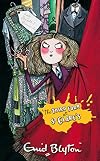
I enjoyed Pamela Cox's continuation novels in the Malory Towers series, so much so that I have no problem considering them a real part of the series, along with Enid Blyton's novels. Therefore, when it comes to the St. Clare series, I'm reading Pamela Cox three novels along with Enid Blyton's six, in internal chronological order. This is therefore the fifth book in the series, after Blyton's
Second Form at St Clare's.
Unlike Malory Towers, where the continuation novels are set after the show more original ones, and with a different set of characters, here we are in the middle of the original series, following the O'Sullivan twins and her school-mates. That has the problem that any small difference is style is more noticeable. However, it was fine. Pamela Cox is able to channel her inner Blyton quite well, and this has a similar feeling to the originals.
If you have read some of these books, you know how it goes. Most of the drama is centered around new girls, who are therefore unknown quantities for the reader and can easily have more character development than more established characters. In that sense, and in the kind of plot threads Pamela Cox uses, this fits very well with the rest of the series. You could say it's too faithful to the premise and style of the series, and that it doesn't bring anything new to the table, but that's really what I want from a continuation novel. If the author is not going to follow the same formula and is going to do her own thing instead... well, she might as well write her own novel instead of a continuation novel is someone else's series. Besides, Enid Blyton's novels are formulaic too, and the familiarity is part of the charm for young readers.
I have read another reviewer complaining that Janet, Carlotta and Allison are out of character here and... yes, there's something to that complaint, but the differences seemed acceptable to me. For example, Janet is jealous that Carlotta is head of the form instead of her. That's rather out of character for her, but then it's mostly an unconscious kind of jealousy, and I guess that even a normally generous and plain-spoken person can sometimes nurse such a resentment. She realizes her mistake at the end and vows to do better, so why not.
All in all, I find it a perfectly fine entry in the St. Clare series, and like with her Malory Towers books, I don't have a problem regarding Pamela Cox's books as a real part of this series. show less
Second Form at St Clare's.
Unlike Malory Towers, where the continuation novels are set after the show more original ones, and with a different set of characters, here we are in the middle of the original series, following the O'Sullivan twins and her school-mates. That has the problem that any small difference is style is more noticeable. However, it was fine. Pamela Cox is able to channel her inner Blyton quite well, and this has a similar feeling to the originals.
If you have read some of these books, you know how it goes. Most of the drama is centered around new girls, who are therefore unknown quantities for the reader and can easily have more character development than more established characters. In that sense, and in the kind of plot threads Pamela Cox uses, this fits very well with the rest of the series. You could say it's too faithful to the premise and style of the series, and that it doesn't bring anything new to the table, but that's really what I want from a continuation novel. If the author is not going to follow the same formula and is going to do her own thing instead... well, she might as well write her own novel instead of a continuation novel is someone else's series. Besides, Enid Blyton's novels are formulaic too, and the familiarity is part of the charm for young readers.
I have read another reviewer complaining that Janet, Carlotta and Allison are out of character here and... yes, there's something to that complaint, but the differences seemed acceptable to me. For example, Janet is jealous that Carlotta is head of the form instead of her. That's rather out of character for her, but then it's mostly an unconscious kind of jealousy, and I guess that even a normally generous and plain-spoken person can sometimes nurse such a resentment. She realizes her mistake at the end and vows to do better, so why not.
All in all, I find it a perfectly fine entry in the St. Clare series, and like with her Malory Towers books, I don't have a problem regarding Pamela Cox's books as a real part of this series. show less
You May Also Like


Associated Authors
Statistics
- Works
- 16
- Members
- 1,934
- Popularity
- #13,313
- Rating
- 3.8
- Reviews
- 20
- ISBNs
- 158
- Languages
- 3
- Favorited
- 1