
Judy Blume
Author of Tales of a Fourth Grade Nothing
About the Author
Judy Blume was born in Elizabeth, New Jersey on February 12, 1938. She received a bachelor's degree in education from New York University in 1961. Her first book, The One in the Middle Is the Green Kangaroo, was published in 1969. Her other books include Are You There, God? It's Me Margaret; Then show more Again, Maybe I Won't; Tales of a Fourth Grade Nothing; Otherwise Known as Sheila the Great; and Blubber. Her adult titles include Wifey, Smart Women, Summer Sisters, and In the Unlikely Event. In 1996, she received the American Library Association's Margaret A. Edwards Award for Lifetime Achievement and in 2004, she received the National Book Foundation's Medal for Distinguished Contribution to American Letters. (Bowker Author Biography) show less
Series
Works by Judy Blume
Places I Never Meant to Be : Original Stories by Censored Writers (1999) — Editor — 337 copies, 7 reviews
The Complete Set of Fudge Books: Tales of a Fourth Grade Nothing; Otherwise Known as Sheila the Great; Superfudge; Fudge-A-Mania; and Double Fudge (2002) 236 copies, 1 review
A Box of Fudge: Tales of a Fourth Grade Nothing; Otherwise Known as Sheila the Great; Superfudge; Fude-a-Mania (1992) 99 copies
BFF*: Two novels by Judy Blume--Just As Long As We're Together/Here's to You, Rachel Robinson (*Best Friends Forever) (2007) 87 copies, 3 reviews
A Judy Blume Collection (Deenie / Then again, maybe I won't / It's not the end of the world) (2004) 49 copies
Best of Blume: Are You There God? It's Me, Margaret/Blubber/Iggie's House/Starring Sally J. Freedman As Herself (2004) 48 copies, 1 review
Judy Bloom (5 Book Set) Are You There God? It's Me Margaret; Then Again, Maybe I Won't; Otherwise Known As Sheila The Gr (1980) 33 copies
Are You There God? It's Me, Margaret / Blubber / Starring Sally J. Freedman as Herself (1993) 27 copies, 2 reviews
Judy Blume Set (Tales of Fourth Grade Nothing, Otherwise Known as Sheila the Great, Freckle Juice, Superfudge, Deenie) (1986) 20 copies
Judy Blume Chapter Book Collection: The Pain and the Great One; The One in the Middle Is the Green Kangaroo; Freckle Juice (2016) 12 copies
The Judy Blume Teen Collection (Boxed Set): Are You There God? It's Me, Margaret; Deenie; Forever; Then Again, Maybe I Won't; Tiger Eyes (2014) 10 copies
The friendly beasts 1 copy
Fudge 1 copy
Banana Books: Set 1 1 copy
Judy Blume (Three book set, includes Iggie's House, Starring Sally J. Freedman as Herself and Then Again, Maybe I Won't) (2013) 1 copy
Judy Blume Collection 1 copy
Authors on Tape 1 copy
ð æ ư ł æ ơ ł æ ơ ł œ 1 copy
Who Lives in this Meadow? 1 copy
O Primeiro Amor 1 copy
Associated Works
Tagged
Common Knowledge
- Legal name
- Blume, Judy Sussman
- Birthdate
- 1938-02-12
- Gender
- female
- Education
- New York University (B.S., Early Childhood Education, 1961)
- Occupations
- author
- Awards and honors
- Margaret A. Edwards Award (1996)
Library of Congress "Living Legends Award" for writers and artists (2000)
National Book Award, Medal of Distinguished Contribution to American Letters (2004)
Carl Sandburg Literary Award (2018)
Ivan Sandrof Lifetime Achievement Award (2023) - Relationships
- Blume, Randy (daughter)
- Nationality
- USA
- Birthplace
- Elizabeth, New Jersey, USA
- Places of residence
- Scotch Plains, New Jersey, USA
Plainfield, New Jersey, USA - Map Location
- USA
Members
Discussions
Childrens Book - Boy purple spots on face? in Name that Book (August 2013)
Old teen fiction book, coming of age for girls, might have had best friend in the title, probably fr in Name that Book (April 2013)
Reviews

A reread. I know I read this as a kid (and from the state of my childhood copy, probably more than once), and I remember having sort of lukewarm feelings about it. Others of Judy Bloom's (particularly [Starring Sally J. Freedman as Herself]) were absolute favorites, but this one I don't think I liked as much. I mostly remembered the stuff the book is known for (frank discussion of periods and of the adolescent girl characters' desire for their breasts to grow), though there are other things show more here the book gives equal weight (the difficulties of being "no religion" for an eleven-year-old girl in 1970s New Jersey; family dynamics). I think as a pre-pubescent kid I didn't warm to the book because I looked on the looming changes of puberty with a kind of resigned dread. I might have wanted to grow up in order to have more autonomy and control over my life, but I had no interest in the physical changes that would come with it (and I *certainly* wasn't doing any dubious exercises to get my breasts to grow. Pain in the ass, breasts.) I was a kid who would have been thrilled if puberty had just held it's horses for a couple of years until I would have been more ready for it. Alas. So it was probably hard for me to relate to these girls who seemed solely focused on "getting it," and while as a kid I loved reading books about experiences that were not my own, this one just fed my suspicion (common, I'm sure) that I wasn't doing growing up and being a girl "right." Upon this reread, while I love the fact that the book talks about periods and developing bodies openly (and provides, through the experiences of the several girls in the book, a few different illustrations of what getting a period for the first time might be like), it struck me starkly how none of the girls in the book cares about anything else aside from puberty and boys. They have no interests. They don't talk about anything else. Then there's the other thing the book is about: Margaret's struggle growing up with parents who want her to choose her own religion (or continue having no religion) when she's older. This scenario came about because her mother was Christian and her father Jewish and there was a schism in her mother's family when she married a Jewish man. Margaret talks to God about this struggle and takes it upon herself to go to different churches and temple with her friends and paternal grandmother. But the examination of religion is completely surface-level. There's nothing about what anyone believes or what it means to anyone to have a religion. The closest we get is Margaret's maternal grandmother, in an ill-fated reunion with her daughter's family, declaring that you don't choose religion, you're born into it. But the hollow religious experimentation just sort of comes to nothing. It's a big question to deal with, especially in a short middle grade book, and I think it's appropriate for the age range the book is aimed at for there to be some ambiguity and sense that there may not be a right answer, but that isn't the feeling I was left with. It feels more like a null conclusion than an ambiguous one. I know this book has achieved classic status, and I think in some ways that is deserved. It's important for girls (and boys) to know about female puberty, and the implicit lesson here that periods are thing that you can talk about is vital. But ultimately, for me, it still felt slightly alienating and hollow. show less
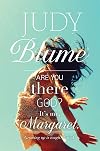
Judy Blume, you've nailed it again with your uncanny ability to tap into the mind of an eleven-year-old, desperately trying to navigate the complex world of friendships, family
As Margaret converses with God, seeking guidance on everything from religious identity to the pressing question of when she’ll finally need a proper bra, I found myself laughing out loud, not just at her earnestness but at the memories of my own similar dilemmas. Who knew that the existential crisis of choosing between pads and tampons could be so hilarious?
Whether you're revisiting this book as a nostalgic adult or discovering it as a curious tween, Are You There, God? It's Me, Margaret serves up a delightful mix of humor and heartfelt moments. It’s a reminder that while growing up is fraught with confusion, it’s also filled with moments of pure comedy.
So, here’s to you, Margaret. Thanks for reminding me that the journey to adulthood is a bit like a group project in gym class—awkward, occasionally embarrassing, but better with friends. And God? If you’re listening, a little heads up on the next embarrassing moment would be much appreciated!
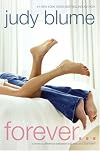
I was interested in Forever by Judy Blume because of the controversy that surrounds it; I knew it was banned because of the sexual content and wondered just what sort of content elicited such a heated reaction from people. While sex is definitely talked about and not shied away from in this book, it is done tastefully and responsibly; although truly, I expected nothing less from Judy Blume.
This book centers on the idea of having a first love and what it’s like to be young and exploring a show more new relationship. I enjoyed that it doesn’t happen all at once; Blume takes her time in showing how the romance and love develops between Katherine and Michael. It’s also done in a healthy way, which was probably my favorite part about this novel, sadly. I feel like too often TV and books idealize unhealthy relationships, but this book very much shows a healthy relationship between two teenagers, and it’s still just as exciting and entertaining (more so, because I’m not grossed out by awful behavior).
Overall, I think this book is great for teens to introduce them to the world of relationships and give them idea of what it looks like and how to have difficult conversations with their parents or significant others. It’s a tad bit dated, but not so much that it’s unrecognizable. Besides that, it’s a super cute romance and it brought up all the feelings I had when I was with my “first love,” so it’s really just great overall. I definitely recommend this for anyone looking for a cute teen romance.
Also posted on Purple People Readers. show less
This book centers on the idea of having a first love and what it’s like to be young and exploring a show more new relationship. I enjoyed that it doesn’t happen all at once; Blume takes her time in showing how the romance and love develops between Katherine and Michael. It’s also done in a healthy way, which was probably my favorite part about this novel, sadly. I feel like too often TV and books idealize unhealthy relationships, but this book very much shows a healthy relationship between two teenagers, and it’s still just as exciting and entertaining (more so, because I’m not grossed out by awful behavior).
Overall, I think this book is great for teens to introduce them to the world of relationships and give them idea of what it looks like and how to have difficult conversations with their parents or significant others. It’s a tad bit dated, but not so much that it’s unrecognizable. Besides that, it’s a super cute romance and it brought up all the feelings I had when I was with my “first love,” so it’s really just great overall. I definitely recommend this for anyone looking for a cute teen romance.
Also posted on Purple People Readers. show less
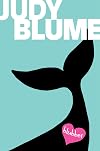
I loved Judy Blume as a kid. Summer Sisters is one of my all-time favorite books I read immediately upon publication in the late '90s. I'm sure I probably read Blubber at some point in my youth. Despite that, I was not prepared for how brutal this book is.
These kids are straight up Lord-of-the-Flies-survival in the restroom, at lunch in the classroom, at the bus stop. They are VICIOUS. I was so uncomfortable listening to their bullying tactics. I just wanted to hug Linda and bitch-slap Jill show more for going along with Wendy.
The ending makes up for the brutality, but it's still a difficult read/listen. show less
These kids are straight up Lord-of-the-Flies-survival in the restroom, at lunch in the classroom, at the bus stop. They are VICIOUS. I was so uncomfortable listening to their bullying tactics. I just wanted to hug Linda and bitch-slap Jill show more for going along with Wendy.
The ending makes up for the brutality, but it's still a difficult read/listen. show less
Lists
Best Young Adult (9)
Read in 2003 (1)
Five star books (1)
Carole's List (1)
Same Title (1)
KID BOOKS (1)
BitLife (1)
. (1)
6th Grade (1)
Which house? (1)
Bullies (1)
Summer Books (1)
B-B to Get (2)
Elevenses (3)
1970s (4)
Children's Humor (1)
Guilty Pleasures (1)
Best Beach Reads (1)
READ in 2023 (1)
Florida (1)
Overdue Podcast (1)
Female Author (1)
Read with Jenna (1)
Favourite Books (1)
Best Dog Stories (1)
Awards


You May Also Like


Associated Authors
Statistics
- Works
- 87
- Also by
- 10
- Members
- 103,791
- Popularity
- #87
- Rating
- 3.7
- Reviews
- 1,436
- ISBNs
- 1,291
- Languages
- 27
- Favorited
- 98

