
Louis Sachar
Author of Holes
About the Author
Louis Sachar was born in East Meadow, New York on March 20, 1954. He attended the University of California, at Berkeley. During his senior year, he helped out at Hillside Elementary School. It was his experience there that led to his first book, Sideways Stories from Wayside School, written in show more 1976. After college, he worked for a while in a sweater warehouse in Norwalk, Connecticut before attending Hastings College of the Law in San Francisco, where he graduated in 1980. Sideways Stories from Wayside School was accepted for publication during his first week of law school. He worked part-time as a lawyer for eight years before becoming a full-time writer in 1989. His other works include There's a Boy in the Girls' Bathroom, the Marvin Redpost books, Fuzzy Mud, and Holes, which won the 1999 Newbery Medal, the National Book Award, and the Boston Globe-Horn Book Award and was made into a major motion picture. (Bowker Author Biography) show less
Series
Works by Louis Sachar
The Wayside School Collection: Sideway Stories from Wayside School, Wayside School is Falling Down, Wayside School Gets a Little Stranger (1998) 367 copies, 9 reviews
Why Pick In Me? (copy 1) 2 copies
WAYSIDE SCHOOL 2 copies
A Package for Mrs. Jewls 1 copy
Sideways Stories 1 copy
Löcher - einfacher Lesen 1 copy
Alone In His Teachers House 1 copy
Associated Works
The Chronicles of Harris Burdick: Fourteen Amazing Authors Tell the Tales (2011) — Contributor — 982 copies, 48 reviews
Tagged
Common Knowledge
- Canonical name
- Sachar, Louis
- Birthdate
- 1954-03-20
- Gender
- male
- Education
- Antioch College
University of California, Berkeley (BA ∙ Economics ∙ 1976)
University of California, Hastings College of Law (JD ∙ 1980) - Occupations
- young adult fiction writer
- Organizations
- Authors Guild
Society of Children's Book Writers and Illustrators - Short biography
- Louis Sachar (born March 20, 1954) is an American young-adult mystery-comedy author. He is best known for the Wayside School series and the novel Holes.
Holes won the 1998 U.S. National Book Award for Young People's Literature and the 1999 Newbery Medal for the year's "most distinguished contribution to American literature for children". In 2013, it was ranked sixth among all children's novels in a survey published by School Library Journal.
After graduating from Tustin high school, Sachar attended Antioch College for a semester before transferring to University of California, Berkeley, during which time he began helping at an elementary school in return for 3 college credits. Sachar later recalled,
I thought it over and decided it was a pretty good deal. College credits, no homework, no term papers, no tests, all I had to do was help out in a second/third grade class at Hillside Elementary School. Besides helping out in a classroom, I also became the Noontime Supervisor, or "Louis the Yard Teacher" as I was known to the kids. It became my favorite college class, and a life changing experience.
Sachar graduated from UC Berkeley in 1976 with a degree in Economics, and began working on Sideways Stories From Wayside School, a children's book set at an elementary school with supernatural elements. Although the book's students were named after children from Hillside and there is a presumably autobiographical character named "Louis the Yard Teacher," Sachar has said that he draws very little from personal experience, explaining that ". ... my personal experiences are kind of boring. I have to make up what I put in my books."
Sachar wrote the book at night over the course of nine months, during which he worked during the day in a Connecticut sweater warehouse. After being fired from the warehouse, Sachar decided to go to law school, around which time Sideways Stories From Wayside School was accepted for publication. The book was released in 1978; though it was not widely distributed and subsequently did not sell very well, Sachar began to accumulate a fan base among young readers. Sachar graduated from University of California, Hastings College of the Law in 1980 and did part-time legal work while continuing to write children's books. By 1989, his books were selling well enough that Sachar was able to begin writing full-time.
Sachar married Carla Askew, an elementary school counselor, in 1985. They live in Austin, Texas, and have a daughter, Sherre, born January 19, 1987. Sachar has mentioned both his wife and daughter in his books; Carla was the inspiration for the counselor in There's a Boy in the Girls' Bathroom (1988), and Stanley's lawyer in Holes.
When asked about whether he thought children have changed over the years, Sachar responded: "I've actually been writing since 1976, and my first book is still in print and doing very well."
On April 18, 2003, the Walt Disney film adaptation of Holes was released, which earned $71.4 million worldwide. Sachar himself wrote the film's screenplay. On November 19, 2005, the Wayside School series was adapted into a special, two years later becoming a TV show with two seasons. - Nationality
- USA
- Birthplace
- East Meadow, New York, USA
- Places of residence
- Tustin, California, USA
Austin, Texas, USA - Associated Place (for map)
- USA
Members
Discussions
Holes, Louis Sachar in World Reading Circle (June 2013)
Reviews
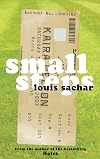
Armpit, or Theodore, a character from Holes, is going straight, working hard, saving his money, going to school, getting tested regularly for drugs by his suspicious parents, making friends with the girl next door and generally scaring people by doing nothing but being big and black. X-Ray, another Camp Green Lake alumni, ropes Armpit in to a ticket-scalping scam, not illegal but definitely dodgy, but that doesn't stop it from threatening Armpit's fragile and precarious existence.
Funny, show more sharp, warm and clever, this is the story of someone trying to keep on the straight and narrow despite the travails and temptations and surprises of modern life. Armpit's a great hero, dogged and down-to-earth and straightforward with a heart as big as the planet, but constantly being misunderstood or mistaken, except, perhaps, by his best friend, Ginny. Terrific. show less
Funny, show more sharp, warm and clever, this is the story of someone trying to keep on the straight and narrow despite the travails and temptations and surprises of modern life. Armpit's a great hero, dogged and down-to-earth and straightforward with a heart as big as the planet, but constantly being misunderstood or mistaken, except, perhaps, by his best friend, Ginny. Terrific. show less
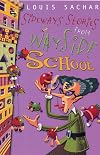
I'm rereading this for the first time since elementary school, and I gotta say, I'm really blown away by the sheer absurdity of it. It reminds me of James Marshall's George and Martha stories: absurd, but lovely in that they never apologize for being absurd or wink at you from beneath the absurdity. It's just absurd all the way down, sincerely and deeply absurd. I imagine after you graduate from George and Martha, you move on to Wayside, and from there you're ready for Beckett and Camus.

Camp Green Lake is a juvenile detention facility where there is neither a lake nor any greenery. Stanley Yelnats is sent there when he is accused of a crime he didn't commit. He blames his great-great-grandfather for his bad luck -- ever since that ancestor's pig-stealing incident, all of his family has been unlucky. At Camp Green Lake, the Warden has the boys go out in the wasteland where a lake once was and dig holes. Perhaps the Warden thinks this will build character -- or perhaps show more there's some other motive. . . .
Part mystery, part adventure story, with a secondary historical narrative woven through, Holes really is a triumph of a book. The plot is tight, the characters are nuanced, the setting is detailed. I'd recommend this to anyone who has an interest in juvenile fiction, but I'd also recommend it to anyone who has a low opinion of children's books -- this is the sort of book that might change your mind! show less
Part mystery, part adventure story, with a secondary historical narrative woven through, Holes really is a triumph of a book. The plot is tight, the characters are nuanced, the setting is detailed. I'd recommend this to anyone who has an interest in juvenile fiction, but I'd also recommend it to anyone who has a low opinion of children's books -- this is the sort of book that might change your mind! show less
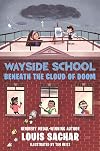
This book was pretty much perfect. I am so much older than I was the last time I read a Wayside School book, but I laughed quite loudly about once a chapter. How, after so many decades, does Louis Sachar remember exactly who all of these characters are? How, after so many decades, do *I* remember exactly who all of these characters are? It's wonderful, and just what I needed, with all of us here under our own Cloud of Doom in 2020.
Lists
Ryan's Books (1)
Five star books (1)
Overdue Podcast (1)
Magic Realism (1)
BitLife (1)
BBC Big Read (1)
100 New Classics (1)
Best Young Adult (1)
Bullies (1)
BBC Top Books (1)
4th Grade Books (4)
storage (1)
1980s (1)
1990s (1)
Favourite Books (2)
Children's Humor (3)
Newbery Adjacent (3)
Boy Protagonists (1)
6th Grade (1)
B-B to Get (1)
Books About Boys (1)
Awards


You May Also Like


Associated Authors
Statistics
- Works
- 69
- Also by
- 4
- Members
- 78,877
- Popularity
- #156
- Rating
- 4.0
- Reviews
- 1,647
- ISBNs
- 809
- Languages
- 25
- Favorited
- 58


