

Louise Fitzhugh (1928–1974)
Author of Harriet the Spy
About the Author
Series
Works by Louise Fitzhugh
The Wonderful Adventures of Suzuki Beane: A Lovable Little Hipster (2000) — Illustrator — 67 copies, 5 reviews
In morning clouds #4 1 copy
Associated Works
The Best of Both Worlds: An Anthology of Stories for All Ages (1968) — Contributor — 25 copies, 1 review
Tagged
Common Knowledge
- Birthdate
- 1928-10-05
- Date of death
- 1974-11-19
- Gender
- female
- Education
- Bard College
Art Students League
Cooper Union - Occupations
- writer
illustrator
painter
children's book author - Awards and honors
- New York Times Outstanding Books of the year (1964)
Sequoyah award (1967) - Short biography
- Louise Fitzhugh was born to a wealthy and prominent family in Memphis, Tennessee. She began writing and drawing as a child. She attended Miss Hutchison's School and three different universities in the U.S., as well as a couple in Italy and France. She lived most of her adult life in New York City, where she studied at the Art Students League and Cooper Union. Louise was a successful visual artist and illustrator before becoming a children's book author, the work for which she is best remembered.
Her book Harriet the Spy, published in 1964, was a groundbreaking novel featuring a rude, inquisitive young heroine who was also extremely funny. The book was an instant hit and paved the way for other writers like Judy Blume to show contemporary children grappling with previously unmentionable problems. Harriet the Spy is a classic that is never out of print and continues to be loved by and entertain young readers.
Awards for her work included a New York Times Outstanding Books of the Year Award, an American Library Association Notable Book citation, and a New York Times Choice of Best Illustrated Books of the Year.
Louise died in 1974 at the age of 46. Her novel Nobody's Family Is Going to Change (1974) was adapted into a Tony-nominated musical called The Tap Dance Kid in 1983. - Cause of death
- brain aneurysm
- Nationality
- USA
- Birthplace
- Memphis, Tennessee, USA
- Places of residence
- Memphis, Tennessee, USA (Birth)
New York, New York, USA
Long Island, New York, USA
Bridgewater, Connecticut, USA
New Milford, Connecticut, USA (Death) - Place of death
- New Milford, Connecticut, USA (Hospital)
- Map Location
- USA
Members
Reviews

I haven't re-read this for many years and it seemed like time. A copy floated around the house when I was a child and I bought my own copy some decades later. I adore this faux children's book narrated by a beatnik child who lives on Bleeker Street in Greenwich Village with her parents, Hugh (a poet) and Marcia (a sculptor). The text is funny and poignant by turns, with cultural references that I didn't understand as a child but appreciate now. The illustrations by Louise Fitzhugh are show more charming and dynamic. I've always loved the illustration on page 86 where High and Marcia are asleep on a bare mattress, curled up fetally with their backs to each other. If you remember the Village when it was, like, not square, you'll, like, dig Suzuki Beane. show less

If I’d read this as a kid I would have struggled with the incessant meanness and how this bully of a main character never really changes her behavior or shows any sort of remorse, and in fact, she’s rewarded for being horrible. I doubt my child self would have been cool with any of that, especially since I could totally have seen myself as a Harriet target.
Reading this an adult however, I guess I was able to take this less seriously or personally than I likely would have as a sensitive show more kid, and while plenty of Harriet’s actions had me cringing and I did wish to see more of a comeuppance for her than she received, admittedly, I found Harriet entertaining.
Harriet’s obsession with tomato sandwiches was so odd that it couldn’t help feeling funny. Equally odd is reading something that’s considered a children’s classic constantly thinking okay here’s the moment when Harriet’s going to understand how hurtful she is and become apologetic, only this girl continuously doubles-down with her awfulness, her answer to everything seems to be I’ll do worse, that’ll teach them. It’s so unexpected to read a children’s book where basically no lessons are learned, combine that with Harriet’s brazen persistence in being horrible and you get something a little amusing and a bit dark, with an entirely unique feel to it. If you can get on board with the villain winning then this is a twisted sort of enjoyable, just, you know, don’t dwell on how miserable it would be to tangle with someone like Harriet in real life. show less
Reading this an adult however, I guess I was able to take this less seriously or personally than I likely would have as a sensitive show more kid, and while plenty of Harriet’s actions had me cringing and I did wish to see more of a comeuppance for her than she received, admittedly, I found Harriet entertaining.
Harriet’s obsession with tomato sandwiches was so odd that it couldn’t help feeling funny. Equally odd is reading something that’s considered a children’s classic constantly thinking okay here’s the moment when Harriet’s going to understand how hurtful she is and become apologetic, only this girl continuously doubles-down with her awfulness, her answer to everything seems to be I’ll do worse, that’ll teach them. It’s so unexpected to read a children’s book where basically no lessons are learned, combine that with Harriet’s brazen persistence in being horrible and you get something a little amusing and a bit dark, with an entirely unique feel to it. If you can get on board with the villain winning then this is a twisted sort of enjoyable, just, you know, don’t dwell on how miserable it would be to tangle with someone like Harriet in real life. show less
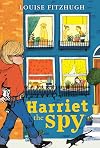
A thank you to Candace Bushnell for prompting my upcoming reread of this book. It was her choice of “ must read” to understand her New York.
From an article in The New York Times on January 31, 2025:
“ If I had to name just one book to read on New York, it would be “Harriet the Spy,” by Louise Fitzhugh, published in 1964. As a little girl living in the Connecticut suburbs at the time, I began dreaming of becoming a writer and living in New York City after reading this book. Harriet show more wasn’t necessarily likable (she wrote nasty stories about her friends, an apt description of a New York City writer) and aspired to something other than marriage and children. She was going to be a writer, which she considered the best possible existence; her best friend Janie was going to be a scientist. They truly believed they would somehow circumvent the rigid gender conventions and rampant sexism of that time. I’ll always remember how mentally freeing this message was, and I suppose that’s something I’ve always associated with New York. People come here to be their true selves.”
I’d forgotten how much Harriet’s personality annoys me, but I pretty much agree with what Candace Bushnell said. Everyone does not have to be likeable, and some of the best writers can turn out to be not such great human beings. show less
From an article in The New York Times on January 31, 2025:
“ If I had to name just one book to read on New York, it would be “Harriet the Spy,” by Louise Fitzhugh, published in 1964. As a little girl living in the Connecticut suburbs at the time, I began dreaming of becoming a writer and living in New York City after reading this book. Harriet show more wasn’t necessarily likable (she wrote nasty stories about her friends, an apt description of a New York City writer) and aspired to something other than marriage and children. She was going to be a writer, which she considered the best possible existence; her best friend Janie was going to be a scientist. They truly believed they would somehow circumvent the rigid gender conventions and rampant sexism of that time. I’ll always remember how mentally freeing this message was, and I suppose that’s something I’ve always associated with New York. People come here to be their true selves.”
I’d forgotten how much Harriet’s personality annoys me, but I pretty much agree with what Candace Bushnell said. Everyone does not have to be likeable, and some of the best writers can turn out to be not such great human beings. show less
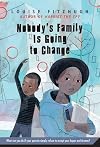
This is a book that every kid should read, perhaps without the knowledge of their parents. Its message is a startling one to find in a bildungsroman (of realistic, unsensational fiction) aimed at a preteen audience, because it is a harsh one. Sometimes the most brutal reads are where the things that happen are mundane in summary, on paper.
Fitzhugh does an incredible job with her characters. The Sheridan family is honestly depicted, warts and all. There is real, eleven-year-old rage (Emma the show more protagonist, with her numerous and varied murderous indignations), and there is real, seven-year-old despair (Willie at the prospect of No More Dancing). There is a bad guy, but the bad guy is a father who is a hardworking professional who had a terrible childhood, wants what he thinks is best for his kids, and has his own baggage regarding institutionalized racism. He is also a manipulative, domineering, misogynist jerk with a guilt-tripping habit and a lame temper.
But Fitzhugh especially nails Emma's voice, crucial to making her realization by the end of the book (see title) poignant, despite all the banal brutality. Truthful, unsentimental, and deeply perceptive. show less
Fitzhugh does an incredible job with her characters. The Sheridan family is honestly depicted, warts and all. There is real, eleven-year-old rage (Emma the show more protagonist, with her numerous and varied murderous indignations), and there is real, seven-year-old despair (Willie at the prospect of No More Dancing). There is a bad guy, but the bad guy is a father who is a hardworking professional who had a terrible childhood, wants what he thinks is best for his kids, and has his own baggage regarding institutionalized racism. He is also a manipulative, domineering, misogynist jerk with a guilt-tripping habit and a lame temper.
But Fitzhugh especially nails Emma's voice, crucial to making her realization by the end of the book (see title) poignant, despite all the banal brutality. Truthful, unsentimental, and deeply perceptive. show less
Lists
Overdue Podcast (1)
Elevenses (1)
Want to Read (1)
Female Author (1)
Best Spy Fiction (1)
Edgar Award (1)
grrrrrl power (1)
Five star books (1)
1960s (2)
Girl Detectives (2)
KID BOOKS (1)
Bullies (1)
Lista d1 (1)
Awards


You May Also Like


Associated Authors
Statistics
- Works
- 12
- Also by
- 3
- Members
- 10,089
- Popularity
- #2,354
- Rating
- 4.0
- Reviews
- 158
- ISBNs
- 153
- Languages
- 9
- Favorited
- 8