
Zilpha Keatley Snyder (1927–2014)
Author of The Egypt Game
About the Author
Zilpha Keatley Snyder was born in Lemoore, California on May 11, 1927. She received a B.A. from Whittier College in 1948. While ultimately planning to be a writer, after graduation she decided to teach school temporarily. However, she found teaching to be an extremely rewarding experience and show more taught in the upper elementary grades for a total of nine years. After all of her children were in school, she began to think of writing again. Her first book, Season of Ponies, was published in 1964. She wrote more than 40 books during her lifetime including The Trespassers, Gib Rides Home, Gib and the Gray Ghost, and William's Midsummer Dreams. She has won numerous awards including three Newbery Honor books for The Egypt Game, The Headless Cupid and The Witches of Worm and the 1995 John and Patricia Beatty Award for Cat Running. She died of complications from a stroke on October 08, 2014 at the age of 87. (Bowker Author Biography) show less
Series
Works by Zilpha Keatley Snyder
Associated Works
Dragons and Dreams: A Collection of New Fantasy and Science Fiction Stories (1986) — Contributor — 46 copies, 2 reviews
Treasure Island Trek; Children's Author & Illustrator Festival Saturday Oct, 18, 1969 — Contributor, some editions — 1 copy
Tagged
Common Knowledge
- Birthdate
- 1927-05-11
- Date of death
- 2014-10-07
- Gender
- female
- Education
- Whittier College (BA | 1948)
- Occupations
- teacher
young adult writer
children's book author - Awards and honors
- Lewis Carroll Shelf Award (1970)
Newbery Honor (1968, 1972, 1973) - Cause of death
- complications from a stroke
- Nationality
- USA
- Birthplace
- Lemoore, California, USA
- Places of residence
- Ventura, California, USA
Sonoma County, California, USA
New York, New York, USA
Marin County, California, USA - Place of death
- San Francisco, California, USA
- Burial location
- Pierce Brothers Santa Paula Cemetery, Santa Paula, California, USA
- Map Location
- California, USA
Members
Discussions
YA Fiction - boy rubs potion on shoulders & grows wings in Name that Book (March 2012)
Reviews

Jessica, whose mother Joy is frequently absent, finds herself the unwilling adoptive mother of an ugly kitten named Worm in this third Newbery-Honor book from the prolific Zilpha Keatley Snyder. Embittered by her mother’s neglectful behavior, her abandonment by her childhood friend Brandon, and haunted by dreams in which she is left alone in an endless void, Jessica comes to believe Worm can speak to her, and that he is responsible for the hateful things that she begins to do...
The Witches show more of Worm is another Snyder title in which the supernatural elements are questionable. Through the third-person narration, the reader is invited to view how Jessica’s rage at her mother and friends has colored her perceptions, and her abusive treatment of Worm is very hard to witness. The author depicts a troubled young girl who blames the object of her abuse for her own behavior, a girl who is her own demon.
Seen in this context, it is difficult to know how to read the exorcism scene towards the end of the book. Is the demon figurative, a colorful description of a psychological state, or is it external to Jessica, an actual supernatural manifestation? The evidence points strongly, but not conclusively to the former. Whatever the truth may be, this was a powerful, and quite disturbing read. show less
The Witches show more of Worm is another Snyder title in which the supernatural elements are questionable. Through the third-person narration, the reader is invited to view how Jessica’s rage at her mother and friends has colored her perceptions, and her abusive treatment of Worm is very hard to witness. The author depicts a troubled young girl who blames the object of her abuse for her own behavior, a girl who is her own demon.
Seen in this context, it is difficult to know how to read the exorcism scene towards the end of the book. Is the demon figurative, a colorful description of a psychological state, or is it external to Jessica, an actual supernatural manifestation? The evidence points strongly, but not conclusively to the former. Whatever the truth may be, this was a powerful, and quite disturbing read. show less

A few years ago I undertook to read Zilpha Keatley Snyder's entire body of work, motivated in part by the fact that although she is an extraordinarily talented and prolific author, I had only read two of her books as a child. One of these was The Changeling, a book that has relentlessly haunted me from the time I first read it. This was the other.
Snyder's fourth book - which won a Newbery Honor - follows the story of two young girls, April and Melanie, whose unlikely friendship leads to the show more revelation that they are both fascinated by ancient Egypt, and to the creation of "the Egypt Game." Soon they are joined by other children, and the game begins to take on a life of its own. When eerie things begin to happen, the friends find themselves wondering if it is a game at all...
I can remember racing through this novel as a child, completely ensnared by Snyder's suspenseful plot; hoping, in fact, for a more supernatural explanation than the one eventually given. I could not have articulated then just why this book (and The Changeling) exercised such a powerful effect upon me. Reading as an adult however, I recognize Snyder's keen understanding of the role of the imagination in the lives of children - the games they create, the "daydreams" that give meaning to their lives. She understands the power of the child's inner life, and is never condescending towards "childish" things. I think I must also have found it refreshing to read a story with such a matter-of-fact interracial friendship, in which race itself was not the predominant concern.
Like many of Snyder's early novels, The Egypt Game is illustrated by Alton Raible. show less
Snyder's fourth book - which won a Newbery Honor - follows the story of two young girls, April and Melanie, whose unlikely friendship leads to the show more revelation that they are both fascinated by ancient Egypt, and to the creation of "the Egypt Game." Soon they are joined by other children, and the game begins to take on a life of its own. When eerie things begin to happen, the friends find themselves wondering if it is a game at all...
I can remember racing through this novel as a child, completely ensnared by Snyder's suspenseful plot; hoping, in fact, for a more supernatural explanation than the one eventually given. I could not have articulated then just why this book (and The Changeling) exercised such a powerful effect upon me. Reading as an adult however, I recognize Snyder's keen understanding of the role of the imagination in the lives of children - the games they create, the "daydreams" that give meaning to their lives. She understands the power of the child's inner life, and is never condescending towards "childish" things. I think I must also have found it refreshing to read a story with such a matter-of-fact interracial friendship, in which race itself was not the predominant concern.
Like many of Snyder's early novels, The Egypt Game is illustrated by Alton Raible. show less

Having passed an idyllic childhood in the treetop city or Orbora, the greatest of the seven cities of Green-sky, Raamo considered himself an ordinary Kindar. So it was with astonishment that he learned, at age thirteen, that he had been selected as one of the Chosen—one of only two Kindar children picked each year—destined to become a member of the priestly Ol-zhaan. This surprise was as nothing, however, when he learned from a young Ol-zhaan novitiate named Dol'Neric that all was not show more well within the order, and within Green-sky in general. For the Spirit skills, long the glory of the Kindar, were waning amongst the people; and the enchanted vine known as Wissenroot, which covered the forest floor far below their arboreal civilization, keeping the monstrous underground Pash-shan at bay, was fading. What could Raamo and Neric do about these great evils? Would they be able to discover what role the mysterious Ol-zhaan secret society known as the Geets-kel had to play in all this, and would Genaa, Raamo's fellow Chosen that year, be an ally or an enemy...?
The first of author Zilpha Keatley Snyder's Green Sky Trilogy—subsequent titles are And All Between and Until the Celebration—Below the Root was first published in 1975, and originated in the imaginative play of two characters in her prior non-fantasy children's novel, The Changeling. The "Green Sky" game played by Martha and Ivy, in that earlier book (published in 1970), also concerned an arboreal civilization beset by evil monsters, and was clearly the seed from which the fully fantastic trilogy grew. While there are key differences between the made-up "Green Sky" of The Changeling and the "real" one in the trilogy, and while it is by no means necessary to have read that earlier book to appreciate the trilogy, I find the connections immensely meaningful, as the earlier book is one of my favorites of all time, and is one I read and reread as a girl. How unfortunate that I did not know of this series at that time, or it might also have been a childhood favorite! It's interesting to note that many other readers discovering this series for the first time as adults approach it through the lens of having played the Below the Root video game, which featured an adventure written by Zilpha Keatley Snyder herself, and which is considered part of Green Sky canon.
Leaving all of that aside, this is an immensely engaging and deeply moving work of fantasy/science fiction for young readers. I have read it once before, but recently reread it, for a group read of the series that I am conducting with friends, and it certainly stood the test of time, and the trial of a reread. I love pretty much everything about it, from the world building—the arboreal life of the Kindar is so magical, and the songs and rituals they use to promote peace and joy within themselves and their society, so beautiful—to the vocabulary and the way it is introduced—sometimes Snyder will explain what a word means, but sometimes she will let the reader figure it out—to the emotional depth of the characters—particularly Raamo's self-reflection and Genaa's deeply buried and unexpressed sorrow and rage at the death of her father at the hands of the Pash-shan—to the story itself. The idea of creating a human civilization free of violence is intriguing, as is the sorrow of discovering that utopias are so frequently built using far from utopian means. I have seen this compared to more contemporary works of dystopian fiction, such as The Hunger Games and Divergent, but of course this came far before those works, and was quite groundbreaking in its day. It differs from such stories in this key regard, which only raises my esteem for it: namely, that it understands the central role of religion to all human societies, and it explores the beauty and power of such belief systems for the believer, as well as the all-too-frequent corruption of those who are in charge of such systems.
Although written in the 1970s, and a product of its time in many ways—the peace and joy and love of the Kindar civilization feels like the fulfillment of the hippie dream, in some sense—in other ways it feels oddly current. I was struck, during this reread, by the parallels between the Kindar civilization and social and political progressives in the western world in this present day. The way in which they both structure their beliefs around ideas of care, benevolence, the avoidance of causing harm; and the way both are built on the suppression of those who have expressed disagreement with them, the ways in which those others are demonized and made into monsters. The parallel truly astonished me, as I read how the Pash-shan haunted the dreams of Raamo and his Kindar brethren, and then thought of the many people I have encountered in this day and age, who are so constantly fixated upon those with whom they disagree, those whom they revile and fear.
As if this strength of storytelling—the ideas expressed and explored, the beautiful language of the text itself, the engrossing character studies, the fascinating world-building—weren't enough, this book is also greatly improved by the gorgeous artwork of illustrator Alton Raible. I understand that many paperback and ebook editions of this title are lacking these beautifully intricate pencil drawings, and that is a great shame, for they add to and complement the sense of magic and mystery to be found throughout. Raible worked on eleven of Zilpha Keatley Snyder's books, and his artwork is always worth looking at, poring over, and enjoying. It's a shame that he doesn't seem to have done any other work within the book world, but the drawings he did for Snyder are certainly an impressive body of work! It's well worth seeking out the original edition of this book, for the sake of this artwork.
In any case, to offer such wonderful storytelling, and to have such powerful social and intellectual relevance, almost fifty years after its publication, speaks to this book's staying power, and to its brilliance. I highly recommend it to any young (or older) reader who enjoys fantasy, science fiction, dystopian fiction, or just thoughtful fiction in general. For my part, I cannot wait to reread the next installment of the series. show less
The first of author Zilpha Keatley Snyder's Green Sky Trilogy—subsequent titles are And All Between and Until the Celebration—Below the Root was first published in 1975, and originated in the imaginative play of two characters in her prior non-fantasy children's novel, The Changeling. The "Green Sky" game played by Martha and Ivy, in that earlier book (published in 1970), also concerned an arboreal civilization beset by evil monsters, and was clearly the seed from which the fully fantastic trilogy grew. While there are key differences between the made-up "Green Sky" of The Changeling and the "real" one in the trilogy, and while it is by no means necessary to have read that earlier book to appreciate the trilogy, I find the connections immensely meaningful, as the earlier book is one of my favorites of all time, and is one I read and reread as a girl. How unfortunate that I did not know of this series at that time, or it might also have been a childhood favorite! It's interesting to note that many other readers discovering this series for the first time as adults approach it through the lens of having played the Below the Root video game, which featured an adventure written by Zilpha Keatley Snyder herself, and which is considered part of Green Sky canon.
Leaving all of that aside, this is an immensely engaging and deeply moving work of fantasy/science fiction for young readers. I have read it once before, but recently reread it, for a group read of the series that I am conducting with friends, and it certainly stood the test of time, and the trial of a reread. I love pretty much everything about it, from the world building—the arboreal life of the Kindar is so magical, and the songs and rituals they use to promote peace and joy within themselves and their society, so beautiful—to the vocabulary and the way it is introduced—sometimes Snyder will explain what a word means, but sometimes she will let the reader figure it out—to the emotional depth of the characters—particularly Raamo's self-reflection and Genaa's deeply buried and unexpressed sorrow and rage at the death of her father at the hands of the Pash-shan—to the story itself. The idea of creating a human civilization free of violence is intriguing, as is the sorrow of discovering that utopias are so frequently built using far from utopian means. I have seen this compared to more contemporary works of dystopian fiction, such as The Hunger Games and Divergent, but of course this came far before those works, and was quite groundbreaking in its day. It differs from such stories in this key regard, which only raises my esteem for it: namely, that it understands the central role of religion to all human societies, and it explores the beauty and power of such belief systems for the believer, as well as the all-too-frequent corruption of those who are in charge of such systems.
Although written in the 1970s, and a product of its time in many ways—the peace and joy and love of the Kindar civilization feels like the fulfillment of the hippie dream, in some sense—in other ways it feels oddly current. I was struck, during this reread, by the parallels between the Kindar civilization and social and political progressives in the western world in this present day. The way in which they both structure their beliefs around ideas of care, benevolence, the avoidance of causing harm; and the way both are built on the suppression of those who have expressed disagreement with them, the ways in which those others are demonized and made into monsters. The parallel truly astonished me, as I read how the Pash-shan haunted the dreams of Raamo and his Kindar brethren, and then thought of the many people I have encountered in this day and age, who are so constantly fixated upon those with whom they disagree, those whom they revile and fear.
As if this strength of storytelling—the ideas expressed and explored, the beautiful language of the text itself, the engrossing character studies, the fascinating world-building—weren't enough, this book is also greatly improved by the gorgeous artwork of illustrator Alton Raible. I understand that many paperback and ebook editions of this title are lacking these beautifully intricate pencil drawings, and that is a great shame, for they add to and complement the sense of magic and mystery to be found throughout. Raible worked on eleven of Zilpha Keatley Snyder's books, and his artwork is always worth looking at, poring over, and enjoying. It's a shame that he doesn't seem to have done any other work within the book world, but the drawings he did for Snyder are certainly an impressive body of work! It's well worth seeking out the original edition of this book, for the sake of this artwork.
In any case, to offer such wonderful storytelling, and to have such powerful social and intellectual relevance, almost fifty years after its publication, speaks to this book's staying power, and to its brilliance. I highly recommend it to any young (or older) reader who enjoys fantasy, science fiction, dystopian fiction, or just thoughtful fiction in general. For my part, I cannot wait to reread the next installment of the series. show less
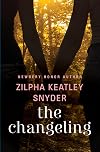
This is not a book about a changeling. The book is deliberately misleading, and readers find out why towards the end. I'm okay with this. I read this book when I was eight or nine, and marveled at it. More than twenty years later, I picked it up again. I was curious to learn if it would have the same effect on me. I had forgotten a lot of it, actually. The story is about the friendship between Martha and Ivy. Martha comes from a family with high expectations, high achievers, and strict show more gender roles. As a child, she is chubby, cries a lot and doesn't like being a Girl Scout. She does not feel a sense of belonging in her own family. Ivy is a respite from all that. She, too, is a misfit in her own family. Creative, imaginative, confident and daring, she is nonetheless constrained by her family's circumstances. They're often on the run from the law, but come back to Martha's town every two years. They own a house there. Ivy's mom is an alcoholic. Her dad has a ton of bad luck in life. Her siblings are following in her parents' footsteps. Ivy's rich imagination helps her cope. Her friendship with Martha helps both girls immensely. Much of the book is dedicated to the games of make believe Ivy and Martha immerse themselves in. This takes a wonderful turn into them doing theater and dance in middle school. And then the plot shows up in the form of the antagonist, Kelly. Regina George is a descendant of hers, in movie form. My heart warmed at how Tom, Martha's star quarterback brother, stood up for his sister and was rightfully cold to Kelly. This was near the book's end, and I welcomed it. I laughed at some of it, delighted. The actual ending was predictable in some ways. I'm glad I read it as an adult now. show less
Lists
Favourite Books (1)
Five star books (1)
1980s (1)
Elementary Reads (1)
1990s (1)
1970 Club (1)
Female Author (1)
Witchy Fiction (1)
Tagged Runaways (1)
Cats in Fiction (1)
Ghosts (1)
1970s (4)
Newbery Adjacent (4)
Books with Twins (4)
1960s (5)
Best Dog Stories (1)
Girl Detectives (1)
Elevenses (2)
Awards


You May Also Like


Associated Authors
Statistics
- Works
- 51
- Also by
- 4
- Members
- 15,011
- Popularity
- #1,526
- Rating
- 3.8
- Reviews
- 274
- ISBNs
- 400
- Languages
- 8
- Favorited
- 32