
Kate Greenaway (1846–1901)
Author of The Language of Flowers
About the Author
Image credit: Kate Greenaway in her studio, 1895
Courtesy of the NYPL Digital Gallery
(image use requires permission from the New York Public Library)
Courtesy of the NYPL Digital Gallery
(image use requires permission from the New York Public Library)
Works by Kate Greenaway
A Apple Pie and Traditional Nursery Rhymes (Everyman's Library Children's Classics) (2002) 52 copies, 2 reviews
BOOK OF GAMES By KATE GREENAWAY Viking Press HC 1889 1976 reprint [Hardcover] Kate Greenway (1951) 5 copies
The Pied Piper of Hamelin 3 copies
The Language of Flowers — Illustrator; Illustrator; Illustrator — 2 copies
Kate Greenaway's calendar for 1884 2 copies
THE ROYAL PROGRESS OF KING PEPITO — Illustrator — 1 copy
A Mother Goose Teasury 1 copy
Marigold Garden (3/3 copies) 1 copy
Marigold Garden (2/3 copies) 1 copy
Vauvan ensimmäinen vuosi 1 copy
Associated Works
The Annotated Mother Goose: Nursery Rhymes Old and New, Arranged and Explained (1962) — Illustrator — 689 copies, 10 reviews
The Illustrated Treasury of Children's Literature, Volumes 1-2 (1955) — Contributor — 524 copies, 4 reviews
My School Days in Paris — Illustrator — 1 copy
Tagged
Common Knowledge
- Canonical name
- Greenaway, Kate
- Legal name
- Greenaway, Catherine
- Birthdate
- 1846-03-17
- Date of death
- 1901-11-06
- Gender
- female
- Education
- National Art Training School, South Kensington, London, UK
Royal Academy of Art - Occupations
- children's book author
children's book illustrator
poet - Awards and honors
- Kate Greenaway Medal(founded in her honour ∙ 1955)
Royal Institute of Painters in Water Colours (1889) - Relationships
- Allingham, Helen (friend)
- Short biography
- Catherine Greenaway, known as Kate, was born in Hoxton, Greater London, the daughter of a draftsman-engraver father and a seamstress-milliner mother. She attended what would become the Royal Academy of Art in 1858, and won local and national awards for her illustrations in the 1860s. She always loved dolls and fabric, and continued to work with them as an adult. In 1868, at the age of 22, she exhibited her watercolor paintings at a gallery in London. She worked as a freelance artist, designing cards, calendars, and books. Kate Greenaway published her first collection of verses, Under the Window: Pictures and Rhymes for Children, in 1879. It was a bestseller and launched her career as an immensely popular and influential author and illustrator of children's books. Other works quickly followed, including Kate Greenaway's Birthday Book (1880), Kate Greenaway's Mother Goose (1881), A Painting Book (1884), and Marigold Garden (1885). She produced the illustrations for Robert Browning’s work The Pied Piper of Hamelin in 1889. Greenaway's name became a household word in the UK and USA, and she was so popular with the public that Liberty of London adapted her designs for children's clothing and sold them in stores. She was elected to membership of the Royal Institute of Painters in Water Colours in 1889. She lived in an Arts and Crafts style house she commissioned from Richard Norman Shaw in Frognal, London, although she spent summers in rural Rolleston, near Southwell in Nottinghamshire.
She died of breast cancer in 1901 at the age of 55. The annual award created in 1955 by the Library Association of Great Britain for the best illustrator of children's books was named the Kate Greenaway Medal in her honor. Her books continue to sell today, along with bookplates, greeting cards, calendars, and other materials based on her illustrations, and for many her work is synonymous with Victorian childhood. - Cause of death
- breast cancer
- Nationality
- UK
- Birthplace
- Hoxton, England, UK
- Places of residence
- London, England, UK
Rolleston, Nottinghamshire, England, UK - Place of death
- Frognal, England, UK
- Burial location
- Hampstead Cemetery, London, England, UK
- Map Location
- England, UK
Members
Reviews
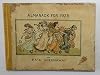
Thoroughly charming. This book, a calendar from almost 100 years ago, may be of little practical modern value, but it is well worth reading for the illustrations alone. Kate Greenaway's art shines with beauty and evokes a simpler time. Moreover, readers may benefit from the historical perspective offered by this tiny tome; small almanacs such as these were numerous and quite stylish back in the day. Reading this book was like seeing and touching history, one artifact at a time.
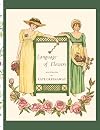
This was a lovely birthday gift. It’s a keeper. I love that it’s now on my bookshelves.
This is a book whose whole I loved its better than the sum of its parts.
I appreciate that this reprint is unabridged and contains the entire 1884 book. In addition to the lists of flowers and their meanings, there are poems (by well-known poets) about flowers, and there are lovely illustrations. Different editions of the newly reprinted book have different cover illustrations; I don’t know which, if show more any, is the original.
I like how there are alphabetical lists of the flowers and also another alphabetical list of the meanings. It was easy to look up and find both the flowers and the meanings really easily.
I would love to have learned HOW and WHY the flowers’ meanings were chosen. This book has nothing about that.
What I don’t like about this language of flowers is how many of my favorite flowers have horrible meanings. I don’t personally believe in their meanings but some people might and back in 1800s England I assume many people did so I do wonder if flowers were given/used on the basis of their meanings and not how much they were admired & loved or how beautiful they were or how pleasing their aroma. Some of the meanings are as I would have guessed: love, inspiration, hope, compassion, joy, levity, beauty, youthful love, friendship, and many others. Some are maybe appropriate for funeral flowers: Alas! for my poor heart, calm repose, consolation, sorrow, mourning, my regrets follow you to the grave, widowhood, sympathy, for instance. Many others are truly awful: indifference, coldheartedness, aversion, disgust, deceit, horror, haughtiness, meanness, malevolence, misanthropy, rudeness, revenge, war, and many more. For me it seems odd to label flowers with such negative meanings, unless they’re poisonous and then I could see it making sense.
The meanings are for flowers and also include trees, shrubs, grasses, tendrils of climbing plants, etc.
I was disappointed that one of my favorite flowers wasn’t there but perhaps they weren’t around yet when the book was first published in 1884 or most likely they just weren’t grown/found/known about in England/the British Isles. It’s the California poppy, which is usually a lovely orange, and rarely yellow or cream; I like the orange ones. There are meanings for other colors of poppies but not orange ones.
I like the idea of the “language of flowers” (that I think I first learned about when I read The Language of Flowers by Vanessa Diffenbaugh) more than I actually like its execution. This will still be a great book to occasionally take of the shelf and view, either to look up a particular flower or meaning or to just enjoy a poem, a picture, or just the lovely presentation.
I’m struggling to read and this was the perfect book to pick up to read for a bit. I did read it cover to cover but just a few pages at a time so it did take me a long time to read. It doesn’t have to be read cover to cover to enjoy it and I assume many readers will just casually peruse the pages and it’s a fine book to read that way too.
3-1/2 stars show less
This is a book whose whole I loved its better than the sum of its parts.
I appreciate that this reprint is unabridged and contains the entire 1884 book. In addition to the lists of flowers and their meanings, there are poems (by well-known poets) about flowers, and there are lovely illustrations. Different editions of the newly reprinted book have different cover illustrations; I don’t know which, if show more any, is the original.
I like how there are alphabetical lists of the flowers and also another alphabetical list of the meanings. It was easy to look up and find both the flowers and the meanings really easily.
I would love to have learned HOW and WHY the flowers’ meanings were chosen. This book has nothing about that.
What I don’t like about this language of flowers is how many of my favorite flowers have horrible meanings. I don’t personally believe in their meanings but some people might and back in 1800s England I assume many people did so I do wonder if flowers were given/used on the basis of their meanings and not how much they were admired & loved or how beautiful they were or how pleasing their aroma. Some of the meanings are as I would have guessed: love, inspiration, hope, compassion, joy, levity, beauty, youthful love, friendship, and many others. Some are maybe appropriate for funeral flowers: Alas! for my poor heart, calm repose, consolation, sorrow, mourning, my regrets follow you to the grave, widowhood, sympathy, for instance. Many others are truly awful: indifference, coldheartedness, aversion, disgust, deceit, horror, haughtiness, meanness, malevolence, misanthropy, rudeness, revenge, war, and many more. For me it seems odd to label flowers with such negative meanings, unless they’re poisonous and then I could see it making sense.
The meanings are for flowers and also include trees, shrubs, grasses, tendrils of climbing plants, etc.
I was disappointed that one of my favorite flowers wasn’t there but perhaps they weren’t around yet when the book was first published in 1884 or most likely they just weren’t grown/found/known about in England/the British Isles. It’s the California poppy, which is usually a lovely orange, and rarely yellow or cream; I like the orange ones. There are meanings for other colors of poppies but not orange ones.
I like the idea of the “language of flowers” (that I think I first learned about when I read The Language of Flowers by Vanessa Diffenbaugh) more than I actually like its execution. This will still be a great book to occasionally take of the shelf and view, either to look up a particular flower or meaning or to just enjoy a poem, a picture, or just the lovely presentation.
I’m struggling to read and this was the perfect book to pick up to read for a bit. I did read it cover to cover but just a few pages at a time so it did take me a long time to read. It doesn’t have to be read cover to cover to enjoy it and I assume many readers will just casually peruse the pages and it’s a fine book to read that way too.
3-1/2 stars show less
The Kate Greenaway Treasury: An Anthology of the Illustrations and Writings of Kate Greenaway by Kate Greenaway

Carefully chose The KG Treasury edition to review here, as the reproductions of the artwork are not always flawless and they might be better in editions named A Treasury of KG. One page in particular has one girl with paper white skin and the others with cheeks so red they look ill.
I must say, too, that a little of this artwork goes a long way, imo. The best of her pieces are worthy of frames, but this many, in one library loan period, feels *to me* like eating a whole bag of show more marshmallows.
Lots of extra matter included. Lots of samples of her books, but few are complete. I do see evidence that she gained more skill as she gained experience... not surprising as she was a friend of John Ruskin. I especially appreciate that her later books had more honest verses, instead of the dissonant mix of twee and bloodthirsty I saw in her earlier ones.
I think my favorite is [b:A Apple Pie|1831541|A Apple Pie|Kate Greenaway|https://i.gr-assets.com/images/S/compressed.photo.goodreads.com/books/1387740545l/1831541._SX50_.jpg|1831412] because Katie did not modernize that old rhyme, that was created before "I" was a letter in our alphabet: her illustrations go from "H had it" to "J jumped it" tyvm.
I would like to read more than this sample of [b:The Queen of the Pirate Isle|19164502|The Queen of the Pirate Isle|Bret Harte|https://i.gr-assets.com/images/S/compressed.photo.goodreads.com/books/1386107439l/19164502._SY75_.jpg|6434760]. The illustrations are, unfortunately, naively racist, but I can forgive her that.
I finally learned what the famous game "Blind Man's Buff" is, and have to say it doesn't seem fun to me. "It" is blindfolded, then spun three times to disorient, other children try to evade her reaching hands (presumably while staying within bounds), the one she catches is the next "It."
I did not read all the biographical or related matter. I do note that many works listed on her timeline were not included even my a single page of a sample. I do not recommend this to anyone who is not already a devoted fan. I would like to see a few of her best works freshened and reprinted in child-size chapbooks. show less
I must say, too, that a little of this artwork goes a long way, imo. The best of her pieces are worthy of frames, but this many, in one library loan period, feels *to me* like eating a whole bag of show more marshmallows.
Lots of extra matter included. Lots of samples of her books, but few are complete. I do see evidence that she gained more skill as she gained experience... not surprising as she was a friend of John Ruskin. I especially appreciate that her later books had more honest verses, instead of the dissonant mix of twee and bloodthirsty I saw in her earlier ones.
I think my favorite is [b:A Apple Pie|1831541|A Apple Pie|Kate Greenaway|https://i.gr-assets.com/images/S/compressed.photo.goodreads.com/books/1387740545l/1831541._SX50_.jpg|1831412] because Katie did not modernize that old rhyme, that was created before "I" was a letter in our alphabet: her illustrations go from "H had it" to "J jumped it" tyvm.
I would like to read more than this sample of [b:The Queen of the Pirate Isle|19164502|The Queen of the Pirate Isle|Bret Harte|https://i.gr-assets.com/images/S/compressed.photo.goodreads.com/books/1386107439l/19164502._SY75_.jpg|6434760]. The illustrations are, unfortunately, naively racist, but I can forgive her that.
I finally learned what the famous game "Blind Man's Buff" is, and have to say it doesn't seem fun to me. "It" is blindfolded, then spun three times to disorient, other children try to evade her reaching hands (presumably while staying within bounds), the one she catches is the next "It."
I did not read all the biographical or related matter. I do note that many works listed on her timeline were not included even my a single page of a sample. I do not recommend this to anyone who is not already a devoted fan. I would like to see a few of her best works freshened and reprinted in child-size chapbooks. show less

This was given to me when I was two, but to be honest, it always kind of bothered me. It's quite violent and I never saw how a pie could hold up through all of that.
Lists
Out of Copyright (1)
Awards

You May Also Like


Associated Authors
Statistics
- Works
- 78
- Also by
- 17
- Members
- 2,612
- Popularity
- #9,826
- Rating
- 3.8
- Reviews
- 57
- ISBNs
- 167
- Languages
- 8
- Favorited
- 1