
India Knight
Author of My Life on a Plate
About the Author
India Knight writes a weekly column for the "Sunday Times" (London) & is a regular contributor to a number of magazines & newspapers. She also wrote a weekly column for the "Observer Review." She lives in London. (Bowker Author Biography)
Works by India Knight
Associated Works
Tagged
Common Knowledge
- Birthdate
- 1965
- Gender
- female
- Occupations
- journalist (The Sunday Times)
- Organizations
- The Sunday Times
- Nationality
- UK
- Places of residence
- London, England, UK
- Associated Place (for map)
- England, UK
Members
Reviews
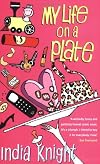
In her debut novel, My Life on a Plate, author India Knight uses sharp humor and wry observations to tell the story of Clara Hutt, who at 33 appears to have her life in order. Married to a successful man with whom she shares two children, Clara’s biggest concerns seems to be that she is slightly overweight and rather inefficient at running a smooth household. Calling herself Jabba the Hutt on bad days, she finds herself constantly questioning if “this is all there is”. She expected her show more husband to be more attentive and for she herself to be less bored and happier.
Overall this book was a miss with me. Clara seemed to be whining a lot and lacked self-confidence, her husband was distant and cold. He was a totally absent father, leaving all child rearing and home-making decisions to Clara. Then when he whisked her off on a romantic weekend to Paris, I thought all issues were going to be discussed, resolved and that a happy ending was in sight. Instead her husband finally reveals what he wants from life leaving Clara to pick up the pieces as best she can. From here we quickly reach an unrealistic conclusion that made me want to throw the book across the room.
My Life on a Plate seemed to be about self-centred people dealing with their mid-life crises and I really felt no connection to these trite, smug people. show less
Overall this book was a miss with me. Clara seemed to be whining a lot and lacked self-confidence, her husband was distant and cold. He was a totally absent father, leaving all child rearing and home-making decisions to Clara. Then when he whisked her off on a romantic weekend to Paris, I thought all issues were going to be discussed, resolved and that a happy ending was in sight. Instead her husband finally reveals what he wants from life leaving Clara to pick up the pieces as best she can. From here we quickly reach an unrealistic conclusion that made me want to throw the book across the room.
My Life on a Plate seemed to be about self-centred people dealing with their mid-life crises and I really felt no connection to these trite, smug people. show less
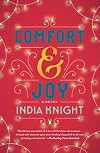
I have such a soft spot for India Knight. Clara Dunphy (nee Hutt) is one of my favorite characters of all time, and I love her rambling and supremely hysterical narration. I laughed out loud so many times during this book, and I rarely laugh out loud while reading/watching TV.
Comfort and Joy isn't so much a story as a catch-up with an old friend. It starts about eight years after My Life On a Plate ends, and it's a three-year look at Clara's life on Christmas and Christmas Eve. Not much show more plot, but it's terribly refreshing to read a book where the female character isn't fighting to get a man/get a man back. Also, I could read the exchanges between Evie, Flo, and Kate over and over again. show less
Comfort and Joy isn't so much a story as a catch-up with an old friend. It starts about eight years after My Life On a Plate ends, and it's a three-year look at Clara's life on Christmas and Christmas Eve. Not much show more plot, but it's terribly refreshing to read a book where the female character isn't fighting to get a man/get a man back. Also, I could read the exchanges between Evie, Flo, and Kate over and over again. show less
Darling: A razor-sharp, gloriously funny retelling of Nancy Mitford’s The Pursuit of Love by India Knight
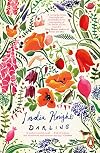
I'm not sure why this is termed a retelling, with the exact same characters being equally obnoxious, made implausible by dragging Nancy Mitford's 1930s novel into the present day (or the 90s at least). Uncle Matthew becomes a retired rock star, everyone has mobile phones (if not a signal), Tony is the son of a UKIP MP and Louisa takes part in a reality show. Other than that, everyone is just very very middle class and awkwardly anachronistic: 'As teenagers, we once found a pile of Aunt show more Sadie;s old Ladybird books in one of the attics, and Linny observed that we looked exactly like the illustrations, which was mostly true.' Nancy Mitford carried this semi-autobiographical drivel off because she was the daughter of a baron and a bright young thing who lived at a time when class and titles mattered and women needed to get married to survive. As Matthew says, Linda, in the modern day setting of the novel, is worth more than that, yet she throws herself at the same ridiculous caricatures as the original.
Linda herself remans insufferable: beautiful (with violet eyes, natch), clever, witty, charming. Everybody loves her because she's just so perfectly Linda: 'She was not self-invented for effect but fully formed, wholly and undeviatingly true to herself ... She was not interested in being pleasing; the fact that so many people found her captivating was, to her, an unsought but aggreable side effect.' I mean, this worked for Nancy Mitford, because she lived that life, but distanced from the original author, Linda just becomes even more punchable. My favourite characters were Merlin and Linda's daughter Momo (fair play to Linda for realising that she wouldn't make a good mother, though).
Unnecessary retelling, old-fashioned characters, abrupt ending. (Beautiful cover, though!) Leave it to the MItfords. show less
Linda herself remans insufferable: beautiful (with violet eyes, natch), clever, witty, charming. Everybody loves her because she's just so perfectly Linda: 'She was not self-invented for effect but fully formed, wholly and undeviatingly true to herself ... She was not interested in being pleasing; the fact that so many people found her captivating was, to her, an unsought but aggreable side effect.' I mean, this worked for Nancy Mitford, because she lived that life, but distanced from the original author, Linda just becomes even more punchable. My favourite characters were Merlin and Linda's daughter Momo (fair play to Linda for realising that she wouldn't make a good mother, though).
Unnecessary retelling, old-fashioned characters, abrupt ending. (Beautiful cover, though!) Leave it to the MItfords. show less
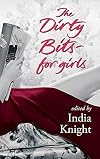
I attended an all-girl grammar school some ten years before India Knight started her teenage quest for smut, and therefore a number of her chosen texts - all those 70's bonkbusters, for example - came ... er ... were written too late to enliven my schooldays, but the principle remains the same. Our school's 'dirty bits' reading consisted of much of the oeuvre of Sir Richard Burton, thanks to whom I have never been able to hear the innocent word 'member' with a straight face. India Knight show more evidently missed this experience. Other titles, however, we have very much in common: dear Constance Chatterley and her flower arranging, Fanny Hill and her parade of mighty engines and, of course, the frankly scary 'O', exposure to whom at a tender age put me off S&M for life. How joyous it is to know that dirty-minded little girls remain exactly the same down all the ages. I do hope that today's tender innocents aren't too busy watching YouTube and playing with their Bratz dolls at least to open a dictionary now and again and look up all the rude words. It would be terrible to think of this fine tradition dying out.
A note for the second edition - 'Fanny Hill'? Written in 1749. That would be how the Georgians did it, India dear, not the Victorians. Boarding school history tuition not all it's cracked up to be?
Ha. 'Crack.' Does one ever get over being 13, I wonder? show less
A note for the second edition - 'Fanny Hill'? Written in 1749. That would be how the Georgians did it, India dear, not the Victorians. Boarding school history tuition not all it's cracked up to be?
Ha. 'Crack.' Does one ever get over being 13, I wonder? show less
Awards


You May Also Like


Associated Authors
Statistics
- Works
- 22
- Also by
- 3
- Members
- 1,173
- Popularity
- #21,938
- Rating
- 3.4
- Reviews
- 34
- ISBNs
- 112
- Languages
- 12
- Favorited
- 2