
Nicholas Crane
Author of Mercator: The Man Who Mapped the Planet
About the Author
Nicholas Crane is a geographer and adventurer. He lives in London.
Image credit: permaculture
Series
Works by Nicholas Crane
Coast: Series 2 [Region 2] 2 copies
International Cycling Guide 1985-86 2 copies
A capital view 1 copy
Bạn đang ở đây 1 copy
Associated Works
Tagged
Common Knowledge
- Canonical name
- Crane, Nicholas
- Birthdate
- 1954-05-06
- Gender
- male
- Education
- Cambridgeshire College of Arts and Technology (BA|1975)
Wymondham College - Occupations
- cartographer
explorer
writer
broadcaster - Organizations
- Royal Geographical Society
Society of Authors
Council for the Protection of Rural England - Awards and honors
- Mungo Park Medal (1992)
Thomas Cook Travel Book Award (1997)
Polartec Adventurer of the Year Award (2000)
Ness Award (2014)
Stanfords Award for Outstanding Contribution to Travel Writing (2024) - Relationships
- Crane, Richard (cousin)
Huxley, Annabel (spouse) - Nationality
- England
UK - Birthplace
- Hastings, Sussex, England, UK
- Places of residence
- London, England, UK
Norfolk, England, UK - Associated Place (for map)
- England, UK
Members
Reviews

What a good book. More than simply a biography of Mercator, but also a history of the Low Countries, its Renaissance and cartography. In a way it has to be, as Mercator was rather a passive figure and a quiet family man; and his letters from the first half of his life appear to have been destroyed to protect the innocent when he was imprisoned. A very useful approach for someone like me though, who really knows nothing about the Low Countries or their history. This book is very much in the show more style of popular non-fiction, but is the product of real scholarship. The breadth of Crane’s references are really quite amazing. In places the information comes so thick and fast you’ll have to wait until after breakfast. I learnt loads. I’ve read a few popular-style books on mapping over the years but stopped as they all seem to regurgitate the same information. This book does not and really stands apart. show less

This is the straightforward telling of an outrageous expedition. Two British cousins in their early 30s ride their bicycles from Bangladesh to Urumqi in 50 days, from the ocean to the place on earth furthest from any ocean. They go through Kathmandu, Lhasa, and Golmud to get to Urumqi.
The really outrageous thing, they carry no food, no tents, very limited water, just one set of clothes... at least they had sleeping bags! They just rely on the people they encounter along the way for food and show more water and places to sleep. They brought enough money to pay folks for the accommodations at least. Traveling with such a small amount of gear, they could use lightweight racing bikes. These were superlative athletes too. They were constantly at their limits... not just physical limits, but psychological. They spoke essentially no Chinese and had very limited information about their route. The road would switch from tarmac to gravel and back, according to no discernable pattern. They had maps, but whether a town on the map actually existed anymore was uncertain.
I followed their route on Google maps quite successfully. I didn't find every town mentioned but almost all of them. That map search I think helped keep me engaged. The book does have rough maps too.
I keep mulling over this approach of just counting on people to help. Much of the time they were eating and sleeping at commercial establishments, so that is straightforward. But in remote country they'd stop at any hut or tent to ask for food and shelter, or flag down trucks to get water. Probably Wyoming Utah Nevada is not quite as large an empty expanse as western China, but it's plenty of empty space all the same. I can't really imagine knocking on people's doors at random, outside of an emergency. Is that just my own limitation, or are people in the remote Western USA less generous... or certainly a foreign visitor can expect a different sort of hospitality. Would a Chinese cyclist be treated kindly on some remote road in Wyoming? The expectation of a British tourist to be treated hospitably in remote China... is that some kind of colonialist attitude?
Anyway, if you like tales of rotten roads, headwinds, rain squalls, etc. - this is certainly an expedition of an extreme sort! show less
The really outrageous thing, they carry no food, no tents, very limited water, just one set of clothes... at least they had sleeping bags! They just rely on the people they encounter along the way for food and show more water and places to sleep. They brought enough money to pay folks for the accommodations at least. Traveling with such a small amount of gear, they could use lightweight racing bikes. These were superlative athletes too. They were constantly at their limits... not just physical limits, but psychological. They spoke essentially no Chinese and had very limited information about their route. The road would switch from tarmac to gravel and back, according to no discernable pattern. They had maps, but whether a town on the map actually existed anymore was uncertain.
I followed their route on Google maps quite successfully. I didn't find every town mentioned but almost all of them. That map search I think helped keep me engaged. The book does have rough maps too.
I keep mulling over this approach of just counting on people to help. Much of the time they were eating and sleeping at commercial establishments, so that is straightforward. But in remote country they'd stop at any hut or tent to ask for food and shelter, or flag down trucks to get water. Probably Wyoming Utah Nevada is not quite as large an empty expanse as western China, but it's plenty of empty space all the same. I can't really imagine knocking on people's doors at random, outside of an emergency. Is that just my own limitation, or are people in the remote Western USA less generous... or certainly a foreign visitor can expect a different sort of hospitality. Would a Chinese cyclist be treated kindly on some remote road in Wyoming? The expectation of a British tourist to be treated hospitably in remote China... is that some kind of colonialist attitude?
Anyway, if you like tales of rotten roads, headwinds, rain squalls, etc. - this is certainly an expedition of an extreme sort! show less
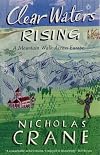
An honest account of Nicolas Crane's walk from Finesterre to Istanbul, across the mountains in the way.
I particularly enjoyed the section through the Alps and the Carpathians. He writes with sympathy and awe about the mountain people he meets, mostly shepherds and he writes knowledgeably about the land and its history.
This is a book you can pick and choose from, but it is also a coherent whole; he talks honestly about how much he misses his partner and of their brief meetings over the 18 show more months of the walk. He also talks honestly about how he felt at the end of the walk. show less
I particularly enjoyed the section through the Alps and the Carpathians. He writes with sympathy and awe about the mountain people he meets, mostly shepherds and he writes knowledgeably about the land and its history.
This is a book you can pick and choose from, but it is also a coherent whole; he talks honestly about how much he misses his partner and of their brief meetings over the 18 show more months of the walk. He also talks honestly about how he felt at the end of the walk. show less
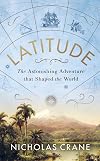
"Latitude: The Astonishing Adventure That Shaped the World" by Nicholas Crane is a well-researched account of an expedition that calculated whether or not the Earth is spherical or oblong.
The book tried, but failed, to show the European adventurers who traveled to South America as comically inept. The failure was due to the fact that the scientists were given little exposition and few character traits, thereby causing tremendous confusion when their names were brought up again and again. show more The excitement of the book came from the conflicts between these scientists, all of whom we are told have giant egos. Their egotism is only shown in their professional conflicts.
Throughout the book, the adventuring scientists faced the natural dilemmas of any explorer - mosquitos, unbearable cold, unbearable heat - that occasionally sidetrack them, but nothing that is near fatal enough to possibly doom the expedition.
"Latitude" ended up being a bore for me because I found the events circular and the biographies of the characters one-dimensional. I was hoping for something more disastrous or incompetent, but it seemed to be just a regular expedition with a few conflicts of little significance. show less
The book tried, but failed, to show the European adventurers who traveled to South America as comically inept. The failure was due to the fact that the scientists were given little exposition and few character traits, thereby causing tremendous confusion when their names were brought up again and again. show more The excitement of the book came from the conflicts between these scientists, all of whom we are told have giant egos. Their egotism is only shown in their professional conflicts.
Throughout the book, the adventuring scientists faced the natural dilemmas of any explorer - mosquitos, unbearable cold, unbearable heat - that occasionally sidetrack them, but nothing that is near fatal enough to possibly doom the expedition.
"Latitude" ended up being a bore for me because I found the events circular and the biographies of the characters one-dimensional. I was hoping for something more disastrous or incompetent, but it seemed to be just a regular expedition with a few conflicts of little significance. show less
Lists
Awards


You May Also Like


Associated Authors
Statistics
- Works
- 45
- Also by
- 4
- Members
- 1,540
- Popularity
- #16,721
- Rating
- 3.7
- Reviews
- 34
- ISBNs
- 78
- Languages
- 8