

Supriya Kelkar
Author of The Many Colors of Harpreet Singh
Works by Supriya Kelkar
The Cobra's Sonng 1 copy
The Hindi Book of Food 1 copy
More Hindi Words 1 copy
The Gujarati Book of Animals 1 copy
More Marathi Words 1 copy
The Marathi Book of Animals 1 copy
The Marathi Book of Food 1 copy
More Gujarati Words 1 copy
The Gujarati Book of Food 1 copy
Associated Works
The Door Is Open: Stories of Celebration and Community by 11 Desi Voices (2024) — Contributor — 26 copies, 2 reviews
Tagged
Common Knowledge
- Gender
- female
- Education
- University of Michigan (BA|Film and Psychology)
- Occupations
- screenwriter
- Agent
- Kathleen Rushall (Andrea Brown Literary)
- Nationality
- USA
- Places of residence
- Plymouth, Michigan, USA
- Associated Place (for map)
- Michigan, USA
Members
Reviews

An exuberant young boy who liked to express his emotional state through the color of his patka - the patka is a style of turban often worn by younger Sikh boys - Harpreet Singh wasn't thrilled when his parents announced that they were moving from sunny California to a snowier region of the country. Shy and ill-at-ease in his new home and school, he took to wearing white, hoping to disappear from sight. Nothing his parents did could cheer him up. Then one snowy day he found a lovely yellow show more hat, and, returning it to its owner, got to know his new classmate Abby. Soon his outlook had improved, and he was back to wearing all kinds of colors... include white, to remind him of the snow on the ground, when he made his first new friend!
The Many Colors of Harpreet Singh was a delightful picture-book, only the second I have read, following upon Super Satya Saves the Day, to specifically feature Sikh children, and the first I have read addressing the Sikh custom of wearing a turban. There is an afterword from scholar Simran Jeet Singh about the meaning of the turban in Sikh tradition, but while I appreciated this inclusion, and the opportunity the book affords young children to (potentially) learn about new customs, in the end what was most appealing here was the story itself, as well as the colorful artwork. Harpreet's experience of being a fish out of water in his new home is one that will feel familiar to many children, while the hopeful ending, in which he makes a new friend, will also strike a chord. The illustrations are charming - colorful, cute and expressive - and well-suited to a tale featuring color so prominently. Recommended to anyone looking for children's stories about moving, about emotions, or about the experiences of Sikh children. show less
The Many Colors of Harpreet Singh was a delightful picture-book, only the second I have read, following upon Super Satya Saves the Day, to specifically feature Sikh children, and the first I have read addressing the Sikh custom of wearing a turban. There is an afterword from scholar Simran Jeet Singh about the meaning of the turban in Sikh tradition, but while I appreciated this inclusion, and the opportunity the book affords young children to (potentially) learn about new customs, in the end what was most appealing here was the story itself, as well as the colorful artwork. Harpreet's experience of being a fish out of water in his new home is one that will feel familiar to many children, while the hopeful ending, in which he makes a new friend, will also strike a chord. The illustrations are charming - colorful, cute and expressive - and well-suited to a tale featuring color so prominently. Recommended to anyone looking for children's stories about moving, about emotions, or about the experiences of Sikh children. show less
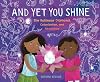
And Yet You Shine is told in the second person, addressed to the Kohinoor diamond, which was mined in India around 1526 and frequently stolen throughout history since; even today, it resides in England as part of the crown jewels collection. This unique method of storytelling is an effective way to trace the history of the diamond, as well as the people of its native region. Mixed media illustrations feature cut paper and craft store gems, as well as two brown-skinned characters (one with show more long hair in a braid, one with short hair). The diamond also functions as a metaphor for indigenous, colonized people themselves, who have survived violence, upheaval, and theft of resources; but "no matter what, / they can't / they won't / they'll never dull / your shine."
Extensive, advanced back matter includes a history of the Kohinoor diamond, a note on alluvial mining, information on colonization, and "How Can You Decolonize?" with suggestions like pronouncing your own and others' names correctly, acknowledging injustices, expanding beauty standards, and questioning whose story is being told and by whom. show less
Extensive, advanced back matter includes a history of the Kohinoor diamond, a note on alluvial mining, information on colonization, and "How Can You Decolonize?" with suggestions like pronouncing your own and others' names correctly, acknowledging injustices, expanding beauty standards, and questioning whose story is being told and by whom. show less
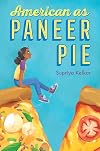
Indian-American sixth-grader Lekha (LAY-khaa) is really two people: shy "School Lekha" and outgoing "Home Lekha." When her new neighbor turns out to be a girl her age who has just moved from India, Lekha is worried that they will be lumped together and made fun of at school. (Lekha's friend and neighbor Noah wants to write op-eds about injustice and standing up for what's right, but has a hard time putting words into action when it comes to standing up to bullies on his or Lekha's behalf.) show more But Avantika (uh-VUHNT-ih-kah) is more confident than Lekha (or Noah); she easily corrects people who mispronounce her name, and talks back to kids who try to make fun of her. Meanwhile, Lekha has finally made the Dolphins swim team but has trouble navigating the waters with her white teammates - Harper, Kendall, and Aidy - some of whom make fun of her and whose families support the anti-immigrant candidate for senator. At last, a hate crime spurs Lekha to write her own op-ed and deliver it at a town hall event with the senator.
Back matter includes Paneer Pie recipe (paneer and pizza dough)
See also: Save Me A Seat by Sarah Weeks and Gita Varadarajan
Quotes
I wouldn't have the courage to stick up for her since I didn't have any to stand up for myself, let alone a stranger at school...[I was] being force-fed a friendship I just wasn't interested in. (43)
"Why do you cover up everything that makes you YOU? So what if....people know you're Indian?" (Avantika to Lekha, 124)
"Do you want to fit in with us or do you want to fit in with her?" (Aidy to Lekha, 149)
Maybe Aai was right not to tell the police. To just be quiet about it all. Maybe Aai was right to be so scared. (Lekha re: her mother, 214)
...what was the point in trying to explain something to someone who wouldn't change? (259)
"A lot of people think only one thing about me. You don't know. You haven't grown up with them."
"That may be true, but you have to think more of yourself." (Lekha and Avantika, 279)
Why couldn't I just be brave all the time? I knew why. Because it was hard. It was hard to speak out against things that were wrong. It was hard to speak up for things that were right." (281)
"Those what-ifs are awful, aren't they? ...There are so many bad what-ifs that pop into my head all the time. But if you just think about the bad what-ifs, you miss out on the good what-ifs. Likes, 'What if Lekha changes the world?'" (Aai, 288) show less
Back matter includes Paneer Pie recipe (paneer and pizza dough)
See also: Save Me A Seat by Sarah Weeks and Gita Varadarajan
Quotes
I wouldn't have the courage to stick up for her since I didn't have any to stand up for myself, let alone a stranger at school...[I was] being force-fed a friendship I just wasn't interested in. (43)
"Why do you cover up everything that makes you YOU? So what if....people know you're Indian?" (Avantika to Lekha, 124)
"Do you want to fit in with us or do you want to fit in with her?" (Aidy to Lekha, 149)
Maybe Aai was right not to tell the police. To just be quiet about it all. Maybe Aai was right to be so scared. (Lekha re: her mother, 214)
...what was the point in trying to explain something to someone who wouldn't change? (259)
"A lot of people think only one thing about me. You don't know. You haven't grown up with them."
"That may be true, but you have to think more of yourself." (Lekha and Avantika, 279)
Why couldn't I just be brave all the time? I knew why. Because it was hard. It was hard to speak out against things that were wrong. It was hard to speak up for things that were right." (281)
"Those what-ifs are awful, aren't they? ...There are so many bad what-ifs that pop into my head all the time. But if you just think about the bad what-ifs, you miss out on the good what-ifs. Likes, 'What if Lekha changes the world?'" (Aai, 288) show less
Good book, chronicling the othering of living in a predominantly white town as an American kid with a southeast Asian family heritage. I liked the friendships, the interesting dive into swim team, the many things Lekha loves about her heritage and the way Avantika takes no grief from her classmates. Kelkar brings a fresh voice and great storytelling. Tackles microaggressions and racist incidents with thoughtfulness and a really sensitive portrayal of how people react really differently when show more singled out or attacked for their identities. show less
Lists
Awards


You May Also Like


Associated Authors
Statistics
- Works
- 27
- Also by
- 2
- Members
- 953
- Popularity
- #27,013
- Rating
- 4.0
- Reviews
- 58
- ISBNs
- 56
- Languages
- 1
