
Barbara Dee
Author of Maybe He Just Likes You
About the Author
Image credit: via Goodreads
Works by Barbara Dee
Solving Zoe 2 copies
Solving Zoe (mix) 1 copy
Tagged
Common Knowledge
- Gender
- female
- Agent
- Jill Grinberg
Members
Reviews
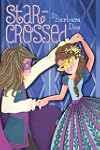
This is a cute, sweet little book, but you'd think if an author wants to make disenfranchised kids feel included, they might not describe the only explicitly fat character in the book as disgusting. What does that say to the fat kid reading this book, who may or may not also be gay? It tells them that being lesbian or gay or bi is fine, but being fat is disgusting, and nobody would choose to love you, as the protagonist's sister declares. The author should frankly be ashamed of herself.
Not gonna lie, I teared up a lot during this book. It's not because the content is sad -- on the contrary, this is this sweet, funny, girl-who-likes-girls, Shakespeare-inspired, middle grade novel that I have been pining for. Nope, I teared up because this book is just about perfect, and I wish I could have read it when I was a kid.

When her older brother develops bipolar disorder, a seventh grader must cope with its effect on her family.
When Zinnia’s parents get the call that her older brother, Gabriel, has been in a car accident, time, like Gabriel’s new diagnosis of bipolar disorder, seems to take on a life of its own. Chapter headings that mix vague and specific days and times reinforce this notion. Likewise, flashbacks to odd and even scary events with her brother help Zinny see that Gabriel’s condition was show more not a sudden onset. Although the story focuses on how Zinny deals with this conflict on a personal level, such as retreating from friends, it also explores the effects of mental illness on Zinny’s entire family (who seem to be white). While Gabriel recovers in a treatment center, Zinny’s narration reveals that her mom wants to keep everything secret, her dad’s working longer hours, her older sister feels guilty, and, with attention elsewhere, her younger brother is neglected. There’s no single savior who helps Zinny but instead a string of people and events that work together: a lunchtime therapy group at school (both group and student body are diverse), a school counselor who notes the harm of “crazy” language, scientific experiments that reframe her thinking, forming new friendships and salvaging old ones, and finding humor where she can. The last brings levity to this tough topic.
A carefully crafted blend of realism, age-appropriate sensibilities, and children’s interests. (Fiction. 9-13)
-Kirkus Review show less
When Zinnia’s parents get the call that her older brother, Gabriel, has been in a car accident, time, like Gabriel’s new diagnosis of bipolar disorder, seems to take on a life of its own. Chapter headings that mix vague and specific days and times reinforce this notion. Likewise, flashbacks to odd and even scary events with her brother help Zinny see that Gabriel’s condition was show more not a sudden onset. Although the story focuses on how Zinny deals with this conflict on a personal level, such as retreating from friends, it also explores the effects of mental illness on Zinny’s entire family (who seem to be white). While Gabriel recovers in a treatment center, Zinny’s narration reveals that her mom wants to keep everything secret, her dad’s working longer hours, her older sister feels guilty, and, with attention elsewhere, her younger brother is neglected. There’s no single savior who helps Zinny but instead a string of people and events that work together: a lunchtime therapy group at school (both group and student body are diverse), a school counselor who notes the harm of “crazy” language, scientific experiments that reframe her thinking, forming new friendships and salvaging old ones, and finding humor where she can. The last brings levity to this tough topic.
A carefully crafted blend of realism, age-appropriate sensibilities, and children’s interests. (Fiction. 9-13)
-Kirkus Review show less

#me too for the middle school set. This is superbly done and so needed for girls and boys alike at the cusp of teenage years with bodies and social roles changing. Barbara Dee covers it all with empathy, intelligence, and even some humor in a completely age appropriate way. I read her book in preparation for her visit to our school and was gratified on all counts. 7th grader Mila is concerned with the shifting dynamics of her friend group, with her placement in concert band, her studies and show more her home life. She and a younger sister live with their single Mom who is struggling to make ends meet. That's a lot on any kid's plate, but Mila is handling it pretty well. The tipping point comes from some unwanted attention from boys in her class. Suddenly they are crowding her, requesting hugs (be a good sport, Mila), pushing boundaries, and one even grabs her. They all maintain innocence - "we're just goofing around" and Mila seriously begins to doubt herself and her perceptions. “Sometimes you could look at something right up close and still not know what you were seeing.” P. 107 When she does "fight back" it is ill-timed and over-the-top and makes her seem the aggressor. She even gets in trouble on a couple occasions. One "friend" claims she is asking for the attention, another is very docile and quiet herself, and another has his own issues to face. Teachers seem oblivious and her Mom is too burdened (in Mila's perception) to bother. How this all resolves is genius and could be a model for schools everywhere. Mila finds her strength in martial arts and music and ultimately finds a way to be heard. A teacher finds a way to make Mila and the boys listen to each other and understand the need to respect boundaries and personal space. An excellent way to open the conversation about consent and the sanctity of your own body. show less
Lists
Awards


You May Also Like


Associated Authors
Statistics
- Works
- 19
- Members
- 1,418
- Popularity
- #18,140
- Rating
- 4.2
- Reviews
- 68
- ISBNs
- 89
- Languages
- 2