
Alicia D. Williams
Author of Genesis Begins Again
About the Author
Works by Alicia D. Williams
Jump at the Sun: The True Life Tale of Unstoppable Storycatcher Zora Neale Hurston (2021) 119 copies, 3 reviews
Tagged
Common Knowledge
- Legal name
- Williams, Alicia Diane
- Birthdate
- 1970-09-26
- Gender
- female
- Education
- University of Kentucky (African American Studies|BA|1994)
American Musical and Dramatic Academy (New York|theatre)
Hamline University (graduate school|2012) - Occupations
- flight attendant
teaching assistant - Nationality
- USA
- Places of residence
- Detroit, Michigan, USA
New York, New York, USA
Charlotte, North Carolina, USA - Associated Place (for map)
- USA
Members
Reviews

Genesis Anderson has had to deal with her father's drinking, comments about her dark coloring, and - once again- getting evicted when he doesn't pay the rent. Ultimately, she wants to have lighter skin like her mother. The constant colorism from her family and schoolmates becomes pervasive and defining for Genesis, who's internalized it and continued keeping a list of the things she dislikes about herself. But once again evicted, her family moves to yet another house and Gen starts at show more another school, beginning to make friends and connecting with the chorus teacher.
I had an interesting relationship reading this book. Genesis narrates, and sometimes being in her head was really intense and I needed to take a break. Other times, I wanted to keep reading and finding out what would happen next. There were both sad and hopeful moments in good balance, and I liked the generally positive message the book sends about healthy relationships with parents - especially her mom - and the challenges that come with dealing with alcoholism and negative self-talk. There are no easy answers, and I think many parents/teachers would want to discuss the difficult topics it addresses with kids who are reading it. show less
I had an interesting relationship reading this book. Genesis narrates, and sometimes being in her head was really intense and I needed to take a break. Other times, I wanted to keep reading and finding out what would happen next. There were both sad and hopeful moments in good balance, and I liked the generally positive message the book sends about healthy relationships with parents - especially her mom - and the challenges that come with dealing with alcoholism and negative self-talk. There are no easy answers, and I think many parents/teachers would want to discuss the difficult topics it addresses with kids who are reading it. show less
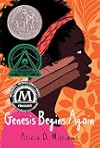
Thirteen-year-old Genesis Anderson is a black girl who has been dealt a heavy hand in life.
She’s had to move several times because her family keeps getting evicted thanks to her alcoholic, gambling father, who defaults on the rent. Genesis hates her circumstances, and even more, she hates the skin she’s in. Dark-skinned like her father—who takes no pride in their resemblance, especially when he’s drunk and mean—Genesis wants nothing more than to look like her light-skinned mother. show more With kids calling her names (Charcoal, Eggplant, Blackie) and a chiding grandmother who spouts backward colorist ideologies, it’s no wonder. Genesis desperately wants to be accepted, even causing herself physical pain to change the look of her skin and hair in order to attain it. But Genesis has a talent that demands that she stand out. With the help of her chorus teacher, Genesis discovers a way to navigate the pain she carries. With smooth and engrossing prose, debut novelist Williams takes readers through an emotional, painful, yet still hopeful adolescent journey. Along the way she references accomplished black activists, athletes, artists, and, notably, musicians such as Billie Holliday, Ella Fitzgerald, and Etta James, all in a way that feels natural and appropriate. This book may bring readers to tears as they root for Genesis to finally have the acceptance she craves—but from herself rather than anyone else.
It’s a story that may be all too familiar for too many and one that needed telling. (Fiction. 10-14)
-Kirkus Review show less
She’s had to move several times because her family keeps getting evicted thanks to her alcoholic, gambling father, who defaults on the rent. Genesis hates her circumstances, and even more, she hates the skin she’s in. Dark-skinned like her father—who takes no pride in their resemblance, especially when he’s drunk and mean—Genesis wants nothing more than to look like her light-skinned mother. show more With kids calling her names (Charcoal, Eggplant, Blackie) and a chiding grandmother who spouts backward colorist ideologies, it’s no wonder. Genesis desperately wants to be accepted, even causing herself physical pain to change the look of her skin and hair in order to attain it. But Genesis has a talent that demands that she stand out. With the help of her chorus teacher, Genesis discovers a way to navigate the pain she carries. With smooth and engrossing prose, debut novelist Williams takes readers through an emotional, painful, yet still hopeful adolescent journey. Along the way she references accomplished black activists, athletes, artists, and, notably, musicians such as Billie Holliday, Ella Fitzgerald, and Etta James, all in a way that feels natural and appropriate. This book may bring readers to tears as they root for Genesis to finally have the acceptance she craves—but from herself rather than anyone else.
It’s a story that may be all too familiar for too many and one that needed telling. (Fiction. 10-14)
-Kirkus Review show less
I can't help but wonder how it feels to be so bound up that you can't be or do what you want" (pg 72).
Despite the gorgeous cover, I was a bit wary about reading this because I didn’t know if this was just going to be a depressing-beat-you-down story. That type of stuff can drag your esteem down if you’re not already in a place of self-love. Thankfully, that wasn't the case. I think this is a great book for young black girls. It tackles the effects of colorism in a relatable way, even for show more those who colorism effects in a more positive light. hopefully, this models why all the derogatory, color-based names are wrong (I’m looking at you, my old Sunday School class. first time, I had heard of kids referring to themselves as burnt shea butter, burnt chocolate, and anything else burnt).
Dang, this is realistic fiction! Poor Genesis’ mom is with a dusty, colorist, and drunkard broke-a-joke. Count the struggles, y’all. Even though Genesis’ dad is trifling (no buts about it), the story doesn’t neglect his own struggles with colorism. No one likes being on the receiving end of you-so-black/dark jokes. Even, Genesis’ grandma on some paper bag test junk! I really like Genesis’ narrative because you understand exactly why she thinks and acts like she does.
This might be lost on those who don’t recognize all the lesser effects of colorism. But, yes, Genesis’ father berating her skin despite being dark-skinned himself is very realistic. I have seen it many times when men marry their opposite and are surprised when their daughters come out looking like themselves and not the mothers.
I won’t lie. My eyes started watering at certain parts. It acknowledges that you can bring up “Black is beautiful (and yes, it is! No negation there)”, but it doesn’t magically erase everything. Sometimes, you can’t put a band-aid over the names, the way society or even loved ones can view your skin. This is why colorism can be such a tough topic to talk about because sometimes people don’t want to talk about the nitty-gritty. Still, I think this book was great. It's tough seeing Genesis' various methods to try and lighten her skin but the conclusion at the end is worth it. Genesis Begins Again manages to tackle heavy issues in a simple and relatable way and sneak in some Harlem Renaissance singers/Black History facts.
4 stars only for...
Anyway, I recommend it! show less

In the summer between eighth and ninth grade, Isaiah and his best friends Darius and Drew have a passion for setting world records, but when an altercation and an accident combine into tragedy, Isaiah sinks into grief and depression. Drew seems to be shutting him out and becoming closer friends with Marcus and Randy, who call Isaiah "flower boy" (his mom is a gardener and horticulturalist, and he shares her interest in plants). Isaiah's mom thinks a change of scene will help, and says he can show more go with his dad (a National Geographic photographer) on a work trip, or go down south to his aunt and uncle's. Isaiah reluctantly goes with Uncle Vent and Aunt Terri. There, he meets talkative younger boy Grady, and Grady's pretty older sister Kiana; he finally opens up about everything that happened, and finds the courage to prove to himself he can tackle hard things (e.g. biking down a steep hill). When he returns to Detroit, he has a hard conversation with Drew, whose younger brother has sickle cell anemia and whose father is in jail - not in the army, as he led Isaiah to believe.
This novel in verse is full of joyful exuberance, the pain of losing a friend, developing the confidence in one's own identity, and learning to see outside your own perspective and empathize with others. show less
This novel in verse is full of joyful exuberance, the pain of losing a friend, developing the confidence in one's own identity, and learning to see outside your own perspective and empathize with others. show less
Lists
Awards


You May Also Like


Associated Authors
Statistics
- Works
- 6
- Members
- 986
- Popularity
- #26,110
- Rating
- 4.3
- Reviews
- 58
- ISBNs
- 33
- Languages
- 1