
Carole Boston Weatherford
Author of Moses: When Harriet Tubman Led Her People to Freedom
About the Author
Works by Carole Boston Weatherford
Voice of Freedom: Fannie Lou Hamer: The Spirit of the Civil Rights Movement (2015) 560 copies, 39 reviews
Standing in the Need of Prayer: A Modern Retelling of the Classic Spiritual (2022) 128 copies, 21 reviews
A Song for the Unsung: Bayard Rustin, the Man Behind the 1963 March on Washington (2022) 75 copies, 2 reviews
Racing Against the Odds: The Story of Wendell Scott, Stock Car Racing's African-American Champion (2009) 28 copies, 6 reviews
Great African-American Lawyers: Raising the Bar of Freedom (Collective Biographies) (2003) 10 copies
When I Move 3 copies
Africa 1 copy
Associated Works
No Voice Too Small: Fourteen Young Americans Making History (2020) — Contributor — 63 copies, 2 reviews
Tagged
Common Knowledge
- Birthdate
- 1956
- Gender
- female
- Education
- University of Baltimore (MA|Publication Design)
University of North Carolina, Greensboro (MFA) - Occupations
- poet
children's book author
literary critic
university professor - Organizations
- Fayetteville State University
- Awards and honors
- Caldecott Honor Medal
Coretta Scott King Award
Children's Literature Legacy Award (2025) - Nationality
- USA
- Birthplace
- Baltimore, Maryland, USA
- Places of residence
- Baltimore, Maryland, USA
North Carolina, USA - Associated Place (for map)
- USA
Members
Reviews

This outstanding book tells an important story, while demonstrating on a meta level how to present horrific and unpleasant but factual information to children in the most positive way possible.
On June 1, 1921, as many as 10,000 armed white Tulsans attacked the thriving and prosperous Black community of Greenwood in Tulsa, leaving between 150 and 300 people dead and more than 8,000 homeless. The provocation was an old and unfortunately common canard maintaining that Black men wanted to defile show more white women.
[This assertion was no doubt born out of projection by white men about their designs on Black women. See, for example, the book by Rachel A Feinstein, When Rape Was Legal: The Untold History of Sexual Violence During Slavery, Routledge, 2019, or the article "Rape as a Badge of Slavery: The Legal History of, and Remedies For, Prosecutorial Race-of-Vicim Charging Disparities," by Law Professor Jeffrey J. Pokorak in the Nevada Law Journal, 2006, online here.]
As Civil Rights activist W.E.B Du Bois opined in a 1929 speech about "Nordics":
They have been responsible for more intermixture of races than any other people, ancient and modern, and they have inflicted this miscegenation on helpless unwilling slaves by force, fraud and insult; and this is the folk that today has the impudence to turn on the darker races, when they demand a share of civilization, and cry: “You shall not marry our daughters!”
The blunt, crude reply is: Who in Hell asked to marry your daughters?"
This time, in Tulsa, a white girl alleged that a black teenager assaulted her in some way. The facts were in dispute, and as the Smithsonian reports in its history of the ensuing massacre, “even white police detectives thought the accusation dubious.” But as Weatherford observes in her “Author’s Note” at the end of this book, in the post-World War I environment in the U.S., racial tensions were high, with returning Black soldiers somehow thinking they might receive greater respect after having fought and shed blood for their country. Whites thought otherwise. Weatherford writes:
“Regardless of the supposed cause, the white mobs’ motives were always to limit Black political and economic progress and to reassert white supremacy.”
[Sadly, the same could be said still today of the MAGA movement and related white supremicist organizations.]
After the alleged provocation in Tulsa, which the local newspaper immediately reported on as a factual assault, a white mob formed with the aim of lynching the Black teenager. Of course, they didn’t stop with him during their sixteen-hour rampage - in fact, they never got the boy, who left town. But the white mob was undeterred: rioters broke into homes as well as businesses, robbing cash, clothing, jewelry, keepsakes and other personal property before setting fire to buildings. Ultimately, 35 square blocks burned to the ground.
Weatherford tells the story by focusing mostly on describing Greenwood before the massacre. She clearly did her homework, having availed herself of research by the Oklahoma Commission to Study the Tulsa Race Riot of 1921, the Oklahoma and Tulsa historical societies, and the Greenwood Cultural Association.
Greenwood was called the “Negro Wall Street of America” and had dozens of restaurants, stores, several libraries, a hospital, a separate school system, a luxury hotel, two Black-owned newspapers, two movie theaters, and a Black surgeon known as “the most able Black surgeon in the nation.” (Dr.Jackson was one of those killed in the violence.). The area was marked by success and prosperity. As Weatherford recounts, “There were even six privately owned airplanes.”
Whites were resentful - just looking for an excuse to light the match, and they did.
When the National Guard arrived the day after the looting, killing, and burning, “all that was left to do was put out fires and move thousands of Black residents into camps outside of Tulsa.”
The author makes a critical observation in her Author’s Note:
“Seventy-five years passed before lawmakers launched an investigation to uncover the painful truth about the worse racial attack in United States history: police and city officials had plotted with the white mob to destroy the nation’s wealthiest Black community.”
She ends the story by mentioning Tulsa’s Reconciliation Park that memorializes the victims and is “a place to realize the responsibility we all have to reject hatred and violence and to instead choose hope.”
The book concludes with notes by both the author and the illustrator.
Award-winning illustrator Floyd Cooper has personal ties to this story; his grandfather had grown up in Greenwood. Cooper wrote in his Illustrator’s Note, “Everything I knew about this tragedy came from Grandpa; not a single teacher at school ever spoke of it.”
Cooper’s personal connection to the story is reflected in the stunning and moving pictures he created to help tell this story. He explains:
“My grandpa passed away many years ago, but I hope that my art and Carole Boston Weatherford’s words can speak for Grandpa.”
Cooper fills all the space on the double-page spreads with pictures dominated by sepia and brown tones occasionally highlighted with spots of color. The expression on the faces of the people he paints convey more than words ever could.
He uses a technique he calls “a subtractive process” by painting an illustration board with oil paint, and then applying an eraser to the paintings. The result lends softness, warmth, and texture to his mesmerizing pictures, as well as a suggestion (enhanced by his research) that readers are seeing historical representations.
Discussion: A recurring question posed by readers and writers of books for children is how to present difficult history to young children. The author herself, in an interview about this book, opined:
“I decided a few years ago to tackle the subject. If children of the past were — and still are — victimized by racial hatred, then today’s children can learn about it. I do not think that young readers are too tender for tough topics.”
Floyd Cooper, in the same interview, added:
“. . . I personally link the pervasive assault on truth that we see in our politics and media directly to historical truths that exist and have existed and are now being brought to light. A good thing for America. And of course there will be many who are and were just fine with leaving truth under the rug where it is had been swept for far too long.
Eventually, truth will always out. That is different from what it once was. With such a change comes resistance to that change, an unwillingness to accept the change, to accept the truth. That can lead to uncomfortable times. But there is a better day on the other side of change. After the wounds have healed, a much better day awaits! Our young will live in better times together in acceptance of the way things really are if we give them the truth. But we must teach them truth in ways they can comprehend. There is no greater gift than truth. [emphasis added]”
Readers wanting to know more will find a great resource in the April 2021 Smithsonian Magazine retrospective coverage of the event. There are interviews, photos, a wonderful annotated map of Black Tulsa, and testimony about the way in which the history of the massacre has been hidden for years. The article also cites the 2001 report produced over 70 years afterwards by the Tulsa Race Riot Commission, which “discovered reams of government and legal documents that had been hidden away for decades.” The commission concluded:
“There was no doubt while Tulsa officials were to blame for the massacre; they not only failed to prevent the bloodshed but had also deputized white civilians who took part in the burning and killing. And yet not one white person was brought to justice for the atrocities.”
Evaluation: Suggested readership is ages 8-12, but there is not one single American who should not read this book, learn the history it imparts, and contemplate its message. Highly recommended. show less
On June 1, 1921, as many as 10,000 armed white Tulsans attacked the thriving and prosperous Black community of Greenwood in Tulsa, leaving between 150 and 300 people dead and more than 8,000 homeless. The provocation was an old and unfortunately common canard maintaining that Black men wanted to defile show more white women.
[This assertion was no doubt born out of projection by white men about their designs on Black women. See, for example, the book by Rachel A Feinstein, When Rape Was Legal: The Untold History of Sexual Violence During Slavery, Routledge, 2019, or the article "Rape as a Badge of Slavery: The Legal History of, and Remedies For, Prosecutorial Race-of-Vicim Charging Disparities," by Law Professor Jeffrey J. Pokorak in the Nevada Law Journal, 2006, online here.]
As Civil Rights activist W.E.B Du Bois opined in a 1929 speech about "Nordics":
They have been responsible for more intermixture of races than any other people, ancient and modern, and they have inflicted this miscegenation on helpless unwilling slaves by force, fraud and insult; and this is the folk that today has the impudence to turn on the darker races, when they demand a share of civilization, and cry: “You shall not marry our daughters!”
The blunt, crude reply is: Who in Hell asked to marry your daughters?"
This time, in Tulsa, a white girl alleged that a black teenager assaulted her in some way. The facts were in dispute, and as the Smithsonian reports in its history of the ensuing massacre, “even white police detectives thought the accusation dubious.” But as Weatherford observes in her “Author’s Note” at the end of this book, in the post-World War I environment in the U.S., racial tensions were high, with returning Black soldiers somehow thinking they might receive greater respect after having fought and shed blood for their country. Whites thought otherwise. Weatherford writes:
“Regardless of the supposed cause, the white mobs’ motives were always to limit Black political and economic progress and to reassert white supremacy.”
[Sadly, the same could be said still today of the MAGA movement and related white supremicist organizations.]
After the alleged provocation in Tulsa, which the local newspaper immediately reported on as a factual assault, a white mob formed with the aim of lynching the Black teenager. Of course, they didn’t stop with him during their sixteen-hour rampage - in fact, they never got the boy, who left town. But the white mob was undeterred: rioters broke into homes as well as businesses, robbing cash, clothing, jewelry, keepsakes and other personal property before setting fire to buildings. Ultimately, 35 square blocks burned to the ground.
Weatherford tells the story by focusing mostly on describing Greenwood before the massacre. She clearly did her homework, having availed herself of research by the Oklahoma Commission to Study the Tulsa Race Riot of 1921, the Oklahoma and Tulsa historical societies, and the Greenwood Cultural Association.
Greenwood was called the “Negro Wall Street of America” and had dozens of restaurants, stores, several libraries, a hospital, a separate school system, a luxury hotel, two Black-owned newspapers, two movie theaters, and a Black surgeon known as “the most able Black surgeon in the nation.” (Dr.Jackson was one of those killed in the violence.). The area was marked by success and prosperity. As Weatherford recounts, “There were even six privately owned airplanes.”
Whites were resentful - just looking for an excuse to light the match, and they did.
When the National Guard arrived the day after the looting, killing, and burning, “all that was left to do was put out fires and move thousands of Black residents into camps outside of Tulsa.”
The author makes a critical observation in her Author’s Note:
“Seventy-five years passed before lawmakers launched an investigation to uncover the painful truth about the worse racial attack in United States history: police and city officials had plotted with the white mob to destroy the nation’s wealthiest Black community.”
She ends the story by mentioning Tulsa’s Reconciliation Park that memorializes the victims and is “a place to realize the responsibility we all have to reject hatred and violence and to instead choose hope.”
The book concludes with notes by both the author and the illustrator.
Award-winning illustrator Floyd Cooper has personal ties to this story; his grandfather had grown up in Greenwood. Cooper wrote in his Illustrator’s Note, “Everything I knew about this tragedy came from Grandpa; not a single teacher at school ever spoke of it.”
Cooper’s personal connection to the story is reflected in the stunning and moving pictures he created to help tell this story. He explains:
“My grandpa passed away many years ago, but I hope that my art and Carole Boston Weatherford’s words can speak for Grandpa.”
Cooper fills all the space on the double-page spreads with pictures dominated by sepia and brown tones occasionally highlighted with spots of color. The expression on the faces of the people he paints convey more than words ever could.
He uses a technique he calls “a subtractive process” by painting an illustration board with oil paint, and then applying an eraser to the paintings. The result lends softness, warmth, and texture to his mesmerizing pictures, as well as a suggestion (enhanced by his research) that readers are seeing historical representations.
Discussion: A recurring question posed by readers and writers of books for children is how to present difficult history to young children. The author herself, in an interview about this book, opined:
“I decided a few years ago to tackle the subject. If children of the past were — and still are — victimized by racial hatred, then today’s children can learn about it. I do not think that young readers are too tender for tough topics.”
Floyd Cooper, in the same interview, added:
“. . . I personally link the pervasive assault on truth that we see in our politics and media directly to historical truths that exist and have existed and are now being brought to light. A good thing for America. And of course there will be many who are and were just fine with leaving truth under the rug where it is had been swept for far too long.
Eventually, truth will always out. That is different from what it once was. With such a change comes resistance to that change, an unwillingness to accept the change, to accept the truth. That can lead to uncomfortable times. But there is a better day on the other side of change. After the wounds have healed, a much better day awaits! Our young will live in better times together in acceptance of the way things really are if we give them the truth. But we must teach them truth in ways they can comprehend. There is no greater gift than truth. [emphasis added]”
Readers wanting to know more will find a great resource in the April 2021 Smithsonian Magazine retrospective coverage of the event. There are interviews, photos, a wonderful annotated map of Black Tulsa, and testimony about the way in which the history of the massacre has been hidden for years. The article also cites the 2001 report produced over 70 years afterwards by the Tulsa Race Riot Commission, which “discovered reams of government and legal documents that had been hidden away for decades.” The commission concluded:
“There was no doubt while Tulsa officials were to blame for the massacre; they not only failed to prevent the bloodshed but had also deputized white civilians who took part in the burning and killing. And yet not one white person was brought to justice for the atrocities.”
Evaluation: Suggested readership is ages 8-12, but there is not one single American who should not read this book, learn the history it imparts, and contemplate its message. Highly recommended. show less
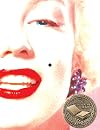
I've always been fascinated by Marilyn Monroe, a captivating icon who hid a lot of pain behind her dazzling smile. Author Carole Boston Weatherford has done a beautiful job giving Marilyn a voice to tell us her own amazing yet heartbreaking story in poems.
The novel is written mainly in first person free verse format, beginning with Marilyn's childhood, then moving through her adult life as a star, and ending just a few weeks before her death. Though this is fictional retelling of Marilyn's show more life, the poems are very raw and personal, like lyrical journal entries.
BEAUTY MARK gives us a poignant look at the complicated, intelligent, and troubled woman underneath the beauty. Gorgeous & heartrending. show less
The novel is written mainly in first person free verse format, beginning with Marilyn's childhood, then moving through her adult life as a star, and ending just a few weeks before her death. Though this is fictional retelling of Marilyn's show more life, the poems are very raw and personal, like lyrical journal entries.
BEAUTY MARK gives us a poignant look at the complicated, intelligent, and troubled woman underneath the beauty. Gorgeous & heartrending. show less
 This review was written for LibraryThing Early Reviewers.
Moses: When Harriet Tubman Led Her People to Freedom (Caldecott Honor Book) by Carole Boston Weatherford
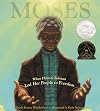
Carole Boston Weatherford opens readers to a beautiful dialogue between Harriett Tubman and God to depict her journey of freeing slaves through the Underground Railroad. Often Harriett Tubman is written as a hero,as she was, but this book focuses on her emotions, her humanity, her emotional toil that accompanied her physical burdens of escaping to freedom. It's beautiful and inspiring to see Harriett Tubman in such a relatable way- doubting her faith, begging for God's help, and letting Him show more lead her. For a girl who sinks into every romance novel, this book shows the love story and undeniable trust between Harriett and her Lord. The detailed illustrations helped me dive into this book and experience the agony Harriett and her fellow slaves felt. show less
Title: Beauty Mark: A Verse Novel of Marilyn Monroe
Author: Carole Boston Weatherford
Format : eBook
Thanks to Edelweiss for the eARC of Beauty Mark for my honest review!
Quick Take : From the day she was born into a troubled home to her reigning days as a Hollywood icon, Marilyn Monroe (nee Norma Jeane Mortenson) lived a life that was often defined by others. Here, in a luminous poetic narrative, acclaimed author Carole Boston Weatherford tells Marilyn's story in a way that restores her show more voice to its rightful place: center stage.
Thoughts : I have been fascinated by Marilyn Monroe since I was a kid, so I jumped at the chance to read an advance readers' copy of Beauty Mark . This book is written in verse, or in poems, starting from childhood to a few weeks before her tragic passing. Weatherford did a wonderful job in giving Monroe her voice, even after all of years. Looking back at her life, it is really sad to see all that Marilyn went though: the numerous orphanages and foster homes, the sexual abuse she suffered, the emotional turmoil of not just her childhood but her throughout her career. But through all of that, she still tried to push through until the end. Beauty Mark is a wonderfully moving book.
Rating: 5 out of 5 Stars show less
Author: Carole Boston Weatherford
Format : eBook
Thanks to Edelweiss for the eARC of Beauty Mark for my honest review!
Quick Take : From the day she was born into a troubled home to her reigning days as a Hollywood icon, Marilyn Monroe (nee Norma Jeane Mortenson) lived a life that was often defined by others. Here, in a luminous poetic narrative, acclaimed author Carole Boston Weatherford tells Marilyn's story in a way that restores her show more voice to its rightful place: center stage.
Thoughts : I have been fascinated by Marilyn Monroe since I was a kid, so I jumped at the chance to read an advance readers' copy of Beauty Mark . This book is written in verse, or in poems, starting from childhood to a few weeks before her tragic passing. Weatherford did a wonderful job in giving Monroe her voice, even after all of years. Looking back at her life, it is really sad to see all that Marilyn went though: the numerous orphanages and foster homes, the sexual abuse she suffered, the emotional turmoil of not just her childhood but her throughout her career. But through all of that, she still tried to push through until the end. Beauty Mark is a wonderfully moving book.
Rating: 5 out of 5 Stars show less
Lists
Awards


Voice of Freedom: Fannie Lou Hamer: The Spirit of the Civil Rights Movement (Historical People, Places, and Events – 2016)
How Do You Spell Unfair? MacNolia Cox and the National Spelling Bee (Historical People, Places, and Events – 2024)
Gordon Parks: How the Photographer Captured Black and White America (Historical People, Places, and Events, 2016; The Arts, 2016)


Voice of Freedom: Fannie Lou Hamer: The Spirit of the Civil Rights Movement (Informational Books for Older Readers – 2015)
How Do You Spell Unfair? MacNolia Cox and the National Spelling Bee (Informational Books for Younger Readers – 2023)
The Roots of Rap: 16 Bars on the 4 Pillars of Hip-Hop (Informational Books for Younger Readers – 2019)
Gordon Parks: How the Photographer Captured Black and White America (Informational Books for Younger Readers – 2015)
Call Me Miss Hamilton: One Woman's Case for Equality and Respect (Informational Books for Younger Readers – 2022)
You May Also Like


Associated Authors
Statistics
- Works
- 86
- Also by
- 3
- Members
- 9,772
- Popularity
- #2,444
- Rating
- 4.2
- Reviews
- 701
- ISBNs
- 330
- Languages
- 2
- Favorited
- 3
