
Lesa Cline-Ransome
Author of Finding Langston
About the Author
Series
Works by Lesa Cline-Ransome
Before There Was Mozart: The Story of Joseph Boulogne, Chevalier de Saint-George (2011) 116 copies, 18 reviews
The Power of Her Pen: The Story of Groundbreaking Journalist Ethel L. Payne (2020) — Author — 95 copies, 3 reviews
Benny Goodman & Teddy Wilson: Taking the Stage as the First Black-and-White Jazz Band in History (2014) 71 copies, 14 reviews
Associated Works
Recognize!: An Anthology Honoring and Amplifying Black Life (2021) — Contributor — 55 copies, 3 reviews
Before She Was Harriet [DVD short film, 2018] — Original Text — 2 copies
Tagged
Common Knowledge
- Gender
- female
Members
Reviews
Before There Was Mozart: The Story of Joseph Boulogne, Chevalier de Saint-George by Lesa Cline-Ransome

An engaging picture-book biography of the eighteenth-century musician, composer and revolutionary, Joseph Boulogne, Before There Was Mozart sets out the story of this talented man, from his childhood on the tiny island of Guadalupe (part of the Leeward Islands), through his adolescence and young adulthood in Paris, where he studied music, and slowly gained the public (and royal) recognition that he deserved. His life was complicated by his status as a person of mixed race - his father was an show more aristocratic Frenchman (who gave him his title, Chevalier de Saint-George), and his mother a Wolof woman, originally from Senegal, and formerly a slave on his father's sugar cane plantation - and he had to struggle against the racial prejudices of his day, in making a place for himself in French society and culture. The narrative concludes with his triumphant first appearance at the royal palace of Versailles, where his virtuosic performance won him the patronage of Marie Antoinette, while the remainder of his life - his role in the French Revolution, his fight against slavery - is detailed in the brief afterword.
Informative and engrossing, Before There Was Mozart is a book that highlights the life story of a celebrated eighteenth-century musical figure who deserves to be better known today. I had heard Saint-George's name before, but really knew nothing about him, so I was glad to be able to correct that omission, although I would have liked to learn a little bit more about his later life as well. The artwork, done by James E. Ransome, is as engaging as the text, with a light-filled quality that I found very appealing. The only thing I didn't like about this book, as it happens, is the title. There's something a little cheap about the Mozart comparison - and Cline-Ransom isn't the only one to do this, as seen by another picture-book biography, The Other Mozart: The Life of the Chevalier Saint-George, or the recording, Le Mozart Noir - as it seems to imply that Saint-George's brilliance can only be established by comparison to his more well-known fellow composer. Leaving that issue aside, this is a book I would recommend to young music lovers, particularly those interested in the life stories of lesser known participants in the western European art music tradition. For my part, I finished it with a desire to become better acquainted with Saint-George's music, particularly his violin concertos! show less
Informative and engrossing, Before There Was Mozart is a book that highlights the life story of a celebrated eighteenth-century musical figure who deserves to be better known today. I had heard Saint-George's name before, but really knew nothing about him, so I was glad to be able to correct that omission, although I would have liked to learn a little bit more about his later life as well. The artwork, done by James E. Ransome, is as engaging as the text, with a light-filled quality that I found very appealing. The only thing I didn't like about this book, as it happens, is the title. There's something a little cheap about the Mozart comparison - and Cline-Ransom isn't the only one to do this, as seen by another picture-book biography, The Other Mozart: The Life of the Chevalier Saint-George, or the recording, Le Mozart Noir - as it seems to imply that Saint-George's brilliance can only be established by comparison to his more well-known fellow composer. Leaving that issue aside, this is a book I would recommend to young music lovers, particularly those interested in the life stories of lesser known participants in the western European art music tradition. For my part, I finished it with a desire to become better acquainted with Saint-George's music, particularly his violin concertos! show less

Award-winning writer Lesa Cline-Ransome's new book will not disappoint readers who appreciate how she combines lessons from history with poignant and inspiring stories.
This historical fiction novel in verse begins in May, 1879, when a Black family joins nine other families to make the trip from Natchez, Mississippi to Nebraska. They were responding to ads offering free land in Nebraska “for the elevation of the colored people of Mississippi.”
Cline-Ransome explains in her Author’s Note show more at the end of the book this fictional group represented some of the “Exodusters . . . a term used for the exodus of the thousands of Black homesteaders who migrated from the South to the West during the period of Reconstruction. . . . this mass exodus was described as the first Great Migration.”
It was only after the 1868 passage of the 14th Amendment, making Blacks citizens of the United States, that they became eligible to take advantage of the 1862 Homestead Act.
The Homestead Act was intended to accelerate the settlement of the western territory by granting any adult citizen 160 acres of surveyed public land for a minimal filing fee and five years of continuous residence on that land. The ability to work on one’s own land picking one’s own crop had great appeal for former slaves. Thomas, the father of the Grier family that is the focus of this story, justified his desire to go to his wife Sylvia:
“I need something to call my own
Can’t be no man
always waiting for someone to tell me
how much he gonna give
When
If…”
As a National Park Service website page on Exodusters [miraculously not yet deleted] reports:
“For people who had spent their lives working the lands of white masters with no freedom or pay, the opportunities offered by these land laws must have seemed the answer to prayer. Many individuals and families were indeed willing to leave the only place they had known to move to a place few of them had ever seen."
So the Griers packed their things and ventured into the unknown, part of some 20,000 Black people that departed the South for the West in the period of 1879-1880. Many kept diaries, and the author availed herself of them to create this story.
Eleven-year-old Lettie was one narrator, and another was her mother Sylvia. A third narrator was added after they had walked more than 50 days and almost 700 miles, when 18-year-old Philomena Pratt, who would be taking a teaching position out West, joined them in Independence, Missouri. Philomena did not want to travel alone, and in exchange for letting her accompany them, not only did she offer to pay, but to help Sylvia with chores.
As for Philomena, she was eager to leave Missouri: “I had no idea how my story would unfold out West/ But I knew one thing/ it was finally my story to write any way I saw fit.”
Their troubles weren’t over yet, however, as long as there were whites unwilling to see Blacks have anything the whites couldn’t take from them for themselves.
At one point, Sylvia reminisced about the times after the Civil War ended, “and we were set free/ we believed all of us did/ that couldn’t nothing hurt us/ the way master had when we were slaves.” But then she tells the story of what happened once to her mama, when white men came to the door. And now, on their journey out West, they knew they were still not safe.
One night in July they heard white voices and hid in terror. The men who came thought they would take what they wanted: “steal our mules hurt our women and children…”. The travelers were able to run them off, but only after one of the men in the company died. After that attack, some in the group turned back.
They faced dangers from the obstacles of nature too, having to cross many rivers along the way. Many Blacks never learned how to swim. Slaves were not taught to swim because it would have made escape easier, especially since dogs couldn’t track their scents in water. Afterwards, because of segregation, public pools were not open to Blacks, or if they were, Blacks were subject to racist attacks. So when it came to traveling through the country on foot, that lack of skill became a big problem.
Lettie suffered a grievous loss during the trip, and much of the story recounts how she processed her profound sorrow. It is in these sections that Cline-Ransome is at her most impressive, limning the hurt and longing of an 11-year old girl that makes her grief palpable and truly heartbreaking. Showing the ways in which Lettie learned to cope and find happy moments again is so well-done, it is as if the author knew all this from her own experience, and she helps readers take this emotional journey of growth as well.
Six families (down from ten) finally got to their new home in November, 1879. They had come a long way in every sense but were ready to start building new lives.
Discussion: This is a story as much about coping with devastating loss as it is a portrait of what it was like to migrate West in the late 1800s. The process of mourning a loved one will be familiar to many. But the details of migration in the late 19th Century may not be. Families traveled by covered wagons pulled by mules. Cline-Ransome observes in her Author’s Note that after researching what it was really like, “many of my romantic notions of pioneer travel were put to rest.” If nothing else, it is worth reading this book to discover some of the real-life aspects of traveling that way. The author writes of the harsh conditions:
“Covered wagons . . . were typically so small and uncomfortable that families rarely sat in them during travel. In addition, on warm days, temperatures under a wagon’s canvas cover could rise as high as one hundred and ten degrees Fahrenheit. As a result, passengers were required to walk the grueling hundreds, sometimes thousands, of miles in extreme weather while battling chiggers, fleas, flies, gnats, lice, scorpions, snakes, and wild animals along the way. [Not to mention, if they were Black, battling opportunistic racist white men intent on ravishing the women and stealing their goods.]”
Evaluation: I became deeply involved in the stories of these families and could hardly put the book down. It is moving, informative, and an important part of American history. I haven’t been a Middle Grader for many years, but I loved this book. Highly recommended.
Note: This book won both a Newbery Honor and a Coretta Scott King Author Honor, as well as an Audie Award for Best-Recorded Books. show less
This historical fiction novel in verse begins in May, 1879, when a Black family joins nine other families to make the trip from Natchez, Mississippi to Nebraska. They were responding to ads offering free land in Nebraska “for the elevation of the colored people of Mississippi.”
Cline-Ransome explains in her Author’s Note show more at the end of the book this fictional group represented some of the “Exodusters . . . a term used for the exodus of the thousands of Black homesteaders who migrated from the South to the West during the period of Reconstruction. . . . this mass exodus was described as the first Great Migration.”
It was only after the 1868 passage of the 14th Amendment, making Blacks citizens of the United States, that they became eligible to take advantage of the 1862 Homestead Act.
The Homestead Act was intended to accelerate the settlement of the western territory by granting any adult citizen 160 acres of surveyed public land for a minimal filing fee and five years of continuous residence on that land. The ability to work on one’s own land picking one’s own crop had great appeal for former slaves. Thomas, the father of the Grier family that is the focus of this story, justified his desire to go to his wife Sylvia:
“I need something to call my own
Can’t be no man
always waiting for someone to tell me
how much he gonna give
When
If…”
As a National Park Service website page on Exodusters [miraculously not yet deleted] reports:
“For people who had spent their lives working the lands of white masters with no freedom or pay, the opportunities offered by these land laws must have seemed the answer to prayer. Many individuals and families were indeed willing to leave the only place they had known to move to a place few of them had ever seen."
So the Griers packed their things and ventured into the unknown, part of some 20,000 Black people that departed the South for the West in the period of 1879-1880. Many kept diaries, and the author availed herself of them to create this story.
Eleven-year-old Lettie was one narrator, and another was her mother Sylvia. A third narrator was added after they had walked more than 50 days and almost 700 miles, when 18-year-old Philomena Pratt, who would be taking a teaching position out West, joined them in Independence, Missouri. Philomena did not want to travel alone, and in exchange for letting her accompany them, not only did she offer to pay, but to help Sylvia with chores.
As for Philomena, she was eager to leave Missouri: “I had no idea how my story would unfold out West/ But I knew one thing/ it was finally my story to write any way I saw fit.”
Their troubles weren’t over yet, however, as long as there were whites unwilling to see Blacks have anything the whites couldn’t take from them for themselves.
At one point, Sylvia reminisced about the times after the Civil War ended, “and we were set free/ we believed all of us did/ that couldn’t nothing hurt us/ the way master had when we were slaves.” But then she tells the story of what happened once to her mama, when white men came to the door. And now, on their journey out West, they knew they were still not safe.
One night in July they heard white voices and hid in terror. The men who came thought they would take what they wanted: “steal our mules hurt our women and children…”. The travelers were able to run them off, but only after one of the men in the company died. After that attack, some in the group turned back.
They faced dangers from the obstacles of nature too, having to cross many rivers along the way. Many Blacks never learned how to swim. Slaves were not taught to swim because it would have made escape easier, especially since dogs couldn’t track their scents in water. Afterwards, because of segregation, public pools were not open to Blacks, or if they were, Blacks were subject to racist attacks. So when it came to traveling through the country on foot, that lack of skill became a big problem.
Lettie suffered a grievous loss during the trip, and much of the story recounts how she processed her profound sorrow. It is in these sections that Cline-Ransome is at her most impressive, limning the hurt and longing of an 11-year old girl that makes her grief palpable and truly heartbreaking. Showing the ways in which Lettie learned to cope and find happy moments again is so well-done, it is as if the author knew all this from her own experience, and she helps readers take this emotional journey of growth as well.
Six families (down from ten) finally got to their new home in November, 1879. They had come a long way in every sense but were ready to start building new lives.
Discussion: This is a story as much about coping with devastating loss as it is a portrait of what it was like to migrate West in the late 1800s. The process of mourning a loved one will be familiar to many. But the details of migration in the late 19th Century may not be. Families traveled by covered wagons pulled by mules. Cline-Ransome observes in her Author’s Note that after researching what it was really like, “many of my romantic notions of pioneer travel were put to rest.” If nothing else, it is worth reading this book to discover some of the real-life aspects of traveling that way. The author writes of the harsh conditions:
“Covered wagons . . . were typically so small and uncomfortable that families rarely sat in them during travel. In addition, on warm days, temperatures under a wagon’s canvas cover could rise as high as one hundred and ten degrees Fahrenheit. As a result, passengers were required to walk the grueling hundreds, sometimes thousands, of miles in extreme weather while battling chiggers, fleas, flies, gnats, lice, scorpions, snakes, and wild animals along the way. [Not to mention, if they were Black, battling opportunistic racist white men intent on ravishing the women and stealing their goods.]”
Evaluation: I became deeply involved in the stories of these families and could hardly put the book down. It is moving, informative, and an important part of American history. I haven’t been a Middle Grader for many years, but I loved this book. Highly recommended.
Note: This book won both a Newbery Honor and a Coretta Scott King Author Honor, as well as an Audie Award for Best-Recorded Books. show less
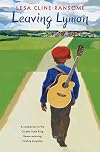
Honestly, I think I liked this book even more than Finding Langston, which was a considerable surprise. Lymon was such an unsympathetic character in that book, and his bullying had such a HUGE impact on Langston. I absolutely love that not only is Lymon believably sympathetic in this book, but that for him, the bullying fades into a small incident against the backdrop of all the other things he's dealing with in his life. I think that's the most realistic portrait of a bully I've even seen. show more
This book deals with: incarceration, abandonment, being raised by loving grandparents, grief, the power of music, homelessness, abuse, and almost every conceivable range of family dynamic -- from the deeply supportive to the deeply toxic, to the well-meaning but absent, to the chosen family who take you in. show less
This book deals with: incarceration, abandonment, being raised by loving grandparents, grief, the power of music, homelessness, abuse, and almost every conceivable range of family dynamic -- from the deeply supportive to the deeply toxic, to the well-meaning but absent, to the chosen family who take you in. show less
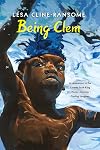
I love how this series centers black boys in history, in everyday life. They each have different challenges, and they each rise to meet them as best they can. For Clem, it's losing his father young, to the Port Chicago disaster, and supporting his mother through her grief. It's also his sisters stepping up to help and the whole family coping with the grief that his educated mother can't find a better job than as a maid. There's a lot packed in besides that -- Clem's intelligence, being on show more either side of bullying, his fear of the water that his father loved, and finding his own voice. Great story, well written. show less
Lists
Awards


You May Also Like


Associated Authors
Statistics
- Works
- 34
- Also by
- 3
- Members
- 3,892
- Popularity
- #6,510
- Rating
- 4.1
- Reviews
- 326
- ISBNs
- 196
- Languages
- 2
- Favorited
- 2