

Kimberly Brubaker Bradley
Author of The War That Saved My Life
About the Author
Kimberly Brubaker Bradley was raised in Fort Wayne, Indiana and her first novel was Ruthie's Gift. Her children's book, The War That Saved My Life, became a New York Times bestseller. (Bowker Author Biography)
Image credit: Kimberly Brubaker Bradley
Series
Works by Kimberly Brubaker Bradley
Associated Works
Tagged
Common Knowledge
- Birthdate
- 1967
- Gender
- female
- Occupations
- freelance writer (equestrian magazines)
editor
children's book author - Nationality
- USA
- Places of residence
- Bristol, Tennessee, USA
Fort Wayne, Indiana, USA - Associated Place (for map)
- USA
Members
Discussions
Medieval Fantasy YA Book in Name that Book (July 2013)
Historical Fiction about a young girl who befriends marie antoinette's daughter in Name that Book (July 2012)
Reviews

Miriam was born in Germany, but moved to Paris with her family after Kristallnacht. She speaks German, Yiddish, some Hebrew, and French fluently. When word of a coming round-up spreads through the Pletzl neighborhood, Miri warns everyone she can, but she and her neighbors still get herded onto buses (what is later known as the Vel d'Hiv roundup: Jewish people, including many French citizens, were transported from the velodrome to French concentration camp Drancy and then to Auschwitz; few show more survived). Thanks to a neighbor and a passing nun, Miri escapes between the bus and the velodrome, along with the neighbor's toddler, Nora, who Miri has always regarded as a sister. The nun shelters the two girls in Paris briefly, then arranges them to be sent to a Catholic school near the Vichy border, in the town of Chenonceaux, home of the Chateau de Chenonceau (where Diane de Poitiers and Catherine de' Medici each lived).
Miri is renamed Marie, and is separated from Nora, who is placed with a Catholic family who calls her Monique. Miri/Marie doesn't know who she can trust, but she's desperate to get Nora back and escape with her to Zurich, Switzerland, where Nora has family. Miri/Marie gets help from someone she slowly realizes is the ghost of Catherine de' Medici; she also becomes a passeuse, helping Jewish refugees escape across the border into Vichy. But when the Germans increase security and surveillance, Marie learns that the window for her own escape with Nora is closing. Is it safer to stay where they are, or to try to make it to Switzerland? Which choice will honor Miri's promise to Nora's mother?
Epilogue, author's note, acknowledgements, sources.
See also: Catherine's War by Julia Billet (graphic novel, translated from French)
Quotes
"We don't choose how we feel, but we choose how we act. Choose courage." (Papa to Miri, 16)
How could I choose courage, when I didn't know which direction it ran? (48)
Jews believed that any law could be set aside in order to save a life. I would try to fit in among the Catholics to save mine. (70)
I was afraid to be rude to [Beatrice and Jacqueline], and I was afraid to be their friend. (79)
The more history you learned, the more you saw the same things happening, over and over, wars and hatred and fighting, people moving from one place to another in search of a safe place to live. Over and over forever. None of it made any sense. (203)
"You can't always believe what's in books," she said. "Who wrote the books? My enemies, or my friends?" (Catherine de' Medici's ghost to Marie, 213) show less
Miri is renamed Marie, and is separated from Nora, who is placed with a Catholic family who calls her Monique. Miri/Marie doesn't know who she can trust, but she's desperate to get Nora back and escape with her to Zurich, Switzerland, where Nora has family. Miri/Marie gets help from someone she slowly realizes is the ghost of Catherine de' Medici; she also becomes a passeuse, helping Jewish refugees escape across the border into Vichy. But when the Germans increase security and surveillance, Marie learns that the window for her own escape with Nora is closing. Is it safer to stay where they are, or to try to make it to Switzerland? Which choice will honor Miri's promise to Nora's mother?
Epilogue, author's note, acknowledgements, sources.
See also: Catherine's War by Julia Billet (graphic novel, translated from French)
Quotes
"We don't choose how we feel, but we choose how we act. Choose courage." (Papa to Miri, 16)
How could I choose courage, when I didn't know which direction it ran? (48)
Jews believed that any law could be set aside in order to save a life. I would try to fit in among the Catholics to save mine. (70)
I was afraid to be rude to [Beatrice and Jacqueline], and I was afraid to be their friend. (79)
The more history you learned, the more you saw the same things happening, over and over, wars and hatred and fighting, people moving from one place to another in search of a safe place to live. Over and over forever. None of it made any sense. (203)
"You can't always believe what's in books," she said. "Who wrote the books? My enemies, or my friends?" (Catherine de' Medici's ghost to Marie, 213) show less

Della and her older sister Suki have landed with foster mother Francine after Suki caught Clifton sexually abusing Della and took a photo for evidence. Although Clifton was not their dad, Suki and Della had been living with him for years, since their mother was arrested and incarcerated for blowing up meth in a motel room, and nearly that whole time, Clifton was sexually abusing Suki, without Della's knowledge - but it's beginning to dawn on her. The awful truth sinks in moments before Della show more sees Suki make a suicide attempt, after which they both finally begin receiving the care they need. Della also stands up to a bully at her new school, who has been pinching the girls' backs where their bra straps would be; armed with language about consent from her therapist, Della finally gets her teacher and principal to listen and support her and the rest of the girls. Della also figures out a way to try to get Clifton put away for longer, without Suki having to face him directly in court. Throughout, Francine is tough but supportive; Della's new friend Nevaeh helps her navigate her new environment; and Della and Suki's old friend and neighbor Teena supports them too.
There are hard subjects here - sexual abuse, drugs, suicide, the foster system and homelessness - but they are things that, unfortunately, many kids face, and the author, who has firsthand experience, treats the subjects with the care, honesty, and accuracy they deserve.
Quotes
That was my first understanding that what happened to us was going to be hard to talk about not just because I didn't want to or really know how. It was going to be hard to talk about because people didn't want to hear it. (44)
"Sometimes people know too much. You can't forget things when you're around them." (Suki to Della re: Teena, 90)
Sometimes it seemed like everybody understood the rules but me. (120)
"Oh, honey. There's no such thing as a normal family." (Nevaeh's mom to Della, 144)
"I'm responsible for getting you and Suki the things you need. For your food and shelter and care. You're responsible for what you say and do."
"Who's responsible for loving me?"
(Francine and Della, 191)
"The first step is to know what you want," Dr. Fremont said. "The second step is to figure out ways to get there." (224) show less
There are hard subjects here - sexual abuse, drugs, suicide, the foster system and homelessness - but they are things that, unfortunately, many kids face, and the author, who has firsthand experience, treats the subjects with the care, honesty, and accuracy they deserve.
Quotes
That was my first understanding that what happened to us was going to be hard to talk about not just because I didn't want to or really know how. It was going to be hard to talk about because people didn't want to hear it. (44)
"Sometimes people know too much. You can't forget things when you're around them." (Suki to Della re: Teena, 90)
Sometimes it seemed like everybody understood the rules but me. (120)
"Oh, honey. There's no such thing as a normal family." (Nevaeh's mom to Della, 144)
"I'm responsible for getting you and Suki the things you need. For your food and shelter and care. You're responsible for what you say and do."
"Who's responsible for loving me?"
(Francine and Della, 191)
"The first step is to know what you want," Dr. Fremont said. "The second step is to figure out ways to get there." (224) show less

This was an unexpected story. I love that it centers and honors the choice of Jewish children and families in WWII to choose heritage over safety, to choose to remember their own stories. The fantastical elements worked for me, and Miri's deep connection to plants and gardening as well. I worry a little bit that the fact that there are fantastical elements might make Miri's choice to lead others to safety seem like an impossible thing as well, but I think that might be why I'm drawn to show more stories about WWII. There were so many people stepping up to do impossible or unlikely things, because they knew it was the morally right thing, the compassionate and human thing. Enjoyed the book very much -- the storytelling is compelling and engrossing.
Advanced Reader's Copy provided by Edelweiss. show less
Advanced Reader's Copy provided by Edelweiss. show less
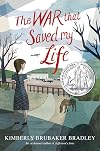
Ada has a clubfoot and her mother has abused/neglected her all her life, but when her brother Jamie is sent away from London to the country for safety during the air raids, she takes the opportunity to run away from home. The children are reluctantly taken in by an old maid, Susan, who tells them she isn't very nice - but she doesn't hit like Ada's mother did and has a pony named Butter that Ada is determined to ride.
This is a heartbreaking, lovely book. Ada is a strong, independent girl but show more deals with her abuse in a very realistic way - the scenes of this were probably even harder for me to read as an adult because I understood what was happening more than I would have as a child. I cried and cheered as Ada began to overcome her past and trust Susan, and as Susan herself came to love the children. Details about riding as Ada learns to ride Butter and some aspects of the war fill out the narrative. The ending felt just a little bit rushed and neat, but overall it was a satisfying read and I can see why it's won such acclaim. show less
This is a heartbreaking, lovely book. Ada is a strong, independent girl but show more deals with her abuse in a very realistic way - the scenes of this were probably even harder for me to read as an adult because I understood what was happening more than I would have as a child. I cried and cheered as Ada began to overcome her past and trust Susan, and as Susan herself came to love the children. Details about riding as Ada learns to ride Butter and some aspects of the war fill out the narrative. The ending felt just a little bit rushed and neat, but overall it was a satisfying read and I can see why it's won such acclaim. show less
Lists
1800s: America (1)
Awards


You May Also Like


Associated Authors
Statistics
- Works
- 24
- Also by
- 1
- Members
- 8,452
- Popularity
- #2,848
- Rating
- 4.4
- Reviews
- 573
- ISBNs
- 168
- Languages
- 6
- Favorited
- 6