
Laura Ingalls Wilder (1867–1957)
Author of Little House in the Big Woods
About the Author
Wilder was born near Pepin, Wisconsin; attended school in DeSmet, South Dakota; and became a teacher before she was 16, teaching for seven years in Dakota Territory schools. She and her husband, Almanzo Wilder, farmed near DeSmet for about nine years and then moved to Mansfield, Missouri, where show more they lived out the rest of their days. Wilder did not write her first book, Little House in the Big Woods, about her early years in Wisconsin, until late in life, on the urging of her daughter, Rose Wilder Lane. It was first published in 1932. She followed this with Farmer Boy (1933), a book about her husband's childhood in New York State. She then completed a series of books about her life as she and her family moved westward along the frontier. Little House on the Prairie (1935) records the family's move to Kansas. On the Banks of Plum Creek (1937) describes the family's move to Minnesota. By the Shores of Silver Lake (1939) records the family's move to South Dakota, as do the final three books in the series: The Long Winter, Little Town on the Prairie (1941), and These Happy Golden Years (1943), which ends with her marriage to Almanzo Wilder. Three of Wilder's books were published posthumously: On the Way Home, a diary of her trip to Mansfield; The First Four Years, an unfinished book about her first four years of marriage; and West from Home, letters she wrote on a visit to her daughter in San Francisco, none of them up to the quality of her earlier books. At her best, Wilder employs a clear, simple style, a wealth of fascinating detail, and a straightforward narrative style. Her tales of a strong, traditional frontier family that endures the hardships of the late eighteenth century are seen through the eyes of a child, which endears them to young readers. Her work is possibly the best example of historical realistic fiction for children. (Bowker Author Biography) show less
Image credit: Laura Ingalls Wilder, 1951
Series
Works by Laura Ingalls Wilder
On the Way Home: The Diary of a Trip from South Dakota to Mansfield, Missouri, in 1894 (1962) 2,614 copies, 25 reviews
West from Home: Letters of Laura Ingalls Wilder, San Francisco, 1915 (1974) 1,936 copies, 20 reviews
The First Four Years / Little House On Rocky Ridge / he Shores Of Silver Lake / Little House On The Prairie / The Long Winter / School Days 289 copies, 2 reviews
A Little House Picture Book Treasury: Six Stories of Life on the Prairie (1932) 243 copies, 3 reviews
A Little House Traveler: Writings from Laura Ingalls Wilder's Journeys Across America (1962) 229 copies, 4 reviews
Hard Times on the Prairie: Adapted from the Little House Books by Laura Ingalls Wilder (1998) 229 copies
Little House on the Prairie [abridged] 169 copies
Writings to Young Women from Laura Ingalls Wilder: On Life As a Pioneer Women (2006) 150 copies, 1 review
Little House Farm Days: Adapted from the Little House Books by Laura Ingalls Wilder (1998) 131 copies
My Little House ABC: Adapted from the Little House Books by Laura Ingalls Wilder (My First Little House Books) (1997) 118 copies, 1 review
Writings to Young Women from Laura Ingalls Wilder - Volume Two: On Life As a Pioneer Woman (2006) 74 copies, 2 reviews
Writings to Young Women on Laura Ingalls Wilder - Volume Three: As Told By Her Family, Friends, and Neighbors (2006) 71 copies
My Little House Chapter Book Collection: Animal Adventures, School Days, Pioneer Sisters, the Adventures of Laura & Jack (Little House-the Laura Years) (1998) 57 copies
Little House 4-Book Box Set: Little House in the Big Woods, Farmer Boy, Little House on the Prairie, On the Banks of Plum Creek (2016) 53 copies
My Book of Little House Christmas Paper Dolls: Christmas on the Prairie (Little House Merchandise) (1996) 39 copies
Laura's Little House: Adapted from the Little House Books by Laura Ingalls Wilder (My First Little House Books) (1998) 24 copies
Little House Hardcover 3-Book Box Set: Little House in the Big Woods, Farmer Boy, and Little House on the Prairie (2017) 20 copies
By the Shores of Silver Lake/Farmer Boy/The First Four Years/Little House in the Big Woods/Little Town on the Prairie/The Long Winter/On the Banks of Plum Creek/These Happy Golden… (1967) 18 copies, 1 review
Before the Prairie Books: The Writings of Laura Ingalls Wilder 1911 - 1916: The Small Farm (2010) 6 copies
The Little House Collection Box Set (Full Color) by Laura Ingalls Wilder (2012-01-17) (1823) 5 copies
Rhetorical Strategies and Genre Conventions in Literary Studies: Teaching and Writing in the Disciplines (2012) 3 copies
LAURA INGALLS WILDER: A PIONEER GIRL'S WORLD VIEW: SELECTED NEWSPAPER COLUMNS (LITTLE HOUSE PRAIRIE SERIES) (2014) 3 copies
My First Little House Books, Set of Four Board Books including: Lauras Garden, Hello, Laura!, Laura Helps Pa, Bedtime for Laura (1996) 2 copies
Farmer Boy: A Play in Four Acts 2 copies
בית קטן בערבה 1 copy
By the Shored of Silver Lake 1 copy
Little Town on the Pratie 1 copy
The Longer Winter 1 copy
Winter Day in the Big Woods 1 copy
The Little House Series 1 copy
A Little House Chapter Book Collection: Stories of Family: Pioneer Sisters, Christmas Stories, School Days (2026) 1 copy
The Adventure of Laura &Jack 1 copy
Animal Adventure 1 copy
Rose at Rocky Ridge 1 copy
By the Shoes of Silver Lake 1 copy
בית קטן ביער הגדול 1 copy
On The Banks Of Plum Creek 1 copy
Little House in the Big Woods / On the Banks of Plum Creek / By the Shores of Silver Lake (1953) 1 copy
Book 1 copy
Before the Prairie Books: The Writings of Laura Ingalls Wilder 1919 - 1920: The Farm Home (2010) 1 copy
Before the Prairie Books: The Writings of Laura Ingalls Wilder 1917 - 1918: the War Years (2010) 1 copy
Cobblestone 1 copy
Why Do Dogs Do That? 1 copy
Before the Prairie Books: The Writings of Laura Ingalls Wilder 1921 - 1924, A Farm Woman (2010) 1 copy
These Happy Days 1 copy
(By the Shores of Silver Lake CD (Little House)) [By: Wilder, Laura Ingalls] [Oct, 2004] (2004) 1 copy
Associated Works
Sisters of the Earth: Women's Prose and Poetry About Nature (1991) — Contributor — 443 copies, 5 reviews
THE GRANDMA MOSES STORYBOOK for Boys and Girls. A Treasure Trove of Stories and Poems By 28 Outstanding Writers (1961) — Contributor — 34 copies
Cricket Magazine, Vol. 1, No. 4, December 1973 — Contributor — 5 copies
Tagged
Common Knowledge
- Legal name
- Wilder, Laura Elizabeth Ingalls
- Other names
- Ingalls, Laura Elizabeth (birth name)
- Birthdate
- 1867-02-07
- Date of death
- 1957-02-10
- Gender
- female
- Occupations
- writer
editor
farmer
teacher - Organizations
- Eastern Star
- Awards and honors
- Laura Ingalls Wilder Medal (1954)
- Relationships
- Lane, Rose Wilder (daughter)
- Cause of death
- diabetes (complications from undiagnosed diabetes)
heart condition - Nationality
- USA
- Birthplace
- Pepin County, Wisconsin, USA
- Places of residence
- Pepin County, Wisconsin, USA
Independence, Kansas, USA
Walnut Grove, Minnesota, USA
De Smet, South Dakota, USA
Mansfield, Missouri, USA
Burr Oak, Iowa, USA - Place of death
- Mansfield, Missouri, USA
- Burial location
- Mansfield Cemetery, Mansfield, Missouri, USA
- Map Location
- USA
Members
Discussions
Found: Tornado Scene Where a Guy is Momentarily Above the Clouds in Name that Book (March 2025)
Reviews

Reading this story as an adult it really is striking how different the hard lives of isolated settlers were from our modern society. The book is a stark reminder that we don't know how easy we have it - we might be isolating away because of COVID, but that is a drop in the ocean compared to living in a small family of two adults and three children in a log cabin in the middle of the woods, responsible for all your own food, and spending the winters indoor with snow piled around the show more house.
Told from the point of view of Laura as a 4 year old, the story is almost too saccharine to be true. Pa hunts and reaps, tells stories, and plays his fiddle. Ma works hard but cheerfully, churning butter, washing, cooking.
The children mostly behave, and when they are not perfect there is a swift beating (which all feel is well deserved, and has been handed down the generations - pa tells the stories of when his pa beat him), in a way that seems excessive to modern sensibilities - whipping a four year old with a strap for striking her sister once who was tormenting her! There is a good sprinkling of morality tale too - their cousin is a lazy boy who cries wolf and doesn't help and no-one believes him when he gets stung all over by bees.
The sheer skill that everyone has - how to make butter, how to cure skins, how to smoke meat, how to carve wood, how to tap maple syrup, hot to make hats etc etc - is really impressive. Having dabbled a bit in home crafts makes me even more in awe.
But then it really was all life and death, wasn't it? It is a lovely story, sugar swirls poured on snow, dances, rag dolls. But you don't see the women giving birth in the wilderness, and you don't see the time the bear doesn't wander away, or the time there isn't enough food to get through winter.
The environmental position is interesting. There is the time Pa holds his hand from shooting, because of the splendour of the stag and the bear. There is the fact they eat no meat all summer, to allow the young animals time to grow. But there is no suggestion that it isn't the right thing to do to smash up the bee hive and take all the honey (the bees will find another tree, and start again with the left over honey scraps), and there is great joy in the wonderful threshing machine.
In general, a fascinating slice of life from a very different world. show less
Told from the point of view of Laura as a 4 year old, the story is almost too saccharine to be true. Pa hunts and reaps, tells stories, and plays his fiddle. Ma works hard but cheerfully, churning butter, washing, cooking.
The children mostly behave, and when they are not perfect there is a swift beating (which all feel is well deserved, and has been handed down the generations - pa tells the stories of when his pa beat him), in a way that seems excessive to modern sensibilities - whipping a four year old with a strap for striking her sister once who was tormenting her! There is a good sprinkling of morality tale too - their cousin is a lazy boy who cries wolf and doesn't help and no-one believes him when he gets stung all over by bees.
The sheer skill that everyone has - how to make butter, how to cure skins, how to smoke meat, how to carve wood, how to tap maple syrup, hot to make hats etc etc - is really impressive. Having dabbled a bit in home crafts makes me even more in awe.
But then it really was all life and death, wasn't it? It is a lovely story, sugar swirls poured on snow, dances, rag dolls. But you don't see the women giving birth in the wilderness, and you don't see the time the bear doesn't wander away, or the time there isn't enough food to get through winter.
The environmental position is interesting. There is the time Pa holds his hand from shooting, because of the splendour of the stag and the bear. There is the fact they eat no meat all summer, to allow the young animals time to grow. But there is no suggestion that it isn't the right thing to do to smash up the bee hive and take all the honey (the bees will find another tree, and start again with the left over honey scraps), and there is great joy in the wonderful threshing machine.
In general, a fascinating slice of life from a very different world. show less

Laura, Mary, Pa, Ma, Baby Carrie, and their trusty dog, Jack leave the Wisconsin woods and strike out for territories west. They pick a spot, build a new house, and start a new life, only to be told they've settled in Indian Territory and must move on.
I *loved* these books as a kid, but it's been a long time since I read them and I'd forgotten about the not-so-great attitude toward Native Americans. Well, it did start some good conversations with Charlie about dated literature and how those show more attitudes change and how we can still appreciate a story and still be aware of its shortcomings. show less
I *loved* these books as a kid, but it's been a long time since I read them and I'd forgotten about the not-so-great attitude toward Native Americans. Well, it did start some good conversations with Charlie about dated literature and how those show more attitudes change and how we can still appreciate a story and still be aware of its shortcomings. show less

She thought to herself, "This is now."
"Little House" is another stop on my casual journey to read classic children's books that I should have read when I was a kid. Merely 50+ years late.
This project started in earnest when I made a friend, a booktuber, who did read all those books as a kid. Some she read many, many times over. Among all sorts of books she reads now, she discusses and still cherishes the childhood ones on her channel too. Once I asked her what would a book have to contain show more to be perfect for her as a lifelong reader. She answered that it had already been written. It was the Little House on the Prairie books.
So now I feel part of that cozy Love Wilder tribe. This tale of family and friends is kind and joyful. The many preparations for each season and their self-reliance is astounding. Hard-working doesn't even begin to describe what life must have been like for them. Makes me plumb ashamed at how much complaining I do over mere inconveniences. I admire that combination of goodness and fortitude.
The beautiful spirit in this book might be considered naive. But, like time with my friend, it is invigorating, even healing, to be wrapped in kindness and joy.
I do have to laugh, though: what an unintentional contrast it makes to the very last book I finished, Independent People! It was also a great book about self-sufficiency, but with an ironic view. It could hardly be more different than Wilder's.
I wouldn't ever pit the viewpoint of the two stories against each other, one right one wrong. Since time immemorial there are all kinds of experiences available in this world and reading gives us access to many lives and ways of living. Our own reality is, like those writers, a canvas.
And so, like little Laura Wilder, this is my now,, one that has real hardships but also has an overflowing fullness of simple joys. One of the duties to being alive is to actually be alive. show less
"Little House" is another stop on my casual journey to read classic children's books that I should have read when I was a kid. Merely 50+ years late.
This project started in earnest when I made a friend, a booktuber, who did read all those books as a kid. Some she read many, many times over. Among all sorts of books she reads now, she discusses and still cherishes the childhood ones on her channel too. Once I asked her what would a book have to contain show more to be perfect for her as a lifelong reader. She answered that it had already been written. It was the Little House on the Prairie books.
So now I feel part of that cozy Love Wilder tribe. This tale of family and friends is kind and joyful. The many preparations for each season and their self-reliance is astounding. Hard-working doesn't even begin to describe what life must have been like for them. Makes me plumb ashamed at how much complaining I do over mere inconveniences. I admire that combination of goodness and fortitude.
The beautiful spirit in this book might be considered naive. But, like time with my friend, it is invigorating, even healing, to be wrapped in kindness and joy.
I do have to laugh, though: what an unintentional contrast it makes to the very last book I finished, Independent People! It was also a great book about self-sufficiency, but with an ironic view. It could hardly be more different than Wilder's.
I wouldn't ever pit the viewpoint of the two stories against each other, one right one wrong. Since time immemorial there are all kinds of experiences available in this world and reading gives us access to many lives and ways of living. Our own reality is, like those writers, a canvas.
And so, like little Laura Wilder, this is my now,, one that has real hardships but also has an overflowing fullness of simple joys. One of the duties to being alive is to actually be alive. show less
The Long Winter (Little House) [ The Long Winter (Little House) by Wilder, Laura Ingalls ( Author ) Hardcover Oct- 1953 ] Hardcover Oct- 14- 1953 by Laura Ingalls Wilder
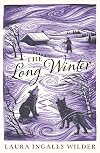
“There were no more lessons. There was nothing in the world but cold and dark and work and coarse brown bread and wind blowing. The storm was aways there, outside the walls, waiting sometimes, then pouncing, shaking the house, roaring, and snarling, and screaming in rage.”
These recollections of frontier life, its hardships and joys, the importance of friends and neighbors and community, and most of all family, are beloved for good reason, withstanding the test of time to become classics show more still read today. There isn’t much that hasn’t been said about them, both in deserved praise and affection — and, sadly, on the other end of the spectrum, ridiculousness when modern day values, mores, and conventions are applied with no historical perspective whatsoever.
I doubt I can add much of anything new to the praise, other than to say that The Long Winter is my personal favorite among these books from Laura Ingalls Wilder. It’s wonderful, and were it complete fiction, it would still be considered a classic. The fact that it’s based on real events only adds resonance to it.
The Long Winter is almost claustrophobic, as the reader feels trapped in this endless winter of intermittent blizzards that will bring families, and an entire town, to the brink of starvation. Yet it is also like a soft heavy blanket in which to wrap ourselves up in and stave off the hardships of life. It is a winter so harsh that Laura’s family must move into town for safety, and weather blizzards so cold and frightening that winter can only be defeated — and then, only just — by pioneer spirit and sticking together.
The inventive ways they keep going, adapting to each new setback as the train with supplies has one disheartening delay after another until they seem doomed, is a true testament to courage and love. It becomes increasingly bleak, and finally tremendously exciting as Almonzo and Cap set out in the short window between blizzards to find grain on a farm which may be only a rumor; and a suicide mission borne of the kind of humanity missing completely today in a certain part of the world.
More than any of the other books in the series, which are all great, I think this one really captures that life so well that had Wilder not written any others, this would still be considered a classic. I can’t say enough good things about this book. From the sadness of Pa’s cracked and swollen fingers that will no longer play the fiddle to keep the family’s spirits up, to the truly thrilling, edge-of-your-seat quest by Almonzo and Cap to save everyone in town from starvation, it is about as perfect a read, heartwarming and uplifting, that you’ll ever come across. Marjorie Kinnan Rawlings beautiful memoir, Cross Creek, of a later time, is more lyrical certainly, and lovelier in the use of language, but The Long Winter is just as impactful in its own manner, and a must-read. Wonderful. show less
These recollections of frontier life, its hardships and joys, the importance of friends and neighbors and community, and most of all family, are beloved for good reason, withstanding the test of time to become classics show more still read today. There isn’t much that hasn’t been said about them, both in deserved praise and affection — and, sadly, on the other end of the spectrum, ridiculousness when modern day values, mores, and conventions are applied with no historical perspective whatsoever.
I doubt I can add much of anything new to the praise, other than to say that The Long Winter is my personal favorite among these books from Laura Ingalls Wilder. It’s wonderful, and were it complete fiction, it would still be considered a classic. The fact that it’s based on real events only adds resonance to it.
The Long Winter is almost claustrophobic, as the reader feels trapped in this endless winter of intermittent blizzards that will bring families, and an entire town, to the brink of starvation. Yet it is also like a soft heavy blanket in which to wrap ourselves up in and stave off the hardships of life. It is a winter so harsh that Laura’s family must move into town for safety, and weather blizzards so cold and frightening that winter can only be defeated — and then, only just — by pioneer spirit and sticking together.
The inventive ways they keep going, adapting to each new setback as the train with supplies has one disheartening delay after another until they seem doomed, is a true testament to courage and love. It becomes increasingly bleak, and finally tremendously exciting as Almonzo and Cap set out in the short window between blizzards to find grain on a farm which may be only a rumor; and a suicide mission borne of the kind of humanity missing completely today in a certain part of the world.
More than any of the other books in the series, which are all great, I think this one really captures that life so well that had Wilder not written any others, this would still be considered a classic. I can’t say enough good things about this book. From the sadness of Pa’s cracked and swollen fingers that will no longer play the fiddle to keep the family’s spirits up, to the truly thrilling, edge-of-your-seat quest by Almonzo and Cap to save everyone in town from starvation, it is about as perfect a read, heartwarming and uplifting, that you’ll ever come across. Marjorie Kinnan Rawlings beautiful memoir, Cross Creek, of a later time, is more lyrical certainly, and lovelier in the use of language, but The Long Winter is just as impactful in its own manner, and a must-read. Wonderful. show less
Lists
Ambleside Y3 (1)
Five star books (1)
A Novel Cure (1)
First Novels (1)
Forest Books (1)
Pioneers (1)
Books About Boys (1)
Espistolary (1)
Overdue Podcast (1)
Ambleside Year 3 (1)
September TBR (1)
Summer Reading (1)
Winter Books (1)
KID BOOKS (1)
Newbery Adjacent (1)
Favorite Series (1)
Tagged Storms (1)
Favourite Books (1)
Best Audiobooks (1)
Sense of place (1)
4th Grade Books (4)
Ambleside Year 5 (4)
1930s (3)
Elevenses (6)
Ambleside Books (9)
Female Author (9)
Ambleside Y2 (2)
Midwestern Books (2)
Which house? (2)
Childhood books (1)
1940s (3)
Christmas Books (2)
Sonlight Books (2)
Awards


You May Also Like


Associated Authors
Statistics
- Works
- 189
- Also by
- 18
- Members
- 152,822
- Popularity
- #40
- Rating
- 4.1
- Reviews
- 1,527
- ISBNs
- 1,229
- Languages
- 23
- Favorited
- 217


