
Roger Lea MacBride (1929–1995)
Author of Little House on Rocky Ridge
About the Author
Series
Works by Roger Lea MacBride
Associated Works
West from Home: Letters of Laura Ingalls Wilder, San Francisco, 1915 (1974) — Editor — 1,936 copies, 20 reviews
The Discovery of Freedom: Man's Struggle Against Authority (1943) — Introduction, some editions — 184 copies, 3 reviews
Tagged
Common Knowledge
- Birthdate
- 1929-08-06
- Date of death
- 1995-03-05
- Gender
- male
- Education
- Harvard University
Princeton University - Occupations
- lawyer
politician - Organizations
- Libertarian Party
- Relationships
- Lane, Rose Wilder ("adopted grandmother")
- Nationality
- USA
- Birthplace
- New Rochelle, New York, USA
- Places of residence
- Miami Beach, Florida, USA
- Place of death
- Miami Beach, Florida, USA
- Map Location
- USA
Members
Reviews
Rose is definitely her own person. She makes some questionable choices, and doesn't always follow the path her parents laid out for her, but she isn't meek and obedient, either.
She pays back the money her parents lent her, often by going hungry. She wants to make her own way, fight for her own living... and fight for the rights of others, like the working class and suffragettes.
She loves the idea of being in love, but slowly realizes that Paul wants her to be a happy, pretty homemaker while show more he goes out to be a racist go-getter... and realizes that a match between them won't work.
I think she does an amazing job of coping with being 17, still in puberty, on her own in the city, dealing with (probably) being bipolar, being broke, refusing her friends' encouragements to kiss men and drink alcohol, and having a very high intelligence at a time when women were supposed to be ditzy & dependent.
I see the rants from other readers who were 'ashamed' of Rose. Apparently they just wanted yet another good girl, not a 20th century feminist. Shame on them for dissing the story that they could have read, had they read with more care, instead of missing the story they wanted to read.
Re' accuracy: Sure, some Facts are wrong. But I get the impression that the Truth of this pioneering woman is here, ready for the open-minded reader. show less
She pays back the money her parents lent her, often by going hungry. She wants to make her own way, fight for her own living... and fight for the rights of others, like the working class and suffragettes.
She loves the idea of being in love, but slowly realizes that Paul wants her to be a happy, pretty homemaker while show more he goes out to be a racist go-getter... and realizes that a match between them won't work.
I think she does an amazing job of coping with being 17, still in puberty, on her own in the city, dealing with (probably) being bipolar, being broke, refusing her friends' encouragements to kiss men and drink alcohol, and having a very high intelligence at a time when women were supposed to be ditzy & dependent.
I see the rants from other readers who were 'ashamed' of Rose. Apparently they just wanted yet another good girl, not a 20th century feminist. Shame on them for dissing the story that they could have read, had they read with more care, instead of missing the story they wanted to read.
Re' accuracy: Sure, some Facts are wrong. But I get the impression that the Truth of this pioneering woman is here, ready for the open-minded reader. show less

This is a "perfectly genuine fictional autobiography." It was written not by Rose Wilder Lane, but by her protégée Roger Lea MacBride. It covers the period of Rose's life beginning with her leaving Mansfield, Missouri for the west coast; through her stint as a telegraph operator; and her marriage to and divorce from Gillette Lane. Altogether it covers at least three years. It is factual that Rose did work as a telegraph operator in California, and that she married and divorced Lane. I am show more not sure anything else in the plot is true.
In particular, the figure of Paul Masters looms large - Paul is the boy who traveled south with his family in a wagon from Dakota to Missouri, along with the Wilders, when Rose and Paul were wee children. I am not sure that he grew up to be a genuine love interest of Rose at all; here they are informally engaged, indulging in passionate lovemaking several times. Paul appears constantly in her life out in California - I am not sure it is at all true, either, that he ever went West.
But what can I say - it's a gripping yarn! I hardly wanted to put it down. MacBride writes a great little story... perhaps there is enough of Rose's actual material here too, shining through enough to enamor me.
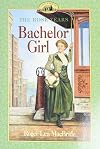
Oh, the cover has got to go, though - its illustration shows a behatted Rose and is obviously based on a famous photo of her, but in the background is a Conestoga wagon traversing an empty prairie. The Wilders were traveling in this style some 10 years or more before the book ever takes place. There are no prairies or covered wagons in the story. This isn't LITTLE HOUSE, Garth Williams - or Garth Williams wanna-be, can't tell. show less
In particular, the figure of Paul Masters looms large - Paul is the boy who traveled south with his family in a wagon from Dakota to Missouri, along with the Wilders, when Rose and Paul were wee children. I am not sure that he grew up to be a genuine love interest of Rose at all; here they are informally engaged, indulging in passionate lovemaking several times. Paul appears constantly in her life out in California - I am not sure it is at all true, either, that he ever went West.
But what can I say - it's a gripping yarn! I hardly wanted to put it down. MacBride writes a great little story... perhaps there is enough of Rose's actual material here too, shining through enough to enamor me.
Oh, the cover has got to go, though - its illustration shows a behatted Rose and is obviously based on a famous photo of her, but in the background is a Conestoga wagon traversing an empty prairie. The Wilders were traveling in this style some 10 years or more before the book ever takes place. There are no prairies or covered wagons in the story. This isn't LITTLE HOUSE, Garth Williams - or Garth Williams wanna-be, can't tell. show less
In this fifth volume of the set, The Rocky Ridge series seems to take a turn. Storywise, Rose Wilder and her family are forced by a poor harvest and pressing bills to move from their farm to a house in the town of Mansfield, Missouri. It's an adjustment for the family as they experience the joys and burdens of "city" life. But the book also has a healthy dose of political commentary as the Wilders and their neighbors react to and comment on the Spanish-American war. It's a marked change from show more the original Little House books which seem totally centered around the Ingalls family's life and immediate surroundings. It's also a lesser departure from the earlier Rocky Ridge books, which were somewhat centered on the farm. Why this change occurs, i don't know. It could be due to the fact that the author, Roger Lea MacBride, died before completing the manuscripts for this and the subsequent three volumes of the series. Perhaps either his ghost writers injected the political slant into the series or they failed to edit out political comments that Mr. MacBride had always put into his rough drafts. Or it could be that Mr. MacBride is trying to reflect the times at the turn of the 20th Century, when the telegraph and improved transportation brought the outside world a bit closer to mid-America. Or maybe it's just an honest depiction of Rose Wilder's own awakening social conscience. Whatever the reason, it doesn't make the book bad, just different from its predecessors. The Wilders and their neighbors are still the same admirable characters and it's still interesting to see what happens next. Check it out.
--J. show less
--J. show less

This last volume of Little House: The Rose Years sees Rose Wilder truly on her own. She returns home to her parents' farm after her high school graduation and year in Louisiana. Life is relatively comfortable, but boring. She's in love, but her beau has yet to propose--he's trying to make a good enough living as a telegraph operator to support both a wife and his widowed mother. When he lands a job in Sacramento, California, Rose is despondent. She finally acts on an old idea of learning show more telegraphy herself. With her parents' help, she heads off to Kansas City to a telegraphy school. From there she struggles to overcome various challenges to make a new life for itself. It's an interesting tale, one worth checking out, though I didn't find it a very satisfying one. The book tries to make a connection between Rose's experience and the pioneer heritage of her parents and grandparents. While I concede that there is a connection, it seems more like she's trading in the pioneer values so prevalent in the previous books for ones that are more urban and 20th Century. Maybe I can't appreciate it because the series is starting to move from a setting that is, for me, a fantasy to one that is all too familiar and real. Or maybe it's because I've read Rose Wilder Lane's biography and know that Bachelor Girl's happy ending is still many years away from "happily ever after".
--J. show less
--J. show less
Lists
Awards


You May Also Like


Associated Authors
Statistics
- Works
- 27
- Also by
- 3
- Members
- 11,307
- Popularity
- #2,076
- Rating
- 3.7
- Reviews
- 67
- ISBNs
- 145
- Languages
- 3
- Favorited
- 1