
Halima Bashir
Author of Tears of the Desert: A Memoir of Survival in Darfur
About the Author
Image credit: President George W. Bush meets with Darfur Human Rights Activist Dr. Halima Bashir in the Oval Office. White House photo by Chris Greenberg
(georgewbush-whitehouse.archives.gov)
Works by Halima Bashir
La bambina di sabbia 1 copy
Tagged
Common Knowledge
- Birthdate
- 1979 (circa)
- Gender
- female
- Occupations
- human rights activist
- Nationality
- Sudan
- Associated Place (for map)
- Sudan
Members
Reviews
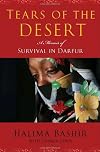
Set in the Darfur region of Sudan, this memoir follows Halima Bashir from her relatively privileged childhood (although she was already bullied and looked down upon by certain Arab teachers and students even then), to er becoming a doctor, studying medicine and eventually fleeing from the war after she is targeted for healing black people injured in the conflict.
If you are interested in the pain and struggles that come to those who live in a war zone, particularly women and children, I can show more definitely recommend this book, although it is horrifying at times. Some parts (especially the chapters that deal with rape victims and dying families) were incredibly harrowing so prepare yourself before going in.
I really enjoyed the parts about Bashir's childhood. I loved getting to know about her community and enjoyed seeing what school was like for her. There was definitely an essence of isolation in both her very different worlds due to her two very different lives and sets of experiences. Despite dealing with some rather unkind people, I'm glad she also met some good ones through her education and that she managed to follow her dreams (although things definitely didn't end up going quite how she hoped due to the rising conflict).
I appreciate that she didn't shy away from some of the horrors she saw as a doctor, even if she doesn't always go into graphic derail (probably good for the reader!). I can only imagine how traumatising it all was. Most people don't understand the kinds of atrocities people in these situations face and books that discuss them are so important, especially in a world that is becoming increasingly hostile. Although awareness of war and genocide is spreading, I rarely see it focus on the experiences of African people - voices that desperately need to be heard.
I don't know if it was intentional or even if it's just something just read into, but I found the change of tone as the book went on rather interesting. Even at its darkest times, I felt like there was a kind of warmth when she was writing about Sudan that wasn't there when she wrote about her experiences in the UK. She does talk about the cultural differences and the contrast between greater individualism and a tight knit community, but I could also almost feel it. How alone she felt and longed for those she loved.
Although not an easy read by any stretch (not because of the writing but the contents) I would definitely recommend this book to those who wish to understand the true impact of conflict. I hope the author managed to find her family and friends again one day (or at the very least learns what happened to them) and that all the people of Sudan will finally know the peace they deserve. show less
If you are interested in the pain and struggles that come to those who live in a war zone, particularly women and children, I can show more definitely recommend this book, although it is horrifying at times. Some parts (especially the chapters that deal with rape victims and dying families) were incredibly harrowing so prepare yourself before going in.
I really enjoyed the parts about Bashir's childhood. I loved getting to know about her community and enjoyed seeing what school was like for her. There was definitely an essence of isolation in both her very different worlds due to her two very different lives and sets of experiences. Despite dealing with some rather unkind people, I'm glad she also met some good ones through her education and that she managed to follow her dreams (although things definitely didn't end up going quite how she hoped due to the rising conflict).
I appreciate that she didn't shy away from some of the horrors she saw as a doctor, even if she doesn't always go into graphic derail (probably good for the reader!). I can only imagine how traumatising it all was. Most people don't understand the kinds of atrocities people in these situations face and books that discuss them are so important, especially in a world that is becoming increasingly hostile. Although awareness of war and genocide is spreading, I rarely see it focus on the experiences of African people - voices that desperately need to be heard.
I don't know if it was intentional or even if it's just something just read into, but I found the change of tone as the book went on rather interesting. Even at its darkest times, I felt like there was a kind of warmth when she was writing about Sudan that wasn't there when she wrote about her experiences in the UK. She does talk about the cultural differences and the contrast between greater individualism and a tight knit community, but I could also almost feel it. How alone she felt and longed for those she loved.
Although not an easy read by any stretch (not because of the writing but the contents) I would definitely recommend this book to those who wish to understand the true impact of conflict. I hope the author managed to find her family and friends again one day (or at the very least learns what happened to them) and that all the people of Sudan will finally know the peace they deserve. show less

This book is a gripping and haunting tale, all the more so because it is true. It brings to life the horrors we hear about in Darfur, Sudan through the tale of one highly intelligent and courageous woman, who dared to keep pursuing her education and work while standing up for what is right in the midst of terrible persecution. While the book is pegged as being about the war and genocide in Sudan, it is more than that. Bashir begins with telling about her childhood, showing another side of show more Sudanese life that doesn't make it into the news. The reader is invited into Bashir's home and village and is made that much richer in knowledge by learning about what another culture looks like at peace -- and seeing the destruction that occurs when hatred and racism are given free rein. show less
 This review was written for LibraryThing Early Reviewers.
When Halima Bashir leaves her small, isolated Zaghawa village for school in a neighboring larger town, it doesn't take her long to figure out what she wants to do with her education. Bashir dreams of being a medical doctor who can return to her village and help her people. Despite growing tensions and racial discrimination between the majority black Africans and minority Arabs of Sudan, Bashir's intelligence and hard work combined with her father's love and support enable her to follow her show more dream to university in Khartoum. After attaining her degree, she returns to her village and to the town where she originally attended school where she serves as a trainee doctor, but life as she knew it is already changing.
Rumors are afoot of deadly groups of Arabs fighting a "Holy War" against black African "infidels," and as Halima helps to treat everyone regardless of color or creed who arrives at the accident and emergency ward of the hospital, the growing danger and atrocity become all too apparent. When she dares to speak out to a newspaper reporter about the things that she sees even in the most vague terms, beating and interrogation soon follow. But it is not until she is assigned to head a clinic in another remote village that the truly dire circumstances of the violence the Arabs are unleashing in Darfur really begin to reveal themselves.
I can't say enough about Tears of the Desert. After the first chapter, I was entirely taken in, basking in Bashir's rich early memories of her family, her village, and her childhood. Each of her relatives and friends is so well described and her love for them so obvious that it almost feels like knowing them personally. Bashir's tales of growing up paint her as an outspoken smart and strong girl who won't accept anything less than her due who reaches adulthood as a smart, strong, and stunningly courageous woman determined to help her people and her homeland despite great personal risk.
One could hardly expect a book about such a difficult topic to be so compulsively readable, but this one is. Make no mistake, parts of this book are gut-wrenchingly difficult to read, but Bashir's honesty and unflinching attention to detail is entirely necessary. Bashir's is a powerful and an important tale and is fully equipped to be a significant part of showing people what is going on in Sudan and motivating people around the world to do their part to stop it. show less
Rumors are afoot of deadly groups of Arabs fighting a "Holy War" against black African "infidels," and as Halima helps to treat everyone regardless of color or creed who arrives at the accident and emergency ward of the hospital, the growing danger and atrocity become all too apparent. When she dares to speak out to a newspaper reporter about the things that she sees even in the most vague terms, beating and interrogation soon follow. But it is not until she is assigned to head a clinic in another remote village that the truly dire circumstances of the violence the Arabs are unleashing in Darfur really begin to reveal themselves.
I can't say enough about Tears of the Desert. After the first chapter, I was entirely taken in, basking in Bashir's rich early memories of her family, her village, and her childhood. Each of her relatives and friends is so well described and her love for them so obvious that it almost feels like knowing them personally. Bashir's tales of growing up paint her as an outspoken smart and strong girl who won't accept anything less than her due who reaches adulthood as a smart, strong, and stunningly courageous woman determined to help her people and her homeland despite great personal risk.
One could hardly expect a book about such a difficult topic to be so compulsively readable, but this one is. Make no mistake, parts of this book are gut-wrenchingly difficult to read, but Bashir's honesty and unflinching attention to detail is entirely necessary. Bashir's is a powerful and an important tale and is fully equipped to be a significant part of showing people what is going on in Sudan and motivating people around the world to do their part to stop it. show less
I am not really sure what draws me to books like this. The Holocaust has long been a part of history that has frightened and moved me. It is a time in the world’s history that is so painful, not to mention shameful. And not just for those who were directly involved. It is a blight on all our records. Stories about the Holocaust are told and re-told, the hope is that the same mistakes won’t be repeated. But they are. Again and again. The Holocaust was not the first instance of genocide show more nor was it the last. While the murder and rape of hundreds of thousands of black Africans in Darfur has not been labeled as genocide by the United Nations, it is still an atrocity that cannot be justified.
In the winter of 2003, the Sudan Liberation Army and Justice and Equality Movement acted out against the injustice they saw taking place in their country. Black Africans were being oppressed and treated like second class citizens by the government. The government retaliated with more violence, taking it to an entirely different level. Not only were the soldiers in the rebellion targeted, but the innocent as well. Children and women are being raped, entire villages wiped out, and survivors are forced to leave the country or hide or risk certain death. The Sudan government controls the media within the country and has continuously tried to control the truth going out.
Halima Bashir is just one person who was caught up in the conflict. Her memoir, Tears of the Desert, is her attempt at giving voice to the hundreds of thousands of people who have been murdered and displaced by the Darfur conflict.
Darfur. I know to you this must be a word soaked in suffering and blood. A name that conjures up terrible images of a dark horror and an evil without end. Pain and cruelty on a magnitude inconceivable in most of the civilized world. But to me Darfur means something quite different. It was and is that irreplaceable, unfathomable joy that is home. [pg 4]
I thought that Halima Bashir did an excellent job of painting a more complete picture of Darfur for someone like me, who has never traveled to Sudan or experienced a life like the one she has lived. The love for her country, her village and her family came through—I could not help but love them too. show less
In the winter of 2003, the Sudan Liberation Army and Justice and Equality Movement acted out against the injustice they saw taking place in their country. Black Africans were being oppressed and treated like second class citizens by the government. The government retaliated with more violence, taking it to an entirely different level. Not only were the soldiers in the rebellion targeted, but the innocent as well. Children and women are being raped, entire villages wiped out, and survivors are forced to leave the country or hide or risk certain death. The Sudan government controls the media within the country and has continuously tried to control the truth going out.
Halima Bashir is just one person who was caught up in the conflict. Her memoir, Tears of the Desert, is her attempt at giving voice to the hundreds of thousands of people who have been murdered and displaced by the Darfur conflict.
Darfur. I know to you this must be a word soaked in suffering and blood. A name that conjures up terrible images of a dark horror and an evil without end. Pain and cruelty on a magnitude inconceivable in most of the civilized world. But to me Darfur means something quite different. It was and is that irreplaceable, unfathomable joy that is home. [pg 4]
I thought that Halima Bashir did an excellent job of painting a more complete picture of Darfur for someone like me, who has never traveled to Sudan or experienced a life like the one she has lived. The love for her country, her village and her family came through—I could not help but love them too. show less
You May Also Like


Statistics
- Works
- 5
- Members
- 372
- Popularity
- #64,809
- Rating
- 4.4
- Reviews
- 47
- ISBNs
- 25
- Languages
- 3
