
Loung Ung
Author of First They Killed My Father: A Daughter of Cambodia Remembers
About the Author
Loung Ung is a national spokesperson for the Campaign for a Landmine Free World, a program of the Vietnam Veterans of America Foundation
Image credit: Loung Ung, author and human-rights activist, by RogerK (talk). Original uploader was RogerK at en.wikipedia
Series
Works by Loung Ung
Lucky Child: A Daughter of Cambodia Reunites with the Sister She Left Behind (2005) 325 copies, 7 reviews
Lulu in the Sky: A Daughter of Cambodia Finds Love, Healing, and Double Happiness (2012) 59 copies, 2 reviews
Associated Works
Reader's Digest Today's Best Nonfiction 60 — Contributor — 1 copy
Tagged
Common Knowledge
- Canonical name
- Ung, Loung
- Birthdate
- 1970-04-17
- Gender
- female
- Education
- St. Michael's College, Winooski VT
- Occupations
- author
- Nationality
- Cambodia
- Birthplace
- Phnom Penh, Cambodia
- Places of residence
- Phnom Penh, Cambodia
Cleveland, Ohio, USA
Essex Junction, Vermont, USA - Associated Place (for map)
- Phnom Penh, Cambodia
Members
Reviews
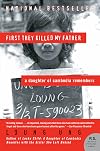
I wasn’t prepared for how quietly First They Killed My Father would undo me.
Loung Ung writes her memoir through the eyes of her five-year-old self — a child forced from her home in Phnom Penh and thrust into the brutality of the Khmer Rouge regime. What unfolds isn’t just a story of survival; it’s a child’s fractured understanding of a world that has suddenly turned against her.
Ung’s decision to tell this story through the lens of innocence is what makes it so haunting. There’s show more no politics, no historical distance — only confusion, hunger, and the desperate will to keep her family alive. The result is raw and unguarded, like truth before it’s been processed into meaning.
As a reader, you don’t just witness trauma; you feel its quiet persistence — the way it lingers long after the violence ends. And yet, what endures is not despair but resilience. Love, in its smallest gestures, becomes a kind of defiance.
It’s the kind of book that reminds me why stories matter — not just to document what happened, but to show what it felt like to live through it.
If you write, lead, or simply try to make sense of the world through others’ eyes, First They Killed My Father is worth your time. It’s a story that won’t leave you, and maybe it shouldn’t. show less
Loung Ung writes her memoir through the eyes of her five-year-old self — a child forced from her home in Phnom Penh and thrust into the brutality of the Khmer Rouge regime. What unfolds isn’t just a story of survival; it’s a child’s fractured understanding of a world that has suddenly turned against her.
Ung’s decision to tell this story through the lens of innocence is what makes it so haunting. There’s show more no politics, no historical distance — only confusion, hunger, and the desperate will to keep her family alive. The result is raw and unguarded, like truth before it’s been processed into meaning.
As a reader, you don’t just witness trauma; you feel its quiet persistence — the way it lingers long after the violence ends. And yet, what endures is not despair but resilience. Love, in its smallest gestures, becomes a kind of defiance.
It’s the kind of book that reminds me why stories matter — not just to document what happened, but to show what it felt like to live through it.
If you write, lead, or simply try to make sense of the world through others’ eyes, First They Killed My Father is worth your time. It’s a story that won’t leave you, and maybe it shouldn’t. show less
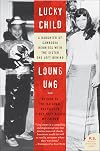
Any book that makes me pour tears in the last chapter is worth five stars to me, and this book fit that bill to a tee. In the late 1970s and early 1980s, the war in Cambodia with the Khmer Rouge opened a limited slots for one family to emigrate to Vermont. The quota only allows room for three: an older brother, his wife, and one sister. The rest of the family had to separate. Because of the war, not only travel, but the most-basic communication between the family is impossible for years. show more That's hard on any family built around closeness and a strong communal ethic.
This story bounces back and forth, one chapter to the next, between points of view of the American sister and the Cambodian sister. Their lives evolve in parallel, each with their own struggles, each with their own pains. The author Loung Ung establishes a purposeful life through education in America, but had to suffer by being different from everyone else in her school. She eventually receives higher education at a Catholic college thanks to a full scholarship and becomes an advocate for those suffering hardships.
Her sister and their Cambodian family also have a story of their own. After years of struggle, they use their brother's American money to establish a profitable business to establish meaningful lives after the war dies down. Of course, they all bear the costs of indiscriminate human destruction through the loss of their mother and father. This book does not hide any of the real costs faced.
Refugees will continue to be a tremendous global problem in coming decades. This book highlights the hardships and pains that journey bears in graphic, moving, and persuasive ways. Those who want to educate themselves about newer situations our world faces should read Ung's story. It was so moving that it was even read on Cambodian radio with a warm reception. Refugees aren't seeking a free ride, just a life where they have a stable home. Ung's narrative demonstrates the perseverance it takes to become one and the inner strength refugees can inspire us all with. A masterful, emotional, all-too-human story! show less
This story bounces back and forth, one chapter to the next, between points of view of the American sister and the Cambodian sister. Their lives evolve in parallel, each with their own struggles, each with their own pains. The author Loung Ung establishes a purposeful life through education in America, but had to suffer by being different from everyone else in her school. She eventually receives higher education at a Catholic college thanks to a full scholarship and becomes an advocate for those suffering hardships.
Her sister and their Cambodian family also have a story of their own. After years of struggle, they use their brother's American money to establish a profitable business to establish meaningful lives after the war dies down. Of course, they all bear the costs of indiscriminate human destruction through the loss of their mother and father. This book does not hide any of the real costs faced.
Refugees will continue to be a tremendous global problem in coming decades. This book highlights the hardships and pains that journey bears in graphic, moving, and persuasive ways. Those who want to educate themselves about newer situations our world faces should read Ung's story. It was so moving that it was even read on Cambodian radio with a warm reception. Refugees aren't seeking a free ride, just a life where they have a stable home. Ung's narrative demonstrates the perseverance it takes to become one and the inner strength refugees can inspire us all with. A masterful, emotional, all-too-human story! show less
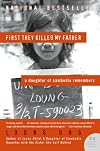
Loung Ung recounts her experience under the rule of the genocidal dictator Pol Pot and his Khmer Rouge regime in this harrowing memoir.
Loung Ung was just five years old when she and her family of 9 were forced to flee Phnom Penh to evade the rebel soldiers of the Khmer Rouge. Taking on new identities in order to protect themselves from the regime, the family first sought refuge with relatives in the countryside, before being compelled to move between ‘re-education’ camps every few show more months.
Loung is bewildered by the changes in her life, too young to understand why Pol Pot’s vision for Cambodia, or New Kampuchea as he has christened it, requires them to perform backbreaking work in exchange for meagre rations that edge them close to starvation.
And when her father is taken away, never to return, what remains of Loung’s fractured family is forced to separate, with little expectation of reunion and only the slimmest hope of surviving Cambodia’s Killing Fields.
I knew the bare facts of the events in Cambodia going into this book, of the 1975 civil war victory by Pol Pot and the Khmer Rouge intent on a vision of a self-sufficient country, free from the ‘corruption’ of the west. A seemingly laudable goal but one which was interpreted to require the torture and execution of professionals, intellectuals, dissenters and their families as well as the aged, the ill and disabled, resulting in the deaths of some two million Cambodians, out of a population of just seven million. Meanwhile Pol Pot amassed the power and riches he publicly condemned, as millions of Cambodian’s suffered unimaginable deprivation.
As a survivor, Ung’s narrative provides insight into the horrors of the Killing Fields, blending the immediacy of her childhood perspective with the knowledge of an adult. The trauma has been imprinted on her, as our worst memories so often are, and there is an undeniable authenticity to this unique account of her experience. It’s a heartbreaking tale of loss and brutality, resilience and courage that had me gasping in shock and sorrow for all Loung, and innocent Cambodian’s like her, endured.
Loung survives, reunited briefly with her surviving siblings before escaping to America after a dangerous journey via Vietnam and Thailand. Today Loung is an activist who among other things dedicates herself to helping Cambodia and its people recover from the traumas of war. Further books, Lucky Child and Lulu in the Sky, share elements of her life following her arrival in America. First They Killed My Father has also been adapted into a movie and a graphic novel is forthcoming. I haven’t had the fortitude as yet to watch the former.
First They Killed My Father is not a story, it is a record of an innocent life marred by hardship and horror. It is a personal account of genocide masked by statistics, politics, and sanitised news reports. It is a must read. show less
Loung Ung was just five years old when she and her family of 9 were forced to flee Phnom Penh to evade the rebel soldiers of the Khmer Rouge. Taking on new identities in order to protect themselves from the regime, the family first sought refuge with relatives in the countryside, before being compelled to move between ‘re-education’ camps every few show more months.
Loung is bewildered by the changes in her life, too young to understand why Pol Pot’s vision for Cambodia, or New Kampuchea as he has christened it, requires them to perform backbreaking work in exchange for meagre rations that edge them close to starvation.
And when her father is taken away, never to return, what remains of Loung’s fractured family is forced to separate, with little expectation of reunion and only the slimmest hope of surviving Cambodia’s Killing Fields.
I knew the bare facts of the events in Cambodia going into this book, of the 1975 civil war victory by Pol Pot and the Khmer Rouge intent on a vision of a self-sufficient country, free from the ‘corruption’ of the west. A seemingly laudable goal but one which was interpreted to require the torture and execution of professionals, intellectuals, dissenters and their families as well as the aged, the ill and disabled, resulting in the deaths of some two million Cambodians, out of a population of just seven million. Meanwhile Pol Pot amassed the power and riches he publicly condemned, as millions of Cambodian’s suffered unimaginable deprivation.
As a survivor, Ung’s narrative provides insight into the horrors of the Killing Fields, blending the immediacy of her childhood perspective with the knowledge of an adult. The trauma has been imprinted on her, as our worst memories so often are, and there is an undeniable authenticity to this unique account of her experience. It’s a heartbreaking tale of loss and brutality, resilience and courage that had me gasping in shock and sorrow for all Loung, and innocent Cambodian’s like her, endured.
Loung survives, reunited briefly with her surviving siblings before escaping to America after a dangerous journey via Vietnam and Thailand. Today Loung is an activist who among other things dedicates herself to helping Cambodia and its people recover from the traumas of war. Further books, Lucky Child and Lulu in the Sky, share elements of her life following her arrival in America. First They Killed My Father has also been adapted into a movie and a graphic novel is forthcoming. I haven’t had the fortitude as yet to watch the former.
First They Killed My Father is not a story, it is a record of an innocent life marred by hardship and horror. It is a personal account of genocide masked by statistics, politics, and sanitised news reports. It is a must read. show less
First They Killed My Father is Loung Ung's memoir of living through the rise of the Khmer Rouge regime as a very young child—she was just five years old when the Khmer Rouge seized Phnom Penh. This gives the book both its harrowing intensity—it's appalling to think of a small child having to face such brutality—and its weakness.
Ung tries to write both as a five-year-old and with the benefit of hindsight, and the resulting narrative voice is an uneasy amalgam of these two perspectives. show more I have little reason to doubt the emotional truth of Ung's testimony or to deny the force of the trauma she conveys, but the historian in me is uneasy at the dialogue/recollections of internal monologues presented as if verbatim.
Equally, Ung presents her beloved father, Seng Im Ung, as an almost superheroic figure, full of wisdom and love—a perspective which makes perfect sense coming from a daughter who never got to know him as a grown up. Yet there is no reflection at all on the fact that Ung was born into a family which enjoyed a standard of living far above that of most Cambodians because Seng Im Ung was an officer in the corrupt authoritarian Lon Nol regime.
That fact does not of course justify what happened to the Ung family—or to the more than million people who died at the hands of the Khmer Rouge regime—but it does complicate what might otherwise be a binary story. But it does underscore the fact that, particularly for those of us in the West who may know shamefully little of the atrocities committed by the Khmer Rouge (and I count myself among that number), First They Killed My Father may be a compelling place to begin learning about this moment in Cambodian history, but not the best place to stop. show less
Ung tries to write both as a five-year-old and with the benefit of hindsight, and the resulting narrative voice is an uneasy amalgam of these two perspectives. show more I have little reason to doubt the emotional truth of Ung's testimony or to deny the force of the trauma she conveys, but the historian in me is uneasy at the dialogue/recollections of internal monologues presented as if verbatim.
Equally, Ung presents her beloved father, Seng Im Ung, as an almost superheroic figure, full of wisdom and love—a perspective which makes perfect sense coming from a daughter who never got to know him as a grown up. Yet there is no reflection at all on the fact that Ung was born into a family which enjoyed a standard of living far above that of most Cambodians because Seng Im Ung was an officer in the corrupt authoritarian Lon Nol regime.
That fact does not of course justify what happened to the Ung family—or to the more than million people who died at the hands of the Khmer Rouge regime—but it does complicate what might otherwise be a binary story. But it does underscore the fact that, particularly for those of us in the West who may know shamefully little of the atrocities committed by the Khmer Rouge (and I count myself among that number), First They Killed My Father may be a compelling place to begin learning about this moment in Cambodian history, but not the best place to stop. show less
Lists
Awards


You May Also Like


Associated Authors
Statistics
- Works
- 3
- Also by
- 1
- Members
- 2,932
- Popularity
- #8,739
- Rating
- 4.1
- Reviews
- 73
- ISBNs
- 61
- Languages
- 7
- Favorited
- 1