
Seumas MacManus (1867–1960)
Author of The Story of the Irish Race
About the Author
Works by Seumas MacManus
The Little Mistress of the Eskar Mór 4 copies
Tales that were told 2 copies
Donegal Fairy Stories, Collected and Told by Seumas Macmanus. [Leatherbound] (1900) [Leather Bound] 1 copy
Ballads of a Country Boy 1 copy
Woman of seven sorrows 1 copy
Scéalta as Tír Chonaill 1 copy
O, Do You Remember 1 copy
Associated Works
Isaac Asimov's Magical Worlds of Fantasy, Volume 11: Curses (1939) — Contributor — 59 copies, 1 review
Tagged
Common Knowledge
- Birthdate
- 1867-12-31
- Date of death
- 1960-10-23
- Gender
- male
- Occupations
- teacher
playwright - Relationships
- Carbery, Ethna (wife)
- Short biography
Irish dramatist, poet, and prolific writer of popular stories, who played an important role in the rise of Irish national literature. Son of a poor farmer, MacManus became a schoolteacher in County Donegal and began contributing articles and stories to many Irish newspapers in the 1890s. Some of his best retellings of Irish fairy tales are in In Chimney Corners: Merry Tales of Irish Folk‐lore (1899). During the 20th century MacManus travelled back and forth between Ireland and the United States and became one of the most popular interpreters of Irish folklore for Americans through his collections of tales. Among his best works are The Bewitched Fiddle and Other Irish Tales (1900), Donegal Fairy Stories (1900), Tales that Were Told (1920), The Donegal Wonder Book (1926), Tales from Ireland (1949), and The Bold Heroes of Hungry Hill, and Other Irish Folk Tales (1951). Though MacManus often exaggerated the Irish aspects of the tales with a mannered style, he also expanded upon the Irish fairy‐tale tradition in innovative ways.
— Jack Zipes- Nationality
- Ireland
- Birthplace
- Mountcharles, County Donegal, Ireland
- Places of residence
- USA
Donegal, Ireland
New York, New York, USA - Place of death
- New York, New York, USA
- Associated Place (for map)
- Ireland
Members
Reviews
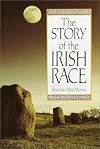
Every little Irish shop in america seemed to sell this book when I was growing up, and I got a copy as a gift from my mother at the time. I never got around to reading it then and the book itself is long gone, but I'm finally reading the text as an ebook. Unfortunately, neither the tone (unabashedly uncritical and ahistorical) nor the style (unnecessarily convoluted) have worn at all well since the book's initial publication almost a hundred years ago. Here is an example of the tortured show more prose:
"Even of Fursa's servant, St. Maguille, the memory is honoured at St. Riquier, where is his holy well, and where, more than four centuries after, and again four centuries after that, his body was enshrined in a very precious shrine, and re-enshrined with ecclesiastical honours."
Tolerant though I usually am of historical styles, I cannot see this as anything other than a failed attempt at "fine writing." show less
"Even of Fursa's servant, St. Maguille, the memory is honoured at St. Riquier, where is his holy well, and where, more than four centuries after, and again four centuries after that, his body was enshrined in a very precious shrine, and re-enshrined with ecclesiastical honours."
Tolerant though I usually am of historical styles, I cannot see this as anything other than a failed attempt at "fine writing." show less
Irish history emerges from misty legends. This book sifts for facts among the fables. Invaders and powerful kings make up much of the early narrative, as it was they who left historical footprints. Tribal Ireland needed powerful kings to form a united front against foreign invaders. Indeed, Ireland was invaded and colonized so many times from so many directions that it is hard to say for sure who the Irish are. It is a story marked by wars, famines, persecutions, and suffering. Saints and show more scholars enter the narrative, followed by freedom fighters and Fenians.
This is the Irish experience to about 1920. Did you know that the Irish invaded England? That Christianity was established in Ireland before St. Patrick arrived? That the Renaissance began in Ireland? That Irish monks were in North America centuries before Columbus? That wearing a moustache was punishable by death under the English penal laws? That the Irish were more fluent in Latin than in English?
This is a big book, not a quick or easy read, but it can be read piecemeal. It covers a lot of ground, from Irish customs and costumes to arts and crafts, poetry, trade and manufacture, politics, laws, education, religion, monasticism, the status of women, etc. It could benefit from artful condensation and better organization. It may be too detailed for some readers. Bias? Yes, but it does not obscure the facts … or the fables. show less
This is the Irish experience to about 1920. Did you know that the Irish invaded England? That Christianity was established in Ireland before St. Patrick arrived? That the Renaissance began in Ireland? That Irish monks were in North America centuries before Columbus? That wearing a moustache was punishable by death under the English penal laws? That the Irish were more fluent in Latin than in English?
This is a big book, not a quick or easy read, but it can be read piecemeal. It covers a lot of ground, from Irish customs and costumes to arts and crafts, poetry, trade and manufacture, politics, laws, education, religion, monasticism, the status of women, etc. It could benefit from artful condensation and better organization. It may be too detailed for some readers. Bias? Yes, but it does not obscure the facts … or the fables. show less
This book is finally finished. The author lamented in the prologue that many people knew little about Irish history. His worries are over. Anyone who completes this book will know everything there is to know about the Irish race. The many hardships detailed in this book that the Irish have suffered are enough to cause one to cry. However, I feel that less passionate writing would have been more effective. After all, the trials and unfair political burdens placed on these people speak for show more themselves. I now have a very broad knowledge and a greater sympathy for those who lived and are living in Ireland. show less

This was a very good read. The author presents their points in an easy-to-follow manner instead of listing years and numbers and droning on. MacManus instead writes the information in a narrative and this makes it a much better read in my opinion. It is very obvious that the author has researched all their information as their writing flows effortlessly from point to point. The information was great to read. I definitely learned a few new things about the Irish Race. I would definitely show more recommend this book to all who are interested in Celts, Ireland, or general history. show less
Lists
Awards


You May Also Like


Associated Authors
Statistics
- Works
- 32
- Also by
- 8
- Members
- 1,324
- Popularity
- #19,418
- Rating
- 3.7
- Reviews
- 8
- ISBNs
- 41
- Languages
- 2
- Favorited
- 1