
Douglas Williams
Author of Always a Yankee
Works by Douglas Williams
Thread of gold : celebrating the unbroken history of 250 years of Freemasonry in the province of Cornwall, 1752-2002 (2001) 2 copies
Daniel, Prophet of Integrity 1 copy
Associated Works
Britain Can Take It : The Book of the Film — Introduction — 1 copy
Tagged
Common Knowledge
- Birthdate
- 1920
- Gender
- male
- Organizations
- RAF
- Nationality
- UK
- Birthplace
- Port Talbot, Wales, UK
- Associated Place (for map)
- Wales, UK
Members
Reviews

A Pirate's Journey: The Life Story of Major League Catcher Hank Foiles is an earnest, warm-hearted, albeit rudimentary baseball autobiography. Foiles has some entertaining stories that wistfully look back at life and the game in simpler times. This is fairly well written for a baseball memoir, but still there is the unfortunate presence of those annoying exclamation points that somehow always plague the genre.

A fun, easy little read. I always love reading about players back in the day, and how their experiences were so different than the players today. I loved the anecdote about how when Jim was working in the forest and the scout had to tromp through the woods to find him. Little nuggets like that make books like these worth reading. Plus Jim is such a nice guy and it was fun reading his backstory.
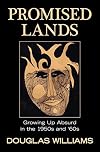
Interesting memoir of a Hippie, inside out
Douglas Williams begins his memoir somewhere in the middle, describing life as a hippie at a time when so many young people slung on their backpacks and took off for the quest to live life wild and free, travelling through Europe mostly, some dipping into Africa and Asia as well. He has described the scene of the counter-culture life of the '60s well, both good and bad. It may be symbolic that he next reverts to his childhood memories in the second show more part of the book.
Living rural near a small town in post-war Canada, his parents immigrants, life was loosely structured but strongly disciplined. The author bares his heart and soul in this memoir. We see a slice of life in what could be referred to as a border town on Lake Erie through the eyes of a child, then through his teen-age years. His honesty is "no holds barred" about himself and the lack of adjustment to the times in a small town.
His father's death when Doug was 7 profoundly affected him in numerous ways. The most consistent theme in his life appears to be his creativity, whether it be in ill-chosen exploits with school friends, or the creativity that comes through during the 1960s, it remains central to his character. By the time the '60s are in full swing, he lacks a close family relationship and is ready for his journey abroad.
As he tours several countries, intimate encounters, and whatever drugs come along, his descriptive writing gives the reader one man's record of a unique and surprising decade. He makes fairly lasting friendships regardless of the nature of his meanderings through time and place. This decade is forever etched in the minds of anyone who lived through it, whether in the counter-culture or away from it, it was a stupifying time filled with change. A time of living music speaking to a new generation.
This book reflects the changes in the traditional mores, beliefs, politics, drugs and sex, a book for those who will remember the distrust, unrest, the revolt on rigid morals, religion, war and corporate greed driving political agendas, and as such is definitely an adult book. The book is true to itself -- Doug Williams kept a journal which is probably why he was able to write so comprehensively on his subject. We learn that among the spaced out, starving, and sharing, there is also humour. Travelling with friends in a malodorous, airless, traditional old VW van is often hilarious. In keeping with his creative side, he touches on his occasional forays into the film industry while in Europe, a stint at a film school in London, England, discussing with the reader his thoughts on movie-makers and their impact on him. Among those movie contacts he mentions are Truffault, Kubrick, and Hitchcock, as a few.
For readers who were not around during what really begins in the 1950s through into the '70s, this book is an eye-opening trip, both in hippiedom and in the aftermath of WWII, segueing into the fear and adulterated suspicion of the Cold War and on through the biased Viet Nam war. This book deals primarily with those fast-changing decades.What he writes in this memoir is baldly honest. What you read is what he is.
As a descriptive and thought-provoking author, I suspect we haven't heard the last of Douglas Williams. But whether his next book will be about the industry of film making, the National Film Board, TV directing, producing and writing, or more travels, we will have to wait and see. Regardless, I'm sure it will be interesting. show less
Douglas Williams begins his memoir somewhere in the middle, describing life as a hippie at a time when so many young people slung on their backpacks and took off for the quest to live life wild and free, travelling through Europe mostly, some dipping into Africa and Asia as well. He has described the scene of the counter-culture life of the '60s well, both good and bad. It may be symbolic that he next reverts to his childhood memories in the second show more part of the book.
Living rural near a small town in post-war Canada, his parents immigrants, life was loosely structured but strongly disciplined. The author bares his heart and soul in this memoir. We see a slice of life in what could be referred to as a border town on Lake Erie through the eyes of a child, then through his teen-age years. His honesty is "no holds barred" about himself and the lack of adjustment to the times in a small town.
His father's death when Doug was 7 profoundly affected him in numerous ways. The most consistent theme in his life appears to be his creativity, whether it be in ill-chosen exploits with school friends, or the creativity that comes through during the 1960s, it remains central to his character. By the time the '60s are in full swing, he lacks a close family relationship and is ready for his journey abroad.
As he tours several countries, intimate encounters, and whatever drugs come along, his descriptive writing gives the reader one man's record of a unique and surprising decade. He makes fairly lasting friendships regardless of the nature of his meanderings through time and place. This decade is forever etched in the minds of anyone who lived through it, whether in the counter-culture or away from it, it was a stupifying time filled with change. A time of living music speaking to a new generation.
This book reflects the changes in the traditional mores, beliefs, politics, drugs and sex, a book for those who will remember the distrust, unrest, the revolt on rigid morals, religion, war and corporate greed driving political agendas, and as such is definitely an adult book. The book is true to itself -- Doug Williams kept a journal which is probably why he was able to write so comprehensively on his subject. We learn that among the spaced out, starving, and sharing, there is also humour. Travelling with friends in a malodorous, airless, traditional old VW van is often hilarious. In keeping with his creative side, he touches on his occasional forays into the film industry while in Europe, a stint at a film school in London, England, discussing with the reader his thoughts on movie-makers and their impact on him. Among those movie contacts he mentions are Truffault, Kubrick, and Hitchcock, as a few.
For readers who were not around during what really begins in the 1950s through into the '70s, this book is an eye-opening trip, both in hippiedom and in the aftermath of WWII, segueing into the fear and adulterated suspicion of the Cold War and on through the biased Viet Nam war. This book deals primarily with those fast-changing decades.What he writes in this memoir is baldly honest. What you read is what he is.
As a descriptive and thought-provoking author, I suspect we haven't heard the last of Douglas Williams. But whether his next book will be about the industry of film making, the National Film Board, TV directing, producing and writing, or more travels, we will have to wait and see. Regardless, I'm sure it will be interesting. show less

Laura lays out a clear plan that encourages readers to use a self-directed approach to their health and wellness planning. It's not just about navigating one type of treatment, but about how to integrate a variety of ways to heal. Brown also addresses the many layers of healing - physical, emotional, spiritual, etc. And the personal stories are wonderful illustrations of the road map!
You May Also Like
Associated Authors
Statistics
- Works
- 22
- Also by
- 2
- Members
- 40
- Popularity
- #370,099
- Rating
- 3.4
- Reviews
- 5
- ISBNs
- 19