
Rami Ungar
Author of Rose
Works by Rami Ungar
Associated Works
Tagged
Common Knowledge
- Gender
- male
- Places of residence
- Columbus, Ohio, USA
- Associated Place (for map)
- Ohio, USA
Members
Reviews
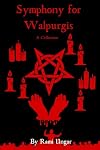
Honestly, I need to start reading more Indie-Published books. As an Author who (as of this writing) has only published short stories in small publications, I feel that I need to reach out to those who are in the same field as me and learn from those who are further along, as well as support other creatives however I can.
Symphony for Walpurgis is a good example of that. Rami Ungar might not be a household name, but with his body of work and this anthology collection of shorts, he demonstrates show more that he has the chops to write horror and showcases his skill as an author in crafting scares. In this review, I intend to go through each of the stories presented in the book and share my thoughts so you know exactly what you're getting yourself into. All while keeping it as spoiler-free as I can.
Introduction: A hell of a way to start an anthology series, really, with it describing how whoever picked up the book is essentially an audience member in a theater among others who picked up the book as well. Makes me wish more anthologies started this way.
Blood and Paper Skin: While this story wasn't the strongest in the list, it is a certified B+ and gives you an idea of the type of horror that Rami Ungar writes, as well as his writing style.
Disillusionment And Trauma Sometimes Go Hand In Hand: A long title, to be sure, but that's just me being a bit nitpicky. This was an interesting story with a great premise, as it's about a young woman mourning the murder of her friend, angry that society and her friend's parents aren't doing more to lock the persons involved up. It's a visceral story, to say the least, on how far grieving parents would go to avenge their daughter by any means necessary.
Although I found the story interesting, I felt some negatives detracted from my enjoyment. For starters, I wasn't connected fully to the character's motivations beyond the premise, as Zelda felt more like a plot device. We only got one instance of her characterization, and it sort of rang hollow to me when Sophie claimed that "Zelda wouldn't have wanted this". Another negative was the many unnecessary adverbs in places I thought were overused, as well as phrases that repeated words. All in all, another B+ besides those small nitpicks.
The House on Lafeyette Street: A banger of a story, but one I feel conflicted about. It's a Jewish haunted-house/possession story that felt very different from the dozens and dozens of possession and exorcism stories from a Catholic perspective. It's about a Rabbi, his daughter, and a friend of theirs who came into possession of a house haunted by the spirits of 12 children, and a demon who wants to hurt them.
So whats the conflict? Unlike most of the stories in the anthology, this one's ending is far different. Spoilers below:
The demon is one that preys on mothers and unprotected children, killing them savagely. The premise is that she wants to be a mother but can't, so she takes out her frustration on living beings she can harm. In the end, she becomes a mother to the ghost children, and it ends happily. I like the idea of a demon that can be redeemed, but there's no actual act of redemption for her. One minute, she's evil, wants to kill the ghost children and harm them, the next, a passionate speech changes her mind, and she's suddenly goodish.
I think that in the end, this could be an excellent novella, or even remade as a children's beginner horror story, especially if it delves into more background on the demon and her character development. For what we got, though? A good story that has the potential for being something bigger.
Mother of Spiders: A great premise that gave me heebie jeebis. Plus, it wasn't overly violent or gory, despite the fact that spiders are a predominant feature of this one. Personally, I thought that the backstory of Ingrid Shalvoy could have been condensed to make the narrative tighter. Plus, I thought the ending was rather abrupt. I'm all for an ending that's basically "horrific action, fade to black", but I felt that there should have been at least a paragraph or two epilogue to show the full extent of the horror, even if it was written in the first-person perspective. Maybe a scene break with something like:
The children made quick work of their parents, just as the firefighters arrived. All they found were dead bodies and empty silken strands. The town of Tulsa never recovered after that night. Four dead teens and their parents, four dead men in a graveyard, and - worse yet - four missing children who were never seen again.
On some nights, in later years, residents would spy an unknown woman roaming the woods. Her long white hair practically glowing against the backdrop of shadows. Curiously, the spider population boomed as well, and farmers would claim that their crops had never been healthier.
Just as an example. Otherwise, a good story about how small towns operate, and how one's reputation within their community leads those to do horrible things to people who probably don't deserve it, simply because they're strange or different.
Famous: Honestly, it was kind of a letdown comparatively, at least for me. Though I thought the ending was actually really good. It was just the build-up to that point that was eh. Plus, out of all the stories I've read to this point, this one was in most need of another read through, as I found several spelling errors, weird word placement, and sentence fragments that took me out of the story. Not the weakest story in the bunch, but one I think should have had a second look through.
The Little Goddess of Horror: I rather liked this one, at least till the end. I don't think it needed the supernatural twist at the end, as it was pretty mysterious and creepy up until then. Some stories simply don't need explanations, and I think leaving it hang on a mystery was good enough. After all, it's the story of a young woman whose body didn't grow past puberty, whose eyes changed red, and had a supernatural pull to audiences for her horror as well as the mysterious deaths that surrounded her. That was enough to draw me in and keep me turning the pages.
The Parasite Man: I actually skipped this one, as I just wasn't "feeling it." However, that is not indicative of its content. It IS an anthology series, and there are stories that I no doubt will not enjoy, but others will, so I urge readers to give it a read themselves.
Cressida: Honestly, I don't have any negatives to say about this. Rami Ungar certainly saved the best two stories for last. It's a mermaid horror story evocative of other horror stories set close to the sea, and what I loved about this one is that there's no definite answer to the ending. It's sublime and mysterious all the way to the end, and it's very well polished, much like a sea stone made by monsters.
Natural Predators: Perhaps the best written story of the bunch, even if the premise itself wasn't for me. While I wasn't "feeling" the story all that much, I thought it was still expertly written because we didn't linger on anything not in service of the plot, and the narration was excellent. It's about a disease that runs rampant worldwide and the effects it has on the human body. Let me just say I am so glad that COVID-19 was nowhere near as bad as this.
Pros
Rami Ungar's writing is pretty much the biggest positive in this book. The prose and grammar is simplistic and easy to get into. While there are some word choices that I think should be stronger (more on that in the cons below), it's an overall quick read that's not too dense. In fact, I was easily able to get through 50 pages a day. Another positive is that the violence isn't really visceral. I'm not a big fan of extended, heavy depictions of gore and violence unless they serve the story (such as King's 1922). This book's violence tends to be on the tamer side, with descriptions that are usually a sentence or two.
Cons
While there's a lot of praise for the book, there are some downsides I think should be pointed out. For starters, this book could have used another pass in certain stories. Some stories were well polished, as I pointed out, but some others could have used another proofreader or revision, as I also pointed out. Another negative is that some of the stories felt somewhat thematically and dramatically different from one another. I understand this is just an anthology of the writer's works, but it felt like tonal whiplash to go from nearly sacrificing a virgin to bring about an ancient curse and a horrifying ending bringing about the apocalypse to a happy ending where ghost children are laughing and playing with a new demonic mother taking care of them, and everyone feels good.
Final Thoughts:
Overall, a very good book. I recommend it to those who like Indie-published stuff and want to find new authors to follow. The stories are enjoyable, quick reads, and I had a fun few days catching up on them and reading the author's thoughts in the endnotes and acknowledgements. A lot of the stories aren't too far off the beaten path of what's done before, but it's a well-worn path that's still exciting when you have a few hours to kill each day.
Plus, self-publishing is hard, which is why I'm giving this a 4-star rating as well. A lot of the stories are B+ to A- tier, with some of them having the potential to be longer stories in their own right later down the line. Happy reading if you pick this book up! show less
Symphony for Walpurgis is a good example of that. Rami Ungar might not be a household name, but with his body of work and this anthology collection of shorts, he demonstrates show more that he has the chops to write horror and showcases his skill as an author in crafting scares. In this review, I intend to go through each of the stories presented in the book and share my thoughts so you know exactly what you're getting yourself into. All while keeping it as spoiler-free as I can.
Introduction: A hell of a way to start an anthology series, really, with it describing how whoever picked up the book is essentially an audience member in a theater among others who picked up the book as well. Makes me wish more anthologies started this way.
Blood and Paper Skin: While this story wasn't the strongest in the list, it is a certified B+ and gives you an idea of the type of horror that Rami Ungar writes, as well as his writing style.
Disillusionment And Trauma Sometimes Go Hand In Hand: A long title, to be sure, but that's just me being a bit nitpicky. This was an interesting story with a great premise, as it's about a young woman mourning the murder of her friend, angry that society and her friend's parents aren't doing more to lock the persons involved up. It's a visceral story, to say the least, on how far grieving parents would go to avenge their daughter by any means necessary.
Although I found the story interesting, I felt some negatives detracted from my enjoyment. For starters, I wasn't connected fully to the character's motivations beyond the premise, as Zelda felt more like a plot device. We only got one instance of her characterization, and it sort of rang hollow to me when Sophie claimed that "Zelda wouldn't have wanted this". Another negative was the many unnecessary adverbs in places I thought were overused, as well as phrases that repeated words. All in all, another B+ besides those small nitpicks.
The House on Lafeyette Street: A banger of a story, but one I feel conflicted about. It's a Jewish haunted-house/possession story that felt very different from the dozens and dozens of possession and exorcism stories from a Catholic perspective. It's about a Rabbi, his daughter, and a friend of theirs who came into possession of a house haunted by the spirits of 12 children, and a demon who wants to hurt them.
So whats the conflict? Unlike most of the stories in the anthology, this one's ending is far different. Spoilers below:
The demon is one that preys on mothers and unprotected children, killing them savagely. The premise is that she wants to be a mother but can't, so she takes out her frustration on living beings she can harm. In the end, she becomes a mother to the ghost children, and it ends happily. I like the idea of a demon that can be redeemed, but there's no actual act of redemption for her. One minute, she's evil, wants to kill the ghost children and harm them, the next, a passionate speech changes her mind, and she's suddenly goodish.
I think that in the end, this could be an excellent novella, or even remade as a children's beginner horror story, especially if it delves into more background on the demon and her character development. For what we got, though? A good story that has the potential for being something bigger.
Mother of Spiders: A great premise that gave me heebie jeebis. Plus, it wasn't overly violent or gory, despite the fact that spiders are a predominant feature of this one. Personally, I thought that the backstory of Ingrid Shalvoy could have been condensed to make the narrative tighter. Plus, I thought the ending was rather abrupt. I'm all for an ending that's basically "horrific action, fade to black", but I felt that there should have been at least a paragraph or two epilogue to show the full extent of the horror, even if it was written in the first-person perspective. Maybe a scene break with something like:
The children made quick work of their parents, just as the firefighters arrived. All they found were dead bodies and empty silken strands. The town of Tulsa never recovered after that night. Four dead teens and their parents, four dead men in a graveyard, and - worse yet - four missing children who were never seen again.
On some nights, in later years, residents would spy an unknown woman roaming the woods. Her long white hair practically glowing against the backdrop of shadows. Curiously, the spider population boomed as well, and farmers would claim that their crops had never been healthier.
Just as an example. Otherwise, a good story about how small towns operate, and how one's reputation within their community leads those to do horrible things to people who probably don't deserve it, simply because they're strange or different.
Famous: Honestly, it was kind of a letdown comparatively, at least for me. Though I thought the ending was actually really good. It was just the build-up to that point that was eh. Plus, out of all the stories I've read to this point, this one was in most need of another read through, as I found several spelling errors, weird word placement, and sentence fragments that took me out of the story. Not the weakest story in the bunch, but one I think should have had a second look through.
The Little Goddess of Horror: I rather liked this one, at least till the end. I don't think it needed the supernatural twist at the end, as it was pretty mysterious and creepy up until then. Some stories simply don't need explanations, and I think leaving it hang on a mystery was good enough. After all, it's the story of a young woman whose body didn't grow past puberty, whose eyes changed red, and had a supernatural pull to audiences for her horror as well as the mysterious deaths that surrounded her. That was enough to draw me in and keep me turning the pages.
The Parasite Man: I actually skipped this one, as I just wasn't "feeling it." However, that is not indicative of its content. It IS an anthology series, and there are stories that I no doubt will not enjoy, but others will, so I urge readers to give it a read themselves.
Cressida: Honestly, I don't have any negatives to say about this. Rami Ungar certainly saved the best two stories for last. It's a mermaid horror story evocative of other horror stories set close to the sea, and what I loved about this one is that there's no definite answer to the ending. It's sublime and mysterious all the way to the end, and it's very well polished, much like a sea stone made by monsters.
Natural Predators: Perhaps the best written story of the bunch, even if the premise itself wasn't for me. While I wasn't "feeling" the story all that much, I thought it was still expertly written because we didn't linger on anything not in service of the plot, and the narration was excellent. It's about a disease that runs rampant worldwide and the effects it has on the human body. Let me just say I am so glad that COVID-19 was nowhere near as bad as this.
Pros
Rami Ungar's writing is pretty much the biggest positive in this book. The prose and grammar is simplistic and easy to get into. While there are some word choices that I think should be stronger (more on that in the cons below), it's an overall quick read that's not too dense. In fact, I was easily able to get through 50 pages a day. Another positive is that the violence isn't really visceral. I'm not a big fan of extended, heavy depictions of gore and violence unless they serve the story (such as King's 1922). This book's violence tends to be on the tamer side, with descriptions that are usually a sentence or two.
Cons
While there's a lot of praise for the book, there are some downsides I think should be pointed out. For starters, this book could have used another pass in certain stories. Some stories were well polished, as I pointed out, but some others could have used another proofreader or revision, as I also pointed out. Another negative is that some of the stories felt somewhat thematically and dramatically different from one another. I understand this is just an anthology of the writer's works, but it felt like tonal whiplash to go from nearly sacrificing a virgin to bring about an ancient curse and a horrifying ending bringing about the apocalypse to a happy ending where ghost children are laughing and playing with a new demonic mother taking care of them, and everyone feels good.
Final Thoughts:
Overall, a very good book. I recommend it to those who like Indie-published stuff and want to find new authors to follow. The stories are enjoyable, quick reads, and I had a fun few days catching up on them and reading the author's thoughts in the endnotes and acknowledgements. A lot of the stories aren't too far off the beaten path of what's done before, but it's a well-worn path that's still exciting when you have a few hours to kill each day.
Plus, self-publishing is hard, which is why I'm giving this a 4-star rating as well. A lot of the stories are B+ to A- tier, with some of them having the potential to be longer stories in their own right later down the line. Happy reading if you pick this book up! show less
You May Also Like
Associated Authors
Statistics
- Works
- 5
- Also by
- 1
- Members
- 10
- Popularity
- #908,815
- Rating
- 3.4
- Reviews
- 2
- ISBNs
- 5