
Titania Hardie
Author of The Rose Labyrinth
About the Author
Image credit: Miguel A. Monjas
Series
Works by Titania Hardie
Titania's Magical Compendium: Spells and Rituals to Bring a Little Magic into Your Life (2003) 22 copies
The Rose Labyrinth: A Riddle to Unravel, A Legacy to Unearth, A Heart to Mend (Set of 2 Books in Folding Slipcase) (2008) 4 copies
Titania's Numbers - 7: Born on 7th, 16th, 25th (Titania's Numbers): Born on 7th, 16th, 25th (Titania's Numbers) (2007) 3 copies
Titania's Numbers - 3: Born on 3rd, 12th, 21st, 30th (Titania's Numbers): Born on 3rd, 12th, 21st, 3 (2007) 2 copies
Tagged
Common Knowledge
- Gender
- female
- Nationality
- Australia
- Birthplace
- Sydney, New South Wales, Australia
- Associated Place (for map)
- New South Wales, Australia
Members
Reviews
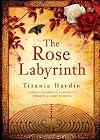
I blame the "Dan Brown effect" for this appalling attempt to pass off a jumble of obscure facts and coincidences, strung together in the most contrived manner, as a novel. The characters are paper-thin and have no internal motivation, there is no suspense or tension, and the "discoveries" which must have seemed so clear to the author are made neither clear or relevant to the reader. (At its worst, the narrative can sound uncannily like the mumblings of the strange person on the train who's show more always lost in their own little world.)
Tellingly, any attempt to review this book negatively on Amazon.co.uk will lead to a pack of the author's supporters/personal friends leaping in and screaming, "Shame on you! Shame on you! This is the greatest book ever conceived!"
Really, it ain't. Save your eyes and your money. show less
Tellingly, any attempt to review this book negatively on Amazon.co.uk will lead to a pack of the author's supporters/personal friends leaping in and screaming, "Shame on you! Shame on you! This is the greatest book ever conceived!"
Really, it ain't. Save your eyes and your money. show less
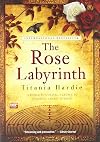
I don't even know where to begin with this one. A woman named Lucy needs a heart transplant, which she gets. She then becomes involved with her doctor, Alex. Somewhere along the way they're pulled into a mystery that involves Alex's brother, Will, John Dee (circa the original Queen Elizabeth's time), riddles, roses, labyrinths in churches, angels, Shakespeare, and the Rapture. If you can make sense of the plot and it's circumnavigations, then by all means, have at it, my friends. For me, it show more was way too much. The riddles on the papers that Lucy and Alex find have much potential, but are SO numerous the reader is inundated trying to figure them out. Eventually they become so overwhelming you start skipping over the details to just get to the meat of it all. With all the clues and mystery there should be a grand finale at the end, but it's over so quickly it's as though it was all a dream and the reader just woke up to a hollow sensation that none of it is real.
A wonderful effort, brilliant idea, but for me, The Rose Labyrinth was completed mired down in it's own mystery. show less
A wonderful effort, brilliant idea, but for me, The Rose Labyrinth was completed mired down in it's own mystery. show less
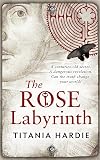
Will Stafford has inherited a key and some mysterious papers from his mother, and so while he travels Europe in his profession as photographer, he is also on the trail to find the answers to the riddles. Lucy King's story becomes intertwined with Will's in the most dramatic way, and she is instrumental in finding the long-lost legacy that was hidden by Will's ancestor centuries before.
It is clear that the author has invested an enormous amount of time and research into this novel, her debut, show more but I'm afraid to say that it hasn't paid off. A lot of the events described are just a little too far-fetched and bordering on the ridiculous for me to take any of the characters or the plot developments seriously, and I had to suspend disbelief a little too often. The plot is littered with rather convenient coincidences, inspirations and thought transferences, while there are contradictions elsewhere. The characters are, with one exception, one-dimensional, and I'm afraid to say that I couldn't really engage with any of them; the person I most related to is only present at the beginning of the book, and their departure affected me surprisingly deeply. There's a lot of mystical mumbo jumbo about, making the whole appear like a Da Vinci Code for women, based on British history and literature. The numerology in the novel is at first intriguing but doesn't bear up to scrutiny when examined at length (and we have to take the author's word for much of it as Dee's system isn't explained), at least in my opinion. Don't expect to see much of Shakespeare in the novel, as I did, he very rarely makes an appearance, direct or indirect (though the epilogue is just plain silly). About halfway through I lost interest and didn't really pay much attention to the riddles any more, and I struggled to make it to the end, only to feel that it wasn't really worth persevering, and that the whole had been contrived and pointless.
The author has taken the trouble to print the thirty-four riddles in the Appendix (points for inventiveness there), so if you're so inclined you can follow Lucy and Will's footsteps and try to solve them yourself; I'm afraid to say that I couldn't be bothered after having spent so much time on it already. show less
It is clear that the author has invested an enormous amount of time and research into this novel, her debut, show more but I'm afraid to say that it hasn't paid off. A lot of the events described are just a little too far-fetched and bordering on the ridiculous for me to take any of the characters or the plot developments seriously, and I had to suspend disbelief a little too often. The plot is littered with rather convenient coincidences, inspirations and thought transferences, while there are contradictions elsewhere. The characters are, with one exception, one-dimensional, and I'm afraid to say that I couldn't really engage with any of them; the person I most related to is only present at the beginning of the book, and their departure affected me surprisingly deeply. There's a lot of mystical mumbo jumbo about, making the whole appear like a Da Vinci Code for women, based on British history and literature. The numerology in the novel is at first intriguing but doesn't bear up to scrutiny when examined at length (and we have to take the author's word for much of it as Dee's system isn't explained), at least in my opinion. Don't expect to see much of Shakespeare in the novel, as I did, he very rarely makes an appearance, direct or indirect (though the epilogue is just plain silly). About halfway through I lost interest and didn't really pay much attention to the riddles any more, and I struggled to make it to the end, only to feel that it wasn't really worth persevering, and that the whole had been contrived and pointless.
The author has taken the trouble to print the thirty-four riddles in the Appendix (points for inventiveness there), so if you're so inclined you can follow Lucy and Will's footsteps and try to solve them yourself; I'm afraid to say that I couldn't be bothered after having spent so much time on it already. show less
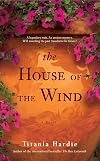
The House of the Wind by Titania Hardie is definitely not a fluffy beach-read. It is a book that demands to be savored slowly and thoughtfully with its lushly-written descriptions and gradually-evolving plot. Neither is it a book that can be fully appreciated the first time it is read. The reader may even feel a little frustrated with how slowly the plot progresses but when you get to the end, you want to read it again in order to appreciate all the nuances and subtle hints that were missed show more in the first reading.
The book begins with Maddie in California, waiting for her fiance to arrive from England until she is told that he has died in a car accident. She grieves for him and for the marriage that will never take place. She continues to work and live her life but feels isolated and lonely until her Italian grandmother sends her to Tuscany. In Tuscany she begins to feel alive again and becomes interested in the story of a centuries-old villa.
Interspersed with the story of Maddie is another story that takes place in 14th century Tuscany. It tells the story of the inhabitants of the villa that Maddie finds so intriguing, although it isn't until well into the book that the connection is made. It is about Mia, a mute young woman who lives with her aunt Jacquetta in 1347 Tuscany. She has reason to grieve as well as do some of the patrons of the wayside inn run by her aunt.
It is while staying in Tuscany and discovering the history of the villa that Maddie is able to make peace with the empty space in her life that was supposed to be her first year of marriage. She is able to find her life again and fill it with other people and interests. Her visit to Italy has become a pilgimage where she feels the lines blurring between the ancient and modern worlds and where she can imagine a better and happier life for herself, one in which she can be whole. "Something was allowing her to be touched by the world around her again" when before she "felt emotionally torn between two worlds." The weather figures in the story in a mystical sort of way, as do birds. There is also a sort of mysticism and a feeling of destiny in Maddie's life. All in all, it is an interesting book that lingers with you when you finish it so that you have to go back and read bits and pieces again and again. show less
The book begins with Maddie in California, waiting for her fiance to arrive from England until she is told that he has died in a car accident. She grieves for him and for the marriage that will never take place. She continues to work and live her life but feels isolated and lonely until her Italian grandmother sends her to Tuscany. In Tuscany she begins to feel alive again and becomes interested in the story of a centuries-old villa.
Interspersed with the story of Maddie is another story that takes place in 14th century Tuscany. It tells the story of the inhabitants of the villa that Maddie finds so intriguing, although it isn't until well into the book that the connection is made. It is about Mia, a mute young woman who lives with her aunt Jacquetta in 1347 Tuscany. She has reason to grieve as well as do some of the patrons of the wayside inn run by her aunt.
It is while staying in Tuscany and discovering the history of the villa that Maddie is able to make peace with the empty space in her life that was supposed to be her first year of marriage. She is able to find her life again and fill it with other people and interests. Her visit to Italy has become a pilgimage where she feels the lines blurring between the ancient and modern worlds and where she can imagine a better and happier life for herself, one in which she can be whole. "Something was allowing her to be touched by the world around her again" when before she "felt emotionally torn between two worlds." The weather figures in the story in a mystical sort of way, as do birds. There is also a sort of mysticism and a feeling of destiny in Maddie's life. All in all, it is an interesting book that lingers with you when you finish it so that you have to go back and read bits and pieces again and again. show less
You May Also Like


Associated Authors
Statistics
- Works
- 37
- Members
- 1,556
- Popularity
- #16,556
- Rating
- 3.0
- Reviews
- 55
- ISBNs
- 149
- Languages
- 9