
Tim McGraw
Author of Songs of America: Patriotism, Protest, and the Music That Made a Nation
About the Author
Samuel Timothy McGraw was born on May 1, 1967 in Louisiana. He is the son of Frank Edwin "Tug" McGraw Jr. (1944-2004), a star pitcher for the New York Mets and the Philadelphia Phillies. He is known as Tim McGraw, an American country music singer, songwriter and actor. McGraw has released fourteen show more studio albums (eleven for Curb Records and three for Big Machine Records), 10 of those albums have reached number 1 on the Top Country Albums charts. All of these albums have produced 65 singles, 25 of which have reached number 1 on the Hot Country Songs or Country Airplay charts. McGraw has ventured into acting, with supporting roles in The Blind Side (with Sandra Bullock), Friday Night Lights, The Kingdom, Tomorrowland, and Four Christmases (with Vince Vaughn and Reese Witherspoon), and lead roles in Flicka (2006) and Country Strong (2010). He has also started writing. In 2016 his book Humble and Kind made the New York Times Best Seller List. (Bowker Author Biography) show less
Image credit: Budd Butcher, USAF
Works by Tim McGraw
Songs of America: Patriotism, Protest, and the Music That Made a Nation (2019) 342 copies, 9 reviews
Greatest hits 3 1 copy
Tim McGraw Home Mix 1 copy
Greatest Hits, Vol. 3 1 copy
Live Like You Were Dying 1 copy
...compilation 1 copy
Associated Works
Tagged
Common Knowledge
- Legal name
- McGraw, Samuel Timothy
- Birthdate
- 1967-05-01
- Gender
- male
- Relationships
- McGraw, Tug (father)
Hill, Faith (wife) - Nationality
- USA
- Birthplace
- Delhi, Louisiana, USA
- Associated Place (for map)
- Louisiana, USA
Members
Reviews

Elevator music, not a call to arms
Yes, I know this book is getting good press, but I was disappointed. Like good music, good music writing must express rhythm and emotion in addition to knowledge. This text is elevator music, not a call to arms.
John Meacham and Tim McGraw appear to have chosen politicians and political events to report and then crafted a musical narrative around the events and political figures. This is backward, I think, in a book that is supposed to be the music that show more shaped the nation, not the people who shaped the events that shaped the music.
In the section on the music of American independence the authors seem more concerned with lyrics than melody. They scarcely mention the origins of popular tunes, including the marching and drinking songs to which the new and radical political poetry was set. This is a sad omission because before the era of recorded music, grafting new lyrics onto a familiar tune was the primary way new ideas were introduced to a scattered and variously literate population. We adapt older songs today too, of course, but in the modern era of mass media and copyright police, lyric and melody are more often new.
Moving into the 1800s there seem to be a lot of holes in this telling of "Patriotism, Protest, and the Music that Made a Nation".
The Second Great Awakening of the early 1800s had profound effects on mainstream and unaffiliated US religion and the music that supported Christian worship. This period of religious and musical upheaval is not mentioned even though leading up to the civil war these new hymns and forms of musical expression were adapted to anti-slavery and martial messages.
In the Civil War section, the authors discuss the songs of slavery and code switching (singing one thing and meaning another), which are the subject of extensive scholarly literature, but the discussion is abbreviated and weirdly bland in a way that does not emphasize song origins and importance, nor evoke the pain, hope, and cunning of the slaves.
I'm astonished that "John Brown's Body" is mentioned only as the tune on which "Battle Hymn of the Republic" and its later variations are based. "John Brown's Body" was composed by soldiers as a humorous song and was widely popular when Julia Ward Howe wrote the grand lyrics we know today. The authors here miss the opportunity to discuss the collaborative song writing style practiced in the early 1800s in religious and secular contexts.
"Dixie" is discussed as a popular song written by a white man for white minstrels, but the importance of the song during and following the war is glossed over in favor of a spiritless, politically correct discussion of how inappropriate it sounds to us today. The text does not reference the abundant literature and political writing on "Dixie".
Moving from the late 19th into the 20th century there is no mention of the labor movement, which relied on music to exhort workers to unionize and also in the fight for their rights. American labor music – from chanteys to railway yard and factory songs and on to protest songs – is fantastically political and it's crazy to leave it out.
I'm mystified as to why the civil rights section begins with the Cuban missile crisis and long sections on JFK. Here again, the authors focus on the politicians, not the songs. Of course Dr. King liked music, but the political songbooks of the era are not examined beyond a few hymns, singers and performances such as the DAR's racist rejection of Marian Anderson. There's no mention of the effects that the 1930s transformation of Negro spirituals into a more regularized, modernized gospel form had on their political usefulness. And how did Bob Dylan end up in the civil rights section rather than the counterculture section?
The counterculture section follows the civil rights section, and is especially lame. It's called "Archie Bunker v. The Age of Aquarius". There is a strong whiff of revisionism here as the authors blatantly ignore the power and musicality of the free speech movement and anti-Vietnam war protests to focus instead on Richard Nixon and Elvis. Elvis, for heaven's sake, who never ever was a voice against the war (although he was a quietly powerful force in the civil rights movement). Several conservative songs are discussed at length – such as "Ballad of the Green Berets" and "Okie from Muskogee" – but there are only about 4 paragraphs, mostly lists, of the music of the anti-war movement. "Give Peace a Chance" is mentioned once, and then only to identify it as an iconic protest song. "Ain't Gonna Study War No More" ("Down by the Riverside"), a spiritual from before the civil war, isn't mentioned at all. (Try YouTube watch?v=bYe-bLaqhhY) There is nothing about government harassment of musicians and musical expression. (If you are interested, read about the musicians on Nixon's enemies list, FBI surveillance of performers, and the blacklisting of Joan Baez.) There is no discussion of the Weavers, the Staple Singers, John Prine, Sy Khan, etc. etc. etc. here or in the civil rights section.
The authors ignore the anti-nuclear and environmental movements and associated songs (Remember "Big Yellow Taxi" – "Paved Paradise" – "Little Boxes"?), but there is one strange sentence listing Janis Joplin's "Me and Bobby McGee" as a feminist song. "Bobby McGee" was written by Kris Kristofferson and is gender neutral.
When we move to the 21st century the authors take a somewhat unusual position.
It's fairly common for the political and music press lament the shortage political songs today. Toby Keith sings "The Taliban Song" and certainly Lady Gaga and Hozier present us with powerful songs about sexual identity, but in the larger view, recent years have not brought us political anthems on par with those of the past. Mr. Meacham and Mr. McGraw trot out Bruce Springsteen. I love Springsteen and acknowledge the class roots of his work, but one songwriter is not a movement nor does Mr. Springsteen's music cover today's range of important political issues. Where is the music of climate chance, poaching and extinction, #MeToo, Occupy Wall Street, impeach Trump music? Or MAGA music for that matter?
In summary, I suspect that Mr. Meacham's and Mr. McGraw's politics are rather conservative (Elvis!) and I think it's spineless and unscholarly of them not to take up the challenge of boldly presenting the work of people whose political positions they disagree with. I also think they missed a great opportunity to show us how music evolves; how chords, progressions and modes shape our emotions; how songs of work and war develop and are used by persons in positions of power, and how they are subverted and twisted into political anthems by talented musicians and poets.
This book could have been so much more.
I received a review copy of "Songs of America: Patriotism, Protest, and the Music That Made a Nation" by Jon Meacham and Tim McGraw (Random House) through NetGalley.com.
Update: Here is an article discussing a recent uptick in protest songs - go to the Atlantic Monthly web address and add /entertainment/archive/2018/01/trump-protest-music-one-year-dorian-lynskey/550268/
Update: On 05 June 2020 The New York Post ran an article called "10 powerful songs that embody black empowerment in music" by Chuck Arnold. It's worth a look. show less
Yes, I know this book is getting good press, but I was disappointed. Like good music, good music writing must express rhythm and emotion in addition to knowledge. This text is elevator music, not a call to arms.
John Meacham and Tim McGraw appear to have chosen politicians and political events to report and then crafted a musical narrative around the events and political figures. This is backward, I think, in a book that is supposed to be the music that show more shaped the nation, not the people who shaped the events that shaped the music.
In the section on the music of American independence the authors seem more concerned with lyrics than melody. They scarcely mention the origins of popular tunes, including the marching and drinking songs to which the new and radical political poetry was set. This is a sad omission because before the era of recorded music, grafting new lyrics onto a familiar tune was the primary way new ideas were introduced to a scattered and variously literate population. We adapt older songs today too, of course, but in the modern era of mass media and copyright police, lyric and melody are more often new.
Moving into the 1800s there seem to be a lot of holes in this telling of "Patriotism, Protest, and the Music that Made a Nation".
The Second Great Awakening of the early 1800s had profound effects on mainstream and unaffiliated US religion and the music that supported Christian worship. This period of religious and musical upheaval is not mentioned even though leading up to the civil war these new hymns and forms of musical expression were adapted to anti-slavery and martial messages.
In the Civil War section, the authors discuss the songs of slavery and code switching (singing one thing and meaning another), which are the subject of extensive scholarly literature, but the discussion is abbreviated and weirdly bland in a way that does not emphasize song origins and importance, nor evoke the pain, hope, and cunning of the slaves.
I'm astonished that "John Brown's Body" is mentioned only as the tune on which "Battle Hymn of the Republic" and its later variations are based. "John Brown's Body" was composed by soldiers as a humorous song and was widely popular when Julia Ward Howe wrote the grand lyrics we know today. The authors here miss the opportunity to discuss the collaborative song writing style practiced in the early 1800s in religious and secular contexts.
"Dixie" is discussed as a popular song written by a white man for white minstrels, but the importance of the song during and following the war is glossed over in favor of a spiritless, politically correct discussion of how inappropriate it sounds to us today. The text does not reference the abundant literature and political writing on "Dixie".
Moving from the late 19th into the 20th century there is no mention of the labor movement, which relied on music to exhort workers to unionize and also in the fight for their rights. American labor music – from chanteys to railway yard and factory songs and on to protest songs – is fantastically political and it's crazy to leave it out.
I'm mystified as to why the civil rights section begins with the Cuban missile crisis and long sections on JFK. Here again, the authors focus on the politicians, not the songs. Of course Dr. King liked music, but the political songbooks of the era are not examined beyond a few hymns, singers and performances such as the DAR's racist rejection of Marian Anderson. There's no mention of the effects that the 1930s transformation of Negro spirituals into a more regularized, modernized gospel form had on their political usefulness. And how did Bob Dylan end up in the civil rights section rather than the counterculture section?
The counterculture section follows the civil rights section, and is especially lame. It's called "Archie Bunker v. The Age of Aquarius". There is a strong whiff of revisionism here as the authors blatantly ignore the power and musicality of the free speech movement and anti-Vietnam war protests to focus instead on Richard Nixon and Elvis. Elvis, for heaven's sake, who never ever was a voice against the war (although he was a quietly powerful force in the civil rights movement). Several conservative songs are discussed at length – such as "Ballad of the Green Berets" and "Okie from Muskogee" – but there are only about 4 paragraphs, mostly lists, of the music of the anti-war movement. "Give Peace a Chance" is mentioned once, and then only to identify it as an iconic protest song. "Ain't Gonna Study War No More" ("Down by the Riverside"), a spiritual from before the civil war, isn't mentioned at all. (Try YouTube watch?v=bYe-bLaqhhY) There is nothing about government harassment of musicians and musical expression. (If you are interested, read about the musicians on Nixon's enemies list, FBI surveillance of performers, and the blacklisting of Joan Baez.) There is no discussion of the Weavers, the Staple Singers, John Prine, Sy Khan, etc. etc. etc. here or in the civil rights section.
The authors ignore the anti-nuclear and environmental movements and associated songs (Remember "Big Yellow Taxi" – "Paved Paradise" – "Little Boxes"?), but there is one strange sentence listing Janis Joplin's "Me and Bobby McGee" as a feminist song. "Bobby McGee" was written by Kris Kristofferson and is gender neutral.
When we move to the 21st century the authors take a somewhat unusual position.
It's fairly common for the political and music press lament the shortage political songs today. Toby Keith sings "The Taliban Song" and certainly Lady Gaga and Hozier present us with powerful songs about sexual identity, but in the larger view, recent years have not brought us political anthems on par with those of the past. Mr. Meacham and Mr. McGraw trot out Bruce Springsteen. I love Springsteen and acknowledge the class roots of his work, but one songwriter is not a movement nor does Mr. Springsteen's music cover today's range of important political issues. Where is the music of climate chance, poaching and extinction, #MeToo, Occupy Wall Street, impeach Trump music? Or MAGA music for that matter?
In summary, I suspect that Mr. Meacham's and Mr. McGraw's politics are rather conservative (Elvis!) and I think it's spineless and unscholarly of them not to take up the challenge of boldly presenting the work of people whose political positions they disagree with. I also think they missed a great opportunity to show us how music evolves; how chords, progressions and modes shape our emotions; how songs of work and war develop and are used by persons in positions of power, and how they are subverted and twisted into political anthems by talented musicians and poets.
This book could have been so much more.
I received a review copy of "Songs of America: Patriotism, Protest, and the Music That Made a Nation" by Jon Meacham and Tim McGraw (Random House) through NetGalley.com.
Update: Here is an article discussing a recent uptick in protest songs - go to the Atlantic Monthly web address and add /entertainment/archive/2018/01/trump-protest-music-one-year-dorian-lynskey/550268/
Update: On 05 June 2020 The New York Post ran an article called "10 powerful songs that embody black empowerment in music" by Chuck Arnold. It's worth a look. show less
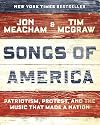
Oh, I so enjoyed reading this book! From the beginning with the beautiful and inspirational Overture on The History of Music by Jon Meacham, I did not want to stop reading this history of America through music.
Music brings a deep association with the events and places I have experienced. When I hear a song I can place myself in a specific place and point in time. The Green Berets by Barry Sadler came out when I was fourteen. It had pride of country and was an appealing march. I bought a show more ceramic green beret pin at a drug store counter.
But the patriotic support of the war was short-lived and the backdrop of my teenage years was filled with anti-war music including Turn, Turn Turn, Where Have All the Flowers Gone? and Give Peace a Chance.
The music of my life tracked the social changes going on. The songs about women waiting for men became feminist anthems. Love of country was replaced by calls for justice and equity. Love songs were still popular, but cooler were the protest songs for social change with messages of universal love, peace, inclusion, anti-authority, and dropping out of the system.
The music of patriotism is inevitably the music of protest, Meacham writes, adding that history is not just read, but is something we also hear. And he notes that history is a continual process. He holds hope that we "can overcome fear, that light can triumph over darkness, that we can open our arms rather than clench our fists." Music reminds the nation of where we have been and points to what we can become.
The authors begin with pre-Revolutionary songs such as John Dickinson's 1768 The Liberty Song which rallied the colonies to unite in a righteous cause and move through history to Bruce Springsteen's protest anthem Born in the U. S. A. Each song placed in its historical and cultural setting.
Over There was George Cohen's "bugle call"
evoking the American Revolution's Yanke Doodle in its patriotism.
"Johnny get your gun...show the "Hun" you're a son-of-a-gun"
"And we won't come back till it's over, over there."
The music discussed by Meacham and commented on by McGraw includes the well-known and well-beloved but also lesser-known songs that were influential in their day. They all represent America at a specific historical era: The Revolutionary War, the War of 1812, slavery and abolition, the Civil War, minstrel shows and racism, WWI and WWII, the social movements of Civil Rights and equal rights and voting rights, the reactive rise of the Klan and Jim Crow, the cultural division of the 1970s, and the political divisions of the last fifty years.
WWI saw patriotic music like America, Here's My Boy
with a mother offering her 'boy' to the cause...
and anti-war protest music like I Didn't Raise My Boy to be a Soldier.
McGraw's contributions are inserted in text boxes. He addresses the songs from a musician's viewpoint and from a personal, emotional response.
Songs of America is a book of history, filled with stories that trace the complicated American experiment in democracy.
In 1938 Irving Berlin's God Bless America was debuted on Kate Smith's CBS radio show. Woody Guthrie's This Land Is Your Land was originally titled God Blessed America and questioned the inequality behind the American promise.
History is an argument without end, Meacham shares. Americans have argued and fought, and dissent and protest continue, but this book offers the promise that "America is not finished, the last notes have not yet been played," and calls us to lift every voice and sing in the continuing great national conversation.
I received an ebook from the publisher through NetGalley in exchange for a fair and unbiased review. show less
Music brings a deep association with the events and places I have experienced. When I hear a song I can place myself in a specific place and point in time. The Green Berets by Barry Sadler came out when I was fourteen. It had pride of country and was an appealing march. I bought a show more ceramic green beret pin at a drug store counter.
But the patriotic support of the war was short-lived and the backdrop of my teenage years was filled with anti-war music including Turn, Turn Turn, Where Have All the Flowers Gone? and Give Peace a Chance.
The music of my life tracked the social changes going on. The songs about women waiting for men became feminist anthems. Love of country was replaced by calls for justice and equity. Love songs were still popular, but cooler were the protest songs for social change with messages of universal love, peace, inclusion, anti-authority, and dropping out of the system.
The music of patriotism is inevitably the music of protest, Meacham writes, adding that history is not just read, but is something we also hear. And he notes that history is a continual process. He holds hope that we "can overcome fear, that light can triumph over darkness, that we can open our arms rather than clench our fists." Music reminds the nation of where we have been and points to what we can become.
The authors begin with pre-Revolutionary songs such as John Dickinson's 1768 The Liberty Song which rallied the colonies to unite in a righteous cause and move through history to Bruce Springsteen's protest anthem Born in the U. S. A. Each song placed in its historical and cultural setting.
Over There was George Cohen's "bugle call"
evoking the American Revolution's Yanke Doodle in its patriotism.
"Johnny get your gun...show the "Hun" you're a son-of-a-gun"
"And we won't come back till it's over, over there."
The music discussed by Meacham and commented on by McGraw includes the well-known and well-beloved but also lesser-known songs that were influential in their day. They all represent America at a specific historical era: The Revolutionary War, the War of 1812, slavery and abolition, the Civil War, minstrel shows and racism, WWI and WWII, the social movements of Civil Rights and equal rights and voting rights, the reactive rise of the Klan and Jim Crow, the cultural division of the 1970s, and the political divisions of the last fifty years.
WWI saw patriotic music like America, Here's My Boy
with a mother offering her 'boy' to the cause...
and anti-war protest music like I Didn't Raise My Boy to be a Soldier.
McGraw's contributions are inserted in text boxes. He addresses the songs from a musician's viewpoint and from a personal, emotional response.
Songs of America is a book of history, filled with stories that trace the complicated American experiment in democracy.
In 1938 Irving Berlin's God Bless America was debuted on Kate Smith's CBS radio show. Woody Guthrie's This Land Is Your Land was originally titled God Blessed America and questioned the inequality behind the American promise.
History is an argument without end, Meacham shares. Americans have argued and fought, and dissent and protest continue, but this book offers the promise that "America is not finished, the last notes have not yet been played," and calls us to lift every voice and sing in the continuing great national conversation.
I received an ebook from the publisher through NetGalley in exchange for a fair and unbiased review. show less
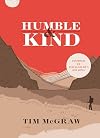
"There is a beautiful diversity to kindness."
-Tim McGraw in Humble & Kind.
Humble & Kind is a book formatted version of his song of the same name. There's a letter before and after the book written by Tim McGraw detailing his thoughts on what being humble and kind mean to him and Lori McKenna detailing how the song came to be (which is very sweet) and what it means to her. I loved the short letters and felt they added depth to a very simple song. I listened to it and followed along with the show more book and it definitely added to my experience.
The song being very simple means the book is extremely simple. They have illustrations adding depth to the lyrics but the illustrations lack depth themselves, there were a few where I didn't know what they were supposed to depict, and others that didn't correspond with the lyrics at all. By itself without the letters the book is very surface level with no real substance. I think the disconnect has to do with music carrying a lot more feeling than written word causing the book to feel very corporate-motivational-posters-in-an-office-breakroom. show less
-Tim McGraw in Humble & Kind.
Humble & Kind is a book formatted version of his song of the same name. There's a letter before and after the book written by Tim McGraw detailing his thoughts on what being humble and kind mean to him and Lori McKenna detailing how the song came to be (which is very sweet) and what it means to her. I loved the short letters and felt they added depth to a very simple song. I listened to it and followed along with the show more book and it definitely added to my experience.
The song being very simple means the book is extremely simple. They have illustrations adding depth to the lyrics but the illustrations lack depth themselves, there were a few where I didn't know what they were supposed to depict, and others that didn't correspond with the lyrics at all. By itself without the letters the book is very surface level with no real substance. I think the disconnect has to do with music carrying a lot more feeling than written word causing the book to feel very corporate-motivational-posters-in-an-office-breakroom. show less
Biographer Jon Meacham and country music artist Tim McGraw make an unlikely writing team, but the two paired up to write a book about American music. The book's focus is on patriotic songs and songs of protest. Beginning with songs of the Revolutionary War period and extending into recent times, the two examine the songs that struck a chord with our nation. Included in the volume are songs from slavery and from the civil rights era, songs supporting women's suffrage, and other similar show more occasions. Of course, war time also yielded a large repertoire of patriotic music. While the book seems well-researched, the hidden endnotes create an appeal with the average American rather than with academics. show less
Lists
Awards


You May Also Like


Associated Authors
Statistics
- Works
- 49
- Also by
- 9
- Members
- 918
- Popularity
- #27,945
- Rating
- 3.8
- Reviews
- 20
- ISBNs
- 50
- Languages
- 2