
Roberta Arenson
Author of One, Two, Skip a Few! First Number Rhymes
Works by Roberta Arenson
Associated Works
Tagged
Common Knowledge
- Gender
- female
Members
Reviews

Curious and kind, Prince Manu rescues a tiny fish in this flood myth from the Hindu tradition, only to discover that his new piscine friend is none other than the god Brahma in disguise. Warned that a terrible flood is coming, Manu builds a ship, taking animals and seven wise men aboard. Surviving the waters that eventually cover the entire earth, Manu rebuilds the world, peopling it again with the children he has with his wife, born from milk...
Flood myths can be found the world over, from show more the biblical Noah story—believed to come from the earlier Babylonian flood myth in The Enuma Elish—to the story of Watákame, the sole survivor of a great flood in the Huichol mythology of Mexico. It is always fascinating to encounter an example of this tale type with which I am unfamiliar, so I picked up Manu and the Talking Fish with some anticipation. I found it quite engaging, and appreciated author/illustrator Roberta Arenson's simple narrative and striking collage artwork, with its vibrant colors and bold shapes. The note about the story and the list of sources at the rear was most welcome, and I was interested to learn that this tale can be found in the Sataphatha Brahamana and the Mahabarata, and that it predates the Noah story. The parallels are fascinating, not just in terms of the flood itself and the divine warning, but the fact that Manu's boat comes to rest on a tall mountain. I feel that these are elements often seen in this type of tale. In any case, this is an appealing telling of this tale, and is one I would recommend to young folklore and mythology enthusiasts, as well as to those interested in conducting a unit on comparative flood myths for young students. show less
Flood myths can be found the world over, from show more the biblical Noah story—believed to come from the earlier Babylonian flood myth in The Enuma Elish—to the story of Watákame, the sole survivor of a great flood in the Huichol mythology of Mexico. It is always fascinating to encounter an example of this tale type with which I am unfamiliar, so I picked up Manu and the Talking Fish with some anticipation. I found it quite engaging, and appreciated author/illustrator Roberta Arenson's simple narrative and striking collage artwork, with its vibrant colors and bold shapes. The note about the story and the list of sources at the rear was most welcome, and I was interested to learn that this tale can be found in the Sataphatha Brahamana and the Mahabarata, and that it predates the Noah story. The parallels are fascinating, not just in terms of the flood itself and the divine warning, but the fact that Manu's boat comes to rest on a tall mountain. I feel that these are elements often seen in this type of tale. In any case, this is an appealing telling of this tale, and is one I would recommend to young folklore and mythology enthusiasts, as well as to those interested in conducting a unit on comparative flood myths for young students. show less
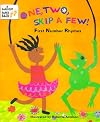
This poetry book is a great way to teach children how to count. It uses various methods of counting which make it fun. Each page rhymes which makes it fun for the reader and the audience.
I liked how this book gave easy and memorable rhymes to help children learn how to count. I couldn’t help but almost start singing along with the words of the poems.
In the classroom, we could make our own short poems using different counting methods. We could also draw pictures on a big poster and write show more our poems on it, then hang it on the wall. show less
I liked how this book gave easy and memorable rhymes to help children learn how to count. I couldn’t help but almost start singing along with the words of the poems.
In the classroom, we could make our own short poems using different counting methods. We could also draw pictures on a big poster and write show more our poems on it, then hang it on the wall. show less
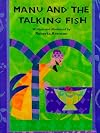
Manu is a prince living in India who is curious about the many wonders of the world. One day, as he sits by the river thinking, he hears a voice calling for help. He rescues a little fish from getting eaten by a bigger fish. In return for the rescue, the little fish promises to tell the future one day, if Manu can keep him alive. Manu is able to keep the fish alive and growing, and one day the fish asks to be returned to the river. Before swimming away, he tells Manu that a great flood with show more wash everything on the earth away, and that he had better build a boat big enough to hold his family, plants, and a bunch of animals. Manu does as the fish tells him, and he and his family are saved from the flood. After floating around for some time, the fish shows up and pulls Manu's boat to safety. Manu is able to rebuild the earth, and lives to be an old man. And every once in awhile, you would see him sitting by the river, listening.
This is an interesting folktale in that it blends Indian culture, the story of the talking fish, and the Ark story. Children might be a little confused as the storyline meanders and never repeats itself like a standard folktale, but they will enjoy recognizing parts of the story they may have heard in other tales. The brightly colored illustrations enhance the story, although they do not have traditional Indian motifs, which would have been beautiful. Still, kids will like the bright colors and easy to read text.
I found it interesting that in the eurocentric stories, the fish represented greed and wanting what you can't have, while in the non Western folktales, the fish represnted wisdom and sustenance. I would be curious to learn more about that dichotomy.
For ages 6 - 9. show less
This is an interesting folktale in that it blends Indian culture, the story of the talking fish, and the Ark story. Children might be a little confused as the storyline meanders and never repeats itself like a standard folktale, but they will enjoy recognizing parts of the story they may have heard in other tales. The brightly colored illustrations enhance the story, although they do not have traditional Indian motifs, which would have been beautiful. Still, kids will like the bright colors and easy to read text.
I found it interesting that in the eurocentric stories, the fish represented greed and wanting what you can't have, while in the non Western folktales, the fish represnted wisdom and sustenance. I would be curious to learn more about that dichotomy.
For ages 6 - 9. show less
One, Two, Skip A Few! First Number Rhymes illustrated by Roberta Arenson
One, Two, Skip A Few! First Number Rhymes is a poetry book that has rhymes that deal with counting numbers or adding numbers with things for example of chicken eggs, fishes, animals and food such as potatoes.
I can relate to this book because my daughter is at the level of learning how to count and sometimes she skips a few numbers in between and this would be a fun book to learn her numbers with her in a rhythm.
In the show more classroom, a teacher can use this book to help students in their counting. One part of the book says one potato, two potato, three potato, four; five potato, six potato, seven potato, more. During this section, the teacher can bring some potatoes from home and lay them out and have the kids count them. Also, a teacher can make a game of it and have students sit in a circle and start passing one potato to the next person then add another potato and sing the poem out loud. Continue adding the potatoes to add to the fun of adding the potatoes. This game could get pretty loud, but the kids will have fun keeping up with the children passing the potatoes and counting them. show less
One, Two, Skip A Few! First Number Rhymes is a poetry book that has rhymes that deal with counting numbers or adding numbers with things for example of chicken eggs, fishes, animals and food such as potatoes.
I can relate to this book because my daughter is at the level of learning how to count and sometimes she skips a few numbers in between and this would be a fun book to learn her numbers with her in a rhythm.
In the show more classroom, a teacher can use this book to help students in their counting. One part of the book says one potato, two potato, three potato, four; five potato, six potato, seven potato, more. During this section, the teacher can bring some potatoes from home and lay them out and have the kids count them. Also, a teacher can make a game of it and have students sit in a circle and start passing one potato to the next person then add another potato and sing the poem out loud. Continue adding the potatoes to add to the fun of adding the potatoes. This game could get pretty loud, but the kids will have fun keeping up with the children passing the potatoes and counting them. show less
Awards

You May Also Like


Associated Authors
Statistics
- Works
- 2
- Also by
- 7
- Members
- 458
- Popularity
- #53,634
- Rating
- 3.8
- Reviews
- 21
- ISBNs
- 12