
Leo Lionni (1910–1999)
Author of Swimmy
About the Author
Leo Lionni was born in Amsterdam on May 5, 1910. He attended the University of Zurich and also earned a doctorate in Economics from the University of Genoa in 1935. He taught himself to draw by visiting museums. After marrying Nora Maffi in 1931, Lionni moved to Milan, Italy, where he became known show more as a painter. In 1939 he moved to Philadelphia and began working in advertising design. Lionni held several positions in the artistic field including artistic director and design director. He also served as president of the American Institute of Graphic Arts. Around 1960 Lionni moved back to Italy. His first of over forty children's books was Little Blue and Little Yellow. Other titles include Inch by Inch, Frederick, Swimmy, and Alexander and the Wind-up Mouse, all of which won a Caldecott Honor. In addition, he received the American Institute of Graphic Arts Gold Medal in 1984. Lionni died on October 11, 1999 at his home in Tuscany, Italy at the age of 89. (Bowker Author Biography) show less
Series
Works by Leo Lionni
Frederick's Fables : A Treasury of 16 Favorite Leo Lionni Stories (1986) — Introduction, some editions — 386 copies, 10 reviews
A Color of His Own, Alexander and the Wind-up Mouse, and Swimmy by Leo Lionni (2003-05-03) (2003) 116 copies
Pezzettino - In musica 1 copy
Lets Make Rabbits 1 copy
Leo Lionni's 100 First Words 1 copy
Η Αριάδνη 1 copy
une année bien rempli 1 copy
Leo Leonni 1 copy
じぶんだけのいろ いろいろさがしたカメレオンのはなし 1 copy
Leo Lionni, pitture 1 copy
The Foolish Turtle 1 copy
Leo Lionni's Friends Go Fish Card Game: Includes Rules for Two More Games: Concentration and Snap (2020) 1 copy
Pé Ante Pé 1 copy
L'année des souris 1 copy
Fot for fot 1 copy
Stuck fur stuck 1 copy
Associated Works
The Myth of Sisyphus and Other Essays (1942) — Cover designer, some editions — 8,420 copies, 49 reviews
The 20th-Century Children's Book Treasury: Picture Books and Stories to Read Aloud (1998) — Contributor — 1,837 copies, 14 reviews
Design Culture: An Anthology of Writing from the AIGA Journal of Graphic Design (1997) — Contributor — 45 copies
Chicka, Chicka, Boom, Boom...and Lots More Learning Fun [1999 film] (2002) — Author & Illustrator — 37 copies, 2 reviews
Tagged
Common Knowledge
- Canonical name
- Lionni, Leo
- Birthdate
- 1910-05-05
- Date of death
- 1999-10-11
- Gender
- male
- Education
- University of Genoa (Ph.D., Economics)
- Occupations
- graphic designer
writer
children's book author
illustrator - Awards and honors
- Society of Illustrators Lifetime Achievement Award (Posthumous, 2007)
- Nationality
- USA
Netherlands (birth) - Birthplace
- Amsterdam, Netherlands
- Places of residence
- Tuscany, Italy
Philadelphia, Pennsylvania, USA
Amsterdam, Netherlands - Place of death
- Radda, Tuscany, Italy
- Map Location
- Italy
Members
Reviews

While his siblings gather food stores for the winter ahead, little Frederick the mouse sits and dreams, seemingly not busy at all. In reality however, he is gathering the sounds and sights around him, and the memory of the warm sun - all things he will use to comfort and enchant his family, when the food runs out during the long winter...
Originally published in 1967 and awarded a Caldecott Honor in 1968, Frederick is one of those childhood classics that I never got around to as a child. show more Although long familiar with author/artist Leo Lionni's name - we have an entire shelf devoted to his books at work - I had never before today actually picked up one of his stories. I'm glad that I finally have, as I found this to be a charming picture-book, pairing a gentle, thoughtful tale about the importance of creativity and imagination with lovely collage-style illustrations. The story here is like an answer to that classic Aesopic fable of The Ants and the Grasshopper, and argues that there is more than one kind of work that is important. Read in that way, I greatly appreciated it.
That said, a part of me couldn't help but think that the narrative here only works if one reads Frederick and his murine compatriots as a society in miniature, rather than as a family. If there were a human farming family, for instance, and one of the children liked sports, while the other liked art, I doubt the parents would excuse the art-loving child from doing their part of the farm chores. Similarly, in many families, members with a diverse range of interests and occupations regularly help out with household tasks, regardless of whether they feel a natural aptitude for the work before them. Will child readers take this as I think it was meant, as an allegory about different kinds of work having value within the larger society? Or will they take the other message (however unintentional), that some should be excused from doing their share of communal work, whether in the family or class? I'm honestly not sure.
Perhaps I'm overthinking the issue, and have been influenced by my distaste for the more recent trend (exemplified by titles like Iggy Peck, Architect), in which children are encouraged to think that they are too special to join in whatever the group is doing, or to follow the rules. In the end, I really did enjoy Frederick, and plan to track down more of Lionni's work. That said, little doubts of the kind described above, would not be quashed as I read it. show less
Originally published in 1967 and awarded a Caldecott Honor in 1968, Frederick is one of those childhood classics that I never got around to as a child. show more Although long familiar with author/artist Leo Lionni's name - we have an entire shelf devoted to his books at work - I had never before today actually picked up one of his stories. I'm glad that I finally have, as I found this to be a charming picture-book, pairing a gentle, thoughtful tale about the importance of creativity and imagination with lovely collage-style illustrations. The story here is like an answer to that classic Aesopic fable of The Ants and the Grasshopper, and argues that there is more than one kind of work that is important. Read in that way, I greatly appreciated it.
That said, a part of me couldn't help but think that the narrative here only works if one reads Frederick and his murine compatriots as a society in miniature, rather than as a family. If there were a human farming family, for instance, and one of the children liked sports, while the other liked art, I doubt the parents would excuse the art-loving child from doing their part of the farm chores. Similarly, in many families, members with a diverse range of interests and occupations regularly help out with household tasks, regardless of whether they feel a natural aptitude for the work before them. Will child readers take this as I think it was meant, as an allegory about different kinds of work having value within the larger society? Or will they take the other message (however unintentional), that some should be excused from doing their share of communal work, whether in the family or class? I'm honestly not sure.
Perhaps I'm overthinking the issue, and have been influenced by my distaste for the more recent trend (exemplified by titles like Iggy Peck, Architect), in which children are encouraged to think that they are too special to join in whatever the group is doing, or to follow the rules. In the end, I really did enjoy Frederick, and plan to track down more of Lionni's work. That said, little doubts of the kind described above, would not be quashed as I read it. show less
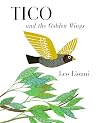
I believe that the art and the main message are meant to be lovely, and that young readers can discuss whether the other black birds are true 'friends' or not... and that when all aspects of the story are considered, the book is worth recommending. The 'Dragonfly' edition has interesting discussion questions. For example, Dragonfly asks us to consider more deeply the idea that *everyone* has memories, dreams, ambitions, fears... that are different from others... the 'friends' are not a set show more of clones, but are individuals themselves.
On the other hand, what would a parent say if a child took the lesson from this to heart and gave away all of his possessions except for a rice bowl? Maybe there's a reason this is set in a place that looks like India; I don't think it would truly fly in the US, or even in England, Ireland or Denmark, the homes of Dickens, Wilde, and Andersen respectively. show less
On the other hand, what would a parent say if a child took the lesson from this to heart and gave away all of his possessions except for a rice bowl? Maybe there's a reason this is set in a place that looks like India; I don't think it would truly fly in the US, or even in England, Ireland or Denmark, the homes of Dickens, Wilde, and Andersen respectively. show less
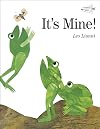
First of all, I love kids' books about frogs. I save those for Passover use. Heh! Next, I love the illustrations that look like colorful collages. Finally, I love the not too long story lines on each page which make this a perfect read-aloud book for toddlers.
This book has a surprise ending to a story which teaches the lesson of sharing. Very cute! I also like reading books again by this author whose book Swimmy I read to my own children when they were little.
This book has a surprise ending to a story which teaches the lesson of sharing. Very cute! I also like reading books again by this author whose book Swimmy I read to my own children when they were little.

A pencil and a pair of scissors make two rabbits, one drawn and the other cut out of brightly patterned paper. After eating a drawn and a cut paper carrot (respectively), the rabbits take a nap. When they wake up they are still hungry and they find something new to eat…a REAL carrot. They can tell it’s real because it has a shadow, and after eating it, the two rabbits have shadows too.
I loved this when I was a kid, and it’s still a delight. The style of art is so clever, with its show more combination of simple pencil outline, paper collage, and realistic drawing. The story is simple and fun, and it’s stuck with me for so many years show less
I loved this when I was a kid, and it’s still a delight. The style of art is so clever, with its show more combination of simple pencil outline, paper collage, and realistic drawing. The story is simple and fun, and it’s stuck with me for so many years show less
Lists
1960s (1)
al.vick-series (1)
Five star books (1)
ABC (1)
Open Book 2021 (1)
Sonlight Books (1)
Which house? (1)
Awards


You May Also Like


Associated Authors
Statistics
- Works
- 131
- Also by
- 11
- Members
- 58,667
- Popularity
- #246
- Rating
- 4.0
- Reviews
- 1,596
- ISBNs
- 878
- Languages
- 22
- Favorited
- 24
