
Ezra Jack Keats (1916–1983)
Author of The Snowy Day
About the Author
Ezra Jack Keats was born Jacob Ezra Katz in Brooklyn, New York on March 11, 1916. He was a mural painter for the Works Progress Administration (WPA) for three years before taking a job as a comic book illustrator. During World War II, he joined the United States Air Corp and was a camouflage show more pattern designer. After the war, he changed his name to make his Jewish heritage less noticeable. He wrote and/or illustrated more than 85 children's books. The first book he illustrated was Jubilant for Sure by Elizabeth Hubbard Lansing, which was published in 1954. The first book he wrote was My Dog is Lost, which was published in 1960. His other works include Pet Show and The Snowy Day, which won a Caldecott Medal in 1963. He was also awarded the University of Southern Mississippi Medallion for outstanding contributions in the field of children's literature in 1980. He died of a heart attack on May 6, 1983. (Bowker Author Biography) show less
Series
Works by Ezra Jack Keats
Myself 10 copies
Ezra Jack Keats' The Little Drummer Boy... and 4 More Holiday Stories (Scholastic Video Collection) (2006) 6 copies
The Little Drummer Boy 2 copies
The Snowy Day (Board Book) 2 copies
Twelve Day of Christmas 1 copy
The Snowy Days 1 copy
A letter to Army 1 copy
Snow 1 copy
By Ezra Jack Keats Dreams (Turtleback School & Library Binding Edition) [School & Library Binding] 1 copy
Peter lernt pfeifen 1 copy
The Wright Brothers 1 copy
Associated Works
The 20th-Century Children's Book Treasury: Picture Books and Stories to Read Aloud (1998) — Contributor — 1,838 copies, 14 reviews
Big Tracks, Little Tracks: Following Animal Prints (1958) — Illustrator, some editions — 915 copies, 4 reviews
two tickets to freedom: the true story of ellen and william craft, fugitive slaves (1971) — Illustrator — 446 copies
Too Many Ghosts (1959) — Illustrator, some editions; frontpiece, some editions — 219 copies, 2 reviews
In the park : an excursion in four languages, (1968) — Illustrator, some editions — 43 copies, 1 review
Nihal — Illustrator — 1 copy
Tagged
Common Knowledge
- Canonical name
- Keats, Ezra Jack
- Legal name
- Katz, Jacob Ezra (birth name)
- Birthdate
- 1916-03-11
- Date of death
- 1983-05-06
- Gender
- male
- Education
- Thomas Jefferson High School, Brooklyn (1935)
- Occupations
- illustrator
children's book author
comic book illustrator
mural painter - Organizations
- 1971 White House Conference for Children
UNICEF
Works Progress Administration
Fawcett Publications
Ezra Jack Keats Foundation - Awards and honors
- The University of Southern Mississippi Silver Medallion (1980)
Ezra Jack Keats New Writer Award (established in his honor)
Ezra Jack Keats New Illustrator Award (established in his honor)
Society of Illustrators Lifetime Achievement Award (Posthumous, 2006) - Cause of death
- heart attack
- Nationality
- USA
- Birthplace
- Brooklyn, New York, USA
- Places of residence
- Paris, Île-de-France, France
New York, New York, USA - Burial location
- cremated
- Map Location
- New York, USA
Members
Discussions
children's book from 80's inner city in Name that Book (January 2013)
Reviews
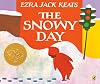
Ezra Jack Keats’ "The Snowy Day" is a beautifully simple yet a meaningful picture book that captures the wonder of childhood and the magic of a fresh snowfall. The story follows Peter, a young boy experiencing the snow-covered ground with joy and curiosity by making footprints, smacking snow off trees, and attempting to save a snowball in his pocket. The use of limited text allows readers to fully immerse themselves in Peter's adventure. The first-person limited perspective keeps the story show more intimate, helping readers connect with Peter’s excitement and small disappointments. Similar to the limited text the illustrations also are minimalistic so that the focus stays on Peter. Personally, I was not a huge fan of the illustrations in this book I think the muted colors in some places, and then bright and bold in others was throwing me off, but just personal preference. However, I did like how Keats' depicted Peter as an African American boy. Instead of showcasing him in a story about racism and making the focus around that, he is in a peaceful environment enjoying a snowy day just like any other kid would, and I really enjoyed that aspect. show less
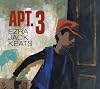
Keats has a knack for dropping the reader into the story with no preamble, and the world-building is only in the pictures. So much outside the story doesn't matter. So much is left to the reader to work out and decide for themself. This story will haunt me; it might be my personal favorite by the author.
Yes, meeting a blind man is scary. But what I work out for my own interpretation is that he is the one who is scared. Note how the colors of the music change.... (I wonder if Keats had show more synesthesia....) show less
Yes, meeting a blind man is scary. But what I work out for my own interpretation is that he is the one who is scared. Note how the colors of the music change.... (I wonder if Keats had show more synesthesia....) show less

Waking up one wintry morning to a world covered in snow, young Peter puts on his red snowsuit in this iconic picture book from 1962, heading out to spend a day playing in a city transformed. Crunching through the snow and making various tracks, hitting a tree with a stick to dislodge the snow, making a snowman and snow angels, sliding down snowy hills—there were many things he did before heading home...
A childhood favorite of many friends, The Snowy Day is one of those books I have always show more known about—it won the Caldecott Medal in 1963, and is considered a ground-breaking title for its depiction of a young African American boy and his day of fun—but never actually read as a child. I suspect that, had I done so, it would have been a favorite. I too loved to play outside in the snow, and could spend hours amusing myself. I thought the artwork here, unsurprisingly, given the accolades it won, was lovely: simple but charming, with wonderful use of color and form. I loved the pinkish-blueish snowflakes! All in all, a wonderful book, one deserving of its status as a classic, that I would recommend to all picture book audiences looking for wintry tales. show less
A childhood favorite of many friends, The Snowy Day is one of those books I have always show more known about—it won the Caldecott Medal in 1963, and is considered a ground-breaking title for its depiction of a young African American boy and his day of fun—but never actually read as a child. I suspect that, had I done so, it would have been a favorite. I too loved to play outside in the snow, and could spend hours amusing myself. I thought the artwork here, unsurprisingly, given the accolades it won, was lovely: simple but charming, with wonderful use of color and form. I loved the pinkish-blueish snowflakes! All in all, a wonderful book, one deserving of its status as a classic, that I would recommend to all picture book audiences looking for wintry tales. show less
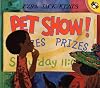
Oh my goodness. I love the role the old woman played. I love that the (social workers? outreach volunteers?) found awards for every single pet. Just a fun story, with an undercurrent that reminds us that kids who live in urban poverty can be the nicest kids of all, as they understand neighborliness and compassion.
I think that I'm caught up on all the Keats that is available to me, but if I do find more I will read it!
I think that I'm caught up on all the Keats that is available to me, but if I do find more I will read it!
Lists
Sonlight Books (1)
1960s (1)
al.vick-series (1)
BitLife (1)
Best Dog Stories (1)
Five in a Row (1)
Winter Books (1)
Five star books (1)
Precious People (1)
Reading Rainbow (4)
African American (3)
Books About Boys (1)
VBL Picturebooks (1)
Storytime (1)
Five in a Row (1)
Fave Books (1)
Awards


You May Also Like


Associated Authors
Statistics
- Works
- 52
- Also by
- 33
- Members
- 46,276
- Popularity
- #345
- Rating
- 4.1
- Reviews
- 2,182
- ISBNs
- 593
- Languages
- 16
- Favorited
- 17
