
Vera B. Williams (1927–2015)
Author of A Chair for My Mother
About the Author
Vera Baker Williams was born on January 28, 1927 in Hollywood, California. She studied at the High School of Music and Art in Manhattan and Black Mountain College in North Carolina, where she received a BFA in graphic arts. She co-found the Gate Hill Cooperative and the Collaberg School, in Stony show more Point, New York. She worked as a teacher and artist before becoming a writer and illustrator of children's books. She won a Caldecott Medal award and the Boston Globe-Horn Book award in the picture book category in 1983 for A Chair for My Mother, a Caldecott Medal award in 1991 for "More More More" Said the Baby: Three Love Stories, the Boston Globe-Horn Book award in fiction in 1994 for Scooter, and the NSK Neustadt Prize for Children's Literature in 2009. She was a member of the executive committee of the War Resisters League from 1984 to 1987, and served a month at a federal penitentiary for participating in a women's peaceful blockade of the Pentagon. She died on October 16, 2015 at the age of 88. (Bowker Author Biography) show less
Image credit: WhatsUpWithBooks
Series
Works by Vera B. Williams
A Chair for My Mother and Other Stories CD: A Vera B. Williams Audio Collection (2009) 1 copy, 1 review
Five Stories 1 copy
Associated Works
The 20th-Century Children's Book Treasury: Picture Books and Stories to Read Aloud (1998) — Contributor — 1,821 copies, 14 reviews
Home: A Collaboration of Thirty Authors & Illustrators (Reading Rainbow Book) (1992) — Illustrator, some editions — 186 copies, 1 review
Long Walks and Intimate Talks: Stories, Poems and Paintings (Women & Peace) (1991) — some editions — 31 copies, 1 review
Tagged
Common Knowledge
- Canonical name
- Williams, Vera B.
- Legal name
- Williams, Vera Baker
- Other names
- Williams, Vera
- Birthdate
- 1927-01-28
- Date of death
- 2015-10-16
- Gender
- female
- Education
- Black Mountain College (BFA|1949 | graphic art)
- Occupations
- illustrator
teacher
graphic artist
cook - Organizations
- Gates Hill (co-founder)
Leslie College, Cambridge, Massachusetts (teacher)
War Resisters League - Awards and honors
- NSK Neustadt Prize for Children's Literature (2009)
Regina Medal (2008) - Relationships
- Rosenblum, Naomi (sister)
Rosenblum, Nina (niece) - Nationality
- USA
- Birthplace
- Los Angeles, California, USA
- Places of residence
- New York, New York, USA
Vancouver, British Columbia, Canada - Place of death
- Narrowsburg, New York, USA
- Associated Place (for map)
- USA
Members
Reviews
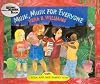
You might just well-up from the emotional charge of Williams' successor to A Chair for My Mother and Something Special for Me. It's the luminous tremor of the pictures, combined with what happens, that gives this a special vibrance. Grandma is sick, so the big, rose-print chair in the living room is often empty. Upstairs in bed, she likes it when Rosa and her friends play music for her: "Leora plays the drums, Mae plays the flute, Jenny plays the fiddle and I play my accordion." Worried show more because the big money jar is empty (maybe, says Mae, "because your mother has to spend all her money to take care of your grandma"), Rosa recalls her mother telling her about her other grandma, who played the accordion at parties and weddings, and was paid. Grandma's all for it. The Oak Street Band is formed; gets help, practices. And their first job is to play at a party for Leora's great-grandparents, to celebrate the 50th anniversary of their comer market. (Now it's run by Leora's mother, who plays the radio. "But for the party she said there just had to be live music.") The children are first shy, then they play and play "like a real band"—while a whirl of dancers young and old fills two wordless pages. The book closes in quiet exultation, with Rosa putting her share of the evening's money into the big jar. Brimming to look at—see Grandma calling out the window, with big snowflakes in her hair—and heart-catching, sometimes, to listen to.
-Kirkus Review show less
-Kirkus Review show less
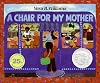
Atender knockout—from the author/illustrator of, most recently and auspiciously, Three Days on a River in a Red Canoe. "My mother works as a waitress in the Blue Tile Diner," the little-girl narrator begins—and to the accompaniment of vividly colored, direct, proto-primitive pictures, the real-life-like story comes out. At home is a glass jar, into which goes all Mama's change from tips and the money Grandma saves whenever she gets a bargain at the market. "When we can't get a single show more other coin into the jar, we are going to take out all the money and go and buy a chair. . . . A wonderful, beautiful, fat, soft armchair." This is because—we see it as she tells it—all the family's furniture burned up in a fire; and though neighbors and friends and relatives brought replacements (a buttercup-and-spring-green spread to contrast with the charred gray gloom just preceding), "we still have no sofas and no big chairs." Only straight, hard kitchen chairs. Then the jar is full; the coins are rolled in paper wrappers, and exchanged for bills; and "Mama and Grandma and I" go shopping for the chair. This last sequence is a glory: Grandma feeling like Goldilocks, trying out all the chairs; the very rose-covered chair "we were all dreaming of," plump in the middle of the floor; the little girl and her mother, snuggled in it together. . . and she can reach right up "and turn out the light if I fall asleep in her lap." It's rare to find so much vitality, spontaneity, and depth of feeling in such a simple, young book. show less
This is a beautifully written and thoughtfully illustrated book that reflects the life of hard-working individuals, in a single-parent, multi-generational home, lived in by three women. A family endures painful experiences of love, loss and hard-work, which is naturally and intuitively observed by the young female child. The family works hard to save their money and buy a special chair, an indicator of happiness, and well-being for their sweet family. This is an incredible story to open a show more window into other home-life experiences, that many children have in lower-income communities, that not everyone is aware of. This book defies stereotypes and the narrative of a single-story by showcasing hard working females, and a community coming together to support a family in need. This book can lead to children’s involvement in their own community by supporting a Habitat for Humanity project, donating to a local women’s shelter, or hosting a lemonade stand to raise funds for a family who experienced a house fire.
This book is inclusive, supports social justice and allows for critical conversations about community support. Some quotes that are memorable are: “We are going to get the best chair in the whole world”, and “Sometimes my mama is laughing when she comes home from work. Sometimes she’s so tired she falls asleep while I count the money into piles.” show less
This book is inclusive, supports social justice and allows for critical conversations about community support. Some quotes that are memorable are: “We are going to get the best chair in the whole world”, and “Sometimes my mama is laughing when she comes home from work. Sometimes she’s so tired she falls asleep while I count the money into piles.” show less
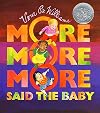
I love this book so much. I love the biracial kid, just thrown in there, like it's no big deal (and so it shouldn't be!), and I love the not-quite-mine dialect, and I love the illustrations and the clear love between the grown-ups and their kids.
Not one bad word to say about this book, that's me.
Not one bad word to say about this book, that's me.
Lists
Awards


You May Also Like


Associated Authors
Statistics
- Works
- 18
- Also by
- 5
- Members
- 14,271
- Popularity
- #1,614
- Rating
- 4.1
- Reviews
- 416
- ISBNs
- 208
- Languages
- 6
- Favorited
- 5