
Mary Hoffman
Author of Amazing Grace
About the Author
Children's author and reviewer Mary Hoffman was born in 1945. She attended Newnham College to study English literature and University College London to study linguistics. She started writing in 1970 and has written about eighty children's books including the picture book Amazing Grace, the show more Stravaganza series, and the anti-war anthology Lines in the Sand. She is also the editor of the children's book review magazine Armadillo, which comes out four times a year. (Bowker Author Biography) show less
Disambiguation Notice:
Mary Hoffman has written a very wide range of books for children and young adults, including the Stravaganza series, the Amazing Grace books, historical novels, and non-fiction.
Series
Works by Mary Hoffman
Wild cats 3 copies
Tunne oma tundeid 1 copy
Gracia Encantada 1 copy
Animals in the wild, Lion 1 copy
Minu pere on parim 1 copy
THE WORLD'S 35 BEST FISH SOUPS, CHOWDERS, AND STEWS: FISH SOUPS & FLAVORS FROM AROUND THE WORLD (2019) 1 copy
Boka om alle følelsene 1 copy
Animals in the Wild PANDA 1 copy
Associated Works
Tagged
Common Knowledge
- Legal name
- Hoffman, Mary Lassiter
- Birthdate
- 1945
- Gender
- female
- Education
- Newnham College, Cambridge
University College London - Relationships
- Lassiter, Rhiannon (daughter)
- Nationality
- UK
- Birthplace
- Eastleigh, Hampshire, England, UK
- Disambiguation notice
- Mary Hoffman has written a very wide range of books for children and young adults, including the Stravaganza series, the Amazing Grace books, historical novels, and non-fiction.
- Associated Place (for map)
- England, UK
Members
Reviews

British author Mary Hoffman, who published her first story about a feisty, story-loving girl named Grace around twenty-five years ago, returns to her adventures in this fifth picture-book, this time addressing the "princess craze." When Grace's teacher announces that their school will have a float in the community parade, and that two girls from their class will be chosen to be princesses on that float, she is beside herself with excitement. She loves princesses, and the wonderful show more fairy-tales from which they come! But when she attempts to describe what she will wear to her Nana, the question of who princesses really are, and what they do, arises. Soon Grace's entire class is learning about the many interesting princesses from world history...
Like its predecessor - after the initial Amazing Grace, this is only the second book about this character that I have read - Princess Grace pairs an engaging tale about a high-spirited, sympathetic young heroine with colorful, appealing artwork. The illustrators here, Cornelius Van Wright and Ying-Hwa Hu, mention in a brief note on the colophon at the front of the book that their work is inspired by the original artwork done by Caroline Binch for the earlier books. Comparing this with the first, I think that overall they have succeeded in capturing the same sensibility, although I do think that Binch's Grace is a little sharper looking, with a little more individuality and character, whereas this Grace looks a little smoother, a little more generic. Leaving that aside, I enjoyed the story here, and appreciated the two central messages - that actions mean more than appearances, and that there are a diverse range of princesses hailing from a diverse group of cultures - that it conveys. Recommended to anyone who has read and enjoyed earlier Grace books, as well as to those looking for picture-books that address 'princess mania' in a more constructive, thoughtful way. show less
Like its predecessor - after the initial Amazing Grace, this is only the second book about this character that I have read - Princess Grace pairs an engaging tale about a high-spirited, sympathetic young heroine with colorful, appealing artwork. The illustrators here, Cornelius Van Wright and Ying-Hwa Hu, mention in a brief note on the colophon at the front of the book that their work is inspired by the original artwork done by Caroline Binch for the earlier books. Comparing this with the first, I think that overall they have succeeded in capturing the same sensibility, although I do think that Binch's Grace is a little sharper looking, with a little more individuality and character, whereas this Grace looks a little smoother, a little more generic. Leaving that aside, I enjoyed the story here, and appreciated the two central messages - that actions mean more than appearances, and that there are a diverse range of princesses hailing from a diverse group of cultures - that it conveys. Recommended to anyone who has read and enjoyed earlier Grace books, as well as to those looking for picture-books that address 'princess mania' in a more constructive, thoughtful way. show less

Grace was a girl who loved stories. She loved them when her Nana told them to her, she loved them when she read them herself, and she loved them when they were interpreted for her through film. Always casting herself into the story - invariably with the most exciting role! - Grace is in no doubt as to which part she wants when her teacher announces that her class will be putting on a play about Peter Pan. But when her classmates tell her she cannot play the boy who never grew up because she show more is a girl and is black, she is temporarily cast down. Fortunately her mother and Nana are there to pick her up, and to show her she can do anything she sets her mind to...
Originally published in 1991 in the UK, Amazing Grace has become a classic of the picture-book genre since then, offering a heartwarming and affirming story of an imaginative and feisty young girl who dreams big dreams, and who makes those dreams a reality in the face of some not-so-enlightened classmates. I appreciated the fact that those classmates are depicted as capable of having a change of heart - although two of them initially think that Grace can't play Peter Pan because of her sex and race, after the auditions, she is elected to the role unanimously - and that Grace herself is such a joyful, strong character. I also appreciated the family dynamic here, with the support and love that Ma and Nana give to Grace. Although not an African-American book (I have seen it described as such), this book about a young black British girl will appeal to many in the African-American community, and to many others as well.
A beautifully illustrated book, Amazing Grace boasts the gorgeous watercolor artwork of the talented Caroline Binch, who captures Grace's joy in play, her discouragement in the face of prejudice, and her triumph at making her dreams a reality with great skill in her paintings. The edition of this book that I read is the standard one, including the scene in which Grace imagines herself as Hiawatha, which some here in the USA have found objectionable. It is interesting to note that the publisher has produced a new 25th Anniversary edition as well, which changes that scene, removing the artwork and substituting an image of Grace pretending to be Aladdin. I appreciate that both versions are available, so that those who want to read the full, original edition as created by the author and artist are able to, but those distressed by the Hiawatha scene can now enjoy the story as well. show less
Originally published in 1991 in the UK, Amazing Grace has become a classic of the picture-book genre since then, offering a heartwarming and affirming story of an imaginative and feisty young girl who dreams big dreams, and who makes those dreams a reality in the face of some not-so-enlightened classmates. I appreciated the fact that those classmates are depicted as capable of having a change of heart - although two of them initially think that Grace can't play Peter Pan because of her sex and race, after the auditions, she is elected to the role unanimously - and that Grace herself is such a joyful, strong character. I also appreciated the family dynamic here, with the support and love that Ma and Nana give to Grace. Although not an African-American book (I have seen it described as such), this book about a young black British girl will appeal to many in the African-American community, and to many others as well.
A beautifully illustrated book, Amazing Grace boasts the gorgeous watercolor artwork of the talented Caroline Binch, who captures Grace's joy in play, her discouragement in the face of prejudice, and her triumph at making her dreams a reality with great skill in her paintings. The edition of this book that I read is the standard one, including the scene in which Grace imagines herself as Hiawatha, which some here in the USA have found objectionable. It is interesting to note that the publisher has produced a new 25th Anniversary edition as well, which changes that scene, removing the artwork and substituting an image of Grace pretending to be Aladdin. I appreciate that both versions are available, so that those who want to read the full, original edition as created by the author and artist are able to, but those distressed by the Hiawatha scene can now enjoy the story as well. show less
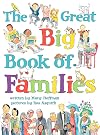
I loved this book because it showed so many different kinds of family, which is something not very common among media. Typically, families in movies are white, straight couples with a son and a daughter. However, this book showed many different types of sexualities, races, socioeconomic levels, religions, and cultures. The language used in this book is very positive towards all types of families which is a very positive and important thing. It stresses that all types of families are equally show more valuable, no matter how different they may seem. I also like the illustrations, which include all the families. There is a lot of color and creativity involved to keep the reader engaged. The big idea of this story is that no matter what you look like, if you love each other, you are a family. No one else can dictate what your family looks like. show less

British author/illustrator team Mary Hoffman and Christina Balit, who also collaborated on Women of Camelot: Queens and Enchantresses at the Court of King Arthur, here turn their attention to the royal figures of the Old Testament, or Hebrew Bible. In seven stories, various kings and queens who appear in the Old Testament are highlighted, beginning with Pharaoh, who resisted the message from God that Moses brought him, to free the Israelites. Other royal figures to feature here include King show more David, King Solomon, the Queen of Sheba, Queen Jezebel, King Belshazzar, and Queen Esther...
Although the brief stories in Kings and Queens of the Bible were engaging enough, the real draw for me, and the reason I sought out the book, was the artwork of Christina Balit, whom I greatly admire. The visuals here - created using watercolor, gouache, gold ink and pencils - were stunning, with vibrant colors and Balit's trademark elegantly stylized figures. The text itself was well enough, although I sometimes felt the stories were abbreviated in such a way as to cause confusion. In the Esther story, for instance, the narrator mentions the king honoring Mordicai, and then in the next breath says that Haman was killed on the gallows intended for Mordicai. No explanation is given, as to how the king, described just a sentence before as being pleased with Mordicai, had subsequently come so close to hanging him. I was also disappointed that, in the back matter about the Queen of Sheba, Hoffman failed to mention that the Ethiopians have a tradition that she was from their nation, and a sacred text - the Kebre Negast - about their relationship, and about the son, who founded a dynasty in his mother's country. This might be outside the scope of the story Hoffman was telling, but it is interesting information about how a biblical figure is perceived in another culture.
Leaving those issues aside, I would recommend this one to picture-book readers looking for Bible stories, and to fellow fans of Christian Balit's artwork. show less
Although the brief stories in Kings and Queens of the Bible were engaging enough, the real draw for me, and the reason I sought out the book, was the artwork of Christina Balit, whom I greatly admire. The visuals here - created using watercolor, gouache, gold ink and pencils - were stunning, with vibrant colors and Balit's trademark elegantly stylized figures. The text itself was well enough, although I sometimes felt the stories were abbreviated in such a way as to cause confusion. In the Esther story, for instance, the narrator mentions the king honoring Mordicai, and then in the next breath says that Haman was killed on the gallows intended for Mordicai. No explanation is given, as to how the king, described just a sentence before as being pleased with Mordicai, had subsequently come so close to hanging him. I was also disappointed that, in the back matter about the Queen of Sheba, Hoffman failed to mention that the Ethiopians have a tradition that she was from their nation, and a sacred text - the Kebre Negast - about their relationship, and about the son, who founded a dynasty in his mother's country. This might be outside the scope of the story Hoffman was telling, but it is interesting information about how a biblical figure is perceived in another culture.
Leaving those issues aside, I would recommend this one to picture-book readers looking for Bible stories, and to fellow fans of Christian Balit's artwork. show less
Lists
Elevenses (1)
Sonlight Books (1)
Reading Rainbow (1)
Youth: BLM (1)
Monastic life (1)
Best Young Adult (1)
Awards


You May Also Like


Associated Authors
Statistics
- Works
- 168
- Also by
- 5
- Members
- 16,606
- Popularity
- #1,365
- Rating
- 4.0
- Reviews
- 500
- ISBNs
- 698
- Languages
- 19
- Favorited
- 10
