
Herbie Brennan (1940–2024)
Author of Faerie Wars
About the Author
Disambiguation Notice:
James Herbert "Herbie" Brennan is not Jan Brennan who wrote The Greythorn Woman.
Series
Works by Herbie Brennan
The Book of Wizardry: The Apprentice's Guide to the Secrets of the Wizards' Guild (2003) 90 copies, 1 review
Through the Wardrobe: Your Favorite Authors on C. S. Lewis's Chronicles of Narnia (2008) — Editor; Contributor — 61 copies, 3 reviews
Mind, Body and Spirit: A Dictionary of Ideas, People and Places (1994) — Editor — 23 copies, 1 review
The Mysterious World of Cats: The ultimate gift book for people who are bonkers about their cat (2017) 7 copies
Le tombeau des malefices 6 copies
The Armageddon Decision 4 copies
O Senhor Do Reino 2 copies
O Destino Das Fadas 2 copies
מלחמת הפאיות 1 copy
Ghosts on Tape: True Ghost Stories — Author — 1 copy
Il regno in pericolo 1 copy
Mammoth 1 copy
The Egyptian Trilogy 1 copy
A Guerra Das Fadas 1 copy
L'enigma di Atlantide 1 copy
Reinkarnacija 1 copy
Associated Works
The Restless Dead: Ten Original Stories of the Supernatural (2009) — Contributor — 214 copies, 13 reviews
The World of the Golden Compass: The Otherworldly Ride Continues (2007) — Contributor — 71 copies, 2 reviews
Analog Science Fiction/Science Fact: Vol. XCVI, No. 1 (January 1976) (1976) — Contributor — 39 copies
Analog Science Fiction/Science Fact: Vol. XCVI, No. 3 (March 1976) (1976) — Contributor — 26 copies, 1 review
Analog Science Fiction/Science Fact: Vol. XCIII, No. 1 (March 1974) (1974) — Contributor — 24 copies
The Magazine of Fantasy and Science Fiction April 1974, Vol. 46, No. 4 (1974) — Contributor — 23 copies
Gnostica News, Volumes 1 & 2 — Contributor — 1 copy
Tagged
Common Knowledge
- Canonical name
- Brennan, Herbie
- Legal name
- Brennan, James Herbert
- Other names
- Brennan, J. H.
Rumstuckle, Cornelius - Birthdate
- 1940-07-05
- Date of death
- 2024-01-01
- Gender
- male
- Occupations
- author
writer - Agent
- Sophie Hicks (Sophie Hicks Agency)
- Relationships
- Burgess, Jacquie (wife)
- Short biography
- Edited the weekly news magazine Scene ("Ireland's International magazine") in Dublin in the 1960s.
- Nationality
- UK
Ireland - Birthplace
- Gilford, County Down, Northern Ireland, UK
- Places of residence
- Gilford, County Down, Northern Ireland, UK
Dublin, County Dublin, Ireland
Tullow, County Carlow, Ireland - Map Location
- Northern Ireland, UK
- Disambiguation notice
- James Herbert "Herbie" Brennan is not Jan Brennan who wrote The Greythorn Woman.
Members
Discussions
a book you might like... in Friends of Jack (C.S. Lewis) (April 2008)
Reviews
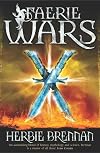
Okay, I'm going to give my critique! I still am glassy-eyed from staying up *literally* all night to finish this book! When you cannot pry a book from your fingers, that means it's good, right? I certainly think so. - To be fair: This is a down-the-line sci-fi/fantasy, IMO. As someone who has extremely little patience for and limited understanding of fiction technology, I could have done with less "science" but that's a person-to-person thing. My little brothers read this series and show more recommended it to me, and they both loved it for these aspects. I give the author props for just being so darn creative! Creativity, to me, should generally outweigh and outshine the more technical aspects of writing, like your "literary elements" and your actual writing style. This is most certainly a "third person omniscient" story in that you as the reader follow literally EVERY character. Most 3rd persons don't do this: they pick one or two characters to follow and you learn about other events through their subsequent discoveries. Sometimes I felt a bit overwhelmed by the back-and-forth coverage, but as the story progressed, it became very necessary to see the plot unfold from different directions. So bravo to that, Brennan! It just took me a few hundred pages to get used to! - Characters: I tend to like "good" good guys and "bad" bad guys, so when I read other reviews that criticize Brennan for not being "complex enough," I dont give those much weight. Evil is very one-dimensional. The baddest villains are the ones that really have no complexity: they're just bad to be bad. And thank god, not every protagonist is Holden Caulfield. I found the main protagonist - Henry Atherton - very enjoyable and relatable, if not a little dorky. He reminds me of a modern Taran from (IMO the greatest childrens fantasy EVER) The Chronicles of Prydain in that he's sweet but maybe a tad dorky (girls, we all know boys like this!). I can certainly deal with the "lovable loser" character type. **I feel like I do need to address this aspect of the story, as everybody does** - Umm okay I found the series in the YA section, and to me that's a very appropriate place. This is a very action-packed series, and yeah there's conflict: and not wishy-washy glossed over conflict, either. These are bad guys who do bad things. I wouldn't use the word "pervasive," but there certainly are violent aspects of the story. To me, I didnt find the violence out of place or even unnaturally heightened...it had a purpose: to be contrasted with good. To make the reader think: "Wow, these dudes need to be stopped". I wouldnt recommend this series for anyone under middle-school (with the exception of the above-average-intelligence 5th grader). CON: - Really, there's only one definite negative I have to gripe about: This is FANTASY--I don't want to read about melodramatic, "Eastender-like" family drama! It is necessary to a point to set up the emotional characterization of Henry: we need to see a bit of his background in order to understand and relate to his situation. What we dont need is over-the-top melodrama, which IMO is what we are given. It seems as though it's not good enough for Brennan to present a relatively normal family problem: he has to write a rather specific and uncommon family situation that to me was just put in to be a "shock factor." There's no development, no substance, because that's not the point. So why bother? Anyway, that's my beef.Overall? Excellent. I will proceed to the next book in the series promptly! This is not exactly a well-known series in the US, though a few of my English friends have read the books and quite enjoyed them. If you are reading this review, give the FAERIE WARS CHRONICLES a try! show less
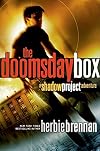
Four teen spies, Danny, Fuchsia, Opal and Michael are part of the Shadow Project, working with their unique abilities to project themselves astrally and see into the future. When a box full of vials that contain the black plague from the Middle Ages shows up, it is up to these four resourceful teenagers to contact Agent Cobra in 1962 Russia. Traveling back in time does have its risks, yet they seem to have all the right intelligence. But, Michael and Opal are captured by the KGB, and Michael show more is tortured in hopes that he spills what he knows...thankfully, Agent Cobra has a few tricks up his sleeve and he gets them to safety. That's when they all need to put their heads together and avert the Cuban Missile Crisis from happening.
The Doomsday Box: A Shadow Project Adventure is full of tension, adventure, and page-turning intrigue. The historical facts lend a air of credibility to the time travel phenomena. Although this is the second book in the Shadow Box adventures, the characters are well-defined and outlined. In truth, however, I would have loved to read the first one prior to this. A great read, nonetheless!
Thank you to Herbie Brennan, HarperCollins Publishers, and LibraryThing for this ARC copy. show less
The Doomsday Box: A Shadow Project Adventure is full of tension, adventure, and page-turning intrigue. The historical facts lend a air of credibility to the time travel phenomena. Although this is the second book in the Shadow Box adventures, the characters are well-defined and outlined. In truth, however, I would have loved to read the first one prior to this. A great read, nonetheless!
Thank you to Herbie Brennan, HarperCollins Publishers, and LibraryThing for this ARC copy. show less
 This review was written for LibraryThing Early Reviewers.
Reviewed by Candace Cunard for TeensReadToo.com
To call this book a "Narnia movie tie-in," as some of the publicity has, is selling it short. The sixteen essays in this book cover all seven of the CHRONICLES OF NARNIA, and although there are several that deal exclusively with Prince Caspian, the movie of which is to be released this May, there are also insightful essays about the other novels in the series. In fact, one of my personal favorites dealt solely with THE VOYAGE OF THE DAWN TREADER show more (which was always my favorite book in the series, as well). And the depth of these essays moves them beyond the realm of the typical movie tie-in into a place of enthusiastic scholarship.
This is not a book for those unfamiliar with the Chronicles, but if you've ever fallen in love with Narnia, the perspectives these authors offer will be a nice complement to your enjoyment. The essays are at their best when their authors start with a personal obsession and go from there to discuss its thematic relevance to the Chronicles as a whole.
Diana Peterfreund's "King Edmund the Cute" starts by discussing her childhood crush on Edmund, but goes deeper than that to trace his character through the Chronicles to show why Lewis intended him to be an attractive character; having once turned traitor but understanding the error of his ways, he can now lead others on the right path. Diane Duane, a self-proclaimed "foodie," tackles the topic of "Eating in Narnia" from a background that discusses both Lewis's own experiences with rationing during the wars but also goes further to suggest the impact food can have, not just on the body, but on the soul.
I really enjoyed the essays' treatment of Lewis's Christian background. While many of them acknowledged Lewis's goal to create a moral allegory that could lead people to a better understanding of Christianity, this was not the focus of any of the essays.
Sarah Beth Durst's "Missing the Point" argues that Lewis's stories would be compelling even without the allegorical component, and O. R. Melling's "Being Good for Narnia and the Lion" discusses how the series presented her with a picture of being good that was more attractive than that posed by her childhood experiences with church. While I think it's impossible to say that a book on Lewis's work has been written from an entirely secular perspective, the treatment of the religious aspect of the Chronicles was deftly done. I was also impressed with the book's willingness to tackle difficult topics, like the accusations that Lewis's Calormen represents a racist depiction of the Middle East.
But above all, every essay in this collection reminded me why Lewis's works are worth reading for both children and adults, and why every foray into the land of Narnia is a grand adventure, for the reader as well as the characters. show less
To call this book a "Narnia movie tie-in," as some of the publicity has, is selling it short. The sixteen essays in this book cover all seven of the CHRONICLES OF NARNIA, and although there are several that deal exclusively with Prince Caspian, the movie of which is to be released this May, there are also insightful essays about the other novels in the series. In fact, one of my personal favorites dealt solely with THE VOYAGE OF THE DAWN TREADER show more (which was always my favorite book in the series, as well). And the depth of these essays moves them beyond the realm of the typical movie tie-in into a place of enthusiastic scholarship.
This is not a book for those unfamiliar with the Chronicles, but if you've ever fallen in love with Narnia, the perspectives these authors offer will be a nice complement to your enjoyment. The essays are at their best when their authors start with a personal obsession and go from there to discuss its thematic relevance to the Chronicles as a whole.
Diana Peterfreund's "King Edmund the Cute" starts by discussing her childhood crush on Edmund, but goes deeper than that to trace his character through the Chronicles to show why Lewis intended him to be an attractive character; having once turned traitor but understanding the error of his ways, he can now lead others on the right path. Diane Duane, a self-proclaimed "foodie," tackles the topic of "Eating in Narnia" from a background that discusses both Lewis's own experiences with rationing during the wars but also goes further to suggest the impact food can have, not just on the body, but on the soul.
I really enjoyed the essays' treatment of Lewis's Christian background. While many of them acknowledged Lewis's goal to create a moral allegory that could lead people to a better understanding of Christianity, this was not the focus of any of the essays.
Sarah Beth Durst's "Missing the Point" argues that Lewis's stories would be compelling even without the allegorical component, and O. R. Melling's "Being Good for Narnia and the Lion" discusses how the series presented her with a picture of being good that was more attractive than that posed by her childhood experiences with church. While I think it's impossible to say that a book on Lewis's work has been written from an entirely secular perspective, the treatment of the religious aspect of the Chronicles was deftly done. I was also impressed with the book's willingness to tackle difficult topics, like the accusations that Lewis's Calormen represents a racist depiction of the Middle East.
But above all, every essay in this collection reminded me why Lewis's works are worth reading for both children and adults, and why every foray into the land of Narnia is a grand adventure, for the reader as well as the characters. show less
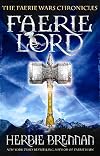
Another reviewer wrote that the final book in the Faerie Wars series takes on an entirely different tone, look, and feel than its predecessors. I couldn't agree more - and I absolutely adored it for those reasons! - This final story seemed more in line with the "hero's journey" motif that saps like me find so thrilling! The direction completely changes, and along with it, a sense of what is truly important. Older, previously dominant characters are put on the backburner, carried-over show more conflicts are tucked away, and therefore Henry, my sweet, sweet Henry, is given the chance to shine! As I was reading, I kept hearing that Mulan song "I'll Make a Man out of You" in my brain, and I thought that was pretty appropriate! - Just like the previous books, though, there is no shortage of action (especially following Ruler of the Realm; my mind is still boggled from that experience!) but like I said before, the rite-of-passage theme gives some needed maturity to this enjoyable series. The first three books were action-packed, clever and imaginative, and wickedly funny; now, thanks to the fourth and final installment, the series finally gets heart, and with that, a true purpose. Now, much as I like Herbie Brennan and Faerie Lord I do feel the urge to wag my finger in his direction, because there were some noticeable plot holes (they dont jeopardize the main story, but they're annoying nonetheless) and some contradictions in character descriptions. Also, I still feel the same way I did at the end of Ruler of the Realm: an ingenious plot device that is a little too easily solved. The epic "battle" (and it's not really a battle so much as a test) is over in practically the blink of an eye, and you're left feeling that the efforts of the characters are somehow futile because of it. Also, I still feel a bit confused at how certain events ended up coming together... So why did I give this final book 5 stars instead of 4? Even if the story may not have been executed in the most effective (or coherent) way possible, the look-and-feel of the story captured my attention and my emotions. And I got my happy ending. Seriously: JUST the way I like it. See, YA authors? It *CAN* be done! If a dude author can give closure, you should, too (CASSIE CLARE! HOLLY BLACK!) And now another series is over and I'm sad again. You just can't beat series books! Whatever will I read next?!?! show less
Lists
al.vick-series (1)
Awards


You May Also Like


Associated Authors
Statistics
- Works
- 180
- Also by
- 11
- Members
- 8,063
- Popularity
- #3,002
- Rating
- 3.7
- Reviews
- 125
- ISBNs
- 501
- Languages
- 18
- Favorited
- 7
