
O. R. Melling
Author of The Hunter's Moon
About the Author
Series
Works by O. R. Melling
Associated Works
The World of the Golden Compass: The Otherworldly Ride Continues (2007) — Contributor — 71 copies, 2 reviews
Through the Wardrobe: Your Favorite Authors on C. S. Lewis's Chronicles of Narnia (2008) — Contributor — 61 copies, 3 reviews
Tagged
Common Knowledge
- Canonical name
- Melling, O. R.
- Legal name
- Whelan, Geraldine V.
- Birthdate
- 1956-12-02
- Gender
- female
- Education
- University of Toronto (B.A | Philosophy | Celtic Studies | Trinity College)
- Occupations
- fantasy writer
literary critic - Agent
- John Duff
- Nationality
- Ireland
- Places of residence
- Toronto, Ontario, Canada
Bray, County Wicklow, Ireland - Associated Place (for map)
- Ireland
Members
Reviews
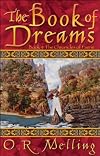
A pleasant and occasionally thrilling and delightful finale to the series, but one that often feels slow and padded compared to the first three. There’s a lot more time spent with Dana’s family compared to previous books, the quest is longer and wider ranging, there are multiple points of view, and as a result, the sense of mounting danger suffers. It felt a bit like Melling bit off more than she could chew and/or was reluctant to kill a few darlings, even though I understand that the show more family stuff and definitely the breadth of the quest was necessary. It was also nice to see Gwen and Laurel as adults, though I’m not sure their character development follows their books as much as it was convenient for Melling to slot them into roles here, and I feel like their POV sections weren’t always needed.
However, Melling’s treatment of Canadian folklore and history is on par with the previous books in this series—beautifully described in a middle grade way, pulled from all manner of traditions without seeming incoherent, often slightly off the beaten path and touching on things I wouldn’t have expected to turn up, capable of moving between whimsy and serious descriptions of things like war, disease, and genocide without being jarring. I think that ability to keep a light touch and bring disparate elements together is probably what impressed me most as an adult reader, actually. Well, that and the sense of wonder she’s still able to evoke in the bigger set pieces. (However, some of the folklore and history that turns up get a bit tell-y and didactic.)
And the story is good, don’t get me wrong, and I did enjoy it. There’s a lot of adventure and character development from Dana, a plot that keeps moving even with the occasional dip in pacing, an enemy that for once I was prepared to believe could win despite narrative rules, and a quest that encompasses all of Canada and acknowledges that Irish faerie lore isn’t the only non-Christian systems of belief out there. (There’s also genuine ethnic and cultural diversity done pretty respectfully, including an indigenous shaman and his grandson, who have a pretty large role, and Dana’s Indian stepmother.) It’s certainly a more complex and epic story than Melling’s done before and the supporting characters are more fleshed out, which was great to see, but it definitely seems to have stretched her limits.
One more point of disappointment: Like I mentioned yesterday and in the warnings below, there’s another case of insta-love here, which I’m less able to look past than the previous ones. Dana’s thirteen and totally uninterested in boys until she meets a fifteen-year-old French-Canadian transfer student, and suddenly she’s confessing deep secrets and trusting him implicitly while longing to be kissed. Two years older each, I’d maybe buy it more, but not quite so young. (Gwen’s and Laurel’s boyfriends are also still with them, apparently.)
(Oh, and she totally plays into what a preteen’s idea of “cool aunt” would be rather than what an actual adult that age would act like, and yes, there is some presumably accidental queer coding going on as well.)
So yeah. I liked it but didn’t love it, enjoyed the ride but kept wishing it to feel faster, am glad I read it but wish it had been better, admire some of Melling’s technique while being disappointed in some of her choices. My mind’s kind of the embodiment of that “I guess” image right now. I’m not sure, though, how much of my opinion would change if I was, say, eleven. Maybe the flaws wouldn’t feel so flawed and the leisureliness would be a blessing because it gives more time to explore the world.
Warnings: A French-Canadian who fits into the broken English and flirty heart-throb stereotypes. Bilingualism that does not match up with real bilingualism. Insta-love. Villain who indulges in mind control and kidnapping. Frank but brief mentions of Canadian forms of racism and inequality, including anti-Irish, anti-indigenous, and anti-French. Two twenty-somethings who don’t act like any I’ve met, one of which is queer-coded but is apparently straight. One use of “Newfie” as a slur.
6.5/10 show less
However, Melling’s treatment of Canadian folklore and history is on par with the previous books in this series—beautifully described in a middle grade way, pulled from all manner of traditions without seeming incoherent, often slightly off the beaten path and touching on things I wouldn’t have expected to turn up, capable of moving between whimsy and serious descriptions of things like war, disease, and genocide without being jarring. I think that ability to keep a light touch and bring disparate elements together is probably what impressed me most as an adult reader, actually. Well, that and the sense of wonder she’s still able to evoke in the bigger set pieces. (However, some of the folklore and history that turns up get a bit tell-y and didactic.)
And the story is good, don’t get me wrong, and I did enjoy it. There’s a lot of adventure and character development from Dana, a plot that keeps moving even with the occasional dip in pacing, an enemy that for once I was prepared to believe could win despite narrative rules, and a quest that encompasses all of Canada and acknowledges that Irish faerie lore isn’t the only non-Christian systems of belief out there. (There’s also genuine ethnic and cultural diversity done pretty respectfully, including an indigenous shaman and his grandson, who have a pretty large role, and Dana’s Indian stepmother.) It’s certainly a more complex and epic story than Melling’s done before and the supporting characters are more fleshed out, which was great to see, but it definitely seems to have stretched her limits.
One more point of disappointment: Like I mentioned yesterday and in the warnings below, there’s another case of insta-love here, which I’m less able to look past than the previous ones. Dana’s thirteen and totally uninterested in boys until she meets a fifteen-year-old French-Canadian transfer student, and suddenly she’s confessing deep secrets and trusting him implicitly while longing to be kissed. Two years older each, I’d maybe buy it more, but not quite so young. (Gwen’s and Laurel’s boyfriends are also still with them, apparently.)
(Oh, and she totally plays into what a preteen’s idea of “cool aunt” would be rather than what an actual adult that age would act like, and yes, there is some presumably accidental queer coding going on as well.)
So yeah. I liked it but didn’t love it, enjoyed the ride but kept wishing it to feel faster, am glad I read it but wish it had been better, admire some of Melling’s technique while being disappointed in some of her choices. My mind’s kind of the embodiment of that “I guess” image right now. I’m not sure, though, how much of my opinion would change if I was, say, eleven. Maybe the flaws wouldn’t feel so flawed and the leisureliness would be a blessing because it gives more time to explore the world.
Warnings: A French-Canadian who fits into the broken English and flirty heart-throb stereotypes. Bilingualism that does not match up with real bilingualism. Insta-love. Villain who indulges in mind control and kidnapping. Frank but brief mentions of Canadian forms of racism and inequality, including anti-Irish, anti-indigenous, and anti-French. Two twenty-somethings who don’t act like any I’ve met, one of which is queer-coded but is apparently straight. One use of “Newfie” as a slur.
6.5/10 show less
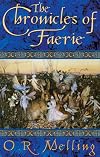
I liked the novels in this omnibus, though I have issues with the insta-love and I remember Melling’s writing being more compelling and evocative as a kid. (I think this means that, for kids, they’ll still be pretty compelling, especially since Melling’s voice doesn’t change all that much from book to book.) Gwen, the heroine of The Hunter’s Moon, is still my favourite because her struggles mirror mine the most, but I appreciated that Melling didn’t stick with her or show more cookie-cutter versions, but instead chose girls who had different personalities. I also liked the way she wove in the faeries and folklore, and that the stories kind of span Ireland, instead of sticking to one county.
Melling’s also a good enough writer that she doesn’t repeat herself much beyond the quest narrative structure (which still doesn’t feel quite predictable) and the apparently obligatory romances. She’s good at character and scenery and things, with a light touch that leaves a lot to the imagination, and toes the line between middle grade and young adult very well, with heroines in both age ranges, a middle grade tone, and adventures that are exciting but believable, scary but not life-threatening.
That said, the books aren’t perfect. There are some timeline problems—characters travelling for a day but making comments like it’s been a week—and, like I keep mentioning, the romance elements. Both Gwen and Laurel, the heroine of the second book, The Summer King, meet boys and within hours have basically realized they are The One. (Dana, the heroine of The Lightbearer’s Daughter, is ten so gets exempted, but stay tuned for tomorrow.) They’re also a little dated in that some of the reactions and themes are a little more simplistic than I’m used to, like if they were written today there’d be more moral greyness, and reluctance or denial from the heroines, and Dana’s story is probably the least believable of the three, because getting a ten-year-old safely through a fantasy quest involves a lot of coincidence. That said, if I were ten, I probably wouldn’t notice, given that I didn’t pick up on the timeline stuff in The Hunter’s Moon.
In sum: An enjoyable series, good writing, possibly not the best out there but certainly strong. I’d cheerfully rec these books to a kid or a teen looking for a fantasy adventure that entertains without being challenging. Melling definitely captures what makes reading magical (and magic, magical too). I’m glad I read this but don’t see myself rereading it again like I might have done as a kid.
Warnings: Insta-love. That thing people do where twins are Connected™. Probably mentions of the g-slur, though it’s been a month by this point so I don’t remember for sure. (It’ll be related to fashion if it’s there.)
7/10 show less
Melling’s also a good enough writer that she doesn’t repeat herself much beyond the quest narrative structure (which still doesn’t feel quite predictable) and the apparently obligatory romances. She’s good at character and scenery and things, with a light touch that leaves a lot to the imagination, and toes the line between middle grade and young adult very well, with heroines in both age ranges, a middle grade tone, and adventures that are exciting but believable, scary but not life-threatening.
That said, the books aren’t perfect. There are some timeline problems—characters travelling for a day but making comments like it’s been a week—and, like I keep mentioning, the romance elements. Both Gwen and Laurel, the heroine of the second book, The Summer King, meet boys and within hours have basically realized they are The One. (Dana, the heroine of The Lightbearer’s Daughter, is ten so gets exempted, but stay tuned for tomorrow.) They’re also a little dated in that some of the reactions and themes are a little more simplistic than I’m used to, like if they were written today there’d be more moral greyness, and reluctance or denial from the heroines, and Dana’s story is probably the least believable of the three, because getting a ten-year-old safely through a fantasy quest involves a lot of coincidence. That said, if I were ten, I probably wouldn’t notice, given that I didn’t pick up on the timeline stuff in The Hunter’s Moon.
In sum: An enjoyable series, good writing, possibly not the best out there but certainly strong. I’d cheerfully rec these books to a kid or a teen looking for a fantasy adventure that entertains without being challenging. Melling definitely captures what makes reading magical (and magic, magical too). I’m glad I read this but don’t see myself rereading it again like I might have done as a kid.
Warnings: Insta-love. That thing people do where twins are Connected™. Probably mentions of the g-slur, though it’s been a month by this point so I don’t remember for sure. (It’ll be related to fashion if it’s there.)
7/10 show less

American (apparently she was Canadian in the original printing?) teenager Gwen hoped to spend her summer with her Irish cousin Findabhair seeking out places famous for their faerie connection. She never expected to be on a wild hunt around Ireland hoping to rescue Finn from a Faerie king desperate to make her his bride. Caught between the human world and Faerie, Gwen has to use all of her wit and all of her willpower to resist the charms of Faerie - or lose her cousin forever.
I loved the show more depiction of faeries in Melling's The Hunter's Moon - they're beautiful, charming, and dangerous; whimsical and pitiless. They're the stuff of Irish folklore brought to life in a way that emphasizes their otherworldliness, their lack of humanity but while still making their attraction obvious. And that's a pretty tough thing to pull off. I was really impressed at the way Melling seemed to echo and amplify the story's Irish roots by contrasting it with modern-day Ireland.
I enjoyed the girls' story - and the twist near the end certainly took me by surprise. After all, a story involving faeries will certainly never be straight-forward. I was really drawn into this story, and I recommend it to those interested in Irish folklore.
More posted at my blog. show less
I loved the show more depiction of faeries in Melling's The Hunter's Moon - they're beautiful, charming, and dangerous; whimsical and pitiless. They're the stuff of Irish folklore brought to life in a way that emphasizes their otherworldliness, their lack of humanity but while still making their attraction obvious. And that's a pretty tough thing to pull off. I was really impressed at the way Melling seemed to echo and amplify the story's Irish roots by contrasting it with modern-day Ireland.
I enjoyed the girls' story - and the twist near the end certainly took me by surprise. After all, a story involving faeries will certainly never be straight-forward. I was really drawn into this story, and I recommend it to those interested in Irish folklore.
More posted at my blog. show less
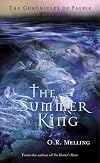
A much better book than "Hunter's Moon," this feels like Melling has finally hit a stride.
Laurel is wracked with guilt over the death of her sister, Honor. But when she discovers her sister's diary, with entries concerning faeries, she begins to wonder about the true circumstances of her death. And when a type of leprechaun approaches her with a quest only she can complete, skeptical Laurel realizes she will have to believe for her sister's sake. To save Honor, she must find the imprisoned show more Summer King, and lead him to relight the fire that protects both Faerie and Earth.
Accompanied by her rebellious ex-boyfriend Ian, who is hiding secrets of his own, Laurel traverses Ireland to find a mythical island, speak with an eagle king, sail with a female ghost pirate, and flee from a band of frightening raven shapeshifters.
Unlike the previous book, this one unrolls at a perfect pace. Laurel's slow exposure to the fantastic is realistic. Her journey is not rushed, and peppered with interesting action along the way. The many twists involving the "good" and "bad" guys kept me intrigued, as did the new Irish myths. And Laurel's shifting relationship with Ian was very well done; I got to know their personalities and feelings well and really appreciate the dynamic they had with each other.
I hope the third book in the series follows this trend! show less
Laurel is wracked with guilt over the death of her sister, Honor. But when she discovers her sister's diary, with entries concerning faeries, she begins to wonder about the true circumstances of her death. And when a type of leprechaun approaches her with a quest only she can complete, skeptical Laurel realizes she will have to believe for her sister's sake. To save Honor, she must find the imprisoned show more Summer King, and lead him to relight the fire that protects both Faerie and Earth.
Accompanied by her rebellious ex-boyfriend Ian, who is hiding secrets of his own, Laurel traverses Ireland to find a mythical island, speak with an eagle king, sail with a female ghost pirate, and flee from a band of frightening raven shapeshifters.
Unlike the previous book, this one unrolls at a perfect pace. Laurel's slow exposure to the fantastic is realistic. Her journey is not rushed, and peppered with interesting action along the way. The many twists involving the "good" and "bad" guys kept me intrigued, as did the new Irish myths. And Laurel's shifting relationship with Ian was very well done; I got to know their personalities and feelings well and really appreciate the dynamic they had with each other.
I hope the third book in the series follows this trend! show less
Lists
Awards


You May Also Like


Associated Authors
Statistics
- Works
- 16
- Also by
- 2
- Members
- 2,283
- Popularity
- #11,242
- Rating
- 4.0
- Reviews
- 47
- ISBNs
- 55
- Languages
- 3
- Favorited
- 10