
Eve Bunting (1928–2023)
Author of A Turkey for Thanksgiving
About the Author
Eve Bunting was born in 1928 in Maghera, Ireland, as Anne Evelyn Bunting. She graduated from Northern Ireland's Methodist College in Belfast in 1945 and then studied at Belfast's Queen's College. She emigrated with her family in 1958 to California, and became a naturalized citizen in 1969. That show more same year, she began her writing career, and in 1972, her first book, "The Two Giants" was published. In 1976, "One More Flight" won the Golden Kite Medal, and in 1978, "Ghost of Summer" won the Southern California's Council on Literature for Children and Young People's Award for fiction. "Smokey Night" won the American Library Association's Randolph Caldecott Medal in 1995 and "Winter's Coming" was voted one of the 10 Best Books of 1977 by the New York Times. Bunting is involved in many writer's organizations such as P.E.N., The Authors Guild, the California Writer's Guild and the Society of Children's Book Writers. She has published stories in both Cricket, and Jack and Jill Magazines, and has written over 150 books in various genres such as children's books, contemporary, historic and realistic fiction, poetry, nonfiction and humor. (Bowker Author Biography) show less
Series
Works by Eve Bunting
Frog and Friends Celebrate Thanksgiving, Christmas, and New Year's Eve (I AM A READER!: Frog and Friends) (2015) 20 copies
Clothing Preschool Story Time Kit 7 copies
That is what Leprechauns Do 1 copy
Train to Somewhere copy 2 1 copy
MY Mom's Wedding 1 copy
A Turkey For Thankgiving 1 copy
Where's Willie? 1 copy
Runaway Home 1 copy
The Valentine Cat 1 copy
Cheyenne Again — Author — 1 copy
On Christmas Eve 1 copy
Best kisses 1 copy
Associated Works
Tagged
Common Knowledge
- Canonical name
- Bunting, Eve
- Legal name
- Bunting, Anne Evelyn
- Other names
- Bunting, A. E.
Bolton, Evelyn - Birthdate
- 1928-12-19
- Date of death
- 2023-10-01
- Gender
- female
- Education
- Methodist College Belfast
Queen's University Belfast
Pasadena City College - Occupations
- author
- Organizations
- International PEN
Society of Children's Book Writers and Illustrators - Awards and honors
- Regina Medal (1997)
- Relationships
- Bunting, Edward Davison (husband)
- Short biography
- Eve Bunting was born and educated in Northern Ireland. Her first book, The Two Giants, was published in 1972. Since that first book, Eve Bunting has gone on to write many, many more, ranging from picture books to novels for young adults.
- Cause of death
- pneumonia
- Nationality
- UK (birth)
USA (naturalized 1969) - Birthplace
- Maghera, County Londonderry, Northern Ireland, UK
- Places of residence
- Maghera, County Londonderry, Northern Ireland, UK
Pasadena, California, USA
Santa Cruz, California, USA - Place of death
- Santa Cruz, California, USA
- Map Location
- Northern Ireland, UK
Members
Reviews

A family sets out on their annual trek to find their Christmas tree in this engaging holiday story from the prolific Eve Bunting. Rather than cutting it down, however, they decorate it right there in the woods, hanging garlands of popcorn, apples and oranges, and homemade sunflower-seed-balls on it, for the local animal population. Then, in the quiet of the dark night, they sit and watch, drinking hot chocolate, and singing Christmas carols...
Simply told, and beautifully illustrated, Night show more Tree is just a lovely book, with a quiet, contemplative feeling that will leave the reader feeling peaceful and content. Like another reviewer, I found myself wishing, as I was reading, that I had a tradition like this, for my own holiday observances. How wonderful, to track the growth of the same tree, over the years, and to return to it each December! I was reminded of the story in Patricia Polacco's Uncle Vova's Tree, which also includes an outdoor tree, decorated with treats for the animals. Recommended (highly!) to young readers who are looking for something a little different, in their Christmas tree stories. show less
Simply told, and beautifully illustrated, Night show more Tree is just a lovely book, with a quiet, contemplative feeling that will leave the reader feeling peaceful and content. Like another reviewer, I found myself wishing, as I was reading, that I had a tradition like this, for my own holiday observances. How wonderful, to track the growth of the same tree, over the years, and to return to it each December! I was reminded of the story in Patricia Polacco's Uncle Vova's Tree, which also includes an outdoor tree, decorated with treats for the animals. Recommended (highly!) to young readers who are looking for something a little different, in their Christmas tree stories. show less
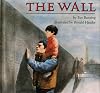
I had to read at least one Eve Bunting book this summer and this seemed like a good complement to Walter Dean Myer's "Patrol". Written in the voice of a young boy, at first I wondered if my middle school students would have the patience for the simple prose and observations of the Vietnam Memorial wall and it's visitors. However, when the boy and his father find the name they're looking for, the story becomes personal and heart wrenching. The image of the boy's father standing, head bowed at show more the wall, as people come and go is powerful, and the final lines strike the most important note--that pride is okay, but we'd all rather have our loved ones with us. Even middle school students can connect to that. show less

When autumn brings brilliant colors to the trees of their New England village, Jim and Andy are pressed into service helping their father with his weekend tour-bus operation, ferrying tourists who have come to see the fall foliage around the neighborhood. The boys make fun of the 'Peepers' - so named because they have come to 'peep' at the leaves - but eventually they realize that the natural beauty around them is every bit as awe-inspiring as these visitors believe. Perhaps the Peepers are show more on to something after all...
'Leaf Peeping' is a colloquial term used in the United States for tourism based around the fall foliage to be found in northern areas of the country - New England and the Upper Midwest, primarily - where the fall colors are most dramatic, most beautiful. It's interesting to note that a similar tradition of touring areas of autumn beauty also exists in Japan, where it is called momijigari ("red leaf hunting"). As someone who has lived in areas that receive large tourist numbers, I could sympathize with Jim and Andy's feelings, in the story here. It can become irritating when everyday tasks are made more difficult because of gawking crowds. I used to have to cross through Time Square every week, on my way to the library to do research, and it always felt like passing through purgatory in order to enter heaven. Fortunately for the boys here, their own tourist mecca is far more beautiful than the glitzy Times Square.
Although sympathetic to her main characters, Eve Bunting resists the urge to make the tourists in Peepers into some kind of villains. If anything, the narrative here demonstrates that their perspective as outsiders, the fact that they 'ooh and ah' at everything, teaches the boys an important lesson about valuing what is all around them. As someone who has always loved the fall colors, and who wants one day to visit Maine's Acadia National Park in autumn, I'll no doubt be a 'peeper' myself one day, although hopefully not an obnoxious one. Bunting is a master at this kind of narrative, in which alternative perspectives are explored, and I appreciated the lessons imparted here, both about learning to see the beauty around us, and about having compassion and understanding of outsiders and/or visitors, even when they annoy us a bit. These are things we could all benefit from! I also appreciated James Ransome's lovely artwork, which captures the wonder of a true New England autumn. Recommended to picture-book readers looking for autumn tales, or for stories about tourism and/or being open to the perspectives of others. show less
'Leaf Peeping' is a colloquial term used in the United States for tourism based around the fall foliage to be found in northern areas of the country - New England and the Upper Midwest, primarily - where the fall colors are most dramatic, most beautiful. It's interesting to note that a similar tradition of touring areas of autumn beauty also exists in Japan, where it is called momijigari ("red leaf hunting"). As someone who has lived in areas that receive large tourist numbers, I could sympathize with Jim and Andy's feelings, in the story here. It can become irritating when everyday tasks are made more difficult because of gawking crowds. I used to have to cross through Time Square every week, on my way to the library to do research, and it always felt like passing through purgatory in order to enter heaven. Fortunately for the boys here, their own tourist mecca is far more beautiful than the glitzy Times Square.
Although sympathetic to her main characters, Eve Bunting resists the urge to make the tourists in Peepers into some kind of villains. If anything, the narrative here demonstrates that their perspective as outsiders, the fact that they 'ooh and ah' at everything, teaches the boys an important lesson about valuing what is all around them. As someone who has always loved the fall colors, and who wants one day to visit Maine's Acadia National Park in autumn, I'll no doubt be a 'peeper' myself one day, although hopefully not an obnoxious one. Bunting is a master at this kind of narrative, in which alternative perspectives are explored, and I appreciated the lessons imparted here, both about learning to see the beauty around us, and about having compassion and understanding of outsiders and/or visitors, even when they annoy us a bit. These are things we could all benefit from! I also appreciated James Ransome's lovely artwork, which captures the wonder of a true New England autumn. Recommended to picture-book readers looking for autumn tales, or for stories about tourism and/or being open to the perspectives of others. show less

I never knew my Uncle Clip, my father's youngest brother, who died eight years before I was born. But although it would probably be an overstatement to say I grew up in his shadow, there is no denying that he was a presence in my childhood home. His picture - a black and white photograph of a handsome young man, laughing, with the sun in his face - hung, framed, on my father's study wall. Beneath it, also in a frame, was an oblong piece of paper, with a pencil rubbing of his name. Long show more before I understood the significance of these two images, or their relationship to one another, long before I heard Uncle Clip's story, and my father's, I instinctively recognized this was a sacred space. We all of us, consciously or not, know what a shrine looks like.
I used to find it terrifying that Uncle Clip looked so much like my father, when he was young, almost as if the image on the wall were of my father, almost as if they might still, despite the passage of time, switch places, my father disappearing into that photograph. My older sisters, thinking perhaps, to frighten me briefly, and probably never dreaming that I would believe them for so long, once told me that the old tarp in our attic was actually the body bag in which Uncle Clip had been shipped home, from far-off Southeast Asia. As bizarre, grotesque (and patently absurd) as such an idea might seem now, it did not come as a surprise to me then, and I believed it for years. Just as Uncle Clip's photograph was with us, in the house, so too, I often felt, was his spirit - why not his body bag? It seemed frightening and strange, but then, so too did the war.
I can't remember when I first heard the story - perhaps all at once, perhaps in bits, as I questioned my parents - of my father's idealistic young brother: of his belief in the justness of the American cause in Vietnam, his belief that he would be fighting for democracy, and to protect the threatened South Vietnamese; of his determination to serve something greater than himself, and his desire to do his duty to the country he loved; of his enlistment in the army, despite the disapproval of his family, who all believed the war to be wrong; of his deployment to Vietnam, and the letter he wrote home, telling his mother (my grandmother) that the American people had been deceived, and that nothing was as he had expected it to be; and finally, of his death, on Good Friday, 1968. I can't remember when I learned that it was my father, and my Great Uncle Bob, who identified his returning body, because my grandparents were so heart-broken that they couldn't bear to do it; or when I discovered that there was such a thing as the Vietnam Veteran's Memorial - the Wall - from which the rubbing of Uncle Clip's name (my grandfather's name, too) was obtained, and to which my grandmother could never bring herself to go.
Suffice it to say that, long before I ever knew it existed, the Wall was a part of my life, and of the life of my family. It has a presence amongst us, and it casts a shadow. It belongs to us, like it belongs to so many other Americans, in a way that few public monuments do. Naturally, walking past the Veteran's Day display, in the children's room of my local public library this past weekend, I was arrested by the sight of this book, sitting on the shelf - arrested by that cover image, of father and son at the Wall. Almost against my will, not sure I really wanted to read it at all, I checked it out, and this morning, reluctantly, I put it in my bag, to be read on my commute. What would Eve Bunting have to say, I wondered, about the Wall? Would she understand its unique power and significance? Would she take an ideological position on the Vietnam War? Would I hate her book? Love it? Be indifferent?
I loved it, and am so glad I gave it a chance! The Wall is a beautiful story, told in a gentle and contemplative way, of a father and his young son visiting the memorial, to find the name of the father's father (and the son's grandfather), who died in Vietnam. Together, they search for his name, encountering others who have also come to visit the Wall: a grieving older couple, a veteran amputee in a wheelchair, a group of schoolgirls with flags, and (most poignant of all) a grandfather with his grandson. This last, in particular, had me tearing up, and was a deeply moving reminder of the loss experienced by the young boy, who would never know his own grandfather.
Like the Wall itself, Bunting concentrates on the grief attendant on losing a loved one in war, rather than on the politics of the war itself. This allows the reader to come to their own conclusions - although the young boy's declaration, at the end of the book, that as proud as he is of his grandfather's service to country, he would rather have had the chance to get to know him - can be read as a commentary of sorts, I suppose. The illustrations, done in somber watercolor by Ronald Himler - who has also collaborated with Bunting on titles such as Fly Away Home and A Day's Work - perfectly capture the emotional intensity of each scene, whether it be the one in which the young boy's father prays, beside the wall, or that in which the elderly couple embrace one another.
Given the way in which this book perfectly captures one of the most important aspects of the Vietnam Veterans' Memorial - that it manages to honor the fallen, without glorifying the war - I was more than a little incensed to read that one of my fellow reviewers considers it "patriotic pornography." I guess Bunting wasn't as explicitly condemnatory as this person could have wished. In addition to being a gross misreading of the story, and one of the most appallingly heartless things I have read of late, it seems to me that this fellow reviewer's comments point to a fundamental misunderstanding of what the Wall is, to so many of us.
Just as I can't remember when and where I first learned the details of Uncle Clip's story, I can't remember when I learned my father's: that he was involved, as a young seminarian and minister, in the Civil Rights and anti-War movements. That he had been in the midst of his first pastorate, at a church in Kansas, when Uncle Clip died, and had been speaking out, from the pulpit, against the Vietnam War. That he had been labeled a "communist" by some (nowadays I expect it would be "terrorist"), although the career Army men in his congregation thanked him, privately, for speaking the truth that they could not. Most of all, although I cannot remember when or how I learned it, that, whatever my father's view of the war, he loved his brother with all his heart, and knew that his actions, in volunteering, came from a noble and honorable impulse, and a selfless desire to serve. That it wasn't necessary to agree with a man's decisions, or his views, to see the goodness and nobility in him, and to honor that.
I don't think, really, I could have put all that into words, as a child, or even a young(er) adult. But it was with a deep sense of recognition that I first read, a few years back, On the Slain Collegians, one of Herman Melville's Civil War poems, in which he wrote:
"Woe for the homes of the North,
And woe for the seats of the South:
All who felt life's spring in prime,
And were swept by the wind of their place and time--
All lavish hearts, on whichever side,
Of birth urbane or courage high,
Armed them for the stirring wars--
Armed them--some to die."
And then, later:
"Warred one for Right, and one for Wrong?
So be it; but they both were young--
Each grape to his cluster clung,
All their elegies are sung."
That's how I think of my Uncle Clip: as an idealistic young man who was "swept by the wind of his place and time," a young man - one amongst many - who paid a terrible price for the misguided ambitions of the powerful. I don't need to agree with the war (and I don't) to believe he was a good man, and to mourn his death. And The Wall - whether we're speaking of this book, or of The Wall itself - doesn't require me to. It doesn't require anything of me, of us, politically. What it does do is provide a space, a unique and powerful space, in which we all, regardless of our views, can mourn our loved ones, and honor the dead. Oh Maya Lin! You did a good, good thing, and a profoundly important service to your country, when you designed that wall!
Today, as I write this review, it is Veteran's Day. My father, who isn't in the best of health, has been speaking recently of seeing the Wall, one last time, before he dies. I think that I will look into going down to D.C., this spring. We'll go to the Wall, my father and I, like the two in this book, and we'll search for the name of that laughing young man, amongst the many thousands of his comrades. My father will pray for the dead, and that his brother's soul be at peace. And I? I will sing my uncle's elegy. With all my heart, will I sing it. show less
I used to find it terrifying that Uncle Clip looked so much like my father, when he was young, almost as if the image on the wall were of my father, almost as if they might still, despite the passage of time, switch places, my father disappearing into that photograph. My older sisters, thinking perhaps, to frighten me briefly, and probably never dreaming that I would believe them for so long, once told me that the old tarp in our attic was actually the body bag in which Uncle Clip had been shipped home, from far-off Southeast Asia. As bizarre, grotesque (and patently absurd) as such an idea might seem now, it did not come as a surprise to me then, and I believed it for years. Just as Uncle Clip's photograph was with us, in the house, so too, I often felt, was his spirit - why not his body bag? It seemed frightening and strange, but then, so too did the war.
I can't remember when I first heard the story - perhaps all at once, perhaps in bits, as I questioned my parents - of my father's idealistic young brother: of his belief in the justness of the American cause in Vietnam, his belief that he would be fighting for democracy, and to protect the threatened South Vietnamese; of his determination to serve something greater than himself, and his desire to do his duty to the country he loved; of his enlistment in the army, despite the disapproval of his family, who all believed the war to be wrong; of his deployment to Vietnam, and the letter he wrote home, telling his mother (my grandmother) that the American people had been deceived, and that nothing was as he had expected it to be; and finally, of his death, on Good Friday, 1968. I can't remember when I learned that it was my father, and my Great Uncle Bob, who identified his returning body, because my grandparents were so heart-broken that they couldn't bear to do it; or when I discovered that there was such a thing as the Vietnam Veteran's Memorial - the Wall - from which the rubbing of Uncle Clip's name (my grandfather's name, too) was obtained, and to which my grandmother could never bring herself to go.
Suffice it to say that, long before I ever knew it existed, the Wall was a part of my life, and of the life of my family. It has a presence amongst us, and it casts a shadow. It belongs to us, like it belongs to so many other Americans, in a way that few public monuments do. Naturally, walking past the Veteran's Day display, in the children's room of my local public library this past weekend, I was arrested by the sight of this book, sitting on the shelf - arrested by that cover image, of father and son at the Wall. Almost against my will, not sure I really wanted to read it at all, I checked it out, and this morning, reluctantly, I put it in my bag, to be read on my commute. What would Eve Bunting have to say, I wondered, about the Wall? Would she understand its unique power and significance? Would she take an ideological position on the Vietnam War? Would I hate her book? Love it? Be indifferent?
I loved it, and am so glad I gave it a chance! The Wall is a beautiful story, told in a gentle and contemplative way, of a father and his young son visiting the memorial, to find the name of the father's father (and the son's grandfather), who died in Vietnam. Together, they search for his name, encountering others who have also come to visit the Wall: a grieving older couple, a veteran amputee in a wheelchair, a group of schoolgirls with flags, and (most poignant of all) a grandfather with his grandson. This last, in particular, had me tearing up, and was a deeply moving reminder of the loss experienced by the young boy, who would never know his own grandfather.
Like the Wall itself, Bunting concentrates on the grief attendant on losing a loved one in war, rather than on the politics of the war itself. This allows the reader to come to their own conclusions - although the young boy's declaration, at the end of the book, that as proud as he is of his grandfather's service to country, he would rather have had the chance to get to know him - can be read as a commentary of sorts, I suppose. The illustrations, done in somber watercolor by Ronald Himler - who has also collaborated with Bunting on titles such as Fly Away Home and A Day's Work - perfectly capture the emotional intensity of each scene, whether it be the one in which the young boy's father prays, beside the wall, or that in which the elderly couple embrace one another.
Given the way in which this book perfectly captures one of the most important aspects of the Vietnam Veterans' Memorial - that it manages to honor the fallen, without glorifying the war - I was more than a little incensed to read that one of my fellow reviewers considers it "patriotic pornography." I guess Bunting wasn't as explicitly condemnatory as this person could have wished. In addition to being a gross misreading of the story, and one of the most appallingly heartless things I have read of late, it seems to me that this fellow reviewer's comments point to a fundamental misunderstanding of what the Wall is, to so many of us.
Just as I can't remember when and where I first learned the details of Uncle Clip's story, I can't remember when I learned my father's: that he was involved, as a young seminarian and minister, in the Civil Rights and anti-War movements. That he had been in the midst of his first pastorate, at a church in Kansas, when Uncle Clip died, and had been speaking out, from the pulpit, against the Vietnam War. That he had been labeled a "communist" by some (nowadays I expect it would be "terrorist"), although the career Army men in his congregation thanked him, privately, for speaking the truth that they could not. Most of all, although I cannot remember when or how I learned it, that, whatever my father's view of the war, he loved his brother with all his heart, and knew that his actions, in volunteering, came from a noble and honorable impulse, and a selfless desire to serve. That it wasn't necessary to agree with a man's decisions, or his views, to see the goodness and nobility in him, and to honor that.
I don't think, really, I could have put all that into words, as a child, or even a young(er) adult. But it was with a deep sense of recognition that I first read, a few years back, On the Slain Collegians, one of Herman Melville's Civil War poems, in which he wrote:
"Woe for the homes of the North,
And woe for the seats of the South:
All who felt life's spring in prime,
And were swept by the wind of their place and time--
All lavish hearts, on whichever side,
Of birth urbane or courage high,
Armed them for the stirring wars--
Armed them--some to die."
And then, later:
"Warred one for Right, and one for Wrong?
So be it; but they both were young--
Each grape to his cluster clung,
All their elegies are sung."
That's how I think of my Uncle Clip: as an idealistic young man who was "swept by the wind of his place and time," a young man - one amongst many - who paid a terrible price for the misguided ambitions of the powerful. I don't need to agree with the war (and I don't) to believe he was a good man, and to mourn his death. And The Wall - whether we're speaking of this book, or of The Wall itself - doesn't require me to. It doesn't require anything of me, of us, politically. What it does do is provide a space, a unique and powerful space, in which we all, regardless of our views, can mourn our loved ones, and honor the dead. Oh Maya Lin! You did a good, good thing, and a profoundly important service to your country, when you designed that wall!
Today, as I write this review, it is Veteran's Day. My father, who isn't in the best of health, has been speaking recently of seeing the Wall, one last time, before he dies. I think that I will look into going down to D.C., this spring. We'll go to the Wall, my father and I, like the two in this book, and we'll search for the name of that laughing young man, amongst the many thousands of his comrades. My father will pray for the dead, and that his brother's soul be at peace. And I? I will sing my uncle's elegy. With all my heart, will I sing it. show less
Lists
Edgar Award (1)
Ghost Cats (1)
Awards


You May Also Like


Associated Authors
Statistics
- Works
- 276
- Also by
- 2
- Members
- 51,821
- Popularity
- #293
- Rating
- 4.0
- Reviews
- 2,479
- ISBNs
- 1,305
- Languages
- 12
- Favorited
- 6
