
Riki Wilchins
Author of GenderQueer: Voices From Beyond the Sexual Binary
About the Author
Image credit: Riki Wilchins
Works by Riki Wilchins
TRANS/gressive: How Transgender Activists Took on Gay Rights, Feminism, the Media & Congress… and Won! (2017) 15 copies
Burn the Binary!: Selected Writings on the Politics of Trans, Genderqueer and Nonbinary (2017) 14 copies, 1 review
When Texas Came for Our Kids: How evangelical extremists launched a war on TRANSGENDER TEENS (2023) 4 copies
Burn the Binary!, Vol. 2 1 copy
Associated Works
Women on Women 3: A New Anthology of American Lesbian Fiction (1996) — Contributor — 112 copies, 2 reviews
Tagged
Common Knowledge
- Birthdate
- 1952
- Gender
- non-binary
- Education
- Cleveland State University (1982)
New School for Social Research (MS|Clinical Psychology|1983) - Organizations
- The Transexual Menace
NYC Gay Community Center Gender Identity Project
NYC Gay Community Center Transgender Health Empowerment Conference
Camp Trans
National Coalition for Sexual Freedom
National Gender Lobby Day (show all 7)
Gender Public Advocacy Coalition (founder) - Awards and honors
- 100 Civic Innovators for the 21st Century (Time Magaine)
- Nationality
- USA
- Associated Place (for map)
- USA
Members
Reviews
Burn the Binary!: Selected Writings on the Politics of Trans, Genderqueer and Nonbinary by Riki Wilchins
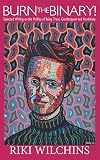
A collection of essays and excerpts from a genderqueer trans activist. There are pieces from as early as 1994, as recent as late 2017, and somehow they don't feel out of place next to one another. Reading the Advocate columns that span from 2002 to 2017 throws into sharp distinction how fast things are changing - terminology, issues, recognition - and also how much things stay the same. (Reading columns from early 2016 is just heartbreaking.) There's a lot of talk about intersex people (more show more than I'm used to even in trans writing, which is refreshing) and a wonderfully expansive inclusiveness to the idea of genderqueerness. The tone varies from chatty and conversational to crude to erotic to intensely theoretical. This isn't a single coherent history or theory of anything, but it's a fascinating and enlightening collection of thoughts, and a good introduction to a compelling and important writer. show less
Queer Theory, Gender Theory by Riki Wilchins is a very good basic introduction to the theory for those who either don't want to read the theory or want a basic foundation before diving into the nuance and detail of the theories.
I wasn't prepared for just how basic this was going to be, so it took a while for me to appreciate what it does so well. I've been reading this theory and using it since the 80s (the 90s for Butler) and forget that not everyone enjoys reading theory. As I've said show more before, yes, I am a nerd. What this book does is highlight where much of the theory (foundationally Derrida, Foucault, and Butler) meets the application or activism. This does not try to express every nuance, it offers the reader a basic understanding so that they can then better understand where some of the ideas come from. I would imagine that for those looking for an intro, this may well suffice. For others, this may pique their interest to learn these ideas in greater detail.
One thing that makes this particularly interesting is that Wilchins does not spare any one or any group critique. Not so much confrontational but more pointing out where feminism(s) or some gay rights groups miss main ideas or, even worse, do to trans what had been done to them. This is done in hope of creating understanding and making bridges, not condemning.
I would recommend this to readers who want a foundation either for better understanding or as a prelude to more serious study.
Reviewed from a copy made available by the publisher via NetGalley. show less
I wasn't prepared for just how basic this was going to be, so it took a while for me to appreciate what it does so well. I've been reading this theory and using it since the 80s (the 90s for Butler) and forget that not everyone enjoys reading theory. As I've said show more before, yes, I am a nerd. What this book does is highlight where much of the theory (foundationally Derrida, Foucault, and Butler) meets the application or activism. This does not try to express every nuance, it offers the reader a basic understanding so that they can then better understand where some of the ideas come from. I would imagine that for those looking for an intro, this may well suffice. For others, this may pique their interest to learn these ideas in greater detail.
One thing that makes this particularly interesting is that Wilchins does not spare any one or any group critique. Not so much confrontational but more pointing out where feminism(s) or some gay rights groups miss main ideas or, even worse, do to trans what had been done to them. This is done in hope of creating understanding and making bridges, not condemning.
I would recommend this to readers who want a foundation either for better understanding or as a prelude to more serious study.
Reviewed from a copy made available by the publisher via NetGalley. show less
This is a collection of essays/stories by people who don't fit into the neat packages of 'male' and 'female'. A number of them defy any labels, while others identify by their gender or sexual orientation, but aren't quite what you'd expect from that label.I did find it all interesting, but there was a lot more discussion of sex than I was expecting. It gives the impression that gender is all about (or mostly about) sex. Not a lot of asexual voices in here, for one thing.It's also a little show more inaccessible (wait, bad term, scratch that term). There are a number of references to people, places, events, and a lot of terms and acronyms that the writers and editors just expect you to know. It seems to be written with the LGB if not even also T community in mind. Now, I'm not ignorant, but there were a number of things that went over my head completely. And it took me a minute to figure out what GB meant.There are some really good ones in here. A few I even half-identified with. But even though I didn't identify with any of them fully, you sort of glean that it's okay that you don't. Because most of these writers are trying to carve their own path amongst all the labels.Weirdly, I kept thinking this was published in the early 90's. But it was 2002, I think. I kept having to remind myself that it really wasn't that old. Still, a lot has changed in even 8 years. Resources and information and community are a lot easier to find on the Internet now.I'd like to see another anthology like this, aimed at teens, maybe. More current. Less sex. More diversity of voices. show less
I picked this up mostly as a joke after learning that iced coffee and walking quickly are queer symbols. While researching whether or not I was queer for liking iced coffee (and wondering if this is what my San Francisco friends meant when they said they were queer,) I came across this book, and was surprised to learn that there is a THEORY behind being queer! Fascinating!
After a quick wikipedia-job on queer theory that didn't prove to be helpful in the least, I thought I should probably show more read a book on the topic. Either it would be informative, or it would be further evidence that the humanities are full of crazy people spouting off on "theories" that are completely impenetrable -- win/win, really.
So I dove in during a long bus ride. And I was pleasantly surprised! Wilchins makes a good argument that it's stupid to draw strong dichotomies based on sexuality. Does it make a man a homosexual if he thinks about kissing another man? Not only is this not right, argues Wilchins, it's not even wrong. These categories are useful insofar as they help us predict the future, but they are not helpful as _identifiers._
I don't remember much else about the book. I ran out of steam on it. I never intended to abandon it, but I did, and I have no desire to read more. Queer Theory was significantly less shit than I was expecting it to be! I remember being impressed with a few of the arguments while reading it, but damned if I can remember what they are now. show less
After a quick wikipedia-job on queer theory that didn't prove to be helpful in the least, I thought I should probably show more read a book on the topic. Either it would be informative, or it would be further evidence that the humanities are full of crazy people spouting off on "theories" that are completely impenetrable -- win/win, really.
So I dove in during a long bus ride. And I was pleasantly surprised! Wilchins makes a good argument that it's stupid to draw strong dichotomies based on sexuality. Does it make a man a homosexual if he thinks about kissing another man? Not only is this not right, argues Wilchins, it's not even wrong. These categories are useful insofar as they help us predict the future, but they are not helpful as _identifiers._
I don't remember much else about the book. I ran out of steam on it. I never intended to abandon it, but I did, and I have no desire to read more. Queer Theory was significantly less shit than I was expecting it to be! I remember being impressed with a few of the arguments while reading it, but damned if I can remember what they are now. show less
Lists
Awards

You May Also Like


Associated Authors
Statistics
- Works
- 14
- Also by
- 3
- Members
- 1,087
- Popularity
- #23,625
- Rating
- 4.1
- Reviews
- 14
- ISBNs
- 25
- Languages
- 1