
Evelyn Toynton
Author of The Oriental Wife
Works by Evelyn Toynton
Associated Works
Mentors, Muses & Monsters: 30 Writers on the People Who Changed Their Lives (2009) — Contributor — 71 copies, 2 reviews
Tagged
Common Knowledge
- Gender
- female
- Occupations
- essayist
reviewer - Nationality
- USA
- Places of residence
- Norfolk, England, UK
- Associated Place (for map)
- Norfolk, England, UK
Members
Reviews
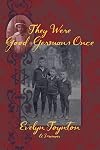
Evelyn Toynton's family were well-assimilated non-practicing Jews, who considered themselves Germans first and Jewish a distant second. Her grandfather and other relatives were decorated for valor in the first world war, and the family was well-established in Nuremberg. This is the story of how various family members adapted to exile from their homeland in the 1930s and their conflicting feelings about Germany after Hitler.
Each chapter focuses on a different family member, their story, and show more the author's relationship with them. For instance, her father came to New York, rose through the ranks of the American Pencil Company, and volunteered with Jewish refugees. His older brother fled first to Czechoslovakia, then to the US via London. He never stopped yearning for the Germany of his youth. The youngest brother escaped to Palestine and worked tireless for his new country, even becoming Minister of Labor. Because their experiences are so varied and their responses to Nazi aggression different, through the microcosm of a single family, we get a pastiche of the Jewish émigré experience.
I read an Advance Reader copy of this memoir, and so some of my quibbles may be sorted out through the final editing process. I hope the published version contains photographs, as well as the full names of each family member. Overall, I found the story compelling and the writing assured. The author has also published three novels. show less
Each chapter focuses on a different family member, their story, and show more the author's relationship with them. For instance, her father came to New York, rose through the ranks of the American Pencil Company, and volunteered with Jewish refugees. His older brother fled first to Czechoslovakia, then to the US via London. He never stopped yearning for the Germany of his youth. The youngest brother escaped to Palestine and worked tireless for his new country, even becoming Minister of Labor. Because their experiences are so varied and their responses to Nazi aggression different, through the microcosm of a single family, we get a pastiche of the Jewish émigré experience.
I read an Advance Reader copy of this memoir, and so some of my quibbles may be sorted out through the final editing process. I hope the published version contains photographs, as well as the full names of each family member. Overall, I found the story compelling and the writing assured. The author has also published three novels. show less
 This review was written for LibraryThing Early Reviewers.
They Were Good Germans Once is a poignant look at Toynton's origin story and beyond. It is not a cohesive or linear autobiography. It is not a standard biography either, but rather a remembrance of various family members, spouses and children. They Were Good Germans Once shares what it meant to be German and Jewish before and after Hitler's rise to power. At times, the lineage is confusing but trust that the writing is superb. Imagery and memories are crystal sharp. As Toynton recalled show more abuses suffered at the hands of her relatives I thought how difficult this book must have been to write and yet, it is beautiful at the same time. show less
This review was written for LibraryThing Early Reviewers.Toynton’s memoir relates the emigration stories and fates of ten of her relatives plus their spouses and children. Both sides of her family had been in Germany for at least a few generations before Hitler came to power, the maternal side in Fuerth and the paternal in Nuremberg, and identified strongly as German. Many of her male relatives were decorated German veterans of World War I. Neither family practiced Judaism. Their departures from Germany took place between 1933 and 1939, with new show more residencies established in England, the United States (either directly or via England and in one case via Czechoslovakia), and Palestine. An additional two relatives who did not survive to emigrate are mentioned, but this memoir is the story of those who got out.
The book is structured around the experiences of specific family members, told through the lens of Toynton’s relationships with them, and covers their lives in Germany and their experiences after leaving. Although most of those involved had died as of the book’s writing, Toynton pulls together detailed accounts, but they are necessarily less than complete—no doubt as maddening for the author as for the reader. There is some back and forth in time, both within and between chapters, as well as overlap between the stories of different people and groups, which I found confusing. It didn't help that she didn't reveal her mother's and father's names when introducing them (the father's name does come in the final chapter, but I never found the mother's). After the first read, I skimmed it a second time to make a chart of all the people covered, their relationship to the author and each other, their emigration dates and destinations, to help me make sense of what happened and to whom.
This was hard to put down, and thought provoking. I learned some things that I probably should already have known, for example: Jewish settlement in Palestine was a policy of Hitler’s regime—Toynton’s uncle held a leadership role in a program that trained German Jews to survive and farm in the desert; prisoners at Dachau were sometimes released in the early days—5 of Toynton’s male relatives were held and then released from Dachau before emigrating. Sad and distressing, but worth reading for historical understanding and perhaps as a guide to surviving. show less
The book is structured around the experiences of specific family members, told through the lens of Toynton’s relationships with them, and covers their lives in Germany and their experiences after leaving. Although most of those involved had died as of the book’s writing, Toynton pulls together detailed accounts, but they are necessarily less than complete—no doubt as maddening for the author as for the reader. There is some back and forth in time, both within and between chapters, as well as overlap between the stories of different people and groups, which I found confusing. It didn't help that she didn't reveal her mother's and father's names when introducing them (the father's name does come in the final chapter, but I never found the mother's). After the first read, I skimmed it a second time to make a chart of all the people covered, their relationship to the author and each other, their emigration dates and destinations, to help me make sense of what happened and to whom.
This was hard to put down, and thought provoking. I learned some things that I probably should already have known, for example: Jewish settlement in Palestine was a policy of Hitler’s regime—Toynton’s uncle held a leadership role in a program that trained German Jews to survive and farm in the desert; prisoners at Dachau were sometimes released in the early days—5 of Toynton’s male relatives were held and then released from Dachau before emigrating. Sad and distressing, but worth reading for historical understanding and perhaps as a guide to surviving. show less
This review was written for LibraryThing Early Reviewers."A thoughtful, notable addition to the literature of the Holocaust . . . a poignant memoir." ― Kirkus Reviews
In They Were Good Germans Once, Evelyn Toynton speaks to a universal immigrant family experience ― some embrace a new life, some forge a compromise between their new home and old traditions, while others never fully find their way.
While Toynton’s father became a hard-working, civic-minded American, with a great sense of obligation to his suburban community, her uncle never show more stopped feeling like an exile in the US ― as soon after World War II as he could, he began making trips back to Germany.
The women in her family also had widely varying relationships to the societies in which they found refuge. One of them, after browbeating a Nazi police chief into having her husband released from Dachau, wound up in England and became a passionate Anglophile; another, a widow deprived of all material comfort and security, retreated into seclusion in her tiny New York apartment, distancing herself from American life and finding solace in her beloved German poets; a fierce Zionist who smuggled guns and money from Europe into Palestine under the noses of the British went on to found a kibbutz and fight for the rights of Arabs as well as Jews.
Then there was the author’s German-born mother, who emigrated to the U.S. only to be struck down by tragedy and forced to live separately from her children, but still found ways to nurture them and provide them with a haven from their sorrows.
Through this series of essays, Toynton remembers her émigré relatives, some of whom left Germany as soon as Hitler came to power, others only escaping much later. Her family lost not only their native homeland and their sense of identity but many of the people they loved. Yet each found ways to give meaning to their lives, whether in their own small circles or in the world at large. show less
In They Were Good Germans Once, Evelyn Toynton speaks to a universal immigrant family experience ― some embrace a new life, some forge a compromise between their new home and old traditions, while others never fully find their way.
While Toynton’s father became a hard-working, civic-minded American, with a great sense of obligation to his suburban community, her uncle never show more stopped feeling like an exile in the US ― as soon after World War II as he could, he began making trips back to Germany.
The women in her family also had widely varying relationships to the societies in which they found refuge. One of them, after browbeating a Nazi police chief into having her husband released from Dachau, wound up in England and became a passionate Anglophile; another, a widow deprived of all material comfort and security, retreated into seclusion in her tiny New York apartment, distancing herself from American life and finding solace in her beloved German poets; a fierce Zionist who smuggled guns and money from Europe into Palestine under the noses of the British went on to found a kibbutz and fight for the rights of Arabs as well as Jews.
Then there was the author’s German-born mother, who emigrated to the U.S. only to be struck down by tragedy and forced to live separately from her children, but still found ways to nurture them and provide them with a haven from their sorrows.
Through this series of essays, Toynton remembers her émigré relatives, some of whom left Germany as soon as Hitler came to power, others only escaping much later. Her family lost not only their native homeland and their sense of identity but many of the people they loved. Yet each found ways to give meaning to their lives, whether in their own small circles or in the world at large. show less
This review was written for LibraryThing Early Reviewers.Lists
You May Also Like
Associated Authors
Statistics
- Works
- 7
- Also by
- 2
- Members
- 174
- Popularity
- #123,125
- Rating
- 3.6
- Reviews
- 13
- ISBNs
- 15
