
Jennifer Moore-Mallinos
Author of When My Parents Forgot How to Be Friends
About the Author
Series
Works by Jennifer Moore-Mallinos
It's OK to Be Me: Just Like You, I Can Do Almost Anything (Live and Learn Series) (2007) 25 copies, 3 reviews
Ganar no es todo!: Winning Isn't Everything (Spanish Edition) (Live and Learn Books) (2007) 11 copies
Jennifer, a Esnobe 5 copies
Mia, a Valentona - Coleção Garotas em Situações Complicadas (Em Portuguese do Brasil) (2011) 5 copies
Enojado, Frustrado Y Triste / Mad, Frustrated, And Sad (Listos Para Aprender / Ready to Learn) (Spanish Edition) (2017) 4 copies, 1 review
Carol Desastrada - Coleção Garotas em Situações Complicadas (Em Portuguese do Brasil) (2011) 4 copies
Sí, Podemos Hacerlo! / We Can Do It! (Listos Para Aprender / Ready to Learn) (Spanish Edition) (2018) 4 copies
VOCÊ TEM UM SEGREDO? 2 copies
Tu Consegues ! 2 copies
I am Deaf 1 copy
Mi hermano es autista 1 copy
Yo puedo, tú puedes 1 copy
Adolescentes Como Nós! 1 copy
Joga Limpo! 1 copy
Grandir petit à petit 1 copy
Se te perderes... 1 copy
¡Tengo dislexia! 1 copy
Mom works, too 1 copy
¡Juega limpio! 1 copy
Diversity 1 copy
Tagged
Common Knowledge
- Gender
- female
Members
Reviews
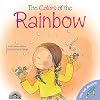
This picture book teaches a very important lesson of acceptance of diversity. The book discusses skin color, age, dress, food, house, and other cultural relevant topics. The book does a good job at explaining a few different "kinds" of each topic but does not include everyone's choice. For example, the author wrote, "We each have a family who loves and takes care of us and a place we call home." However, this statement is not true for a lot of children and adults. The intention of this book show more is very positive but fails to include everyone in their "rainbow". This book is good for younger ages to start a discussion on inclusion of diversity but the teacher must make a point to identify these flaws in order to teach true acceptance. show less
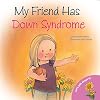
I love this book because it emphasizes the similarities between children with Down syndrome and typically developing children. The book is a part of a series called “Let’s Talk about It,” and while it is a story, it is also informational, offering a guide for parents at the end of the book. The book starts with the question, “Do you have a special friend?” This engages students and makes them relate to the book, thinking about the best friend that they have. When it is introduced show more that a new camper will be joining the summer camp group group, the camp leader teaches the campers all about Down syndrome. She emphasizes that all of the campers must be patient and understanding because Tammy may need extra help with certain things. She explains that people with Down syndrome are born with an extra gene and may have different features. Through the camp leaders explanations, children learn valuable information about Down syndrome. The author of this book even addresses some children’s uncertainties such as whether or not it is contagious and why someone who needs extra help should go to their camp. I love that this is addressed because it gives parents or teachers the opportunity to address the topic of inclusion and explain how it is beneficial for everyone. The book goes on to highlight what Tammy is really good at and the fact that people with Down syndrome go on to do great things. For example, the author writes, “Did you know that some kids with Down syndrome grew up to be actors and actresses?” The end of the book pictures Tammy and her buddy playing in the talent show together. The roles are somewhat reversed, and the author depicts Tammy as the helper by teaching the main character to never give up and offering to teach her to play the guitar. This shows the great abilities that children with Down syndrome have rather than depicting Down syndrome as a disability. The last line of this book really sums up the central message: “Just like Tammy, I need help with some things too! And that’s okay!” show less
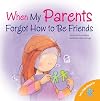
Summary: The little girl and her parents use to do everything together. Then things started to change and she noticed her parents were fighting more late at night and they seemed to be very sad a lot. Her dad packed up his things and moved into his own house in the city. The girl found herself blaming herself for her parents forgetting how to be friends. Soon things changed for the better again and her mom started to look happy again. She lived with her mom, but saw her dad every week. show more Sometimes both of her parents would spend time with the girl just like old times and the girl loved it!
Evaluation/Argument: I thought this was a very well written book and addresses the topic of separation and divorce in an appropriate manner. All aspects of separation were included. For example, the author made sure to include how the child was feeling throughout this process and how the child often blamed herself for her parents decisions. Many children feel this way when their parents go through a divorce. One thing that I noticed when reading is that the book could be seen as a bit stereotypical. This can be seen when the author writes "I didn't know what they were arguing about, but they seemed very mad, and my Mom usually cried". This could be viewed as stereotypical because the mom was described as crying and women in today's society are viewed as the more emotional gender. Her father could have been crying as well, but the author chose the female to be represented in this way. Any child in a family who has gone through a divorce can find themselves relating to all aspects of this book. Parents will find this to be a useful tool when starting a separation or to inform children about what could happen through this process.
The central message of this book is that even if a divorce occurs the parents will always still love their children. Just like the author wrote sometime parents get along better when they live in different houses. No matter the outcome of these situations children should still feel love from both parents, if present. show less
Evaluation/Argument: I thought this was a very well written book and addresses the topic of separation and divorce in an appropriate manner. All aspects of separation were included. For example, the author made sure to include how the child was feeling throughout this process and how the child often blamed herself for her parents decisions. Many children feel this way when their parents go through a divorce. One thing that I noticed when reading is that the book could be seen as a bit stereotypical. This can be seen when the author writes "I didn't know what they were arguing about, but they seemed very mad, and my Mom usually cried". This could be viewed as stereotypical because the mom was described as crying and women in today's society are viewed as the more emotional gender. Her father could have been crying as well, but the author chose the female to be represented in this way. Any child in a family who has gone through a divorce can find themselves relating to all aspects of this book. Parents will find this to be a useful tool when starting a separation or to inform children about what could happen through this process.
The central message of this book is that even if a divorce occurs the parents will always still love their children. Just like the author wrote sometime parents get along better when they live in different houses. No matter the outcome of these situations children should still feel love from both parents, if present. show less
I thought this book was adorable. It's a great introduction of Down Syndrome to children. Although I do believe considering the intended age of the book's audience, rather than focusing on the physical features of Tammy, focusing more on Tammy's positive personality traits would have been better. I believe children may not understand the exceptions of the physical features and it can possibly cause a sense of confusion. Needless to say, the book did show a great description of friendship and show more how individuals with Down Syndrome are capable of as many accomplishment as an individual without Down Syndrome. show less
You May Also Like


Associated Authors
Statistics
- Works
- 76
- Members
- 1,254
- Popularity
- #20,453
- Rating
- 4.3
- Reviews
- 160
- ISBNs
- 178
- Languages
- 12