
Lucille Recht Penner
Author of The Statue of Liberty (Step-into-Reading, Step 2)
About the Author
Series
Works by Lucille Recht Penner
The Liberty Tree: The Beginning of the American Revolution (Picture Landmark) (1998) 124 copies, 4 reviews
Sitting Bull[ SITTING BULL ] by Penner, Lucille Recht (Author) Oct-31-95[ Paperback ] (1995) 3 copies
Teddy Bear Book (1986-06-03) 2 copies
Dragons 1 copy
By Lucille Recht Penner - X Marks the Spot! (Math Matters series) (1905-07-09) [Paperback] (1905) 1 copy
Buz Kapanı 1 copy
Snakes! Step into Reading 3 1 copy
Tagged
Common Knowledge
- Canonical name
- Penner, Lucille Recht
- Gender
- female
- Occupations
- author
Members
Reviews
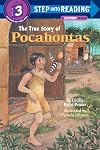
This is a biography of Pocahontas for readers in the first to third grade. I was interested in learning more about Pocahontas, I think there is lots of good information, but I also think the flow and plot of the story was choppy and a bit dry. It covered a lot of events, and would have been easier to follow if it had more details, I felt as if it jumped around too much and there were some holes in the story. I think this is an interesting topic, but the writing style did not appeal to me. show more The main idea of this story is about Pocahontas’ life, and how it changed forever when the English came to America. show less
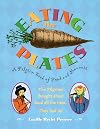
This book, intended for children ages 7-11, includes some recipes that might be fun for elementary students to try. However, the volume is seriously flawed by historical inaccuracies and poorly chosen illustrations. Even an amateur historian can recognize factual errors in the text (for example, Winslow's portrait was painted in London, not in America as the author implies). Also, the book's illustrations stretch the boundaries of Plymouth Plantation (and the credulity of the reader) well show more beyond acceptable limits. That is, the author included illustrations of a gravestone, as well as a harpooned whale, from Salem, MA; portraits of famous Puritans from Boston; and even several drawings from Colonial Williamsburg in her book. Little wonder that American school children know little about their country's history, never mind its geography, with books like this one appearing in the classroom. Worse, a selection from this book appeared in the reading section of the Massachusetts Comprehensive Assessment in recent years. Shame on the MA Department of Education for spotlighting shoddy work by a careless author. show less
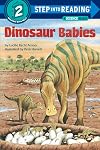
This beginner reading book takes the reader on a journey back in time to visit the dinosaurs. This book gives information about the adult dinosaurs as well as the many stages of development of young dinosaurs and how they are similar to animals that around today. After reading this book a child should be able to know the names of and recognize the different types of dinosaurs.
This book is a great building block for a child to learn to read and understand literature. I thought the show more illistrations were very real and well done. The child would easily be able to infer what the words were saying by the pictures if they weren’t sure what the page itself said. The orginaztion was very good to the audience that it was aimed for. The words were very easy to locate and read.
A really cool idea would be having your class hatch their own dinosaur babies. They used to make these eggs that if you put them in the water they eventually turned into little tiny dinosaurs. I don’t know if they still make those but doing something along with this book in a lesson would be a perfect combination. show less
This book is a great building block for a child to learn to read and understand literature. I thought the show more illistrations were very real and well done. The child would easily be able to infer what the words were saying by the pictures if they weren’t sure what the page itself said. The orginaztion was very good to the audience that it was aimed for. The words were very easy to locate and read.
A really cool idea would be having your class hatch their own dinosaur babies. They used to make these eggs that if you put them in the water they eventually turned into little tiny dinosaurs. I don’t know if they still make those but doing something along with this book in a lesson would be a perfect combination. show less
As part of the Step-into-Reading series, this book does a good job of presenting a basic, readable text for young readers age 5-8 to enjoy. The problem is that none of the information presented here is cited. Many generalizations are made. Pocahontas is called an "Indian Princess." This book reinforces stereotypes and does little to promote critical thought. While it serves its purpose as a tool for students learning how to read, I would not recommend using it with any student due to its show more very questionable content. While the text is a step above Disney's "Pocahontas" film, the illustrations are far inferior. show less
Lists
Awards


You May Also Like


Associated Authors
Statistics
- Works
- 52
- Members
- 9,722
- Popularity
- #2,453
- Rating
- 3.7
- Reviews
- 72
- ISBNs
- 197
- Languages
- 3