Headwaters and hardwoods : the folklore, cultural history, and traditional arts of the Pennsylvania Northern Tier by Patricia M. Macneal

Chapter 9 : "Tioga County..." includes nothing of interest to historians. Worse, the author misleads the reader by referring to French Azilum as if the colony had been founded in Tioga County! French Azilum remains today where the colony began--in Bradford County.

Impressive documentation; Despite describing grand stories of American history, the book spares not the cruel pedagogy of the past--beating school children and worse (nothing short of child abuse). Odd that a hardcover text book dated 1928 that at first glance appears to be for young people is, in fact, a history book for adults.

Extraordinary collection of material produced by the
world's best intellectuals
world's best intellectuals

Worth owning for the illustrations alone! Useful description of Puritan commitment to schooling; Defines "samplers," "hornbooks" and the New England Primer (1680), including illustrations. Much more to recommend it...appendices include the Declaration of Independence and a copy of the Revised Statutes (1878) of the Constitution of the United States

Includes selections from FAMOUS European and American, authors (e.g., Coleridge, Keats, Shelley, Lamb, Milton, Bryant, Shakespeare. Burns, Poe, Browning, Franklin, Dickens, Cervantes, Irving, Whittier, Lowell, Thackeray, Scott, Longfellow, Emerson, Goethe, Jonson, Goldsmith, Lincoln, Lee, Wordsworth, and Roosevelt). An excellent, timeless reference!!

Consult for details about Puritan commitment to literacy and schooling; Refer to for Eugene Field research
Adolescence (v. 1): Its psychology and its relations to physiology, anthropology, sociology, sex, crime, religion and education by G. Stanley Hall

Copyright 1904; withdrawn from Phillips Academy Library
How to Do Things, A Compendium of New and Practical Farm and Household Devices, Helps, Hints, Recipes, Formulas and Useful Information from the Farm Journal by The Farm Journal

How To Do Things, published in 1919 by the Editors of The Farm Journal, overflows with rural wisdom and, as the title promises, "How To's" for life on the farm. Unlike contemporary DIY books, which often include detailed directions, recipes, etc., this book assumes a good bit of knowledge on the part of the reader. For example, one must know where to obtain "Paris green" and "Bordeaux" to mix up an effective fungicide for plants...probably helps also to know what these ingredients are! Also, in order to use many of the book's ideas, one would need help from one's blacksmith, one's seedsman, and one's milkman...among other obsolete professionals. However, the Editors' recommendations range across all aspects of farm life, including child-rearing, entertaining, cooking, home improvement, and on and on and on. The book offers a fascinating glimpse into agrarian life in America following World War I. And, despite the historical flavor of the text, I learned numerous useful skills: how to fit a cork into a bottle, how to make a twine holder out of a coconut, how to make cheese, how to make a charming kitchen apron, how to grow a woodbine fence, how to make a box kite, how to have a potato peeling contest, and how to make a newborn foal poop (which I may not have to practice any time soon). I love this book...my copy belonged to my father, and to his father before him. And both men definitely knew "How To Do Things."
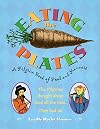
This book, intended for children ages 7-11, includes some recipes that might be fun for elementary students to try. However, the volume is seriously flawed by historical inaccuracies and poorly chosen illustrations. Even an amateur historian can recognize factual errors in the text (for example, Winslow's portrait was painted in London, not in America as the author implies). Also, the book's illustrations stretch the boundaries of Plymouth Plantation (and the credulity of the reader) well beyond acceptable limits. That is, the author included illustrations of a gravestone, as well as a harpooned whale, from Salem, MA; portraits of famous Puritans from Boston; and even several drawings from Colonial Williamsburg in her book. Little wonder that American school children know little about their country's history, never mind its geography, with books like this one appearing in the classroom. Worse, a selection from this book appeared in the reading section of the Massachusetts Comprehensive Assessment in recent years. Shame on the MA Department of Education for spotlighting shoddy work by a careless author.

A classic collection well worth browsing through or reading cover to cover; Of historical as well as literary interest; Music, games, sidewalk chants incuded

Harvard professor records the canonical story of the Pilgrims and Plymouth Plantation for The Mentor, a children's magazine.

Valuable anthology on Piagetian theory

Early editions of Cole and Cole are superior textbooks--unparalleled quality.