
Miska Petersham (1888–1960)
Author of The Rooster Crows: A Book of American Rhymes and Jingles
About the Author
Disambiguation Notice:
All of their work was published together, with Maud's name first. All titles are presently listed on Maud's page.
Image credit: Maud and Miska Petersham via Publishers Weekly
Series
Works by Miska Petersham
Nursery Friends from France 3 copies
The Story Books of Ships and Trains 2 copies
Cadmus books 1 copy
The Story Book of Clothes, Silk, Sugar, Corn, Iron and Steel, Cotton, Gold, Oil, and Transportation (1948) 1 copy
In Clean Hay 1 copy
Associated Works
Tales Told in Holland (1926) — Illustrator, some editions; Illustrator, some editions — 309 copies, 3 reviews
The Magic Doll of Roumania: A Wonder Story In Which East and West Do Meet, Written for American Children (1929) — Illustrator — 3 copies
Young Trajan — Illustrator — 1 copy
Tagged
Common Knowledge
- Legal name
- Mihaly, Petrezselyem
- Birthdate
- 1888-09-20
- Date of death
- 1960-05-15
- Gender
- male
- Education
- Royal National School for Applied Arts, Budapest, Hungary
- Occupations
- writer
illustrator - Relationships
- Petersham, Maud (wife)
Petersham, Elizabeth (daughter) - Nationality
- Hungary
- Birthplace
- Torokszentmiklos, Austria-Hungary
- Places of residence
- Budapest, Hungary, Austro-Hungarian Empire
Greenwich Village, New York, USA
Woodstock, New York, USA - Disambiguation notice
- All of their work was published together, with Maud's name first. All titles are presently listed on Maud's page.
Members
Reviews

From "A is for America, the land I love," to "Z is for Zeal, an American trait," this patriotic alphabet book from 1941 explores concepts, events and historical figures that are important in American history and to the American identity. Less of a picture-book than an illustrated collection of vignettes, all arranged alphabetically, it is part of Maud and Miska Petersham's series of This Is America books, and includes brief entries on George Washington and Abraham Lincoln, on the Liberty show more Bell and Old Glory, and on the Jamestown Colony and Valley Forge.
Chosen as a Caldecott Honor book in 1942 - other titles chosen that year include In My Mother's House, Paddle-to-the-Sea and Nothing At All - this title is very much a product of its times, reflecting the heightened levels of nationalistic feeling during the World War II era, as well as some of the outdated notions of non-European peoples abroad in the culture during that period. The page on the "Redskins," in particular, made me cringe. That said, it was interesting to see a book written by Maud and Miska Petersham themselves, as I am familiar with them primarily through their illustrations for other authors' books, from Elizabeth Cleveland Miller's Pran Of Albania, which was a Newbery Honor Book in 1930, to Olive Beaupré Miller's gorgeous collection, Tales Told in Holland. I enjoy the Petershams' vividly colorful artwork - one of the copies of Heidi that I own is illustrated by them - so I was appreciative on that score, even though I found the text less-than-pleasing. Recommended primarily to Caldecott completists, and to fans of Maud and Miska Petersham. show less
Chosen as a Caldecott Honor book in 1942 - other titles chosen that year include In My Mother's House, Paddle-to-the-Sea and Nothing At All - this title is very much a product of its times, reflecting the heightened levels of nationalistic feeling during the World War II era, as well as some of the outdated notions of non-European peoples abroad in the culture during that period. The page on the "Redskins," in particular, made me cringe. That said, it was interesting to see a book written by Maud and Miska Petersham themselves, as I am familiar with them primarily through their illustrations for other authors' books, from Elizabeth Cleveland Miller's Pran Of Albania, which was a Newbery Honor Book in 1930, to Olive Beaupré Miller's gorgeous collection, Tales Told in Holland. I enjoy the Petershams' vividly colorful artwork - one of the copies of Heidi that I own is illustrated by them - so I was appreciative on that score, even though I found the text less-than-pleasing. Recommended primarily to Caldecott completists, and to fans of Maud and Miska Petersham. show less
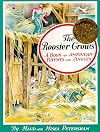
I recently became Nana to my first little grandson, Oscar, and so I've had reason to dust off the old lullabies and nursery rhymes. I started making lists of all the old rhymes and the children's songs that I remembered from my own childhood. I then made recordings, in the end, of over 400 folk songs and nursery songs, every one of which I knew and could sing by the age of seven, thanks to my own beloved Nana. Oscar is part of a blended family and I discovered that his five year old sister, show more Gigi, barely knew any of them. This got me to thinking about the Americana and folk heritage that modern day kids may be missing out on. It made me remember some anthologies of nursery rhymes and folk songs that I had also enjoyed in my childhood. The first to come to mind was this beautiful book which contains lively illustrations of characters in period costume and a broad cross-section of American nursery rhymes and jingles.
The Rooster Crows: A Book of American Rhymes and Jingles was compiled by Maud Petersham. Maud and her husband artist Miska Petersham illustrated it and won the Caldecott Medal for it in 1946. The entry about the Petershams in Encyclopædia Britannica Online says that when Miska was away serving out his duty in WWII Maud would lie awake at night worrying about him and to help pass the time and fall asleep she would think of all the old rhymes and jingles she knew. She wrote them down and when Miska came home safe and sound they put this wonderful book together.
The book is broken down into sections as follows:
Rhymes and Jingles
Finger Games
Rope Skipping Rhymes
Counting-out Rhymes
Games
Yankee Doodle
Rhymes and Jingles has 57 different rhymes. Some of them are very familiar like,
Lady bug, lady bug,
Fly away home.
Your house is on fire,
Your children are gone.
All but one and her name is Anne,
And she crept under the pudding pan.
(We always said "frying pan" but there are regional differences.)
Others are not so well known like,
I came to a river and I couldn't get across,
Paid five dollars for an old blind hoss.
Wouldn't go ahead, nor he wouldn't stand still,
So he went up and down like an old sawmill.
or
Wake up, Jacob,
Day's a breakin'
Peas in the pot
An' hoecake a bakin'
(Now if you're really lucky you know how to make hoecakes and this can be a fun activity for you to share with your little one.)
What I like about these silly, often plain old rhymes is that they have been spoken, enjoyed and repeated by the long thread of humanity that makes us who we are. They come from a time when we had to make our own entertainment. They're organic and honest and simple. Many of them go along with hand motions or have melodies or dance steps. What I like about this book is that it preserves them and does so out of a genuine love for them and a fundamental understanding of their great value. The art of the Petershams is perfect for these classics because they make an effort to take us back to the birthplaces and times of these rhymes and they show people acting out the images the rhymes bring to mind. The characters are wearing quaint period clothing and are involved in the everyday activities of the bygone era when these rhymes and jingles and songs were popular. Maud and Miska really have the knack of taking us back to our childhood and the country's childhood.
The Finger Games section has only five little games of the type most of us might best remember from the one that starts out,
Here is the church, Here is the steeple.
Each little finger game shows small drawings of a hand forming the shapes that match with the lines of the rhyme.
The Rope Skipping Rhymes section only has four rhymes and since I was a big rope-skipper back in the day I was disappointed not to find more in this section but it does include the beloved
Teddy bear, teddy bear turn around.
Teddy bear, teddy bear touch the ground...etcetera...that I remember from the playgrounds of my past.
There are several rhyming games including one that has all the verses to the folk song Oats, Peas, Beans and Barley Grow. The last section contains all the verses of Yankee Doodle most of which aren't well known and it can be appreciated for the slice of American history that it truly is. It is a part of their heritage that American children in particular ought to be taught as their emotional due, their entitlement for being born a part of this cultural crazy quilt.
The illustrations are so wonderful they practically stand alone. They convey such activity and interest and life! The Petershams worked together easily on their projects because one was right handed and one was left handed and they could draw on the same piece without conflicting with each other. Their personal chemistry surely worked because their vision is always true and apt and takes us where they want us to go along the path of Memory Lane. Their style conveys hints of art nouveau with curvilinear designs from nature but this is a subtle underpinning and it is really characterized by folksy detail and humor and action. There are many full color illustrations but most are two color or three color prints. This book was published in 1945 but it features mostly characters from Colonial, Revolutionary War Era and Frontier America.
I love this book because of the memories it rekindles. The children to whom I have read it seem to love it as much as I ever did, but the rhymes have to be sung and acted out for them the way they were when they were originally experienced or they might not be as much fun. This book is designed to be utilized rather than simply read to a child. The illustrations are wonderful to pour over with a child and they can be a nice bridge to history.
I urge you to find a copy of this book which is available in hard cover and paperback and treat yourself to some sweet nostalgia. Read it to a child and preserve a legacy.
Don't miss other books illustrated by Maud and Miska Petersham. Here are a few of the many still available. The Internet is full of lots more that are out of print.
Carl Sandburg's Rootabaga Stories
Margery Clark's The Poppy Seed Cakes
The Christ Child (a gorgeous retelling of the Christmas Story) show less
The Rooster Crows: A Book of American Rhymes and Jingles was compiled by Maud Petersham. Maud and her husband artist Miska Petersham illustrated it and won the Caldecott Medal for it in 1946. The entry about the Petershams in Encyclopædia Britannica Online says that when Miska was away serving out his duty in WWII Maud would lie awake at night worrying about him and to help pass the time and fall asleep she would think of all the old rhymes and jingles she knew. She wrote them down and when Miska came home safe and sound they put this wonderful book together.
The book is broken down into sections as follows:
Rhymes and Jingles
Finger Games
Rope Skipping Rhymes
Counting-out Rhymes
Games
Yankee Doodle
Rhymes and Jingles has 57 different rhymes. Some of them are very familiar like,
Lady bug, lady bug,
Fly away home.
Your house is on fire,
Your children are gone.
All but one and her name is Anne,
And she crept under the pudding pan.
(We always said "frying pan" but there are regional differences.)
Others are not so well known like,
I came to a river and I couldn't get across,
Paid five dollars for an old blind hoss.
Wouldn't go ahead, nor he wouldn't stand still,
So he went up and down like an old sawmill.
or
Wake up, Jacob,
Day's a breakin'
Peas in the pot
An' hoecake a bakin'
(Now if you're really lucky you know how to make hoecakes and this can be a fun activity for you to share with your little one.)
What I like about these silly, often plain old rhymes is that they have been spoken, enjoyed and repeated by the long thread of humanity that makes us who we are. They come from a time when we had to make our own entertainment. They're organic and honest and simple. Many of them go along with hand motions or have melodies or dance steps. What I like about this book is that it preserves them and does so out of a genuine love for them and a fundamental understanding of their great value. The art of the Petershams is perfect for these classics because they make an effort to take us back to the birthplaces and times of these rhymes and they show people acting out the images the rhymes bring to mind. The characters are wearing quaint period clothing and are involved in the everyday activities of the bygone era when these rhymes and jingles and songs were popular. Maud and Miska really have the knack of taking us back to our childhood and the country's childhood.
The Finger Games section has only five little games of the type most of us might best remember from the one that starts out,
Here is the church, Here is the steeple.
Each little finger game shows small drawings of a hand forming the shapes that match with the lines of the rhyme.
The Rope Skipping Rhymes section only has four rhymes and since I was a big rope-skipper back in the day I was disappointed not to find more in this section but it does include the beloved
Teddy bear, teddy bear turn around.
Teddy bear, teddy bear touch the ground...etcetera...that I remember from the playgrounds of my past.
There are several rhyming games including one that has all the verses to the folk song Oats, Peas, Beans and Barley Grow. The last section contains all the verses of Yankee Doodle most of which aren't well known and it can be appreciated for the slice of American history that it truly is. It is a part of their heritage that American children in particular ought to be taught as their emotional due, their entitlement for being born a part of this cultural crazy quilt.
The illustrations are so wonderful they practically stand alone. They convey such activity and interest and life! The Petershams worked together easily on their projects because one was right handed and one was left handed and they could draw on the same piece without conflicting with each other. Their personal chemistry surely worked because their vision is always true and apt and takes us where they want us to go along the path of Memory Lane. Their style conveys hints of art nouveau with curvilinear designs from nature but this is a subtle underpinning and it is really characterized by folksy detail and humor and action. There are many full color illustrations but most are two color or three color prints. This book was published in 1945 but it features mostly characters from Colonial, Revolutionary War Era and Frontier America.
I love this book because of the memories it rekindles. The children to whom I have read it seem to love it as much as I ever did, but the rhymes have to be sung and acted out for them the way they were when they were originally experienced or they might not be as much fun. This book is designed to be utilized rather than simply read to a child. The illustrations are wonderful to pour over with a child and they can be a nice bridge to history.
I urge you to find a copy of this book which is available in hard cover and paperback and treat yourself to some sweet nostalgia. Read it to a child and preserve a legacy.
Don't miss other books illustrated by Maud and Miska Petersham. Here are a few of the many still available. The Internet is full of lots more that are out of print.
Carl Sandburg's Rootabaga Stories
Margery Clark's The Poppy Seed Cakes
The Christ Child (a gorgeous retelling of the Christmas Story) show less
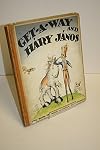
Get-a-way and Hary Janos (pronounced "Harr-y Yahn-nos" according to the "About the Toys" note in the back of the book) is the story of two old, worn-out toys, a horse and a soldier, who meet on a trash heap and journey together to a land where old toys are restored and made new - sort of like the Toy Story for the 1933 set.
Hary Janos, a Hungarian Hussar, is a bit too proud for his own good, which sometimes gets him into trouble. Get-a-way is much more humble, considerate, and loyal, though show more Hary Janos always returns to his friend.
The illustrations (black-and-white and colored pencil?) are exquisite, and the stories of a toys' afterlife isn't too outdated.
This book is now out of print and rare; I had to request it through InterLibrary Loan (ILL).
Includes references to Felix the Cat, Mickey Mouse, and Charlie Chaplin. show less
Hary Janos, a Hungarian Hussar, is a bit too proud for his own good, which sometimes gets him into trouble. Get-a-way is much more humble, considerate, and loyal, though show more Hary Janos always returns to his friend.
The illustrations (black-and-white and colored pencil?) are exquisite, and the stories of a toys' afterlife isn't too outdated.
This book is now out of print and rare; I had to request it through InterLibrary Loan (ILL).
Includes references to Felix the Cat, Mickey Mouse, and Charlie Chaplin. show less
This is a solid collection of Mother Goose rhymes and finger plays. Some of them are a bit harsh by today's standards* but it's a good volume to have for introducing children to some of the classics. I use this with my grade 2 students when we come to "rhymes" as part of our Traditional Literature unit.
*Trot trot to Boston/To buy a loaf of bread./Trot, trot home again/The old trot's dead.
(This is not as fun as the version I learned from my great-grandmother!)
*Trot trot to Boston/To buy a loaf of bread./Trot, trot home again/The old trot's dead.
(This is not as fun as the version I learned from my great-grandmother!)
Lists
Awards


You May Also Like
Associated Authors
Statistics
- Works
- 58
- Also by
- 29
- Members
- 2,601
- Popularity
- #9,871
- Rating
- 3.8
- Reviews
- 29
- ISBNs
- 39