This is a hard review to write for the same reason that this is a good book to read. What's it all about? How much of it do I buy into? It's a trip. I read and enjoy Bob Frissell's books because as Bob Dylan once said, "I know there's something happening here, but I don't know what it is." Frissell's books are all brimming over with bizarre information about the "true" nature of the Universe and this one is no different. It talks about sacred geometry, ascended Masters, Christ Consciousness, Martians, Sirians, different dimensions, Bible Codes, the pineal gland, rebirthing, the Fall of Atlantis, the Secret Government, the Greys, Thoth, Ra and the rest of the boys from Egypt and Luciferian consciousness among many other juicy topics.
Have you ever tried wrapping your head around the Universe...I mean just the concept of a Uni-verse? Then think about microcosm and macrocosm, about energy and love, about the subtle bodies and different planes of existence. How about "I Am"? OM. How about co-creating that Universe? Well, if you're reading this review, you probably have. This book, like the two preceding it, Nothing In This Book Is True and Something in This Book Is True, are point blank discussions about many different so-called New Age topics, frankly stated and without a lot of extraneous fluff, and they contain much material that has been delivered to Frissell by an exulted being of an order known as the Melchizedeks, by the name of Drunvalo Melchizedek, himself an show more interesting author. Basically, it's the lowdown on the evolution of the human race in the grand scheme of the evolution of the planet and the solar system and the Universe itself. I find it entertaining and thought-provoking and I actually do feel that some of it is true, as embarassing as that would be to admit in many circles within which I travel. I mean it's just so "out there". But then, I'm a person who, based on my own observations, personally believes that birds can travel inter-dimensionally. Think how tickled I was to read in this book that Bob thinks dolphins can do the same thing! Wow.
In order to become more fully actualized and to help our planet make the shift into higher consciousness Bob recommends some breathing and meditating techniques which I have not tried. That's the thing, I guess, all this crazy stuff IS just too much for me to really integrate. When I read the fascinating quantum physics parts of his book, I am just zipping along out there in the cosmos and I'm following it and I can see myself as a geometric form of energy, the totality of Being and at the same time but an aspect of Being, shifting my identity from that of a human victim to being a spiritual Master and then I gotta put the book down and watch "Survivor" on TV. I guess I'm still just a third dimensional spud, but I love these books. show less
Have you ever tried wrapping your head around the Universe...I mean just the concept of a Uni-verse? Then think about microcosm and macrocosm, about energy and love, about the subtle bodies and different planes of existence. How about "I Am"? OM. How about co-creating that Universe? Well, if you're reading this review, you probably have. This book, like the two preceding it, Nothing In This Book Is True and Something in This Book Is True, are point blank discussions about many different so-called New Age topics, frankly stated and without a lot of extraneous fluff, and they contain much material that has been delivered to Frissell by an exulted being of an order known as the Melchizedeks, by the name of Drunvalo Melchizedek, himself an show more interesting author. Basically, it's the lowdown on the evolution of the human race in the grand scheme of the evolution of the planet and the solar system and the Universe itself. I find it entertaining and thought-provoking and I actually do feel that some of it is true, as embarassing as that would be to admit in many circles within which I travel. I mean it's just so "out there". But then, I'm a person who, based on my own observations, personally believes that birds can travel inter-dimensionally. Think how tickled I was to read in this book that Bob thinks dolphins can do the same thing! Wow.
In order to become more fully actualized and to help our planet make the shift into higher consciousness Bob recommends some breathing and meditating techniques which I have not tried. That's the thing, I guess, all this crazy stuff IS just too much for me to really integrate. When I read the fascinating quantum physics parts of his book, I am just zipping along out there in the cosmos and I'm following it and I can see myself as a geometric form of energy, the totality of Being and at the same time but an aspect of Being, shifting my identity from that of a human victim to being a spiritual Master and then I gotta put the book down and watch "Survivor" on TV. I guess I'm still just a third dimensional spud, but I love these books. show less
This story takes place on a reconstructed Earth of the future, following the devastations of a meteor hit. People are either ridiculously rich or unemployed impoverished fringe folk who have been displaced by a multitude of robotic workers. I'm not sure how the rich got richer but this is a sort of not too brave new world where babies selected by type are created in test tubes and delivered from artificial wombs to parents kept eternally young by Rejuvinex. Police keep everyone who's rich safe from everyone who's poor by monitoring them electronically. Kind of like the jail bracelet concept in reverse. The 16 year old protagonist, Jane, is a totally sheltered, spoiled rich girl whose growth is stunted by living in the shadow of her rich, arrogant and self-absorbed globe-trotting mother. Their relationship is more like that of French Poodle owner and pup than it is like mother and daughter. Jane's friends, aren't really friends at all since they are also self-absorbed, spoiled, jaded rich kids who use each other as backdrops to their dramas. One of the things I detested the most about this book is the long pages of descriptions about Jane's friends and their vapid, perverse lifestyles. In a word, BORING. The plot is good though it's been done before a gazillion times with the likes of Star Trek's Data and in D.A.R.Y.L. and in Robin Williams' portryal of Milennium Man and many other AI contributions to the sci-fi literary grab-bag. Jane meets this sophisticated robot model show more that is capable of pretty much any kind of work including the arts and love-making. He looks and feels like a human except for the faint silver tinge to his skin. No problem, lots of human in this world like to paint their skin silver, too. No one can really tell that he's a robot. Jane falls in love with him and has to give up every bit of her rich girl world if she wants to be with him. They discover and uncover each other's humanity but it ends bad for Robo-honey. Never fear, the trite ending is a surprise. Why wasn't I surprised? Jane is 16 years old and maybe this book will appeal to YA readers because it delves into the areas of first love, and finding one's self, personal discovery, loss and independence and all that jazz in a way that is at least, imaginative. I didn't enjoy it. I thought the talented Tanith Lee dropped the ball here with characters, dialogue, credibility...pretty much everything. It should be disassembled like an annoying robot. show less
As a rule, I prefer non-fiction over historical fiction because I frequently find that historical fiction tends to romanticize its subjects. I do, however feel that there are certain subtle understandings about the characters and unspoken inner worlds of human beings that can be expressed in a uniquely personal way quite well through the medium of the historical novel. In his novel Fools Crow, author James Welch has traveled with a sure step and a deft hand the thin line that all historical writers walk between truth and fabrication. I think he has offered his readers an honest, revealing and intimate look into the lives, personalities, traditions and inner worlds of the Pikuni Blackfeet people of the mid 1800s. His fictional approach to teaching allows for a singularly personal understanding of such intangibles in Indian life and psychology as dreaming, communicating with otherworldly beings and the effects of their honor and bravery traditions. By offering his readers the insights into the feelings and motivations of created characters we are shown multidimensional portraits that are vivid and evocative and to which we, as fellow human beings, can relate. When we pair these personal insights with the factual evidence of the history of those times in which these characters lived we end up with a well rounded understanding that non-fictional accounts frequently lack.
James Welch (1940-2003)authored several novels and volumes of poetry concerning the life of western plains show more Indians. Born of a Blackfeet father and a Gros Ventre mother and raised primarily on Montana's Fort Belknap Reservation Welch had ample experience and access to the stories, spirituality and traditions of the Blackfeet tribe throughout his life. His style of writing is frank, thoughtful and detailed. Dee Brown, author of Bury My Heart at Wounded Knee had this to say about Fools Crow, "Remarkable for its beauty of language...May be the closest we will ever come in literature to an understanding of what life was like for a western Indian." While I do not think I can be as effusive as Mr. Brown in my assessment of this book I most heartily concur with his viewpoint as to the style and beauty of the writing. When Welch is in his omniscient perspective he communicates in modern English but when seeing through the eyes of a particular character he manages to convey in English the Indian way of sentence structure and idiom without making it sound like pidgin English. The results whether internal or external add a valuable layer of characterization that is revealed through the very structure of the thoughts, emotions and dialog of characters.
Fools Crow is a novel whose main character, White Man's Dog eventually earns the name of Fools Crow for his bravery in a raid upon a Crow village. The Fools Crow of this novel should not be confused in any way with the contemporary real life person of Fools Crow, a respected Ceremonial Chief of the Oglala Sioux.
The novel tells the story of the latter days of the Pikuni (aka Piegan) people, one of three branches of the Blackfeet Nation. The life of its central character, Fools Crow is traced from the young adult days of an untried hunter and warrior up through his growth as a healer, visionary, husband and father, and respected warrior of his people at the time of the disastrous Marias River Massacre in which over 200 unarmed, sleeping women, children and elderly people were slaughtered and the few survivors left to freeze and starve by the terrorist American Calvary in January of 1870.
Fools Crow is like so many other books about Indians of this time period in that it traces their frustration, confusion, fear and anger due to the incursions into their territory by white settlers, prospectors and military. It relates the same frightful racist tactics of greed and hatred that are part and parcel to any book of historical insights from this period. Open any book of this genre and you will learn the same essential facts no matter if it concerns the Blackfeet, the Lakota, the Nez Perce, the Cherokee or any other First Nation tribe. It is easy to find books that talk about Indian life with its myriad variations tribe to tribe of social traditions, spiritual and religious expression, and traditions surrounding the hunt and warfare. I've read a good many and I do appreciate any opportunity to further pierce the veil with which the years and the whitewashing of facts by white historians and educators has obscured the truth. This novel has done just that by its perceptive sensitivity of characterization.
In Fools Crow we will not find the circumstances any different than those that we have come to know about the injustice, the murder and pillage, the breaking of promises and treaty agreements, the white man disease epidemics, the wanton waste of the buffalo herds, the encroachment upon homelands, the dehumanization and racism, the forced relocations and poverty, starvation and disease of the reservation life and all the other atrocities heaped upon the First Nation people by the United States government and its people. What I found unique about this book and why it was most certainly worth my while to read it was the perspective it gave of the personalities (and I mean the use of that word in its most literal sense) of Blackfeet people of that time. Welch is the grandson of a woman who survived the tragic Marias River Massacre. He has obviously been exposed to deep personal insights into the feelings and thoughts of real people from that time.
The character Fools Crow gives us through his inner dialog of thoughts and feelings and his outer dialog of conversation with his family, friends and enemies another layer of understanding. We are given the opportunity to feel the inner person's wash of emotions as we learn the facts of acquiring skills, hunting, fighting, protecting the women, children and old ones, healing the sick, listening to the wisdom as it comes from tribal mentors and from the deities and the voices of the animals who share the world. Instead of only fact we get a multidimensional experience.
The novel examines several interpersonal relationships that Fools Crow has and it traces the events that led up to the historical Marias River Massacre. We learn many details and facts about camp life, life as it was lived on a day to day basis with its courtships, marriages, births and deaths, sickness and healing, traditions and taboos. We are treated to several Pikuni legends and spiritual stories that are offered up in a unique way that illustrates the very real impact they had on individual people. Crow and Wolverine speak with and relate to Fools Crow and others of the Pikuni in a very real, first person manner. Their wisdom is related personally in the otherworld consciousness that for the Pikuni and many First Nations tribes is very real. Usually when in the past I have read Indian legends and teaching stories they seemed like rather one dimensional tales...symbolic and contrived for a purpose. In this book the legends are conveyed in the way that a person actually would have perceived them. We see how real and how important they were to every day life and to the direction of that life. We see how much respect for the deities of the seasons, the sun and moon and stars and their fellow creatures the Blackfeet people had. When an eclipse occurs just prior to an important raid upon the Crows we see how each man takes its import very seriously indeed. Signs and portents are everywhere and are looked upon with great seriousness. We are made to understand how very connected the Blackfeet people were to their world, how every bit of it was alive and capable of speech and wisdom.
The plot or action of this book makes it a page turner but its action is not what makes it so remarkable. It is the inner worlds of its characters that offer us so much. As with all books from this time period we already know when we start reading it that it isn't going to have a "happy ending." Still, we go along with the characters and we experience life through their eyes. This drives home the depth of the tragedy of white incursion in a personal way because we see people just trying to be people, just living life, all the while knowing full well what they are up against even when they themselves do not.
Many books about Indians have a tendency to group braves, warriors, hunters in one stereotypical group, leaders, chiefs, old men in another, women in another and children in yet another. We are used to the stereotypical stoicism, bravery, physical endurance of the braves, the selfless wisdom of the chiefs, the demure, submissive role of the women. This book does a brilliant job of filling in the blanks in those stereotypes and illuminating the essential truths of them while expanding upon the psychology behind those roles with the more personal variances of individual personalities. At a time in history when the Indians were often violently punished by the United States government with bloody actions that claimed hundreds of innocent lives it is very interesting to understand the motivations and understandings and also the confusion of the Indians as they faced an atmosphere of living that was utterly foreign to their way of thinking. In a novel, more so than a work of non-fiction we have the powerful opportunity of absorbing the emotional content that most certainly would have accompanied the facts that history has taught us. We get an inside seat to the events and we gain an appreciation for the nuances of personality and situation that a backward look at history cannot provide.
For the most part, I enjoyed this book very much. I did take issue with what I perceived to be the author's own perspective on females and gender relations in general which I felt cast a somewhat misogynous and more overtly chauvinistic attitude of the Pikuni men toward women than was actually present in the factual lives of the people. It's no secret that interpersonal relations between men and women were different among Indian people of the 1800s than they are today. It is a complex subject the scope of which this review cannot contain. It is known that women most definitely had a "place" and were expected to know that place and to keep in it. The same is true for men. Social structure and taboos defined these places and behaviors and gender relationships. They can appear to be chauvinistic and misogynous on the surface when viewed in a strictly linear way but can be seen to be practical and orderly if seen in another light. My problem with Welch's portrayal of men's actions and responses to women in this book is that in his desire to be frank and honest about the sexual feelings and appetites of men he has a tendency in this book to stereotype and often makes the men seem like inappropriate sexually primitive beings. He tends to describe men's reactions to female presence in a primarily sexual way. He suggests that certain sexual responses that are completely abnormal occur to totally normal men. For example he describes the rape of a sick and feverish young woman who is happened upon by an honorable warrior in the midst of a raid gone wrong while trying to hide from his enemies. The rape happens not as an act of violence or hatred toward an enemy woman but rather as a side effect of the warrior hiding in her robes and becoming aroused when discovering her naked body to be hot and wet from her fever. I found it to be quite preposterous. He describes the erections of various men at times when they for example see a woman bathing in the river or hard at work scraping a buffalo hide. I am not saying that sexual arousal is not a part of everyday life but in this book it seems that many times Welch seems to be describing his own sexual feelings and agenda as regards women rather than relating anything meaningful about social/sexual relationships. Welch makes it seem like Indian men are horny dogs as a first response to women in general. Since I know this is not the actual case it leads me to suspect that it is actually Welch who is the horny dog in this case and not his characters.
I really loved the way this book ended because even though Fools Crow has stood in the destroyed and burned out rubble of the winter camp of Heavy Runner's people on the Marias River and witnessed the murderous mayhem and even though he has received a powerful medicine vision that has revealed the dismal and desperate future of his people and knows what is ahead, the final pages show him continuing on with his life, anticipating the coming spring hunt, the raising of his infant son, and the continuation of his people's way of life. It is a hopeful and brave heart that he maintains even in the face of such depredation. It is a well grounded urge to continue, to survive and to live a brave life, a good life. Knowing what we the readers do know about the fate of the Blackfeet people of that time we can not help but be moved by Welch's ending because we know the insurmountable wave of destruction that raced toward the shore even as Fools Crow so valiantly picks up the pieces and continues living. For me the ending spoke very poignantly and illustrated one of the most important reasons why the First Nation people and their ways are still alive today despite the holocaust they endured.
All in all, despite my objection to the sexual stereotyping I found this book to be very informative, moving and just a downright interesting read. I can easily recommend it. I don't know of a better inside look at the perceptions of the Indians of the 1800s as regards their interrelationships on a personal level with the natural world in which they lived. Their relationship to their world was so much more layered than our own and they approached it with such elevated sensitivity. This is a very hard thing to convey in writing. James Welch managed it with a high degree of artistry. I can recommend this book for the clarity and authenticity of its view into history, for its depiction of the events leading up to the Marias River Massacre and its insights into Blackfeet culture and most importantly to me, its insights into the inner world of First Nation people of that astonishingly volatile period. show less
James Welch (1940-2003)authored several novels and volumes of poetry concerning the life of western plains show more Indians. Born of a Blackfeet father and a Gros Ventre mother and raised primarily on Montana's Fort Belknap Reservation Welch had ample experience and access to the stories, spirituality and traditions of the Blackfeet tribe throughout his life. His style of writing is frank, thoughtful and detailed. Dee Brown, author of Bury My Heart at Wounded Knee had this to say about Fools Crow, "Remarkable for its beauty of language...May be the closest we will ever come in literature to an understanding of what life was like for a western Indian." While I do not think I can be as effusive as Mr. Brown in my assessment of this book I most heartily concur with his viewpoint as to the style and beauty of the writing. When Welch is in his omniscient perspective he communicates in modern English but when seeing through the eyes of a particular character he manages to convey in English the Indian way of sentence structure and idiom without making it sound like pidgin English. The results whether internal or external add a valuable layer of characterization that is revealed through the very structure of the thoughts, emotions and dialog of characters.
Fools Crow is a novel whose main character, White Man's Dog eventually earns the name of Fools Crow for his bravery in a raid upon a Crow village. The Fools Crow of this novel should not be confused in any way with the contemporary real life person of Fools Crow, a respected Ceremonial Chief of the Oglala Sioux.
The novel tells the story of the latter days of the Pikuni (aka Piegan) people, one of three branches of the Blackfeet Nation. The life of its central character, Fools Crow is traced from the young adult days of an untried hunter and warrior up through his growth as a healer, visionary, husband and father, and respected warrior of his people at the time of the disastrous Marias River Massacre in which over 200 unarmed, sleeping women, children and elderly people were slaughtered and the few survivors left to freeze and starve by the terrorist American Calvary in January of 1870.
Fools Crow is like so many other books about Indians of this time period in that it traces their frustration, confusion, fear and anger due to the incursions into their territory by white settlers, prospectors and military. It relates the same frightful racist tactics of greed and hatred that are part and parcel to any book of historical insights from this period. Open any book of this genre and you will learn the same essential facts no matter if it concerns the Blackfeet, the Lakota, the Nez Perce, the Cherokee or any other First Nation tribe. It is easy to find books that talk about Indian life with its myriad variations tribe to tribe of social traditions, spiritual and religious expression, and traditions surrounding the hunt and warfare. I've read a good many and I do appreciate any opportunity to further pierce the veil with which the years and the whitewashing of facts by white historians and educators has obscured the truth. This novel has done just that by its perceptive sensitivity of characterization.
In Fools Crow we will not find the circumstances any different than those that we have come to know about the injustice, the murder and pillage, the breaking of promises and treaty agreements, the white man disease epidemics, the wanton waste of the buffalo herds, the encroachment upon homelands, the dehumanization and racism, the forced relocations and poverty, starvation and disease of the reservation life and all the other atrocities heaped upon the First Nation people by the United States government and its people. What I found unique about this book and why it was most certainly worth my while to read it was the perspective it gave of the personalities (and I mean the use of that word in its most literal sense) of Blackfeet people of that time. Welch is the grandson of a woman who survived the tragic Marias River Massacre. He has obviously been exposed to deep personal insights into the feelings and thoughts of real people from that time.
The character Fools Crow gives us through his inner dialog of thoughts and feelings and his outer dialog of conversation with his family, friends and enemies another layer of understanding. We are given the opportunity to feel the inner person's wash of emotions as we learn the facts of acquiring skills, hunting, fighting, protecting the women, children and old ones, healing the sick, listening to the wisdom as it comes from tribal mentors and from the deities and the voices of the animals who share the world. Instead of only fact we get a multidimensional experience.
The novel examines several interpersonal relationships that Fools Crow has and it traces the events that led up to the historical Marias River Massacre. We learn many details and facts about camp life, life as it was lived on a day to day basis with its courtships, marriages, births and deaths, sickness and healing, traditions and taboos. We are treated to several Pikuni legends and spiritual stories that are offered up in a unique way that illustrates the very real impact they had on individual people. Crow and Wolverine speak with and relate to Fools Crow and others of the Pikuni in a very real, first person manner. Their wisdom is related personally in the otherworld consciousness that for the Pikuni and many First Nations tribes is very real. Usually when in the past I have read Indian legends and teaching stories they seemed like rather one dimensional tales...symbolic and contrived for a purpose. In this book the legends are conveyed in the way that a person actually would have perceived them. We see how real and how important they were to every day life and to the direction of that life. We see how much respect for the deities of the seasons, the sun and moon and stars and their fellow creatures the Blackfeet people had. When an eclipse occurs just prior to an important raid upon the Crows we see how each man takes its import very seriously indeed. Signs and portents are everywhere and are looked upon with great seriousness. We are made to understand how very connected the Blackfeet people were to their world, how every bit of it was alive and capable of speech and wisdom.
The plot or action of this book makes it a page turner but its action is not what makes it so remarkable. It is the inner worlds of its characters that offer us so much. As with all books from this time period we already know when we start reading it that it isn't going to have a "happy ending." Still, we go along with the characters and we experience life through their eyes. This drives home the depth of the tragedy of white incursion in a personal way because we see people just trying to be people, just living life, all the while knowing full well what they are up against even when they themselves do not.
Many books about Indians have a tendency to group braves, warriors, hunters in one stereotypical group, leaders, chiefs, old men in another, women in another and children in yet another. We are used to the stereotypical stoicism, bravery, physical endurance of the braves, the selfless wisdom of the chiefs, the demure, submissive role of the women. This book does a brilliant job of filling in the blanks in those stereotypes and illuminating the essential truths of them while expanding upon the psychology behind those roles with the more personal variances of individual personalities. At a time in history when the Indians were often violently punished by the United States government with bloody actions that claimed hundreds of innocent lives it is very interesting to understand the motivations and understandings and also the confusion of the Indians as they faced an atmosphere of living that was utterly foreign to their way of thinking. In a novel, more so than a work of non-fiction we have the powerful opportunity of absorbing the emotional content that most certainly would have accompanied the facts that history has taught us. We get an inside seat to the events and we gain an appreciation for the nuances of personality and situation that a backward look at history cannot provide.
For the most part, I enjoyed this book very much. I did take issue with what I perceived to be the author's own perspective on females and gender relations in general which I felt cast a somewhat misogynous and more overtly chauvinistic attitude of the Pikuni men toward women than was actually present in the factual lives of the people. It's no secret that interpersonal relations between men and women were different among Indian people of the 1800s than they are today. It is a complex subject the scope of which this review cannot contain. It is known that women most definitely had a "place" and were expected to know that place and to keep in it. The same is true for men. Social structure and taboos defined these places and behaviors and gender relationships. They can appear to be chauvinistic and misogynous on the surface when viewed in a strictly linear way but can be seen to be practical and orderly if seen in another light. My problem with Welch's portrayal of men's actions and responses to women in this book is that in his desire to be frank and honest about the sexual feelings and appetites of men he has a tendency in this book to stereotype and often makes the men seem like inappropriate sexually primitive beings. He tends to describe men's reactions to female presence in a primarily sexual way. He suggests that certain sexual responses that are completely abnormal occur to totally normal men. For example he describes the rape of a sick and feverish young woman who is happened upon by an honorable warrior in the midst of a raid gone wrong while trying to hide from his enemies. The rape happens not as an act of violence or hatred toward an enemy woman but rather as a side effect of the warrior hiding in her robes and becoming aroused when discovering her naked body to be hot and wet from her fever. I found it to be quite preposterous. He describes the erections of various men at times when they for example see a woman bathing in the river or hard at work scraping a buffalo hide. I am not saying that sexual arousal is not a part of everyday life but in this book it seems that many times Welch seems to be describing his own sexual feelings and agenda as regards women rather than relating anything meaningful about social/sexual relationships. Welch makes it seem like Indian men are horny dogs as a first response to women in general. Since I know this is not the actual case it leads me to suspect that it is actually Welch who is the horny dog in this case and not his characters.
I really loved the way this book ended because even though Fools Crow has stood in the destroyed and burned out rubble of the winter camp of Heavy Runner's people on the Marias River and witnessed the murderous mayhem and even though he has received a powerful medicine vision that has revealed the dismal and desperate future of his people and knows what is ahead, the final pages show him continuing on with his life, anticipating the coming spring hunt, the raising of his infant son, and the continuation of his people's way of life. It is a hopeful and brave heart that he maintains even in the face of such depredation. It is a well grounded urge to continue, to survive and to live a brave life, a good life. Knowing what we the readers do know about the fate of the Blackfeet people of that time we can not help but be moved by Welch's ending because we know the insurmountable wave of destruction that raced toward the shore even as Fools Crow so valiantly picks up the pieces and continues living. For me the ending spoke very poignantly and illustrated one of the most important reasons why the First Nation people and their ways are still alive today despite the holocaust they endured.
All in all, despite my objection to the sexual stereotyping I found this book to be very informative, moving and just a downright interesting read. I can easily recommend it. I don't know of a better inside look at the perceptions of the Indians of the 1800s as regards their interrelationships on a personal level with the natural world in which they lived. Their relationship to their world was so much more layered than our own and they approached it with such elevated sensitivity. This is a very hard thing to convey in writing. James Welch managed it with a high degree of artistry. I can recommend this book for the clarity and authenticity of its view into history, for its depiction of the events leading up to the Marias River Massacre and its insights into Blackfeet culture and most importantly to me, its insights into the inner world of First Nation people of that astonishingly volatile period. show less
The Kiowa, known among themselves as Kwuda and also Tepda, were once, along with their allies the Commanche, fierce fighting lords of the southern plains and master horsemen. There are roughly 17,000 of them left and their reservation is in Oklahoma but they are not native to that region having come from the mountains beyond the source of the Yellowstone and Missouri Rivers. They eventually migrated onto the Great Plains. Like other tribes of the Great Plains they have a rich body of mythos, a spiritual vision of themselves replete with ceremony and sacrifice such as the Sun Dance and they have suffered greatly at the hands of white expansionism and racism.
One of the most famous modern sons of the Kiowa is N. Scott Momaday who in addition to writing this book received the 1969 Pulitzer Prize for his book, House Made of Dawn. He is a Professor of English at the University of Arizona.
I enjoyed The Way to Rainy Mountain because it took me inside the Kiowa consciousness however briefly. This book communicates its wisdom on an emotional level. It speaks more to the right brain, than the left. It conveys by way of subtleties of perspective rather than facts, although it uses certain carefully selected facts to embellish the artful nuances of the narrative.
As a Kiowa, Momaday has the benefit of the inside track of first hand observations and first-person accounts from elderly relatives who lived according to the old traditional ways. Published in 1968, this book was written show more at a time when it seemed even to Momaday that the Kiowa were defeated, their golden age having ended somewhere around 1833, existing in decline until around 1875 and finally dwindling to the struggles of only around 5,000 survivors. Today's outlook is brighter and young Kiowas are once again taking up the ways of their grandfathers and grandmothers and the traditions are being restored, however, at the time of the writing of this book that was not the case and so the tone of Momaday's writing is conveyed with words in the past tense. It is a looking back, a reflective view but also the tale of personal journey.
This is a very short book than can be read in the space of an hour or so. It is illustrated with large black wood-cuts made by Momaday's father, Al Momaday. It is told in chapter form, or in the form of little tales almost in the style of the old oral teaching tales. Each entry is numbered and contains three individual but related parts. The first part is from Momaday's father's voice, from the ancestors' oral tradition. The second part is from a historical perspective. The third part is Momaday's personal feelings, recollections, questions, and observations relating to the first two parts. It tells the Kiowa creation story, illuminates their most important myths, rituals and beliefs and examines the Kiowa spirit.
Momaday is a talented and poetic writer with an ability to set tone and to create vivid images that I find most enjoyable. Here is a sample of his evocative style: "In New Mexico the land is made of many colors. When I was a boy I rode out over the red and yellow and purple earth to the west of Jemez Pueblo. My horse was a small red roan, fast and easy-riding. I rode among the dunes, along the bases of mesas and cliffs, into canyons and arroyos. I came to know that country, not in the way a traveler knows the landmarks he sees in the distance, but more truly and intimately, in every season, from a thousand points of view. I know the living motion of a horse and the sound of hooves. I know what it is, on a hot day in August or September, to ride into a bank of cold, fresh rain."
This book is small and short but in its brevity it manages to create a mood that transports. It illuminates in minimalist terms a profound, intangible quality of spirit as it is found uniquely among the Kiowa. It manages in a most mysterious way to convey distinction, to illustrate the inner foundation of the outer characteristics of this people and their history. It is not a history book but it is a reconnoitering, one that like the gaze of a man surveying the plains from horseback in the midday glare, shadowed by his hand above his brow, penetrates far into the distance and assists him in his journey. It is a personal story with intimate reflections and at the same time it is legacy...transcendent and made available to us all.
For me this book is one of those aesthetic pleasures, like the drinking of tea from a fragile porcelain cup. It is defined in part by its simplicity but treasured for its richness and the refinement of its impact. show less
One of the most famous modern sons of the Kiowa is N. Scott Momaday who in addition to writing this book received the 1969 Pulitzer Prize for his book, House Made of Dawn. He is a Professor of English at the University of Arizona.
I enjoyed The Way to Rainy Mountain because it took me inside the Kiowa consciousness however briefly. This book communicates its wisdom on an emotional level. It speaks more to the right brain, than the left. It conveys by way of subtleties of perspective rather than facts, although it uses certain carefully selected facts to embellish the artful nuances of the narrative.
As a Kiowa, Momaday has the benefit of the inside track of first hand observations and first-person accounts from elderly relatives who lived according to the old traditional ways. Published in 1968, this book was written show more at a time when it seemed even to Momaday that the Kiowa were defeated, their golden age having ended somewhere around 1833, existing in decline until around 1875 and finally dwindling to the struggles of only around 5,000 survivors. Today's outlook is brighter and young Kiowas are once again taking up the ways of their grandfathers and grandmothers and the traditions are being restored, however, at the time of the writing of this book that was not the case and so the tone of Momaday's writing is conveyed with words in the past tense. It is a looking back, a reflective view but also the tale of personal journey.
This is a very short book than can be read in the space of an hour or so. It is illustrated with large black wood-cuts made by Momaday's father, Al Momaday. It is told in chapter form, or in the form of little tales almost in the style of the old oral teaching tales. Each entry is numbered and contains three individual but related parts. The first part is from Momaday's father's voice, from the ancestors' oral tradition. The second part is from a historical perspective. The third part is Momaday's personal feelings, recollections, questions, and observations relating to the first two parts. It tells the Kiowa creation story, illuminates their most important myths, rituals and beliefs and examines the Kiowa spirit.
Momaday is a talented and poetic writer with an ability to set tone and to create vivid images that I find most enjoyable. Here is a sample of his evocative style: "In New Mexico the land is made of many colors. When I was a boy I rode out over the red and yellow and purple earth to the west of Jemez Pueblo. My horse was a small red roan, fast and easy-riding. I rode among the dunes, along the bases of mesas and cliffs, into canyons and arroyos. I came to know that country, not in the way a traveler knows the landmarks he sees in the distance, but more truly and intimately, in every season, from a thousand points of view. I know the living motion of a horse and the sound of hooves. I know what it is, on a hot day in August or September, to ride into a bank of cold, fresh rain."
This book is small and short but in its brevity it manages to create a mood that transports. It illuminates in minimalist terms a profound, intangible quality of spirit as it is found uniquely among the Kiowa. It manages in a most mysterious way to convey distinction, to illustrate the inner foundation of the outer characteristics of this people and their history. It is not a history book but it is a reconnoitering, one that like the gaze of a man surveying the plains from horseback in the midday glare, shadowed by his hand above his brow, penetrates far into the distance and assists him in his journey. It is a personal story with intimate reflections and at the same time it is legacy...transcendent and made available to us all.
For me this book is one of those aesthetic pleasures, like the drinking of tea from a fragile porcelain cup. It is defined in part by its simplicity but treasured for its richness and the refinement of its impact. show less
I collect so-called oracle decks and Tarot Decks and I have come across some stinkers in my day but this one takes the cake. It exploits a Native American theme but does not deliver. It is made up of a small, poorly written guide book of sorts and ten cards with rudimentary art, indigenous-inspired art...that's right, I said TEN cards. The price asked for this set is completely ridiculous. This is the epitome of the worst aspects of New Age marketing. RIP OFF.

This is an oracle deck of cards, not a Tarot deck. The paper guidebook that accompanies it is thorough and suggests several ways to use the deck. It gives information on each plant or flowers' Signature (or appearance), its flower essence, its Archetype (Goddess or God), a Healing message and a Blessing. It is a gentle deck filled with colorful imagery. Even if you care nothing at all about oracles, the artwork is worth appreciating as if it is a miniature art gallery. Stroll through the images in your mind and just relax and enjoy. The colors are very bright, the images are detailed and mystical. This deck has a New Age flavor to it and the following explanation for the use of flowers as an oracle clearly shows this style. "As keepers of the seeds of future manifestations, flowers represent a rainbow bridge to enlightenment, a mirror of tiny mandalas of the Great Womb we call our universe." The booklet is filled with lovely thoughts such as this but some may find it a bit over the top. This deck should not be overlooked by pagans because it provides access to a number of different examples of deity. It could be used as a teaching aid in that respect or as a meditation tool. Its 32 cards provide as useful an oracle as any. A book by the artist and author, available separately, discusses the same ideas and images.
I read Tarot professionally and have studied it for 32 years. I also collect decks and have over 200 different ones...so far. While I do not use this deck, it is one that stands out in my mind and I like it quite a lot. The bright sunset colors the artist used and the subtle black outlines of the pictures lend a stained glass look to the cards. There is a lot of turquoise, purple, magenta, and bright pink in these cards that one doesn't often see in the more common or popular decks. I go back and forth in my mind trying to decide if it is cloying or a fantasy touch of innovation. Some of the characters have a Botticelli look to them. Most of the men have long hair and a medieval look, but inexplicably the Emperor seems to have just come from the barber. There are far too many cherubs on these cards to suit my taste and they don't seem to have much rhyme or reason to them, just popping in there where you don't expect them, like leaning over the scaffold on the Hanged Man card, sticking up out of the goblet on the Ace of Cups, or four of the chubby little rascals flying around the solar disk on The Sun card, but I'm sure others will enjoy them. The illustrations are for the most part quite striking and always positive. The pips are all illustrated as well as the major arcana. There is a Judeo-Christian thread of symbolism but it is not overwhelming. The more traditional Death and Devil cards have been changed into Transition and Materialism, respectively. The Fool, dressed show more in magenta and pink stands at a purple crossroad with a tuquoise sea and white chalk cliffs in the distance with a Spuds MacKenzie look-alike at his feet, the symbol being changed it seems from the more traditional carefree naivte to cautious contemplation of the road not taken, but still the artwork is GOOD and all of the cards are engaging. I like the way they illustrated the suit of Wands which features oak staves complete with green oak leaves and sometimes acorns. The artist and the designer have given new viewpoints while also maintaining imagery that will be familiar to those experienced with Tarot. The very fact of the different imagery encourages study and meditation. show less
I love the art of the talented Kris Waldherr, especially her Book of Goddesses that this deck is based upon. This is a Tarot deck that bases its symbolism on the Rider-Waite deck but it has transformed the symbols into female, Goddess centered mythos. The artwork is beautiful, detailed and evocative. The cards are larger than a standard deck but it seemed that my hands just got used to the size after a while. The Major Arcana cards each feature a different goddess and include this line-up: Tara, Isis, Sarasvati, Estsanatlehi, Freyja, Juno, Venus, Rhiannon, Athena, Chang O, Lakshmi, Oya, Kuan Yin, Ukemochi, Yemana, Nyai Loro Kidul, The Wawalak, Inanna, Diana, The Zorya, Gwenhwyfar, and Gaia. As you can see, the deck introduces many of the less familiar goddesses. The small paper pamphlet that accompanies the deck offers a sampling of their lore. A helpful workbook is available separately. The Minor Arcana is divided up into four different cultural stories each corresponding with one of the four elements, water, air, earth and fire. Each card except for the court cards shows a woman as she undergoes the journey symbolized by the suit. The suit of Cups is the Path of Venus, Staves is Freyja, Swords is Isis, and Pentacles is Lakshmi. The court cards show the querant's psyche in different times and areas of life and can also be used to represent different people.
I think the deck is very user friendly and I enjoy its different focus. So many women seek out Tarot readings to show more help them work through and understand the influence of the men in their lives upon their lives. This deck is so useful for keeping querants focused on their own issues and their own well-being. show less
I think the deck is very user friendly and I enjoy its different focus. So many women seek out Tarot readings to show more help them work through and understand the influence of the men in their lives upon their lives. This deck is so useful for keeping querants focused on their own issues and their own well-being. show less
This set containing a quality 248 page soft-cover book and a colorful deck of 60 oracle cards plus 4 spread cards is very unusual and that says a lot in a market as swamped as the current Tarot card market is. From the creators of the Sacred Circle Tarot, The Fairy Ring uses the same type of computer enhanced photographic images of human beings. They occur in collage-like surroundings featuring fairy mounds and standing stones, forests glades and moonlit moors wearing fairy garb, altered sometimes to give them the oddly shaped bodies and features of the fairies they represent. The set is unusual, in my opinion, because it provides a much better than usual atmosphere and even some written suggestions for using these beautiful cards for deep meditation. It unfolds like guided meditation does, the images on the cards being wonderful catalysts. One's imagination melds so readily with the details on the cards that it is very easy to step into the land of the fey and to discover the teachings waiting there. The settings and the fairies are so evocative in this deck that you get a quantum leap into your meditation if you are only willing. You can meditate with any Tarot deck but with this deck it seems almost effortless.
The cards are divided into four seasonal suits depending on the time of year when a particular fairy is most likely to appear. There are thirteen cards in each suit that are numbered one to nine plus four court cards. Each card has a different fairy for a total show more of 52 fairies. There are also eight festival cards that mark the cheif fairy feasts. These closely correspond with Wiccan sabbats except Herfest is substituted for Mabon. The cards have both upright and reversed meanings. The fairies depicted are of all different sorts, fair and ugly. The quality cards are glossy with green backs featuring Celtic knotwork in the shape of the vesica pisces. The book contains delineations for each card that first describes the imagery of the card, then gives the detailed lore of the fairy, the divinatory meanings, reversed meanings, and finally, information and tips on working with the particular fairy including tree and herbal lore or other pertinent habitat lore.
These cards are very beautiful. The fairy lore is so excellent that I would recommend this set just for the book alone. It is packed with scholarly information and shows a deep understanding of fey beings. It has a select bibliography and has been well-researched.
This deck is not for everyone. You are either a fairy friend or you are not. If you are willing to enter into this realm with an open mind and heart in can be very illuminating. The deck is accessible and the visual images are definite portals. It is an excellent value in that the book is a wonderful resource alone and the cards are a miniature art gallery if nothing else. If used as the creators intend it is a remarkably useful tool for self-awareness. show less
The cards are divided into four seasonal suits depending on the time of year when a particular fairy is most likely to appear. There are thirteen cards in each suit that are numbered one to nine plus four court cards. Each card has a different fairy for a total show more of 52 fairies. There are also eight festival cards that mark the cheif fairy feasts. These closely correspond with Wiccan sabbats except Herfest is substituted for Mabon. The cards have both upright and reversed meanings. The fairies depicted are of all different sorts, fair and ugly. The quality cards are glossy with green backs featuring Celtic knotwork in the shape of the vesica pisces. The book contains delineations for each card that first describes the imagery of the card, then gives the detailed lore of the fairy, the divinatory meanings, reversed meanings, and finally, information and tips on working with the particular fairy including tree and herbal lore or other pertinent habitat lore.
These cards are very beautiful. The fairy lore is so excellent that I would recommend this set just for the book alone. It is packed with scholarly information and shows a deep understanding of fey beings. It has a select bibliography and has been well-researched.
This deck is not for everyone. You are either a fairy friend or you are not. If you are willing to enter into this realm with an open mind and heart in can be very illuminating. The deck is accessible and the visual images are definite portals. It is an excellent value in that the book is a wonderful resource alone and the cards are a miniature art gallery if nothing else. If used as the creators intend it is a remarkably useful tool for self-awareness. show less
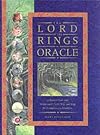
This oracle set is packaged so lavishly, in my opinion, to trick one into buying what is a poorly executed deck of 40 cards, a cheesy plaster of Paris "ring", a stiff and inaccurate map, and a little, awkward hardcover book. The book gives directions for using the ring on its own, the ring with the map, and the ring with the cards...kinda like a pendulum or Ouija board type of thing. Why would you want to use the very symbol of evil to ascertain the mysteries? The book also gives three different meanings for each card, Esoteric, Personal, and Reversed. The esoteric meaning for the Mirror Of Galadriel card has a few disjointed phrases about the Kabbala and some psycho-babble about unresolved personality/sexuality...... The art on the cards is just plain awful and if you love The Lord of the Rings they may actually make you wince with pain as they did me. Gollum, subtitled The Unloved Child looks vaguely like the figure in the famous painting called The Scream. The White Tree looks like a spindly birch that has been crookedly planted. Saruman looks like Sir Walter Raleigh while Gandalf looks like John Malkovich with a bad hangover. There is a card inexplicably titled The Mothers that shows two really ugly beings supposed to be Rose Gamgee and Belladonna Took holding infants. Mount Doom looks utterly unthreatening. The Black Riders look like really tired people, some quite feminine, none malefic, with the red-eyed leader sporting a huge pair of Longhorn steer horns. The show more elves are depicted as ladies in pastel dresses and men in cutaway coats and lacey cravats with Vandyke beards. Treating the great work and artistry of J.R.R.Tolkien in such a fashion is just bad karma. Stay away from this show less
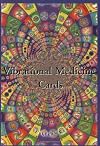
I got this deck of oracle cards and book set from my husband a few years ago at Yule. I like it for the beauty of the cards even though I have to roll my eyes at the extreme New Age claims that are associated with it. The 64 different cards each have a colorful geometric image supposedly acting as a "consciousness lens" that focuses light and subtle energy as vibrations. Got that? The cards contain "seed-forms" that when brought into the consciousness can be used for spiritual healing. Okay. Each card has two words of text that are intended to assist in opening us to the Love-Light, one is a basic meaning or "Old Earth" keyword while the other is a complementarity (is that a word?), a New Earth heightening toward the Love-Light. I want to point out that I realize that there are people out there who will be able to use this book and these lovely cards to meditate and to heal their traumatized cellular memory and to grow ever closer to Love-Light. Just because that sounds like nonsense to me doesn't mean that the virtues this set promises to possess are not true. It just means it hasn't manifested for me. I really think that if you seriously take time with this set you might be able to relax and thus find an inner quiet that can lead to positive things. Each card has a corresponding affirmation and explaination in the book and nothing but positive can come from the contemplation of these symbols and insights. I admit that I do not use this book or these cards for their show more intended purpose. I just look at the cards quietly and allow their beautiful colors and designs and vibrations to wash over me. I do find them relaxing but I don't pursue them intellectually in any way. I don't care about the book but you might. The cards ae pretty. That's enough for me. show less
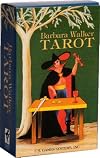
Barbara Walker is an excellent scholar of symbolism and her substantial knowledge is evident in this complex and evocative Tarot deck that she based on her book "The Secrets of Tarot: Origins, History and Symbolism". The paintings for this deck combine traditional Tarot themes with preclassic mythology, influenced by feminine spirituality. The court cards each depict a different Goddess or God, many of them lesser known but all fascinating. This is not a beginner's deck in that its imagery is complex, however it is one of the finest decks in terms of keyword association and in that sense is a very useful teaching/learning tool. The pip cards each bear a keyword that aids greatly in understanding the card's meaning. The keywords and the titles of the cards are printed in five different languages with English being the primary language. The tiny little guide book that accompanies this deck is actually of great use and helps to interpret the symbols specific to this deck unlike so many guide books of this type. Some of the imagery is quite dark but so is some of life. I think this deck teaches more about life and Tarot than most decks. It requires deep reflection and introspection but it is at the same time the perfect vehicle for such work. My only complaint is that the deck is too small. The cards measure 2 1/2" x 3 3/4" and are similar in size to ordinary playing cards, however, the paintings have a wide white border so the actual paintings are only 2" x 2 1/2" and I show more personally have to use a magnifying glass to study them. The art is simple in style but there are many beautiful images. The Eight of Cups, one of my favorites, shows a despairing satyr with his back up against a willow tree as nearby eight cups drain their contents into a lily pond. He does not see that the willow tree is actually a beautiful dryad with flowing hair and a shapely female body. The delineation of these symbols in the little guide book is surprisingly detailed and scholarly. I recommend this deck to any student of the Tarot but especially to pagans and Goddess conscious people. show less
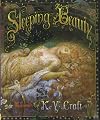
I am sure it will come as no surprise that K.Y. Craft has created another breath-takingly beautiful picture book. This retelling of the story of Sleeping Beauty, Princess Aurora or Brair Rose by Mahlon F. Craft, the artist's husband, is romantic and magical, with courtly language and all the drama one expects from this marvelous old tale. It is a delightful read. The illustrations truly make the book the treasure that it is and include lovely illuminated text as well as full page and double page spreads throughout. Craft's characteristic eye for detail is everywhere evident as is her flair for decorative flora and fauna, costumes, jewelry and interiors. The angry 13th fairy, snubbed without an invitation to the princess's christening who curses the child is painted with a grand touch of maleficence while the 12th fairy whose magical gift saves the baby's life is uncanny and sparkly with a golden power that eminates from the illustrations. The landscapes have a marvelous Renaissance feel and are brooding and deep and magically enhance the story with a certain wildness. A beautiful Alsatian dog with a fairy collar of light around his neck is a secret guardian in several pictures and I suspect this dog may be a very familair friend to the author and illustrator.
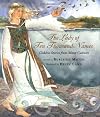
This beautiful book tells the folktales of ten Goddesses from different cultures around the world. The illustrations are truly lovely with colorful detailed costumes and borders on the pages filled with diverse flora from water lilies to hazel branches, to cherry blossoms. You will discover many different faces of the Goddess and young girls in particular will benefit from these positive role model examples. The stories are purely good yarns which have stood the test of time and when combined with the artistry of Helen Cann they sparkle! Invite Isis, Kuan Yin, Cerridwen, Freya, White Buffalo Woman, Oshun, Ama-terasu, Persephone, Demeter, and Hekate in when you enjoy this bountiful treasure of stories.
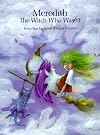
This is a short, sweet story about Meredith, a young witch who really isn't too good at magic spells. Her heart just isn't in it so she isn't careful with the wording of her spells and things never turn out the way she wants them to turn out when she uses magic. The truth is, she really doesn't like magic. She likes to use her imagination and then do things by hand. She enjoys using her creativity. Alas! She is commanded to attend the Annual Assessment of Witchly Powers and she knows that failure to perform will cost her her witchly certification.
She ends up learning a great truth about magic and discovers a lot about her own powers. This is a great lesson about not always doing things the "easy" way, about the joy of working things out yourself, and about the satisfaction that comes from making things with your own two hands. The illustrations are big, bright colored romps through the witchy world of spells, flying brooms and zany, eccentric witches. Each character is a quirky individual and even when Meredith botches her spells, the other witches are supportive. I loved their wild, colorful costumes and their funny, show-off hyjinx. There are so many fun-filled, light-hearted touches in both the writing and illustrations that each page was a new treat. The big Assessment takes place on October 31st so of course this is a good Halloween story, but the message of self-sufficiency is a good one any time. I loved it.
She ends up learning a great truth about magic and discovers a lot about her own powers. This is a great lesson about not always doing things the "easy" way, about the joy of working things out yourself, and about the satisfaction that comes from making things with your own two hands. The illustrations are big, bright colored romps through the witchy world of spells, flying brooms and zany, eccentric witches. Each character is a quirky individual and even when Meredith botches her spells, the other witches are supportive. I loved their wild, colorful costumes and their funny, show-off hyjinx. There are so many fun-filled, light-hearted touches in both the writing and illustrations that each page was a new treat. The big Assessment takes place on October 31st so of course this is a good Halloween story, but the message of self-sufficiency is a good one any time. I loved it.

This is a slim little volume but totally packed with decadent, delicious delicacies, all made of chocolate. The Wellesley Fudge Cake with Hungarian Chocolate Frosting that is pictured on the cover is a personal favorite of mine, a true "company" cake to bake if you want heaps of praise. Try Cream Cheese Brownies, Pot de Creme au Chocolat, Chunky Chocolate Cookies that Tollhouse doesn't want to know about, or the incredible Chocolate Mousse Pie au Rhum. The recipes are clear and easy to follow. Mouth-watering photographs illustrate this book and will definitely encourage you to branch out and try some new recipes that are destined to become favorites. It has a convenient wire spiral binding so it lays flat for ease of use in the kitchen. The various sections are as follows: Chocolate...Gift From the Gods; Cakes; Pies; Cookies; Desserts; Candies; Toppings; Chocolate Know-How. After his friend who started the chocolate mill drowned at sea, Dr. James Baker took over the Dorchester company in Massachusetts and made it a household word in large part due to the excellent quality that he insisted upon. Stemming from these New England roots there are several keepsake recipes in this book from the Boston area. The Wellesley Fudge Cake and Hungarian Chocolate Frosting alone are worth searching this book out.
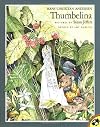
The familiar Hans Christian Andersen story of Thumbelina has received the royal treatment from Susan Jeffers. Her large, lovely pictures make this seem like you are stepping into the story for the first time. Thumbelina is so dainty and sweet that it's no wonder the toad wishes to marry her but poor Thumbelina has a harrowing time escaping from her warty suitor. Share a trumpet vine blossom with Thumbelina, a pair of hummingbirds and a fat bumble bee or take a ride with her on the back of a gallant swallow. This whole story is enchanting from start to finish and the pictures are a delight!
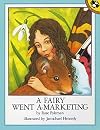
This story of a lovely fairy's marketing day was originally published in 1918. This book's bright detailed pictures are a wonderful glimpse into fairyland. As the fairy indulges herself with thrilling purchases she remembers to treat all creatures with kindness. The fauna and flora in this book are beautifully detailed and the realistic snow-drops, bleeding hearts, trilliums, and thistles make you feel like you too are a-marketing with the fairy.
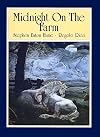
I wish I could give a whole galaxy of stars to this book instead of only five! This book is a perfect bedtime story for a child or for an adult. The book is brimming with gentle, drowsy imagery and you feel softly drawn into the dreamy world of a warm night with moonlit pastures and peaceful, slumbering creatures. The art is EXQUISITE! We are beguiled with starlight and moonbeams, cascading magnolia petals, misty valleys, moonshadows and softly glowing embers in the fireplace. The sleeping farm and the little boy who watches the peaceful night descend complete this enchanting treasure.
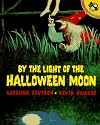
This is a cumulative rhyming story that begins with a child's pair of bare feet dangling peacefully over the side of a bridge in the silvery moonlight of a Halloween night. One by one, various creatures of the night reach forward to grab one of the little, unsuspecting toes, but each attempt, in turn, is botched by the next creature. Black cats, bats, witches, ghouls and other spooky folk take a crack at the toe and the suspense keeps building in a delightfully fun and entertaining way. The Halloween creatures are all so funny that this story really cannot be considered at all scary but the level of suspense takes it out of the realm of the cute and deftly places it in the realm of the spine-tingly! It's high spirited Halloween fun for one and all.
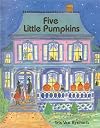
You remember the little song from grade school about the five little pumpkins! This absolutely charming book uses the lyrics of that Halloween song and combines them with full double page illustrations in bright water-colors. The fun and excitement of trick or treat night is captured so well in this book. Join the neighborhood witches, devils, ghosts and a cute black cat on a visit to the skeleton's haunted house! The five little jack-o-lanterns roll along for some good high-spirited fun with nothing scary that might trouble little ones.
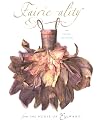
I found this book a few years ago when shopping for Yuletide gifts and promptly chunked down a portion of my Christmas Club stash right then and there on moi! I couldn't resist it and it surprises me that it isn't more well known. It is truly splendid! It's a colorful catalog of fairy fashion that had it been available to me when I was a fairy loving child would have made me feel like I'd died and gone to heaven. The emerging spring flowers outside my window have reminded me of this book and as it's one of my favorites I want to introduce it to you. I hope you'll check it out because words really do not do it justice. It's really not a children's book per se yet it holds a lot of appeal for the childish among us, young and old alike. While its imaginary tone is from the world of make-believe, its artistry is very real indeed. I would have to say this is the most beautiful book I've seen in years.
Forget about Paris or Milan or New York! If you want to know who's burning up the runways with the season's haute couture, look no further! Enjoy this detailed catalog of The Fashion Collection known as Fairie-ality from the innovative and expressive House of Ellwand, designer to the Folk, par excellence.
It is an elegant, beautifully crafted coffee table volume in a gold hard cover edition. It is delightfully witty and captures the fashion world's nuances and idiosyncrasies in good fun and high style. Whimsical water color sketches of a type from fashion's heyday in Vogue show more Magazine introduce the various themes and creations while full dazzling color photographs present exquisitely detailed and meticulously handcrafted high fashion of the fairy realm.
The commentary is breezy and bright and oh, so, in the know! Charming inserts such as a mix and match catalog, removable invitations in envelopes, and advance notices are sprinkled throughout the book. Gatefolds, velum and foil papers add a distinctly lavish touch. The artistry is unparalleled and uses the finest of natural materials, including feathers, seeds, and myriad examples of the exotic floral and other botanical resources joined with a master's eye for flair, movement, and color. Enjoy eclectic designs filled with flash from shoes to hats and everything in between.
Not only are we invited into this exclusive world of fashion but we are made privy to the parties, the cotillions, moonbeam swims, firefly hunting, midnight dancing and all of the biggest names in fairy society. Fashions for ladies and gentlemen grace these pages as do fashions for the entire wedding party from the flower girl to the bride. As the wedding fashions featured in this collection indicate, it is a very chic bride who will walk the bridal runway on the arm of her proud father this season. The detail here and the witty humor can be enjoyed over and over again with each foray seeming to present new delicacies of fashion delight.
The descriptions for the designs are each more tantalizing than the one before as evidenced by this commentary for the astonishing Maid of Honor dress: "Silky crow feathers and a single green parrot feather gather in layers, creating the touch-me velveteen look of the skirt - spellbinding. The bodice and straps are lily leaves; the overbodice, a whispering tracery of skeleton leaf. Sumptuous."
One of the many reasons I love this book is that as a child I spent many dreamy hours making fairy fashions myself along with fairy houses from things I gathered on my treks through meadow and marsh, up hill and down dale. Fairies have been in my life since I was a toddler at my Nana's knee. My Nana was a fashion designer and a talented seamstress and she was Welsh so of course she had an inside track to the fey folk. She spent hours telling me all about the secret lives of fairies and of course she knew endless details about fairy fashion. This book is like the ultimate result of many fashion fantasies I had in my heart back then. It's so much fun to see fairy design come real in photographs! Nana would have been so pleased with this book.
This book is a true work of art from beginning to end and I think most anyone will at least admire it's detail and perfection of execution. Fairy friends will, of course, be enraptured by it. Any creative, artistic, whimsical, young at heart, fashion conscious, costume or dress-up aficionado will treasure it. It's the pick of the crop. Tre chic! show less
Forget about Paris or Milan or New York! If you want to know who's burning up the runways with the season's haute couture, look no further! Enjoy this detailed catalog of The Fashion Collection known as Fairie-ality from the innovative and expressive House of Ellwand, designer to the Folk, par excellence.
It is an elegant, beautifully crafted coffee table volume in a gold hard cover edition. It is delightfully witty and captures the fashion world's nuances and idiosyncrasies in good fun and high style. Whimsical water color sketches of a type from fashion's heyday in Vogue show more Magazine introduce the various themes and creations while full dazzling color photographs present exquisitely detailed and meticulously handcrafted high fashion of the fairy realm.
The commentary is breezy and bright and oh, so, in the know! Charming inserts such as a mix and match catalog, removable invitations in envelopes, and advance notices are sprinkled throughout the book. Gatefolds, velum and foil papers add a distinctly lavish touch. The artistry is unparalleled and uses the finest of natural materials, including feathers, seeds, and myriad examples of the exotic floral and other botanical resources joined with a master's eye for flair, movement, and color. Enjoy eclectic designs filled with flash from shoes to hats and everything in between.
Not only are we invited into this exclusive world of fashion but we are made privy to the parties, the cotillions, moonbeam swims, firefly hunting, midnight dancing and all of the biggest names in fairy society. Fashions for ladies and gentlemen grace these pages as do fashions for the entire wedding party from the flower girl to the bride. As the wedding fashions featured in this collection indicate, it is a very chic bride who will walk the bridal runway on the arm of her proud father this season. The detail here and the witty humor can be enjoyed over and over again with each foray seeming to present new delicacies of fashion delight.
The descriptions for the designs are each more tantalizing than the one before as evidenced by this commentary for the astonishing Maid of Honor dress: "Silky crow feathers and a single green parrot feather gather in layers, creating the touch-me velveteen look of the skirt - spellbinding. The bodice and straps are lily leaves; the overbodice, a whispering tracery of skeleton leaf. Sumptuous."
One of the many reasons I love this book is that as a child I spent many dreamy hours making fairy fashions myself along with fairy houses from things I gathered on my treks through meadow and marsh, up hill and down dale. Fairies have been in my life since I was a toddler at my Nana's knee. My Nana was a fashion designer and a talented seamstress and she was Welsh so of course she had an inside track to the fey folk. She spent hours telling me all about the secret lives of fairies and of course she knew endless details about fairy fashion. This book is like the ultimate result of many fashion fantasies I had in my heart back then. It's so much fun to see fairy design come real in photographs! Nana would have been so pleased with this book.
This book is a true work of art from beginning to end and I think most anyone will at least admire it's detail and perfection of execution. Fairy friends will, of course, be enraptured by it. Any creative, artistic, whimsical, young at heart, fashion conscious, costume or dress-up aficionado will treasure it. It's the pick of the crop. Tre chic! show less
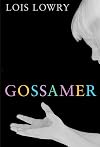
A tale sparkling with imagination that plunges us into darkness then leaves us with hope's glimmer, Gossamer is the type of story I've come to expect from Lois Lowry, the author of the Newbery Medal winning novel,The Giver. Published in 2006, it is a short and spare novelette that the intended readership of 10-13 year olds will whistle through, probably finding it a page-turner experience, as I did. Part of the beauty of Lowry's writing talent is her ability to present weighty subjects with simplicity while offering up a completely fresh setting and complex characters. By enticing us with whimsical imaginary backdrops, she manages to pull the unsuspecting reader into places requiring mature depth of thought and emotion. In that sense her novels are tasty fare for the inquiring minds and hearts of coming of age young people in the intended readership group.
Gossamer is a tale with two interwoven story lines. A fantasy world and its characters are combined with often painfully realistic characters in a real world setting. The first story line concerns beings called Dream Givers, elemental entities who "collect" memories from humans by entering their homes at night while the humans are sleeping and touching items in the homes such as books, blankets, pictures, knickknacks...almost anything, and extracting the memories from the items to later be "bestowed", again through the act of touch, upon the sleepers in the form of dreams. In this way the Dream Givers influence human show more beings in a positive way and help them to remember the important positive aspects of their lives so that they can stay on a path of growth and happiness. In this tale we follow the training period of a very young, talented and compassionate Dream Giver called Littlest One. In the process of her training she and her teacher Thin Elderly are assigned to the home of a lonely retired teacher who has just opened her home to a foster child, eight year old John. John has been the victim of serious child abuse and he is in foster care waiting for his mother who was also a victim of abuse, to get her life together and prepare a safe home for him. The antagonists in the story are an evil type of Dream Giver called Sinisteeds that rather than bestowing dreams, come snarling and reeking into the sleep of humans to inflict nightmares. They seek to twist the minds and hearts of humans and make them lose their way on their life path. They thrive on misery. They pick at and magnify our dark secrets. They keep our pain fresh.
Littlest One is an adorable deceptively simple character filled with sweet, babyish innocence over a spirit of commitment, compassion, childish curiosity and courage. In my opinion, the unfolding of her story is the best part of the book and is why I really liked this book even though I felt it was too painful in other spots to make it what I would call a great book. Her teacher is also an interesting and well-drawn character. The boy, John, is a surly, difficult, smart-mouthed, sometimes cruel child that we can see is well on the road to becoming an abuser himself or a prison inmate or worse. He is drowning in sorrow, fear, pain, anger and loneliness and is closed down emotionally. His mother is fighting an uphill battle to regain control of her painful life and struggles with self-esteem issues, guilt and poverty. The foster care provider is gentle and intelligent and patient and extremely lonely herself. The lives of the Dream Givers and of the humans in the story intertwine and the relationship effects form the outcome.
I loved the fantasy world of the Dream Givers/Sinisteeds. It was refreshingly new and imaginative and like nothing I have encountered before in fantasy literature. While the story's outcome is perhaps predictable the character development was not and I enjoyed that. The human characters were well realized as well. I did not appreciate the depth of the descriptions of the child abuse to which the boy is subjected. They were too graphic, in my opinion, and the same effect could have been achieved with less detail. That would have turned this book from one which I found likable and interesting to one I loved.
I realize part of the book's power is the way in which it draws attention to the tragedy of child abuse and its long term implications but I question the need to illustrate it so starkly in a book that is, in part, essentially a fantasy and one written for children. Maybe I am a bit too sensitive but I would encourage parents to read this book themselves before offering it to their children, simply because the images will stay and they will chip away at innocence in a way that may ultimately be necessary but which you may want to maintain some control over in the lives of your own children. You may choose to be the one who discusses child abuse and evil with your children, rather than leaving it up to Lois Lowry. Maybe you'll want her help...but I would definitely want a hand in the process. It is for this reason that I can recommend this book but with reservations. It is well written, well realized and worthy of attention but I suggest it is best offered with a guiding hand. show less
Gossamer is a tale with two interwoven story lines. A fantasy world and its characters are combined with often painfully realistic characters in a real world setting. The first story line concerns beings called Dream Givers, elemental entities who "collect" memories from humans by entering their homes at night while the humans are sleeping and touching items in the homes such as books, blankets, pictures, knickknacks...almost anything, and extracting the memories from the items to later be "bestowed", again through the act of touch, upon the sleepers in the form of dreams. In this way the Dream Givers influence human show more beings in a positive way and help them to remember the important positive aspects of their lives so that they can stay on a path of growth and happiness. In this tale we follow the training period of a very young, talented and compassionate Dream Giver called Littlest One. In the process of her training she and her teacher Thin Elderly are assigned to the home of a lonely retired teacher who has just opened her home to a foster child, eight year old John. John has been the victim of serious child abuse and he is in foster care waiting for his mother who was also a victim of abuse, to get her life together and prepare a safe home for him. The antagonists in the story are an evil type of Dream Giver called Sinisteeds that rather than bestowing dreams, come snarling and reeking into the sleep of humans to inflict nightmares. They seek to twist the minds and hearts of humans and make them lose their way on their life path. They thrive on misery. They pick at and magnify our dark secrets. They keep our pain fresh.
Littlest One is an adorable deceptively simple character filled with sweet, babyish innocence over a spirit of commitment, compassion, childish curiosity and courage. In my opinion, the unfolding of her story is the best part of the book and is why I really liked this book even though I felt it was too painful in other spots to make it what I would call a great book. Her teacher is also an interesting and well-drawn character. The boy, John, is a surly, difficult, smart-mouthed, sometimes cruel child that we can see is well on the road to becoming an abuser himself or a prison inmate or worse. He is drowning in sorrow, fear, pain, anger and loneliness and is closed down emotionally. His mother is fighting an uphill battle to regain control of her painful life and struggles with self-esteem issues, guilt and poverty. The foster care provider is gentle and intelligent and patient and extremely lonely herself. The lives of the Dream Givers and of the humans in the story intertwine and the relationship effects form the outcome.
I loved the fantasy world of the Dream Givers/Sinisteeds. It was refreshingly new and imaginative and like nothing I have encountered before in fantasy literature. While the story's outcome is perhaps predictable the character development was not and I enjoyed that. The human characters were well realized as well. I did not appreciate the depth of the descriptions of the child abuse to which the boy is subjected. They were too graphic, in my opinion, and the same effect could have been achieved with less detail. That would have turned this book from one which I found likable and interesting to one I loved.
I realize part of the book's power is the way in which it draws attention to the tragedy of child abuse and its long term implications but I question the need to illustrate it so starkly in a book that is, in part, essentially a fantasy and one written for children. Maybe I am a bit too sensitive but I would encourage parents to read this book themselves before offering it to their children, simply because the images will stay and they will chip away at innocence in a way that may ultimately be necessary but which you may want to maintain some control over in the lives of your own children. You may choose to be the one who discusses child abuse and evil with your children, rather than leaving it up to Lois Lowry. Maybe you'll want her help...but I would definitely want a hand in the process. It is for this reason that I can recommend this book but with reservations. It is well written, well realized and worthy of attention but I suggest it is best offered with a guiding hand. show less
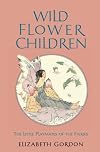
Originally published in 1918, this beautiful picture book is filled with sweet little flower children that look a lot like fairies but of course they are only "playmates of the fairies" so they don't always have wings. They are dressed in the most charming Victorian costumes including lace petticoats, bonnets, pinnafores, spats, and waistcoats. Each one represents a wild flower, rendered in satisfying detail by this talented illustrator and accompanied by a nostalgic little poem. The flowers are identified by their Latin names as well as their often quaint and colorful folk names such as Frostweed, Virgin's Bower, Pearly Everlasting, Baby Blue Eyes and Gold Thread.
I love this book. The other three by the same writer, Bird Children, Flower Children, and Mother Earth's Children, are all similar but the Bird Children one is a bit creepy in spots. See my review on it if you are curious.
I love this book. The other three by the same writer, Bird Children, Flower Children, and Mother Earth's Children, are all similar but the Bird Children one is a bit creepy in spots. See my review on it if you are curious.
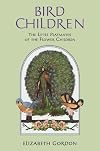
Published in 1912 this quaint little book of nature sprites is one of four by Elizabeth Gordon and one of three illustrated by M.T. Ross. (The 4th one, "Wild Flower Children: The Little Playmates of the Fairies" was illustrated by Janet Laura Scott and is by far the best.) This book features charming couplets of rhyme about various birds, including many that we don't see quite so much of these days like the Golden Pheasant, Indigo Bunting, Kingbird or the Redstart. The book is definitely worth seeing because it is so quaint and it once spoke to a sweet and innocent pre-Nintendo audience that probably adored the little bird beings it depicts. I loved the whimsy and delicate details of Gordon's flower sprites but somehow the concept of a flower-human hybrid just doesn't transfer well to the bird kingdom. The cute little children's faces sticking out of a bird's body is just a little bit creepy. The Guinea Hens, for example have a normal bird's beak and black button eyes, but underneath there is a human face and sticking out from the underside of the wings are human arms. It just doesn't work the way a Daisy bonnet does. As a collector's book this may be desirable but if you must choose, I suggest you go with one of the three plant themes and leave the birds, well...for the birds.
This beautiful little book should be a part of every child's Yuletide celebration. The text consists of the words to the Old Welsh traditional carol, "Deck the Hall" and as such comes equipped with plenty of merry holiday ambiance and the illustrations of Sylvia Long make the carol into a magical Yuletide treasure. A loving family of rabbits celebrates the season together with Mama, Papa and their little son hanging the yew garlands, the colored lights,and ornaments (including the special carrot ornament of course!) and getting all dressed up in their gay apparel for a worship service complete with carolling. They cuddle together before the blazing Yule fire, enjoy hot steaming mugs of hot cocoa and have fun cutting out cookies together. The little boy gets flour on the red flannel sleeves of his Dr. Dentons as he carefully works the star cookie cutter and Mama looks on encouragingly. The family strings popcorn, cranberries and nuts to trim the pine tree outdoors for the birds and tiny wreaths of suet and seeds are tied on with crimson ribbons. Bundled up in their soft warm jammies the family reads a Yuletide story before Mama and Papa tuck their little son into bed beneath a charming patchwork quilt. They stand snuggled together in the doorway, looking lovingly at their beautiful sleeping boy. Excitment abounds as the presents are opened in the morning and a fun-filled day of ice-skating, sledding and making snow angels begins. Fa-la-la-la-la-la-la-la-la!
I really love show more this little jewel of a book. show less
I really love show more this little jewel of a book. show less
Right from the start this book is one of those that just feels good in the hand. A thin aesthetically pleasing little volume it has a red satin ribbon to mark your place and a brightly colored huge red heart invites you inside from the front cover. The text is a love poem by the great Carl Sandburg that has never before been published. The pictures are by Anita Lobel and they are filled with glad, warm-hearted images and colors.
A young man goes to "where the aurora borealises grow" and brings home a beautiful speciman for his true love's birthday. The enchanting swirls of color actually do quite well at depicting the essence of the aurora borealis and its mysterious, magical light show. I know, because the northern lights were swirling in the skies over my home just a few nights ago and Lobel captured the feeling just perfectly.
We follow the young man's struggle to find and bring the aurora borealis to his love and we believe that his feelings are so strong that he really can do anything for his love that he sets his heart on doing. He offers to bring her more aurora borealises or even a rainbow if she would like. This poetical man is letting her know that he will always work hard for her and struggle through life with her which is something a young woman may hope for, but this clever man has found a beautiful and romantic way to say it. His sensitivity to her need for beauty and abundance is the endearing point of the colorful promises he makes in this story.
A young man goes to "where the aurora borealises grow" and brings home a beautiful speciman for his true love's birthday. The enchanting swirls of color actually do quite well at depicting the essence of the aurora borealis and its mysterious, magical light show. I know, because the northern lights were swirling in the skies over my home just a few nights ago and Lobel captured the feeling just perfectly.
We follow the young man's struggle to find and bring the aurora borealis to his love and we believe that his feelings are so strong that he really can do anything for his love that he sets his heart on doing. He offers to bring her more aurora borealises or even a rainbow if she would like. This poetical man is letting her know that he will always work hard for her and struggle through life with her which is something a young woman may hope for, but this clever man has found a beautiful and romantic way to say it. His sensitivity to her need for beauty and abundance is the endearing point of the colorful promises he makes in this story.
Before she wrote her "little house" books,Laura Ingalls Wilder wrote some wonderful poems about fairies and we are fortunate that Stephen W. Hines compiled them and Richard Hull contributed colorful, detailed illustrations just full of whimsy, magic and fun.
This charming litle volume consists of a short adaptation of an essay on fairies by Wilder, a short bio on Wilder by Hines and five beautifully illustrated fairy poems by Wilder.
Written in 1915 these quaint fairy stories are sure to delight young and old alike as they show us the daily lives and activities of the wee folk. You will see lady bugs and dragon flies, crickets and caterpillars, toads, birds, butterflies and flowers galore, but best of all you will see lots of fairies in flowery long skirts and pinafores sporting colorful wings and huge mischievous eyes. The flowers are right out of a turn of the century cottage garden including poppies, four o'clocks, forget-me-nots, tiger lilies and pinks.
I liked the book for its light-hearted, nostalgic look at Fairyland and for showing me another side to an already beloved writer.
This charming litle volume consists of a short adaptation of an essay on fairies by Wilder, a short bio on Wilder by Hines and five beautifully illustrated fairy poems by Wilder.
Written in 1915 these quaint fairy stories are sure to delight young and old alike as they show us the daily lives and activities of the wee folk. You will see lady bugs and dragon flies, crickets and caterpillars, toads, birds, butterflies and flowers galore, but best of all you will see lots of fairies in flowery long skirts and pinafores sporting colorful wings and huge mischievous eyes. The flowers are right out of a turn of the century cottage garden including poppies, four o'clocks, forget-me-nots, tiger lilies and pinks.
I liked the book for its light-hearted, nostalgic look at Fairyland and for showing me another side to an already beloved writer.
I love everything about this terrific little book. It has an exciting adventure-filled plot, stout-hearted little heroes and scary adversaries. It has a quest filled with peril and great hope. There are just barely possible tasks to be fulfilled some sorrow and some mystery and some happiness, too. The illustrations are very lovely and filled with details that take you to the heart of this story of the last five survivors of an ancient Peruvian race of tiny folk who must journey to find a new home knowing full well that it is prophesied that only three will survive the voyage. They set off across the vast sea, afloat in an old earthen poppykettle and you will eagerly rock with them upon the waves through many an astonishing adventure. Children will love this and most likely so will any adult with a gypsy soul and a child's heart.
This book was written by Shirley Jackson whose spooky short story, "The Lottery", you might have had to read in High School.Originally published in 1963, it's back now with beautiful new illustrations filled with color and dreams from the lively imagination of childhood.
What if a magician with stars on his hat suddenly came up to you and gave you 9 wishes? Would you wish to live forever, or for wealth or for something much more wonderful like "a squirrel holding a nut that opens and inside is a Christmas tree." The wishes our lucky girl chooses are delightful and the illustrations of them are pure magic. The ending is the most beautiful part of a very special book.
What if a magician with stars on his hat suddenly came up to you and gave you 9 wishes? Would you wish to live forever, or for wealth or for something much more wonderful like "a squirrel holding a nut that opens and inside is a Christmas tree." The wishes our lucky girl chooses are delightful and the illustrations of them are pure magic. The ending is the most beautiful part of a very special book.