

Edward F. Edinger (1922–1998)
Author of Ego and Archetype
About the Author
Edward F. Edinger, M.D., is a founding member of the C. G. Jung Foundation in New York City. He is the author of numerous other books, including Ego and Archetype: Individuation and the Religious Function of the Psyche.
Series
Works by Edward F. Edinger
Encounter With the Self: A Jungian Commentary on William Blake's Illustrations of the Book of Job (1986) 63 copies
Archetype of the Apocalypse: Divine Vengeance, Terrorism, and the End of the World (1999) 61 copies, 1 review
The Psyche in Antiquity: Gnosticism and Early Christianity : From Paul of Tarsus to Augustine (1999) 36 copies
The New God-Image: A Study of Jungs Key Letters Concerning the Evolution of the Western God-Image (1996) 32 copies
The New God Image: A Study of Jung's Key Letters Concerning The Evolution o the Western God Image (2018) 8 copies
Ego e Arquetipo - Uma sintese fascinante dos conceitos psicologicos fundamentais de Jung (Em Portugues do Brasil) (2021) 7 copies
Bíblia e psique 1 copy
O Arquétipo Cristão 1 copy
Transformations of Libido 1 copy
La psique en la antigüedad 1 copy
[Ego and Archetype (C. G. Jung Foundation Books Series)] [By: Edinger, Edward F.] [August, 1992] (1991) 1 copy
A CRIAÇAO DA CONSCIENCIA 1 copy
The psyche in antiquity 1 copy
Conferencias Sobre Aion,Las 1 copy
Associated Works
Tagged
Common Knowledge
- Legal name
- Edinger, Edward Ferdinand
- Birthdate
- 1922-12-13
- Date of death
- 1998-07-17
- Gender
- male
- Education
- Yale University (MD|1946)
Indiana University (BA|chemistry) - Occupations
- Jungian analyst
psychiatrist - Organizations
- C.G. Jung Foundation
C.G. Jung Institute - Nationality
- USA
- Birthplace
- Cedar Rapids, Iowa, USA
- Place of death
- Los Angeles, California, USA
- Associated Place (for map)
- USA
Members
Reviews
Archetype of the Apocalypse: Divine Vengeance, Terrorism, and the End of the World by Edward F. Edinger

With popular culture and media constantly promoting imminent doom - from preppers concerned about zombies and civil unrest, to environmentalists fretting over imminent climate catastrophes, to Christian rapturists - this book is highly psychologically relevant today. It does however, focus on the Judaeo-Christian mythology of apocalypse in its analysis and it is not really intended for those unfamiliar with Jungian psychology.

I found this book somewhat useful as a point of departure while reading widely on Jung's theory of the collective unconscious. Edinger believes that human beings can achieve completeness only through a conscious merging of the ego and the unconscious, and in the third chapter of the book, "Encounters with the Self," he explores the role of the collective in the formation of identity.
He argues that "modern man" desperately needs to re-establish a connection with the primitive psyche, but show more this re-establishment of primitiveness must manifest itself in the individual's relationship with the conscious inner world. To be primitive in relation to the outer world is to be "superstitious." I think this is an interesting distinction in some ways, but since this isn't really my area of interest, I might be inclined to suggest skipping straight to the Jung. show less
He argues that "modern man" desperately needs to re-establish a connection with the primitive psyche, but show more this re-establishment of primitiveness must manifest itself in the individual's relationship with the conscious inner world. To be primitive in relation to the outer world is to be "superstitious." I think this is an interesting distinction in some ways, but since this isn't really my area of interest, I might be inclined to suggest skipping straight to the Jung. show less
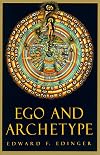
A medical psychiatrist and founding member of the Jung Foundation explores a pivotal part of analytical psychology: encountering the self through individuation. This book is about the individual’s journey to psychological wholeness, known in analytical psychology as the process of individuation. Edward Edinger traces the stages in this process and relates them to the search for meaning through encounters with symbolism in religion, myth, dreams, and art. For contemporary men and women, show more Edinger believes, the encounter with the self is equivalent to the discovery of God. The result of the dialogue between the ego and the archetypal image of God is an experience that dramatically changes the individual’s worldview and makes possible a new and more meaningful way of life.
Source: Shambala's 1992 Edition show less
Source: Shambala's 1992 Edition show less

This is a thorough discussion of the ego, its relationship to the Self and the archetypes normally associated with religious experience and myth. It focuses heavily on the symbolism of alchemy and is not intended for someone unfamiliar with Jung and the symbolic importance of alchemy to the unconscious.
Lists
You May Also Like


Associated Authors
Statistics
- Works
- 61
- Also by
- 1
- Members
- 1,803
- Popularity
- #14,278
- Rating
- 4.0
- Reviews
- 9
- ISBNs
- 66
- Languages
- 6
- Favorited
- 2