
Robert A. Johnson (1) (1921–2018)
Author of Inner Work: Using Dreams and Active Imagination for Personal Growth
For other authors named Robert A. Johnson, see the disambiguation page.
About the Author
Robert A. Johnson is a noted lecturer and Jungian analyst in private practice in San Diego, California
Works by Robert A. Johnson
The Fisher King and the Handless Maiden: Understanding the Wounded Feeling Function in Masculine and Feminine Psychology (1993) 287 copies, 2 reviews
Living Your Unlived Life: Coping with Unrealized Dreams and Fulfilling Your Purpose in the...Second Half of Life (2007) 137 copies
Lying with the Heavenly Woman: Understanding and Integrating the Feminine Archetypes in Men's Lives (1994) 129 copies
Associated Works
Tagged
Common Knowledge
- Canonical name
- Johnson, Robert A.
- Legal name
- Johnson, Robert Alex
- Birthdate
- 1921-05-26
- Date of death
- 2018-09-12
- Gender
- male
- Education
- University of Oregon
Stanford University
C. G. Jung Institute, Zurich - Occupations
- Episcopal monk
Jungian analyst - Organizations
- St. Gregory's Abbey, Three Rivers (Michigan)
- Relationships
- Luke, Helen (colleague)
- Short biography
- Robert A. Johnson is among the most influential interpreters of Jungian psychology of our time. One of the few living Jungians who studied with Jung himself, Johnson's term "inner work" has entered the spiritual vocabulary of our era. In 2002 he received an honorary doctorate in humanities and a lifetime achievement award from Pacifica Graduate Institute. He lives in San Diego. [from Living Your Unlived Life (2007) and Wikipedia.org]
- Nationality
- USA
- Birthplace
- Portland, Oregon, USA
- Places of residence
- San Diego, California, USA
- Place of death
- San Diego, California, USA
- Associated Place (for map)
- California, USA
Members
Reviews
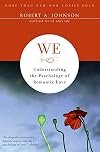
I expect everyone who has been in romantic relationships has experienced that boom-and-bust cycle of passion, aka “the honeymoon phase.” The flame burns extremely brightly in the initial weeks or months or years: sex all the time, you spend most of your days dreaming about the other person, it feels like something deep and meaningful has finally entered your life; on the other hand, every slight is charged with the greatest despair, you are plunged into confusions and uncertainties, show more maybe you neglect your other relationships. Slowly (but not slowly enough to escape notice), the passion drops off: less sex, your partner’s plain humanness becomes more evident, the incredible highs and lows of feeling begin to flatten. You start noticing other people, you consider what they might have to offer that you partner doesn’t, you feel whether your partner isn’t really “the one,” but who knows, maybe should you just stick it out, maybe this is a rough spot, maybe the old passion is just hiding around the corner, at the end some long talk you two need to have. At this point you either end the relationship (conveniently, you have been reserving the perfect excuse: you aren’t totally sexual compatible with them; one of you moved and you couldn’t do long-distance; you are just better as friends in the long-run, you don’t share the same hobbies or interests, etc.), or you swallow your dissatisfaction and try to tough it out.
To me and possibly to you (who?), this is a familiar cycle. I have gone through it in every romantic relationship I have ever been in, playing both the roles of the passionate and the despairing. I have harbored my secret exits for when my partner stopped exciting me, and my partners have taken their own exits when I stopped exciting them. This cyclical drama has been the center of probably the greatest amount of mental energy I have invested into anything, ever. Over and over, the pattern holds.
To Robert A. Johnson, this is the basic condition of Western man with regard to romantic love.
There are a few main points I took from this book.
(1) Our Western society—stripped of all other outlets for spiritual life—has invested all of its spiritual energy into romantic love, hoping to live out the entirety of the soul in what it projects onto romantic partners.
(2) Romantic love is not synonymous with human love; in fact they are closer to mutually exclusive concepts. Romantic love has taken the form of the passion I wrote about above: being “in love” rather than just “loving” someone, the selfish use(!) of another person to live out one’s own unexpressed soul. This is a delusion—the process of projecting onto another person the contents of one’s own soul, expecting them to match up to what one lacks in oneself, praising them only so far as they correlate to that ideal. Human love, on the other hand, is a recognition of another person for their simple, obvious humanity, totally unrelated to whatever is unexpressed in one’s own soul. It is a warm, friendly affection and loyalty toward the person they really are, not as we want them to be.
(3) We instinctively think that romantic love—for all its delusions and pains, even if it involves using another person for one’s own passions—is much more important than human love, because we know, more than we know almost anything else, how important it feels. We feel we can find human love in any corner of life, if we are willing to look for it, but romantic love is rare. It is bizarre, perspective-shifting, imbued with intense meaning and depth; it feels like nothing we (or else anyone) have ever felt. Johnson believes this knowledge we all seem have of romantic love is a misrecognition. Rather, he believes that these incredible depths we associate with romantic love are actually to do with the soul, since we all reflexively project our souls onto our partners in our romantic loves. It is not romantic love that is so important, but the exploration and expression of the inner, unknown psyche—the soul.
(4) We in the West cannot simply choose to stick to human love, to stop projecting in romantic love. The missing passion will gnaw away at us until we address it. Some people find expression of the soul in collective organized religion, some in contemplative meditation, some in yoga, some in concentrated creativity, etc. The important thing is that we cannot leave the soul unexplored, or it will inevitably seep out in projection. We must come to it on its own terms, and in doing so, work toward a more total understanding and expression of our selves.
Couple of more technical review notes: this book’s conclusion was a little boring. Maybe it was just me, but I was getting sleepy near the end there. Another thing, probably 20 pages could have been cut from this thing simply by eliminating rephrasings. Johnson has a habit here of saying something, and then saying it again. Sometimes it’s helpful for illuminating difficult concepts; sometimes it feels redundant.
But overall I think this was wonderful and revelatory. I do not need to play out the same old scenes for all of my life. Also, I think this Jungian approach to psychology is the most real-feeling psychology I have ever come across. It actually seems to map onto my life, inner and outer, without stretching its premises too far. I will have to check out some more stuff. Ok bye. show less
To me and possibly to you (who?), this is a familiar cycle. I have gone through it in every romantic relationship I have ever been in, playing both the roles of the passionate and the despairing. I have harbored my secret exits for when my partner stopped exciting me, and my partners have taken their own exits when I stopped exciting them. This cyclical drama has been the center of probably the greatest amount of mental energy I have invested into anything, ever. Over and over, the pattern holds.
To Robert A. Johnson, this is the basic condition of Western man with regard to romantic love.
There are a few main points I took from this book.
(1) Our Western society—stripped of all other outlets for spiritual life—has invested all of its spiritual energy into romantic love, hoping to live out the entirety of the soul in what it projects onto romantic partners.
(2) Romantic love is not synonymous with human love; in fact they are closer to mutually exclusive concepts. Romantic love has taken the form of the passion I wrote about above: being “in love” rather than just “loving” someone, the selfish use(!) of another person to live out one’s own unexpressed soul. This is a delusion—the process of projecting onto another person the contents of one’s own soul, expecting them to match up to what one lacks in oneself, praising them only so far as they correlate to that ideal. Human love, on the other hand, is a recognition of another person for their simple, obvious humanity, totally unrelated to whatever is unexpressed in one’s own soul. It is a warm, friendly affection and loyalty toward the person they really are, not as we want them to be.
(3) We instinctively think that romantic love—for all its delusions and pains, even if it involves using another person for one’s own passions—is much more important than human love, because we know, more than we know almost anything else, how important it feels. We feel we can find human love in any corner of life, if we are willing to look for it, but romantic love is rare. It is bizarre, perspective-shifting, imbued with intense meaning and depth; it feels like nothing we (or else anyone) have ever felt. Johnson believes this knowledge we all seem have of romantic love is a misrecognition. Rather, he believes that these incredible depths we associate with romantic love are actually to do with the soul, since we all reflexively project our souls onto our partners in our romantic loves. It is not romantic love that is so important, but the exploration and expression of the inner, unknown psyche—the soul.
(4) We in the West cannot simply choose to stick to human love, to stop projecting in romantic love. The missing passion will gnaw away at us until we address it. Some people find expression of the soul in collective organized religion, some in contemplative meditation, some in yoga, some in concentrated creativity, etc. The important thing is that we cannot leave the soul unexplored, or it will inevitably seep out in projection. We must come to it on its own terms, and in doing so, work toward a more total understanding and expression of our selves.
Couple of more technical review notes: this book’s conclusion was a little boring. Maybe it was just me, but I was getting sleepy near the end there. Another thing, probably 20 pages could have been cut from this thing simply by eliminating rephrasings. Johnson has a habit here of saying something, and then saying it again. Sometimes it’s helpful for illuminating difficult concepts; sometimes it feels redundant.
But overall I think this was wonderful and revelatory. I do not need to play out the same old scenes for all of my life. Also, I think this Jungian approach to psychology is the most real-feeling psychology I have ever come across. It actually seems to map onto my life, inner and outer, without stretching its premises too far. I will have to check out some more stuff. Ok bye. show less
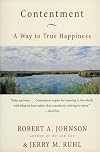
I've had this book on the shelf for a while and turned to it hoping for an antidote to the February doldrums. It's quite a short volume, easy to finish in the space of an hour or two, but provides good food for thought.
Johnson is a Jungian analyst and so uses story as a jumping-off point for his discussion of contentment - in this case, the story of King Lear, a tale of 'distorted expectations and painful illusions.' Examining just some of the interactions between the characters in the play, show more Johnson and Ruhl describe how psychological projection, artificial inflation of the ego, and obsessive attempts to control life lead to discontentment. The final section of the book reviews the 'gifts of contentment.' There are some simple exercises here to help the reader listen to the inner voice of the heart, but the description of the gifts is mostly comprised of folk tales and anecdotes that convey the wisdom of contentment.
Readers of strongly anti-religious bias may object to Johnson and Ruhl's reference to the inner 'divine voice' and discussion of the importance of connecting to a larger whole:
Can atheists make use of applied Jungian psychology? Perhaps only strict materialists would find the above passage difficult to relate to - or perhaps not, as the fabric of society and culture provide many 'wholes' for the self to identify with.
Although a short book, this is one that rewards careful reading and can provide food for thought for many months, if not a lifetime. show less
Johnson is a Jungian analyst and so uses story as a jumping-off point for his discussion of contentment - in this case, the story of King Lear, a tale of 'distorted expectations and painful illusions.' Examining just some of the interactions between the characters in the play, show more Johnson and Ruhl describe how psychological projection, artificial inflation of the ego, and obsessive attempts to control life lead to discontentment. The final section of the book reviews the 'gifts of contentment.' There are some simple exercises here to help the reader listen to the inner voice of the heart, but the description of the gifts is mostly comprised of folk tales and anecdotes that convey the wisdom of contentment.
Readers of strongly anti-religious bias may object to Johnson and Ruhl's reference to the inner 'divine voice' and discussion of the importance of connecting to a larger whole:
The original meaning of the word 'religion' is to rerelate or reconnect - to put back together again, heal the wounds of separation, and to make whole. Contentment grows, not out of pursuing self-interest, but from our capacity to connect to a larger whole - family, social groups, nature, and, ultimately, God. Some people have trouble with the word 'God,' but all that is really required here is a willingness to acknowledge a power greater than yourself.
Can atheists make use of applied Jungian psychology? Perhaps only strict materialists would find the above passage difficult to relate to - or perhaps not, as the fabric of society and culture provide many 'wholes' for the self to identify with.
Although a short book, this is one that rewards careful reading and can provide food for thought for many months, if not a lifetime. show less

It's been a long time since I've read this book and I remember having mixed feelings about it. On one hand, I was severely disappointed that the book focused on a woman's existence in respect to a man (Psyche's marriage) instead of a woman as herself, without being focused on as the "other"... the concept of marriage being like the death of a woman's autonomy, however, has stuck with me still. 2.5 stars for an interesting analysis of the story of Psyche and Eros.
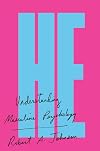
The advice is good. I don't like it when the silly Jungians and Fruedians start using jargon but this book was a surprisingly good intro to Jungian thinking, a great example of analyses of the collective (un)consciousness as well as a reminder; happiness is like love. If you only chase it mono-directionally you'll scare away the person and they'll pepper spray you. If you are sated/whole without it then it'll enter into your life itself.
By the trident, bless the internet for being able to show more learn such wisdom early! show less
By the trident, bless the internet for being able to show more learn such wisdom early! show less
Lists
Awards

You May Also Like


Associated Authors
Statistics
- Works
- 25
- Also by
- 2
- Members
- 5,241
- Popularity
- #4,755
- Rating
- 3.9
- Reviews
- 29
- ISBNs
- 160
- Languages
- 14
- Favorited
- 3