
Connie Zweig
Author of Meeting the Shadow: The Hidden Power of the Dark Side of Human Nature
About the Author
Connie Zweig, Ph.D., is a Jungian-oriented therapist and non-denominational minister in Los Angeles
Works by Connie Zweig
Meeting the Shadow: The Hidden Power of the Dark Side of Human Nature (1991) — Editor — 528 copies, 4 reviews
Meeting the Shadow on the Spiritual Path: The Dance of Darkness and Light in Our Search for Awakening (2023) 11 copies
Associated Works
Tagged
Common Knowledge
- Gender
- female
Members
Reviews
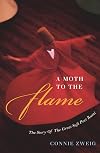
READING RUMI AFTER SEPTEMBER 11
“The lovers crawl in and out of your alley,
They bathe in drips of blood; and not finding you, they give up and leave.
I am forever stationed at your door like the earth,
While others come and go like the wind.”
––Jalalludin Rumi
I first fell in love with the poetry of Jelaluddin Rumi some 18 years ago when the unparalleled lyrical grace, philosophical brilliance, and spiritual daring of his work took me completely by surprise. The impact of its soulful show more beauty and the depth of its profound humanity were so intense that they prompted me to spontaneously compose poetry without being aware I had done so––until later reading the compositions in my notebook and wondering how they had gotten there. Writing without realizing I had been writing was no small matter to me, so I wrote Coleman Barks, one of the renowned translators of Rumi’s work, to ask what he thought about it.
Barks was kind enough to call me and said he was aware of many instances where people with a deep passion for Rumi’s poetry found themselves spontaneously composing, reciting, or singing poetry. That knowledge, coming from the man whose translations helped make Rumi a bestselling poet in the United States, made me feel better about my own experience and forever defined the sense of blessed enchantment that I’ve come to associate with all things related to Rumi. Consequently, I couldn’t help expecting and yearning for some semblance of that enchantment as I read the novel A MOTH TO THE FLAME, THE LIFE OF THE SUFI POET RUMI, by Ph.D. Connie Zweig.
From the first page to the last, there is much to admire in Zweig’s amazing recreation of the places, people, and events that shaped the life and work of Rumi. The author skillfully brings to life the everyday colors, activities, and diverse religious customs of the Middle East in the thirteenth century. She also––having been for 30 years a student of Hinduism, Buddhism, and Sufism––proves more than a little adept at describing various states of psychological and spiritual consciousness.
A Moth to the Flame begins as Rumi’s father, the spiritual leader Bahaoddin Velad, is dying. The future author of the massive and now classic book of world literature, the Mathnawi, is left to face life alone in Konya, where threats of war and invasion increase daily. As Rumi takes on the mantle of leadership and enters into marriage and fatherhood, Zweig exercises her privilege as author to make readers privy to his thoughts and most intimate moments. Those who prefer their spiritual heroes presented in their basic humanity may nod approvingly at the portrayal of Rumi’s consummation of his two marriages while those who empower the grace of their own spirituality with that gleaned from his may feel differently. In one sense, these brief scenes––in which Rumi experiences both disappointment and erotic intoxication––appear crucial to illustrating the contrast between the nature of carnal desire and the elevated spiritual consciousness towards which Rumi was evolving. In another, they do not, and become even more questionable when the sexual focus is place on his wife Kira’s fantasies regarding her mystically preoccupied husband.
It is difficult sometimes to determine whether A Moth to the Flame is intended as a celebration of Rumi’s life, as a feminist critique of it, or simply a balanced account presented in the form of fiction. Much of the book’s substance is a matter of historical record while much of it is a matter of interpretation of that record. By nearly every account, the Rumi now famed for his boundless defense and espousal of life as a manifestation of divine love, would be unknown to the world had it not been for a spiritual transformation triggered by his meeting, and subsequent friendship with, the wandering dervish known as Shams of Tabriz. That fact is a dominant theme in A Moth to the Flame as well. But it is often difficult to understand exactly why or how this is so when the overwhelming impression of both Rumi and Shams in these pages is that of two men whose esoteric obsessions caused devastating––even fatal––psychological harm to those who loved them, particularly the women in their lives.
Consequently, we note with stunned sorrow the forced marriage of Rumi’s young daughter Kimiya to the much older Shams; and the painful desire-filled loneliness that Rumi’s wife Kira suffers while her husband engages, seemingly to the exclusion of everything else, in sacred conversations with Shams. Readers even find themselves empathizing with Rumi’s son Aloeddin’s stinging sense of rejection when his relationship with his father appears to be obliterated by the presence of Shams in their lives. Eventually that rejection leads to Shams’ murder.
As plausible as these scenarios may be, they leave the reader wondering about the majesty of that Shams who was described as “one of the poles of the age,” and who was not only resented and feared as he is in A Moth to the Flame, but who was adored for his love and knowledge of God. Likewise, the novel gives us a true enough account of Shams’ initial departure from Konya after first meeting Rumi, but says nothing of the legendary celebration, in which people in the streets spontaneously recited and sang poetry, upon his return. We learn instead about guards who are executed because they lied about having killed Shams. The degree to which Zweig’s work as a Jungian therapist and an explorer of “the shadow side of spiritual and religious life” influenced the substance of her narrative is worth readers’ consideration.
Possibly the most inspiring scene in A Moth to the Flame comes at the end when once again Mongols and crusaders threaten to conquer Konya. Rumi, after a lifetime of devotion and sacrifice, experiences this revelation: “I am a lover of God, and those who follow me, Muslims, Christians, or Jews, we are a nation of lovers. Our religions divide us, but our yearning for God, our himma, unites us, whether we are Muslims longing to join Allah, Christians longing to be embraced by Christ, or Jews yearning for the Messiah.” He decides to “make jihad in my own way,” which means standing, like Moses, rooted unshakably in his faith and watching as Divinity literally fights and wins his battles for him.
One does not need to be a U.N. ambassador or professor of religious studies to note the importance of Rumi’s understanding and application of the concept of jihad. For him, it meant battling the “nafs,” or weaker worldly qualities within oneself in order to achieve a greater sense of unity and co-creativity with Divinity as opposed to launching a supposed “holy war” against those who do not share one’s religious beliefs. Achieving this divine union relegated all else to secondary importance. This point is significant not only for those duped into believing that blowing up their selves and others is the ultimate act of faith. It is also important for those readers who, following the destruction of September 11, 2001, needlessly questioned their passion for writings by Rumi. Among the stronger aspects of Zweig’s novel is its demonstration that Rumi’s literary and spiritual voice is one that champions unity through love over domination through coercion.
Despite any criticisms offered above, just as it states on the book’s back cover, A Moth to the Flame is clearly presented “in the tradition of Siddhartha and The Last Temptation of Christ” as “a mythic story of the human soul.” This distinction is necessary because while the book is categorized as fiction, the subtitle reads “The Life of the Sufi Poet Rumi,” which could lead some to interpret it as historical biography. The more accomplished volume along those lines remains Franklin D. Lewis’ “Rumi, Past and Present, East and West, the Life, Teachings and Poetry of Jalâl al-Din Rumi.” Nevertheless, A Moth to the Flame does contain a very useful appendix timeline of events pertaining to Rumi’s life. Moreover, translations of Rumi’s poetry by Jonathan Star and Shahram Shiva, utilized throughout, help make the novel as a whole an exceptional work of literary art well worth reading and cherishing.
By Author-Poet Aberjhani
Creative Thinkers International
© 10/7/07 show less
“The lovers crawl in and out of your alley,
They bathe in drips of blood; and not finding you, they give up and leave.
I am forever stationed at your door like the earth,
While others come and go like the wind.”
––Jalalludin Rumi
I first fell in love with the poetry of Jelaluddin Rumi some 18 years ago when the unparalleled lyrical grace, philosophical brilliance, and spiritual daring of his work took me completely by surprise. The impact of its soulful show more beauty and the depth of its profound humanity were so intense that they prompted me to spontaneously compose poetry without being aware I had done so––until later reading the compositions in my notebook and wondering how they had gotten there. Writing without realizing I had been writing was no small matter to me, so I wrote Coleman Barks, one of the renowned translators of Rumi’s work, to ask what he thought about it.
Barks was kind enough to call me and said he was aware of many instances where people with a deep passion for Rumi’s poetry found themselves spontaneously composing, reciting, or singing poetry. That knowledge, coming from the man whose translations helped make Rumi a bestselling poet in the United States, made me feel better about my own experience and forever defined the sense of blessed enchantment that I’ve come to associate with all things related to Rumi. Consequently, I couldn’t help expecting and yearning for some semblance of that enchantment as I read the novel A MOTH TO THE FLAME, THE LIFE OF THE SUFI POET RUMI, by Ph.D. Connie Zweig.
From the first page to the last, there is much to admire in Zweig’s amazing recreation of the places, people, and events that shaped the life and work of Rumi. The author skillfully brings to life the everyday colors, activities, and diverse religious customs of the Middle East in the thirteenth century. She also––having been for 30 years a student of Hinduism, Buddhism, and Sufism––proves more than a little adept at describing various states of psychological and spiritual consciousness.
A Moth to the Flame begins as Rumi’s father, the spiritual leader Bahaoddin Velad, is dying. The future author of the massive and now classic book of world literature, the Mathnawi, is left to face life alone in Konya, where threats of war and invasion increase daily. As Rumi takes on the mantle of leadership and enters into marriage and fatherhood, Zweig exercises her privilege as author to make readers privy to his thoughts and most intimate moments. Those who prefer their spiritual heroes presented in their basic humanity may nod approvingly at the portrayal of Rumi’s consummation of his two marriages while those who empower the grace of their own spirituality with that gleaned from his may feel differently. In one sense, these brief scenes––in which Rumi experiences both disappointment and erotic intoxication––appear crucial to illustrating the contrast between the nature of carnal desire and the elevated spiritual consciousness towards which Rumi was evolving. In another, they do not, and become even more questionable when the sexual focus is place on his wife Kira’s fantasies regarding her mystically preoccupied husband.
It is difficult sometimes to determine whether A Moth to the Flame is intended as a celebration of Rumi’s life, as a feminist critique of it, or simply a balanced account presented in the form of fiction. Much of the book’s substance is a matter of historical record while much of it is a matter of interpretation of that record. By nearly every account, the Rumi now famed for his boundless defense and espousal of life as a manifestation of divine love, would be unknown to the world had it not been for a spiritual transformation triggered by his meeting, and subsequent friendship with, the wandering dervish known as Shams of Tabriz. That fact is a dominant theme in A Moth to the Flame as well. But it is often difficult to understand exactly why or how this is so when the overwhelming impression of both Rumi and Shams in these pages is that of two men whose esoteric obsessions caused devastating––even fatal––psychological harm to those who loved them, particularly the women in their lives.
Consequently, we note with stunned sorrow the forced marriage of Rumi’s young daughter Kimiya to the much older Shams; and the painful desire-filled loneliness that Rumi’s wife Kira suffers while her husband engages, seemingly to the exclusion of everything else, in sacred conversations with Shams. Readers even find themselves empathizing with Rumi’s son Aloeddin’s stinging sense of rejection when his relationship with his father appears to be obliterated by the presence of Shams in their lives. Eventually that rejection leads to Shams’ murder.
As plausible as these scenarios may be, they leave the reader wondering about the majesty of that Shams who was described as “one of the poles of the age,” and who was not only resented and feared as he is in A Moth to the Flame, but who was adored for his love and knowledge of God. Likewise, the novel gives us a true enough account of Shams’ initial departure from Konya after first meeting Rumi, but says nothing of the legendary celebration, in which people in the streets spontaneously recited and sang poetry, upon his return. We learn instead about guards who are executed because they lied about having killed Shams. The degree to which Zweig’s work as a Jungian therapist and an explorer of “the shadow side of spiritual and religious life” influenced the substance of her narrative is worth readers’ consideration.
Possibly the most inspiring scene in A Moth to the Flame comes at the end when once again Mongols and crusaders threaten to conquer Konya. Rumi, after a lifetime of devotion and sacrifice, experiences this revelation: “I am a lover of God, and those who follow me, Muslims, Christians, or Jews, we are a nation of lovers. Our religions divide us, but our yearning for God, our himma, unites us, whether we are Muslims longing to join Allah, Christians longing to be embraced by Christ, or Jews yearning for the Messiah.” He decides to “make jihad in my own way,” which means standing, like Moses, rooted unshakably in his faith and watching as Divinity literally fights and wins his battles for him.
One does not need to be a U.N. ambassador or professor of religious studies to note the importance of Rumi’s understanding and application of the concept of jihad. For him, it meant battling the “nafs,” or weaker worldly qualities within oneself in order to achieve a greater sense of unity and co-creativity with Divinity as opposed to launching a supposed “holy war” against those who do not share one’s religious beliefs. Achieving this divine union relegated all else to secondary importance. This point is significant not only for those duped into believing that blowing up their selves and others is the ultimate act of faith. It is also important for those readers who, following the destruction of September 11, 2001, needlessly questioned their passion for writings by Rumi. Among the stronger aspects of Zweig’s novel is its demonstration that Rumi’s literary and spiritual voice is one that champions unity through love over domination through coercion.
Despite any criticisms offered above, just as it states on the book’s back cover, A Moth to the Flame is clearly presented “in the tradition of Siddhartha and The Last Temptation of Christ” as “a mythic story of the human soul.” This distinction is necessary because while the book is categorized as fiction, the subtitle reads “The Life of the Sufi Poet Rumi,” which could lead some to interpret it as historical biography. The more accomplished volume along those lines remains Franklin D. Lewis’ “Rumi, Past and Present, East and West, the Life, Teachings and Poetry of Jalâl al-Din Rumi.” Nevertheless, A Moth to the Flame does contain a very useful appendix timeline of events pertaining to Rumi’s life. Moreover, translations of Rumi’s poetry by Jonathan Star and Shahram Shiva, utilized throughout, help make the novel as a whole an exceptional work of literary art well worth reading and cherishing.
By Author-Poet Aberjhani
Creative Thinkers International
© 10/7/07 show less
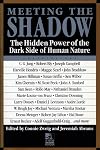
Although I personally do not see this as a book for those who are still actively dealing with panic traumas (particularly related to childhood abuses), this book is extremely useful, in many chapters, for working through the details of getting to the bottom of the traumas and less severe but nonetheless hurtful events of earlier life. I found in particular those excercises for finding and dealing with Shadow projections to be potentially helpful, if rather difficult, and useful. This is a show more book that bears re-reading with pen in hand, and going back through one's journals while working on the excercises.
(I found this book on my landlady's book shelf just after my therapist mentioned that being emotionally exhausted and wanting to give up was a by-product of running, with the Shadow ever on my heels, from those very parts of me that need to be acknowledged and integrated/accepted).
Comme dit-on en français, bon courage ! (The phrase that comes strongly to mind here is what the French say: courage, which means both courage or bravery, but also in this case, may the work go well, as it will clearly not be easy...) show less
(I found this book on my landlady's book shelf just after my therapist mentioned that being emotionally exhausted and wanting to give up was a by-product of running, with the Shadow ever on my heels, from those very parts of me that need to be acknowledged and integrated/accepted).
Comme dit-on en français, bon courage ! (The phrase that comes strongly to mind here is what the French say: courage, which means both courage or bravery, but also in this case, may the work go well, as it will clearly not be easy...) show less
Although I personally do not see this as a book for those who are still actively dealing with panic traumas (particularly related to childhood abuses), this book is extremely useful, in many chapters, for working through the details of getting to the bottom of the traumas and less severe but nonetheless hurtful events of earlier life. I found in particular those excercises for finding and dealing with Shadow projections to be potentially helpful, if rather difficult, and useful. This is a show more book that bears re-reading with pen in hand, and going back through one's journals while working on the excercises.
(I found this book on my landlady's book shelf just after my therapist mentioned that being emotionally exhausted and wanting to give up was a by-product of running, with the Shadow ever on my heels, from those very parts of me that need to be acknowledged and integrated/accepted).
Comme dit-on en français, bon courage ! (The phrase that comes strongly to mind here is what the French say: courage, which means both courage or bravery, but also in this case, may the work go well, as it will clearly not be easy...) show less
(I found this book on my landlady's book shelf just after my therapist mentioned that being emotionally exhausted and wanting to give up was a by-product of running, with the Shadow ever on my heels, from those very parts of me that need to be acknowledged and integrated/accepted).
Comme dit-on en français, bon courage ! (The phrase that comes strongly to mind here is what the French say: courage, which means both courage or bravery, but also in this case, may the work go well, as it will clearly not be easy...) show less
Zweig, former executive editor of Brain/Mind Bulletin, and Abrams, a Jungian therapist, offer a provocative collection of more than 60 brief pieces (most of them extracts from longer works) exploring the "shadow," the part of the unconscious self that a conscious mind sees as undesirable and tries to define as the "other." Christine Downing considers how a person might project the shadow self onto a same-sex sibling, while Maggie Scarf describes the ways in which husbands and wives can do show more the same thing: one spouse, for instance, expressing anger for the spouse who shuns the hostile feelings, turning an "intrapsychic problem" into "interpersonal conflict." Jerome S. Bernstein looks at this phenomenon in collective terms: the U.S. sees its darker self in the Soviet Union and vice versa. Many of the contributors note the dangers of ignoring one's own shadow, and the volume concludes with texts that discuss ways of coming to terms with it. Ken Wilber suggests that people should try to recognize and play out aspects of their rejected selves in order to heal "the split between persona and cap is correct/pk Shadow." show less
Lists
Awards

You May Also Like


Associated Authors
Statistics
- Works
- 16
- Also by
- 1
- Members
- 1,032
- Popularity
- #24,951
- Rating
- 3.8
- Reviews
- 10
- ISBNs
- 39
- Languages
- 7