
Lisa M. Klein
Author of Ophelia
About the Author
Works by Lisa M. Klein
Be It Remembered: The Story of Trinity Episcopal Church on Capital Square, Columbus, Ohio (2003) 12 copies, 1 review
Two Girls of Gettysburg 1 copy
Tagged
Common Knowledge
- Gender
- female
- Nationality
- USA
- Birthplace
- Peoria, Illinois
- Associated Place (for map)
- USA
Members
Reviews
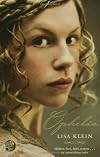
The court ladies, with their bright plumage and twittering voices, were like so many birds in a gilded cage. I was the plain robin among them, longing for freedom and unable to sing for the bars around me.
I am a person who hates Shakespeare and loves Shakespeare. The original text is just impossible for me, I struggle with the Old English and I don't have the patience for footnotes. I also do not enjoy the play format - it wasn't written to be read but to be seen and heard. That was the key show more to Shakespeare for me. It was Leonardo DiCaprio who taught me to love Romeo & Juliet, Heath Ledger for The Taming of the Shrew and Daisy Ridley who unlocked Hamlet for me. Is it "authentic"? No. And I'm okay with that.
I saw this sitting on a shelf in my local used bookstore and put it in my cart after reading a page or three. It's that kind of easily digested "King James lite" dialogue that still sounds formal but you don't trip over any of the words. I really enjoyed this retelling. Obviously it is expanded and Ophelia is the main character and not a minor character, as in Hamlet. Several things happen in the book that don't happen in the play, most notably the HEA - which I personally enjoyed very much. Very appropriate for Valentine's week reads. I'll be looking for more by Klein. show less
I am a person who hates Shakespeare and loves Shakespeare. The original text is just impossible for me, I struggle with the Old English and I don't have the patience for footnotes. I also do not enjoy the play format - it wasn't written to be read but to be seen and heard. That was the key show more to Shakespeare for me. It was Leonardo DiCaprio who taught me to love Romeo & Juliet, Heath Ledger for The Taming of the Shrew and Daisy Ridley who unlocked Hamlet for me. Is it "authentic"? No. And I'm okay with that.
I saw this sitting on a shelf in my local used bookstore and put it in my cart after reading a page or three. It's that kind of easily digested "King James lite" dialogue that still sounds formal but you don't trip over any of the words. I really enjoyed this retelling. Obviously it is expanded and Ophelia is the main character and not a minor character, as in Hamlet. Several things happen in the book that don't happen in the play, most notably the HEA - which I personally enjoyed very much. Very appropriate for Valentine's week reads. I'll be looking for more by Klein. show less
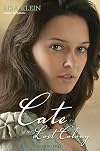
Its not often I will read a non-romance, historical fiction novel. Even less likely if its young adult. However something about Cate of the Lost Colony made me want to read it. Badly. Told in three parts, we watch Cate go from an anxious lady in waiting to Queen Elizabeth, to a young settler desperately trying to hold onto hope and ultimately a young woman who has found a place for herself.
The novel is told from her first person POV, Manteo's first person POV and through letters, poems and show more memos of Sir Walter Ralegh's. In this way we get a rather interesting vision of events that occur. In the first part we see how temperamental, jealous, vindictive, vain and uncertain a monarch Elizabeth is. As a ruler she was perfect (or at least better than most), in her persona life Cate views the strain of being the 'Virgin' Queen. She falls in and out of love easily enough (though Klein is careful to keep these 'chaste' romances with no hint of anything untoward happening), but she expects her handmaidens to be pure. They are not allowed to marry--or even love--without her consent in fact.
A matter that Cate does not heed well enough when she is found out to be harboring feelings for Ralegh. And thus we enter the second part! First sent to the Tower and than banished to Virginia, Cate is both afraid of the future and excited. She felt her fortunes could be made in the New World. And she awaited Ralegh. But the New World is not easy and what seems like so much fun on paper turns out to be deadly and dangerous. In the third part, events conspire to shape her into a determined and proud young woman. She realizes what she has wanted all this time, what she has been ignoring for want of her dreams, and embraces it whole-heartedly.
Manteo's chapters reveal a man torn between two worlds himself. Eager to prove his worth to his kinsmen he seeks to help bridge the gap between his people and the settlers. But distrust, unanimity and misunderstandings serve to only make things worse. He struggles to retain his promise to help the settlers survive, but also to show he is not a traitor to his people. He sees the worth in helping the settlers, how they can help and offer so much to his people, but what can he do when just getting two of the tribes' leaders to talk often leads to war?
Interestingly Klein develops a lot of his growth through his people's beliefs. He equates what he is doing as a journey all the 'great heroes' had to undertake to gain power. He continually makes peace and offers different courses of action. However he is a prideful young man himself, certain that the power 'Kwin-lissa-bet' has bestowed upon him is what makes him mighty. What makes him right. Too late he realizes that he made decisions that weren't the right ones at the time. That he tried too hard to straddle the line between worlds and didn't listen hard enough to his heart.
Roanoke Island is considered the first settlement, though its fate is shrouded in mystery and legend. In the end notes Klein describes some of the theories surrounding the Island and its settlers and possibilities that could have occurred. She also describes where she has taken artistic liberty, but I found I didn't care so much that she updated some of Ralegh's (overly flowery and faintly offensive) poetry. The man, if he was anything like the Ralegh in here (who I may add is nothing like the Ralegh from the movie Elizabeth: the Golden Age) was an utter prig. So self-motivated and insincere in his affections (except for fame and fortune) I found myself hoping he'd get scalped (I know he wasn't, but still).
I loved this book. Klein painted a picture that though extremely bleak at times still holds onto hope. These people really wanted to live. They fought and struggled and starved in order to carve a life into the New World. Maybe not the life they expected or thought they'd achieve, but a life they could be proud of. How many can say that nowadays? show less
The novel is told from her first person POV, Manteo's first person POV and through letters, poems and show more memos of Sir Walter Ralegh's. In this way we get a rather interesting vision of events that occur. In the first part we see how temperamental, jealous, vindictive, vain and uncertain a monarch Elizabeth is. As a ruler she was perfect (or at least better than most), in her persona life Cate views the strain of being the 'Virgin' Queen. She falls in and out of love easily enough (though Klein is careful to keep these 'chaste' romances with no hint of anything untoward happening), but she expects her handmaidens to be pure. They are not allowed to marry--or even love--without her consent in fact.
A matter that Cate does not heed well enough when she is found out to be harboring feelings for Ralegh. And thus we enter the second part! First sent to the Tower and than banished to Virginia, Cate is both afraid of the future and excited. She felt her fortunes could be made in the New World. And she awaited Ralegh. But the New World is not easy and what seems like so much fun on paper turns out to be deadly and dangerous. In the third part, events conspire to shape her into a determined and proud young woman. She realizes what she has wanted all this time, what she has been ignoring for want of her dreams, and embraces it whole-heartedly.
Manteo's chapters reveal a man torn between two worlds himself. Eager to prove his worth to his kinsmen he seeks to help bridge the gap between his people and the settlers. But distrust, unanimity and misunderstandings serve to only make things worse. He struggles to retain his promise to help the settlers survive, but also to show he is not a traitor to his people. He sees the worth in helping the settlers, how they can help and offer so much to his people, but what can he do when just getting two of the tribes' leaders to talk often leads to war?
Interestingly Klein develops a lot of his growth through his people's beliefs. He equates what he is doing as a journey all the 'great heroes' had to undertake to gain power. He continually makes peace and offers different courses of action. However he is a prideful young man himself, certain that the power 'Kwin-lissa-bet' has bestowed upon him is what makes him mighty. What makes him right. Too late he realizes that he made decisions that weren't the right ones at the time. That he tried too hard to straddle the line between worlds and didn't listen hard enough to his heart.
Roanoke Island is considered the first settlement, though its fate is shrouded in mystery and legend. In the end notes Klein describes some of the theories surrounding the Island and its settlers and possibilities that could have occurred. She also describes where she has taken artistic liberty, but I found I didn't care so much that she updated some of Ralegh's (overly flowery and faintly offensive) poetry. The man, if he was anything like the Ralegh in here (who I may add is nothing like the Ralegh from the movie Elizabeth: the Golden Age) was an utter prig. So self-motivated and insincere in his affections (except for fame and fortune) I found myself hoping he'd get scalped (I know he wasn't, but still).
I loved this book. Klein painted a picture that though extremely bleak at times still holds onto hope. These people really wanted to live. They fought and struggled and starved in order to carve a life into the New World. Maybe not the life they expected or thought they'd achieve, but a life they could be proud of. How many can say that nowadays? show less
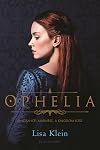
Plot: Ophelia is the learned, tomboyish daughter to an ambitious man. Eventually her father works his way into the court of Denmark. Ophelia becomes a ladymaid to the Queen and falls in love with with the dark and clever Prince Hamlet (and wins his love in return). Everything seems perfect, for a time. But her love is not an easy one. The Prince suspects that his uncle has murdered his father the king and he has vowed revenge. But the mask of insanity he has put on for his plan starts to show more feel all to real and his revenge comes to deeply affect her own life and family. Ophelia will have to be very cunning to survive her love and his revenge.
This is a wonderful retelling of Shakespeare’s famous play from the perspective of a character that remained sadly underdeveloped in the original. Klein clearly knows the play inside and out; she expands upon the existing narrative and inserts scenes and lines from the text in an elegant and seamless way. We come to understand Ophelia, her family and even the Queen, in a way that the play didn’t really permit. Hamlet is ultimately secondary here. Klein’s Ophelia is intelligent, witty and vibrant. She is struggling as best she can against forces she cannot control. Her love is beautiful and truly sad. But personally, I fell in love with kind, quiet Horatio rather than Hamlet from the start. ^_^ show less
This is a wonderful retelling of Shakespeare’s famous play from the perspective of a character that remained sadly underdeveloped in the original. Klein clearly knows the play inside and out; she expands upon the existing narrative and inserts scenes and lines from the text in an elegant and seamless way. We come to understand Ophelia, her family and even the Queen, in a way that the play didn’t really permit. Hamlet is ultimately secondary here. Klein’s Ophelia is intelligent, witty and vibrant. She is struggling as best she can against forces she cannot control. Her love is beautiful and truly sad. But personally, I fell in love with kind, quiet Horatio rather than Hamlet from the start. ^_^ show less
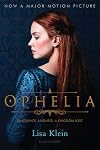
I really enjoyed reading this especially since in high school I loved the play Hamlet. Klein fills in all the holes that could never be filled in a play. Her story seemed believable and pieced together the story of Ophelia and Hamlet so well I pretty much thought I was reading Shakespeare. The only thing keeping me from giving this book 5 stars is the last part of the book got really boring for me. I wasn't interested in that part of Ophelia's life and felt it wasn't really needed. If the show more whole part 3 was chopped and the epilogue was bumped up, I would have totally been head over heels for this book. I would recommend this book for anyone who loves Shakespeare and who maybe wants to know more about Ophelia. I also loved the twists the story had and the ending. I found myself surprised who I wanted Ophelia to be with. show less
Lists
Awards


You May Also Like


Statistics
- Works
- 8
- Members
- 1,714
- Popularity
- #14,982
- Rating
- 3.6
- Reviews
- 58
- ISBNs
- 30
- Languages
- 2